
Daily Current Affairs UPSC 30 July 2024
Welcome to our daily current affairs blog post for UPSC aspirants! In today's edition, we will be discussing the most significant events and news updates that took place on 30th July 2024. Staying updated with current affairs is crucial for UPSC preparation, as it not only helps you stay informed but also enhances your understanding of various subjects. So, let's dive into the important happenings of the day and explore their potential impact on the upcoming UPSC examinations.

Central Water Commission (CWC)
- CWC has been recognized with the Global WaterTech Award for 'Water Department of the Year' by GEEF for its work in hydro-meteorological data collection and flood forecasting.
- CWC, headquartered in New Delhi, was established in 1945 on the advice of Dr. B.R. Ambedkar.
- The organization is headed by a Chairman who serves as an Ex-officio Secretary to the Government of India.
- CWC is a premier technical organization operating as an attached office of the Ministry of Jal Shakti.
- It consists of three technical wings: Designs and Research Wing, Water Planning and Projects Wing, and River Management Wing.
- The main goal of CWC is to promote integrated and sustainable development and management of India's water resources through the use of advanced technology and coordination of all stakeholders.
Periyar Tiger Reserve (PTR)
- A unique wind turbine has been installed in PTR to power real-time monitoring cameras and Wi-Fi connectivity in its forests.
- PTR is located in Thekkady district, Kerala in the Cardamom Hills and Pandalam Hills of the Southern Western Ghats.
- The climate in PTR is cool and humid with high rainfall.
- Forest types in PTR include tropical evergreen forests, tropical semi-evergreen forests, moist deciduous forests, grasslands, and eucalyptus plantations.
- The major rivers in PTR are Periyar and Mullayar, with the Mullaperiyar Dam located within the reserve.
- Fauna in PTR includes Asian Elephants, Bengal Tigers, Sambar Deer, Leopards, Barking Deer, Nilgiri Tahr, Lion Tailed Macaques, and more.
- Flora in PTR consists of more than 41% of all flowering plants (angiosperms).
Ideas4LiFE
- The Union Minister for Environment, Forest and Climate Change has launched the Ideas4LiFE portal.
- The portal aims to encourage students, faculty, and research scholars to contribute innovative ideas to the global initiative of Mission LiFE.
- The focus of the portal is on promoting behavioral changes related to environmentally friendly lifestyles.
- Mission LiFE, launched in 2022, aims to bring about behavior changes in individuals to combat climate change.
- It is a global movement that seeks to transition from a model of destructive and mindless consumption to deliberate and mindful utilization of resources.
MQ-9B UAV
- The Defence Acquisition Council, led by the Defence Minister, has approved changes to the deal for 31 MQ-9B High Altitude Long Endurance Unmanned Aerial Vehicles (UAV).
- The MQ-9B UAV has two variants: SkyGuardian and SeaGuardian, with the ability to fly over the horizon for up to 40 hours (SkyGuardian) and 30 hours (SeaGuardian) via satellite.
- Equipped with the Lynx Multi-mode Radar, advanced electro-optical/infrared (EO/IR) sensor, and automatic takeoff and landing capabilities.
- Armament includes laser-guided missiles, anti-tank missiles, anti-ship missiles, and more.
- Missions capabilities of the MQ-9B UAV include humanitarian assistance/disaster relief, electronic warfare, anti-surface warfare, anti-submarine warfare, and more.
Pumped Storage Hydropower
- Uttar Pradesh government has given approval for a 1,200 MW pumped storage power project in Sonabhadra.
- Pumped storage hydropower plants utilize gravity to produce electricity.
- The system consists of two water reservoirs at varying elevations that generate power as water moves between them through a turbine.
- Power is needed to pump water back into the upper reservoir for recharge.
- The Central Electricity Authority estimates that India has a potential of 103 GW for on-river pumped storage hydro projects.
Hoolock Gibbon
- Oil and gas exploration poses a threat to the habitat of the Hoolock Gibbon in Assam.
- The Hoolock Gibbon is the only ape found in India, specifically in the northeast region.
- They are primates similar to monkeys, langurs, and chimpanzees.
- Hoolock Gibbons are arboreal species that prefer to live in the canopies of evergreen forests in northeast India.
- The Western Hoolock Gibbon is found in all states of the northeast, restricted between the south of Brahmaputra river and east of Dibang river, as well as in Eastern Bangladesh and northwest Myanmar.
- The IUCN status of the Western Hoolock Gibbon is Endangered.
- The Eastern Hoolock Gibbon is found in specific pockets of Arunachal Pradesh and Assam in India, as well as in southern China and northeast Myanmar.
- The IUCN status of the Eastern Hoolock Gibbon is Vulnerable.
- The Western Hoolock Gibbon is listed under Schedule 1 of the Wildlife Protection Act 1972.
Advanced Land Navigation System (ALNS)
- Defense Acquisition Council approved procurement of Advanced Land Navigation System (ALNS) for Indian Army's Armoured Fighting Vehicles.
- ALNS will be purchased from Bharat Electronics Limited.
- ALNS is a Ring Laser Gyro (RLG) based navigation system for Armoured vehicles.
- It has three different modes: Inertial Mode, Hybrid Mode, and GPS Mode.
- ALNS Mk-II is compatible with NaVIC and GLONASS positioning systems.
Clustered Regularly Interspaced Short Palindromic Repeats (CRISPR)/Cas9
- Scientists have developed a more precise and efficient genome-editing system using the FnCas9 enzyme from Francisella novicida bacteria.
- CRISPR-Cas9 is a genome-editing tool that allows for precise modification of DNA sequences.
- It involves the use of guide RNA to target specific parts of the genome and Cas9 as the molecular scissors to cut DNA strands.
- Applications of CRISPR-Cas9 include treating cancer, hepatitis B, cardiovascular diseases, creating genetically modified organisms, and improving crop resilience.
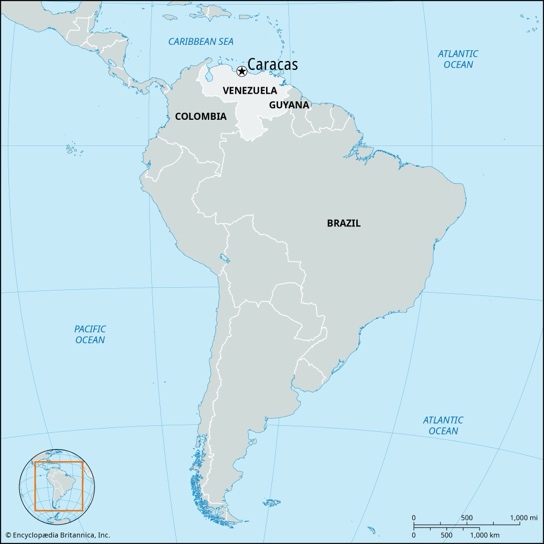
Venezuela (Capital: Caracas)
- President Nicolás Maduro has been re-elected for a third term in Venezuela's presidential election.
- Political features of Venezuela include its location at the northern end of South America, with land boundaries with Guyana to the east, Brazil to the south, and Colombia to the west, as well as maritime boundaries with the Caribbean Sea and Atlantic Ocean.
- Geographical features of Venezuela include its highest point, Pico Bolivar, major rivers such as Rio Negro, Orinoco, and Arauca, and a hot and humid tropical climate.
Global Mangrove Alliance Report 2024
- The report was released on World Mangrove Day, which is observed annually on 26th July.
Key Highlights of the Report
- Southeast Asia has nearly one-third of global mangroves, with Indonesia having 21% of the world's mangroves.
- West and Central Africa also have significant mangrove coverage.
- Half of the world's mangrove provinces are considered threatened according to the IUCN Red List of Mangrove Ecosystems.
- Mangroves in Lakshadweep archipelago and on the coast of Tamilnadu are critically endangered.
Drivers of Mangrove Loss:
- Climate change, including sea-level rise and increased storm intensity, is a major factor.
- Expansion of industrial shrimp aquaculture in regions like Andhra Pradesh, West Bengal, and Gujarat is contributing to mangrove loss.
- Conversion of mangroves to oil palm plantations and rice cultivation has led to a 43% loss between 2000-2020.
Benefits of Mangroves
- Support Biodiversity: Mangroves support a wide variety of plants and animals, with over 5,700 species recorded in Indian mangroves.
- Carbon Sequestration: Mangroves act as carbon sinks, storing an average of 394 tonnes of carbon per hectare.
- Coastal Protection: Mangroves protect coastal regions from disasters by reducing flood depths by 15-20%, and over 70% in some areas.
- Nutrient-Rich Food Source: Fish and seafood sourced from mangrove ecosystems are rich in essential nutrients like protein, omega-3 fatty acids, vitamins (e.g. D and B12), and minerals (e.g. iron, zinc).
- Water Quality Improvement: Mangroves improve water quality by filtering pollutants and trapping sediments.
About Mangroves
- Mangroves are found in coastal areas such as salt marshes, tidal creeks, mud flats, and estuaries.
- These salt-tolerant plant communities thrive in tropical and subtropical intertidal regions with high rainfall (1,000-3,000 mm) and temperatures (26-35°C).
- West Bengal has the largest mangrove cover in India, according to the India State of Forest Report 2021.
Initiatives for Mangroves
India:
- MISHTI focuses on creating shoreline habitats and providing tangible incomes for communities.
- SAIME promotes sustainable aquaculture within mangrove ecosystems.
Global:
- GMA's Mangrove Breakthrough initiative.
- The Mangrove Alliance for Climate, led by the UAE in collaboration with Indonesia.
"RBI Releases 2023-24 Currency and Finance Report"
- This year's report focuses on the topic of "India's Digital Revolution."
Key Findings of the Report:
- The report focuses on India's Digital Revolution and highlights the growth of the digital economy globally and in India.
- Factors contributing to the growth of the digital economy in India include internet penetration, low data costs, high mobile data consumption, and a thriving startup ecosystem.
- India leads globally in biometric-based identification and real-time payments volume.
- The Digital Public Infrastructure (DPI) in India is expanding globally through initiatives like the Modular Open Source Identity Platform (MOSIP) and interlinking with other countries' fast payment systems.
- Social welfare initiatives like Direct Benefit Transfer have helped lift millions of people out of poverty in India.
Challenges to Digitalization:
- Consumer Vulnerability: Nearly half of complaints to RBI ombudsman in 2022-23 were related to digital payments, highlighting the vulnerability of consumers in this area.
- Cyber Security: The average cost of data breaches in India has risen to US$ 2.18 million in 2023, showing a significant increase of 28% since 2020 and emphasizing the importance of cyber security measures.
- Use of Dark Pattern: Dark patterns are deceptive design tactics used in digital interfaces to manipulate users into taking unintended actions, posing a threat to consumer trust and privacy.
Suggestions from the Report:
- Self-regulatory organizations (SROs) can promote responsible practices and ethical standards in the FinTech industry.
- Scaling up cyber infrastructure is necessary to handle the increasing number of transactions securely.
- Data localization and ring fencing measures are needed to ensure the secure storage of critical data due to the rise in digital transactions.
"Urban Flooding Projects Launched by HLC"
- HLC, chaired by Union Home Minister, approved six projects of five states (Telangana, Gujarat, Karnataka, West Bengal and Maharashtra) for urban flood management.
About Urban Floods
- Urban floods refer to rapid rise of floodwaters in urban areas due to limited infiltration and heavy rainfall events.
- Management of urban floods falls under the purview of State Governments and Urban Local Bodies/Urban Development Authorities responsible for maintaining drainage and sewerage system in cities/towns.
Factors Contributing to Urban Floods
- Meteorological Factors: Record-breaking rainfall (944 mm in one day, causing floods in Mumbai in 2005); Cyclonic storms (resulting in floods in Hyderabad in 2020); Climate change (leading to snowfall, melting snow, and rising sea levels) and more.
- Hydrological Factors: Hydrological factors include alterations in river paths, landslides, and soil erosion, as well as the presence or absence of overbank flow and high tides that can obstruct drainage.
- Human factors: Human activities such as fast urbanization and deforestation, neglect of infrastructure and drainage systems, and uncontrolled water release from dams and lakes (as seen in the 2015 Chennai Floods with water released from Chembarampakkam lake) are contributing factors to environmental issues.
Impact of Urban Floods
- Structural damage to buildings, Loss of lives and property, Disruption in transport and power, Incidence of epidemics.
Measures taken by India to prevent Urban Floods
- Chennai Flood Warning System and Flood forecasting system implemented.
- Kolkata City has an early warning system for floods.
- AMRUT Mission includes storm water drainage component to prevent flooding
- Ministry of Urban Development has a Standard Operating Procedure for Urban Flooding.
- NDMA guidelines include Hazard Risk Zoning and Mapping, Urban Flood Disaster Management Information System, and Separate Urban Flooding Cell at national/state level.
"Union Budget 2024-25: Embracing Natural Farming"
- In the next two years, 1 crore farmers will be introduced to natural farming with the support of certification and branding.
- The implementation will involve scientific institutions and willing gram panchayats.
- Additionally, 10,000 need-based bio-input resource centers will be established.
Natural Farming
- Natural farming is a low-input, climate-resilient farming system that promotes the elimination of synthetic chemical agroinputs.
- It integrates crops, trees, and livestock with functional biodiversity, following principles such as multi-cropping, no synthetic agroinputs, and minimal tillage.
- Promoting traditional indigenous practices principles include:
- Multi-cropping systems
- Avoiding synthetic agroinputs like fertilizers, pesticides, or herbicides
- Keeping soil covered with cover crops or mulch
- Using bio-stimulants to enhance soil microbial activity
- Minimal tillage
- Using cow dung-urine formulations like Bijamrit, Jivamrit, Ghanjivamrit
- States like Andhra Pradesh, Karnataka, Himachal Pradesh, Chhatisgarh, and Jharkhand have been practicing natural farming.
Significance of Natural Farming
- Natural farming can improve yield, increase farmers' income, and ensure better health due to higher nutrition density in food.
- It also contributes to environmental conservation by improving soil biology, agrobiodiversity, and reducing carbon and nitrogen footprints.
Challenges
- Challenges include skeptical farmers, lack of quality inputs, inadequate research, and higher labor costs.
Initiatives for Natural Farming
- NMNF will be a distinct scheme starting in 2023-24.
- NMNF is separate from National Mission on Sustainable Agriculture and Paramparagat Krishi Vikas Yojana.
- Some states are promoting Zero Budget Natural Farming (ZBNF).
- Andhra Pradesh has implemented the Community Managed Natural Farming (APCNF) model, which won the 2024 Gulbenkian Prize for Humanity.
"Quad Foreign Ministers Meet in Tokyo"
- The Quad is an informal strategic forum made up of India, US, Australia, and Japan.
- The objective of the Quad is to secure a rules-based global order, freedom of navigation, liberal trading system, and work for an open, stable, and prosperous Indo-Pacific.
- The Quad held its inaugural meeting in 2007 on the sidelines of the ASEAN Regional Forum.
Key Highlights of the Quad Meeting
- The Quad plans to expand the Indo-Pacific Partnership for Maritime Domain Awareness into the Indian Ocean Region (IOR) to ensure safety and security of critical sea lanes.
- There is a plan to launch the Quad Maritime Legal Dialogue under the Quad Maritime Security Working Group to support a rules-based maritime order in the Indo-Pacific.
- Standard operating procedures for Humanitarian Assistance and Disaster Relief operations have been finalized to enable an effective, immediate, and coordinated response mechanism.
- The Quad is implementing the Women, Peace, and Security (WPS) Agenda, including its application to disaster risk reduction.
Significance of the Quad for India
- The Quad helps India counterbalance China's growing presence in the Indian Ocean Region, including its Belt and Road Initiative which has led to the building of port facilities in countries neighboring India.
- With the rising significance of the Indo-Pacific, the Quad provides India with a powerful platform to advance East Asia's interests and further strengthen its Act East policy.
- India is evolving its foreign policy strategy by aligning with like-minded countries through the Quad.
- The Quad also supplements India's defense capabilities, especially in the maritime domain.
"China to Launch World's First Thorium Molten Salt Nuclear Power Station in 2025"
- This nuclear power station uses thorium instead of Uranium as fuel, which is a safer alternative.
- The reactor does not require water for cooling, using liquid salt or carbon dioxide instead to transfer heat and generate electricity.
- This design reduces the risk of meltdowns compared to traditional water-cooling models.
Thorium as a Fuel:
- Thorium is a naturally occurring element that is slightly radioactive and can be found in various sources such as soil, rocks, water, plants, and animals.
- In order to use thorium to produce nuclear energy, it must first be converted into U-233 in a nuclear reactor because of its physical properties.
Significance of Thorium based reactors:
- India has abundant reserves of monazite, which contains thorium, unlike uranium which is scarce.
- Monazite is found in states like Kerala, Odisha, Andhra Pradesh, Tamil Nadu, West Bengal, and Jharkhand.
- Thorium is chemically safe due to its higher melting point, better thermal conductivity, fuel performance characteristics, chemical inertness, and stability.
- Thorium is environmentally safe as it generates lesser toxic and short-lived radioactive wastes compared to other nuclear fuels.
Role of Thorium in India’s Nuclear Programme:
- India's nuclear power program has three stages, with the third stage focusing on producing power from thorium.
- The first stage uses natural Uranium in Pressurised Heavy Water Reactors (PWHRs), while the second stage uses Plutonium in Fast Breeder Reactors.
- India has established processes for producing thorium from monazite, a mineral rich in thorium.
- The Advanced Heavy Water Reactor being developed by BARC will demonstrate the use of thorium in the fuel cycle.