
Daily Current Affairs UPSC 25 July 2024
Welcome to our daily current affairs blog post for UPSC aspirants! In today's edition, we will be discussing the most significant events and news updates that took place on 25th July 2024. Staying updated with current affairs is crucial for UPSC preparation, as it not only helps you stay informed but also enhances your understanding of various subjects. So, let's dive into the important happenings of the day and explore their potential impact on the upcoming UPSC examinations.

Sangameshwar Temple
- Sangameshwar Temple in Nandyal district of Andhra Pradesh gets submerged annually in the backwaters of the Srisailam dam due to flooding in the Krishna river.
- The Nagara-style temple is dedicated to Lord Shiva and was built by the Chalukya dynasty at the confluence of the Krishna and Tungabhadra rivers, along with five other tributaries, hence the name Sangameswara.
- Other Sangameshwar Temples in India include Sri Ketaki Sangameshwara Swamy Temple in Telangana, Sangameshwar temple in Bhavani, Tamil Nadu, and Sangameshwar temple in Karnataka, which is part of a UNESCO World Heritage Site at Pattadakal.
Artificial Reefs
- 300 artificial reefs were placed off the coast of Rameshwaram, Tamil Nadu
- Artificial reefs are used to improve natural habitats, increase productivity, and manage aquatic resources.
- The Department of Fisheries is promoting artificial reefs under the Pradhan Mantri Matsya Sampada Yojana to rejuvenate coastal fisheries.
- Advantages of artificial reefs include reducing wave damage, helping marine ecosystem regeneration, acting as a carbon sink, enhancing recreational fisheries and eco-tourism, creating diving areas, and reducing conflicts.
- Artificial reefs also restrict bottom trawling in near shore areas.
Right to Shelter
- The Supreme Court emphasized the importance of balancing railway infrastructure development with the right to shelter for people accused of illegally living on railway land.
- The right to shelter is considered a fundamental right, derived from the right to residence and the right to life as outlined in the Indian Constitution.
- This right was affirmed by the Supreme Court in the case of U.P. AvasEvamVikasParishad vs. Friends Coop. Housing Society Ltd. in 1996.
Right to be forgotten
- The Supreme Court will be looking into the concept of the 'right to be forgotten' in relation to digital privacy.
- The 'right to be forgotten' is also referred to as the 'right to erasure' and involves individuals having control over how organizations use their personal data.
- In the Justice K.S. Puttaswamy case in 2017, the Supreme Court supported the recognition of the 'right to be forgotten'.
- The Digital Personal Data Protection Act of 2023 does not specifically mention the 'right to be forgotten'.
- The GDPR law in Europe does include provisions for the right to be forgotten.
Rule 267 of Rules of Procedure and Conduct of Business
- The Chairman of the Rajya Sabha is worried about the misuse of Rule 267, which allows for the suspension of rules to discuss urgent matters.
- Rule 267 is meant for rare situations and has only been used six times in the past 36 years, with the last instance being in 2016.
- This rule is comparable to the adjournment motion in the Lok Sabha, where scheduled business can be put on hold to address urgent public matters.
Magnetotactic bacteria (MTB)
- Research in Ladakh discovered rock varnish with magnetofossils that could indicate habitable environments in space.
- Magnetofossils are remnants of magnetic particles created by magnetotactic bacteria (MTB).
- MTB are common, mobile, and varied prokaryotes that create a specialized organelle called a magnetosome containing magnetic iron mineral.
- These bacteria can align themselves within Earth's geomagnetic field.
Dark Oxygen
- Scientists found 'dark' oxygen deep in the Pacific Ocean at 13,100 feet.
- Dark oxygen is created by metallic nodules on the seafloor.
- These metal formations help split seawater into hydrogen and oxygen.
- It was previously thought that oxygen mainly came from marine plants through photosynthesis.
- This discovery challenges current beliefs about oxygen production in deep-sea environments.
Bioplastics
- Small holder farmers in Nagaland are using compostable bioplastic bags made from Cassava starch instead of traditional plastics.
- Bioplastics are made from renewable resources like carbohydrates and vegetable oils using microorganisms.
- Bioplastics can be broken down by microbes like fungi, bacteria, and yeasts, resulting in the production of CO2, water, and biomass.
- These bioplastics are a sustainable alternative to traditional plastics, as they have similar physical properties but a lower carbon footprint.
Domestic Money Transfer (DMT)
- The RBI has updated the framework for domestic money transfers that was first introduced in 2011.
- The revision was made under the Payment and Settlement Systems Act, 2007.
- The review was conducted due to the increase in banking outlets and advancements in payment systems for fund transfers.
- The new framework will be implemented starting from November 01, 2024.
MERCOSUR
- Bolivia has officially joined MERCOSUR, a Southern Common Market in Latin America.
- MERCOSUR was founded in 1991 by Argentina, Brazil, Paraguay, and Uruguay, and later expanded to include Venezuela and Bolivia.
- Venezuela has been suspended from MERCOSUR since December 1, 2016.
- The main goal of MERCOSUR is to promote the free movement of goods, services, capital, and people among its member countries.
- India has a Preferential Trade Agreement with MERCOSUR, indicating a trade relationship between the two entities.
"Angel Tax Scrapped in Union Budget 2024-25"
- The elimination of the Angel Tax will significantly impact India's startup ecosystem.
- The new regulations will come into effect on April 1, 2025.
- This change will lead to a more stable and encouraging investment climate for startups in India.
What is Angel Tax?
- Introduced in 2012 under the Finance Act,2012.
- Falls under Section 56 (II) (viib) of the Income Tax Act,1961.
- Imposed on funding raised by unlisted companies or startups if their valuation exceeds the fair market value.
- Excess amount treated as income and taxed at 30.9%.
- Purpose: To prevent tax avoidance and money laundering.
Reason for Scrapping Angel Tax
- To reduce compliance burden for startups.
- Assessing officer used the discounted cash flow method to determine fair market value, which is unfavorable for startups.
- DCF method evaluates investment by discounting estimated future cash flows.
- Abolishing Angel Tax aligns with the government's Startup India initiative.
Startup India Initiative
- Launched in 2016.
- Objective: Supporting entrepreneurs, building a robust startup ecosystem, and transforming India into a country of job creators.
- Implemented by the Department for Promotion of Industry and Internal Trade (DPIIT).
"Corridor Projects for Vishnupad and Mahabodhi Temple in Union Budget"
- These projects will be based on the successful Kashi Vishwanath Temple Corridor, aiming to upgrade them into top-tier destinations for both pilgrims and tourists.
- About the Vishnupad Temple.
- Vishnupad Temple in Gaya, Bihar.
- Located on the banks of the Falgu river.
- Dedicated to Lord Vishnu.
- Renovated by Queen Devi Ahilyabai in the 18th century.
- Features a 40 cm-long footprint believed to be Lord Vishnu's.
About Mahabodhi Temple
- Mahabodhi Temple in Bodhgaya, Bihar.
- Located at the base of the bodhi tree where Buddha attained nirvana.
- Built by Emperor Asoka in the 3rd century B.C.
- Temple design is a mix of Nagara and Dravida styles.
- Recognized as a UNESCO World Heritage Site.
Buddhist Architecture
- Stupa: Dome-shaped structure containing relics of Buddha.
- Chaityas: Buddhist halls of worship.
- Viharas: Monastery buildings for monks, like Nalanda University.
"Public-Private Partnership for Bharat Small Reactors: Budget 2024-25"
- The announcement allows for private sector participation in nuclear energy generation, a first since the Atomic Energy Act of 1962.
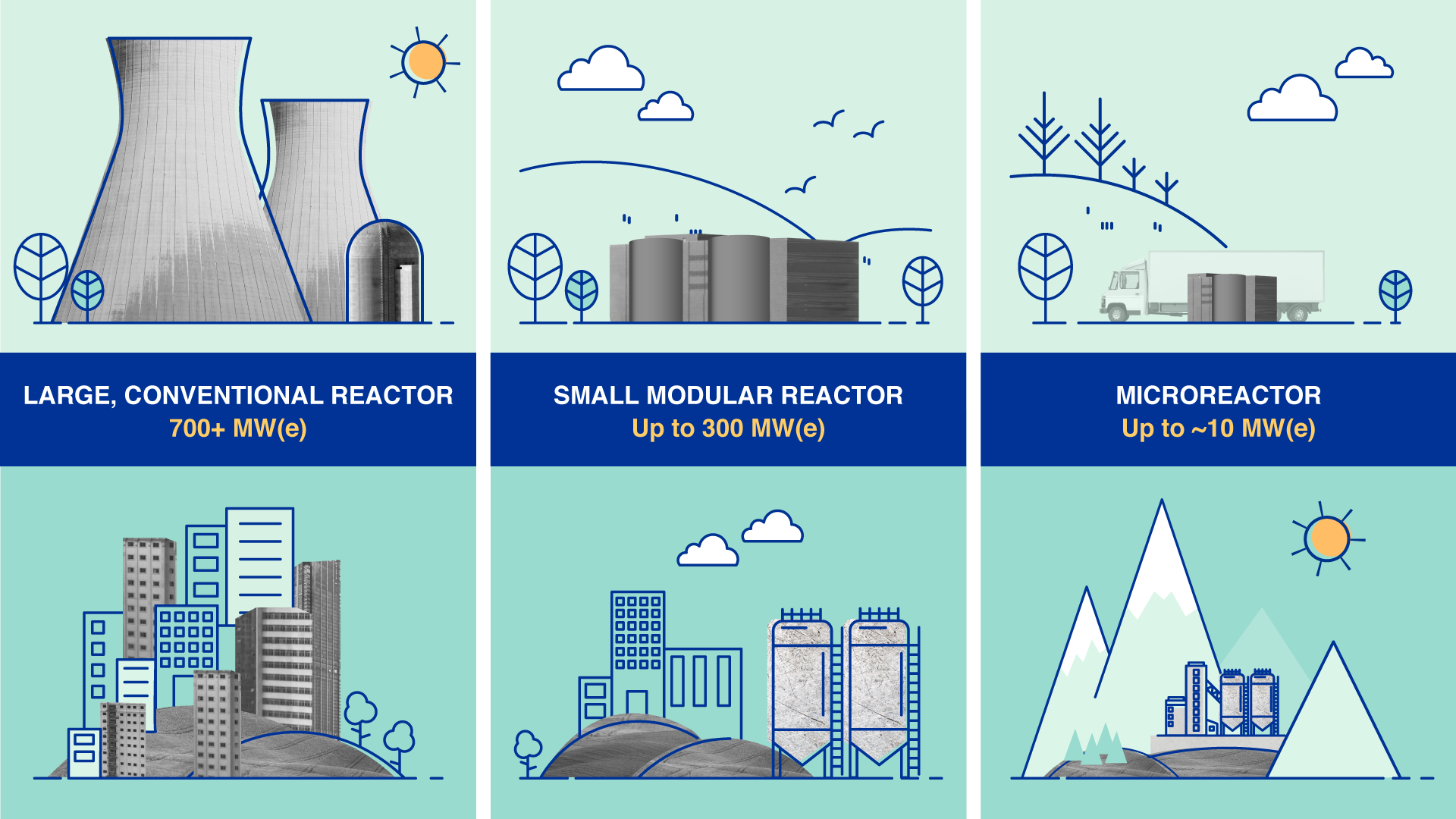
- BSRs align with global trends of Small Modular Reactors (SMRs) gaining attention.
- BSRs are based on India's existing Pressurized Heavy Water Reactor technology, unlike SMRs which are a new concept involving factory-made, easily assembled reactors.
- BSRs can enhance the contribution of nuclear energy in India's energy basket, which currently has a share of 1.6%.
About Small Modular Reactors
- Advanced nuclear reactors with a power capacity of up to 300 MW(e) per unit.
- Over 80 SMR designs and concepts globally, with most in various developmental stages.
Significance of SMRs
- Reduced fuel requirements and less frequent refueling compared to conventional plants.
- Saves construction time with prefabricated units that can be manufactured, shipped, and installed on site.
- Eliminates or significantly lowers the potential for unsafe releases of radioactivity to the environment.
"2024 Report on Global Food Security and Nutrition"
- The report was prepared by five specialized agencies of the United Nations: FAO, IFAD, UNICEF, WFP, and WHO.
- The focus of the report is on financing to end hunger, food insecurity, and malnutrition in all its forms.
Need for a New Definition
- The report highlights the need for a new definition of financing for food security and nutrition.
- The absence of a coherent picture of financial resources spent on food security and nutrition has led to multiple definitions causing issues like underfinanced areas and accountability problems.
The report puts forward a new definition of financing for food security and nutrition
- Public and private funds, both local and international, are used to address hunger, food insecurity, and malnutrition.
- The goal is to ensure that nutritious and safe food is available, accessible, and stable, while also improving the resilience of food systems.
Current Gaps in Financing
- Public spending on agriculture per capita is low and not steadily growing in low-income countries and lower-middle-income countries.
- Food security and nutrition receive less than a quarter of official development assistance and other official flows, indicating they are not a priority for donors.
Status of Food Security and Nutrition
- The world is not on track to achieve Sustainable Development Goal 2, Zero Hunger.
- In 2023, 1 in 11 people globally faced hunger, and between 713 and 757 million people were estimated to be undernourished.
- Approximately 28.9 percent of the global population were moderately or severely food insecure in 2023.
Successful Flight Test of DRDO's Phase-II BMD System
- The BMD System aims to defend against attacks by launching interceptors to destroy incoming missiles on impact.
- DRDO's successful Phase-II AD Endoatmospheric missile tests demonstrated India's capability to defend against 5,000 km class ballistic missiles.
- Weapon system radars on land and sea detected the Target Missile and activated the Air Defence interceptor system.
- The flight test validated a network-centric warfare system with long-range sensors, communication systems, and advanced interceptor missiles.
India's BMD Programme Overview
- The goal of India's BMD programme is to deploy a layered missile shield to protect against ballistic missile attacks.
- Phase 1 of the BMD system, already deployed, can intercept ballistic missiles with a range of 2,000 km using PAD and AAD missiles.
- Phase II includes AD-1 and AD-2 missiles for enhanced defense capabilities.
- In November 2022, DRDO successfully tested the long-range interceptor missile AD-1.
"India-UK Launch Technology Security Initiative"
- TSI is focused on improving collaboration in critical and emerging technologies between India and the UK, based on the India-UK Roadmap 2030.
- The initiative will be led by the National Security Advisors of both countries and will prioritize creating valuable partnerships in technology value chains.
- The launch of new bilateral initiatives will help to speed up cooperation between government bodies, technology and research centers, industry, and academia in areas such as telecoms, critical minerals, semiconductors, and quantum technology.
What is the Relevance of the UK to India
- Strategic Convergence: Both India and the UK are concerned about China's assertiveness in the Indo-Pacific region, leading to a shared interest in collaborating on security issues.
- Defence Cooperation: The UK has the potential to co-develop defence technology with India and help enhance maritime security through joint military exercises like Ajeya Warrior, Konkan, and Cobra Warrior.
- Trade and Investment: Through initiatives like the Enhanced Trade Partnership (ETP), India and the UK aim to double bilateral trade by 2030 and are in the process of negotiating a Free Trade Agreement (FTA) to further strengthen economic ties.
- Infrastructure Support: The India-UK Infrastructure Finance Bridge is helping support India's National Infrastructure Pipeline (NIP), showcasing the UK's commitment to aiding India's development projects.
- Civil Nuclear Cooperation: The UK has committed to sharing advanced nuclear technology with India, similar to its partnerships with other top international allies, highlighting the potential for collaboration in the energy sector.