
Daily Current Affairs UPSC 17 September 2024
Welcome to our daily current affairs blog post for UPSC aspirants! In today's edition, we will be discussing the most significant events and news updates that took place on 17th September 2024. Staying updated with current affairs is crucial for UPSC preparation, as it not only helps you stay informed but also enhances your understanding of various subjects. So, let's dive into the important happenings of the day and explore their potential impact on the upcoming UPSC examinations.

Palamau Tiger Reserve(PTR)
- Forestry operations in PTR have been hindered by left wing extremism.
- PTR is located in the western part of the Chotanagpur plateau in Jharkhand.
- The sanctuary has a geological formation rich in bauxite and coal, consisting of gneiss.
- PTR was the first sanctuary in the world to conduct a tiger census and is constituted under Project Tiger (1973).
- The sanctuary is a watershed area for the Koel, Burha, and Auranga rivers.
- Fauna in PTR includes tigers, elephants, leopards, grey wolves, and wild dogs.
- The vegetation in PTR is dominated by Tropical Dry Deciduous forest, with small patches of Tropical Moist Deciduous forests.
- Key flora in PTR includes Sal, Butea, Carissa, Capparis, and Salvadora.
Phosphoric Acid
- The increasing need for phosphoric acid in electric vehicle batteries is a concern for India's agriculture sector, which heavily relies on imported fertilizers.
- Phosphoric acid is a crucial component in lithium-iron-phosphate (LFP) batteries.
- Phosphoric acid, also known as H3PO4, is produced from rock phosphate ore through grinding and reacting with sulphuric acid.
- This corrosive, colorless, odorless, and inorganic acid is primarily used in di-ammonium phosphate (DAP), India's second most consumed fertilizer after urea.
- Apart from fertilizers, phosphoric acid is also used in livestock feeds, phosphate salts, polyphosphates, soaps, waxes, polishes, and detergents.
- India imports phosphoric acid mainly from Jordan, Morocco, Senegal, and Tunisia.
Fast-track special courts (FTSCs)
- FTSCs are more effective in handling rape cases and POCSO Act cases, as per a report from India Child Protection.
- FTSCs are a centrally sponsored scheme launched in 2019 and extended until 2026.
- The funding for FTSCs comes from the Nirbhaya Fund, and they are implemented by the Department of Justice under the Ministry of Law and Justice.
- The objective of FTSCs is to ensure quick disposal of rape cases and POCSO Act cases.
- Currently, there are 755 FTSCs, including 410 exclusive ePOCSO Courts, operational in 30 States/UTs.
- FTSCs have a significant impact, disposing of 83% of cases in 2022 compared to only 10% by conventional courts.
Seaweed
- ICAR-Central Marine Fisheries Research Institute has been recognized as a center of excellence for seaweed cultivation.
- Seaweed is a term used for various marine plants and algae that can be found in oceans, rivers, and lakes.
- Seaweed is classified into three groups: green, brown, and red seaweeds.
- Seaweed has various applications, including providing minerals and vitamins, health benefits such as anti-inflammatory properties, and being used in manufacturing and agriculture to enhance crop productivity.
Battery Waste Management (BWM) Rules, 2022
- The Central Pollution Control Board (CPCB) has implemented strict environmental compensation (EC) guidelines to penalize violations of the BWM Rules, 2022.
- The BWM Rules, 2022 outline standards for managing waste batteries, including electric vehicle, portable, automotive, and industrial batteries.
- The rules include extended producer responsibility (EPR), requiring producers to oversee the collection, recycling, and refurbishment of waste batteries.
- Environmental compensation for failing to meet EPR targets is based on the Polluter Pays Principle.
Account Aggregator (AA)
- Lending firms have used AA to process loans totaling Rs 42,300 crores.
- AAs allow individuals to securely and digitally share information from one financial institution to another within the AA network.
- AAs facilitate the flow of data between Financial Information Providers and Financial Information Users.
- AAs are regulated by the RBI and require individual consent for data sharing.
- AAs are not allowed to read or sell consumer data.
- Consumers can selectively share and revoke data once it has been shared.
Online Information and Database Access or Retrieval (OIDAR) Services
- The Directorate General of GST Intelligence (DGGI) has proposed establishing reciprocal agreements with foreign governments to share information and enforce measures to prevent tax evasion in OIDAR services.
- DGGI is a top intelligence agency that focuses on collecting and sharing intelligence related to GST, Central Excise, and Service Tax evasion, operating under the Ministry of Finance.
- OIDAR services refer to services provided online without a physical interface, such as cloud services and digital content.
- If a foreign service provider offers OIDAR services to an unregistered recipient in India, they are required to register under Indian GST and pay the necessary taxes.
Quantum natural language processing (QNLP)
- QNLP is a field of research that applies quantum computing to natural language processing (NLP).
- NLP allows computers to understand and manipulate human language.
- Traditional large language models (LLMs) are better at processing the meaning of language but struggle with syntax.
- Syntax refers to the structural arrangement of words and phrases in a sentence.
- QNLP combines grammar and meaning in language processing, unlike traditional systems that treat them separately.
- QNLP offers advantages such as lower energy costs and requiring fewer parameters compared to conventional LLMs.
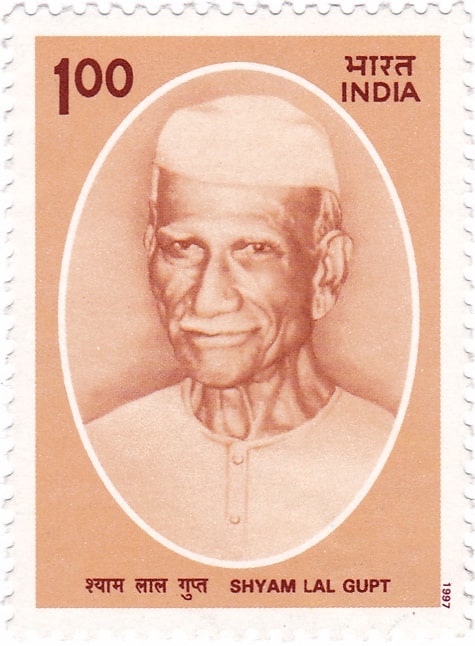
Shyamlal Gupta 'Parshad’
Remembering Shyamlal Gupta 'Parshad' on his Birth Anniversary
- Shyamlal Gupta 'Parshad' (9 September 1896-10 August 1977)
- Born in Narwal, Kanpur
- Freedom fighter, journalist, social worker, and teacher
Contributions of Shyamlal Gupta 'Parshad'
- Composed patriotic song 'Vijayi Vishwa Tiranga Pyara' (Jhanda Geet) in 1924
- Participated in movements like 'Salt Satyagraha' and 'Quit India Movement'
- Founded organizations such as college, orphanage, and girls' school
- Opposed dowry system and advocated for widows' remarriage
- Edited monthly magazine 'Sachiv'
Achievements and Values of Shyamlal Gupta 'Parshad'
- Awarded 'Padma Shri' in 1973
- Values of justice, courage, determination, etc.
"Jute Production Forecasted to Decrease by 20% in FY 2024-25"
- The jute crop in West Bengal and Assam has been damaged by floods, leading to a potential decline in production.
- These states are major producers of jute, which is known as the golden fibre.
Overview of the Jute Industry in India
- India is the top producer of jute goods globally, accounting for approximately 70% of world production.
- The jute industry is a significant sector in the eastern region, with West Bengal alone contributing about 73%.
- Most of the jute production is consumed domestically, providing direct employment to 0.37 million workers in organized mills.
- The industry has an annual export potential of Rs 4500 crore, showing growth from Rs 3000 crore in 2023-24.
Challenges Faced by the Jute Industry
- Declining area under jute cultivation and the availability of low-cost synthetic alternatives pose challenges.
- States lack the impetus to procure jute products like jute geo-textiles.
- Quality issues persist, with over 80% of raw jute being below average or poor quality.
- Other challenges include the lack of modernization, shortage of skilled labor force, and more.
Suggested Measures to Address Challenges
- The Standing Committee on Labour, Textiles, and Skill Development recommends preparing a comprehensive policy for setting up new mills.
- A suitable scheme should be devised to address the shortage of skilled workers and other issues in the jute industry.
Initiative Taken
- The National Jute Board (NJB) was established under the National Jute Board Act, 2008 to oversee the development of jute cultivation, manufacturing, and marketing.
- The National Jute Development Programme is a comprehensive scheme aimed at promoting the jute industry.
- The Production Linked Incentive (PLI) is a measure to encourage increased production in the jute sector.
- The Jute Corporation of India (JCI) was set up to support the jute industry.
- The Jute Packaging Materials (Compulsory Use in Packaging Commodities) Act, 1987 mandates the use of jute packaging material.
- Other initiatives include the Jute Mark Logo and the Improved Cultivation and Advanced Retting Exercise (Jute ICARE) Scheme.
"New Release: WMO Ozone and UV Bulletin 2nd Edition"
- The release of the Bulletin coincides with World Ozone Day on September 16th.
- World Ozone Day celebrates the Montreal Protocol and the Kigali Agreement.
- This year's theme is Montreal Protocol: Advancing Climate Actions.
Key Findings
- The ozone layer is recovering, with ozone-depleting substances decreasing.
- Full recovery to 1980 levels is expected by 2066 over Antarctica, by 2045 over the Arctic, and by 2040 for the rest of the world.
- The Kigali Amendment could potentially reduce global heating by 0.5°C by 2100.
About the Ozone Layer
- The ozone layer is located in the stratosphere at a height of approximately 15 to 30 km and is naturally formed by the interaction of solar ultraviolet light with oxygen molecules.
- Ozone depletion is caused by chemical reactions involving ozone-depleting substances like CFCs and Halons.
- Ozone holes are primarily found in Antarctica and are exacerbated by stratospheric clouds that provide surfaces for these harmful reactions.
- Ozone holes are areas or regions that are negatively impacted by harmful UV radiation.
- Depletion of the ozone layer has various impacts, including increased risk of skin cancer for humans, disrupted growth and development of plant life, and reduced survival of phytoplankton in marine ecosystems.
Initiatives Taken
Global Initiatives:
- Vienna Convention (1885) and Montreal Protocol (1987) regulate the production and consumption of man-made chemicals known as ODS.
- India is a party to these agreements.
- The Kigali Amendment was made in 2016 to phase down Hydrofluorocarbons (HFCs).
Initiatives in India:
- India launched the Cooling Action Plan in 2019 to address cooling demand, refrigerants, and energy efficiency.
- India has phased out Chlorofluorocarbons, Carbon tetrachloride, Halons, Methyl Bromide, and Methyl Chloroform.
Revolutionizing Medicine with Organs-on-Chips Technology
- Recent developments in human-relevant 3D culture models, referred to as "new approach methods" (NAMs), offer potential for more accurate and efficient treatment development.
- These models encompass 3D spheroids, organoids, bioprinting, and OoCs technology.
What is Organ-on-Chips (OoCs) Technology?
- OoCs technology uses tiny fluid channels to create miniature models of biological organs on a chip-sized device.
- These chips are made from living cells grown in a flexible material.
Advantages of Organ-on-Chips (OoCs) Technologies:
- OoCs can reduce the need for animal testing in some cases.
- OoCs provide more accurate biological responses compared to traditional 2D cultures.
Applications of Organ-on-Chips (OoCs) Technologies:
- OoCs can be used in drug discovery to study drug efficacy and develop new drugs.
- OoCs can help in precision medicine by developing personalized treatments for specific patients.
- OoCs can be used to study disease mechanisms and identify potential therapeutic targets.
- OoCs allow researchers to study cell-cell interactions and how cells interact with each other.
Challenges Associated with Organ-on-Chips (OoCs) Technology:
- Challenges include standardizing manufacturing processes, lack of universally accepted protocols and materials, and replicating the full complexity of a human organ.
Steps Taken for Promoting Organ-on-Chips (OoCs):
- The amendment of New Drugs and Clinical Trials Rules 2019 permits the use of OoCs and other NAMs prior to and in conjunction with animal testing when evaluating new drugs.
- The BioE3 policy aims to drive innovation in the biotechnology sector, with a key focus on precision therapeutics.
"Addressing Subtle Gender Discrimination"
- Overt gender discrimination, such as a lack of gender-sensitive infrastructure, may have decreased, but subtle forms still exist.
- Subtle gender discrimination is seen in attitudes and behaviors that appear to be supportive but actually uphold traditional gender roles and maintain inequality.
Subtle Forms of Gender Discrimination:
- Compliments that Reinforce Stereotyping: Positive comments that reinforce traditional gender roles and undermine women's capabilities.
- Hiring, Promotion, and Evaluation: Unconscious bias towards male candidates for roles traditionally seen as requiring physical strength or leadership.
- Microaggressions: Small comments that reinforce gender stereotypes, such as implying that women are less committed to their careers due to family reasons.
- Work-Life Balance Assumptions: Assumptions about work-life balance needs that may affect women more due to societal expectations around caregiving and family responsibilities.
Addressing Subtle Forms of Gender Discrimination:
- Blind Evaluation: Hiding job applicants' physical attributes during evaluation processes.
- Creating a Culture of Inclusivity: Promoting a workplace that values input from everyone regardless of gender.
- Assessing Unconscious Gender Bias: Using methods like perception surveys, language analysis, and analyzing gender gaps in pay and career advancement.
- Changing Male Mindsets: Promoting wider gender sensitization to address biases and stereotypes.
Steps Taken for Curbing Gender Discrimination:
- Equal Remuneration Act of 1976: Enforced to reduce wage gaps between genders.
- Beti Bachao Beti Padhao Scheme: Educating citizens against gender bias and improving welfare services.
- Prime Minister's Employment Generation Programme (PMEGP): Supporting women in setting up their own enterprises.
- Mission Shakti: A scheme for the safety, security, and empowerment of women.
"Border Villages: Frontline Defense"
The Defence Minister has stated that border villages are crucial in protecting the country from various challenges due to India's strategic location.
How Border Villages will act as First Line of Defence?
- Intelligence gathering: Border villages help in gathering information about security threats, suspicious activities, and smuggling attempts, enhancing situational awareness.
- Residents as Eyes and Ears: The familiarity of residents with local terrains, crossing points, and movement patterns make them valuable assets for border forces.
- Tackling workforce shortages: Residents of border villages have assisted the military during standoffs, like the residents of Chushul village in Ladakh in 2020.
- Discrediting adversary claims: People and infrastructure in developed border areas confirm the true situation on the ground, countering any misleading claims and enabling prompt military deployments.
Challenges and Concerns
- Infrastructure Bottlenecks: Hilly and difficult terrains in areas like the Northeast pose challenges for development.
- Scattered Population: Low population density in border villages makes it difficult to provide services and infrastructure.
- Law and Order Problems: Illegal cross-border movements, insurgency, and smuggling create persistent security challenges.
- Trust Deficit: Residents of border villages may feel deprived of developmental facilities and have a low socio-economic profile.
- Development by Adversaries: Countries like China have policies to develop border villages along disputed borders.
Initiatives Taken
- Vibrant Villages Programme: Aims to develop border villages, reverse outmigration, and preserve local culture.
- Border Area Development Programme (BADP): Meets the special developmental needs of people living near international borders.
- Improving Connectivity: Projects like Atal Tunnel, Sela Tunnel, and Shikun-La Tunnel enhance transportation infrastructure.
- Enhancing Digital Connectivity: Initiatives like providing government-funded 4G Airtel service in Lumpo, Arunachal Pradesh, improve digital connectivity in border areas.
"RBI's Concerns on Sustainable Agriculture Financing"
- Sustainable agriculture is crucial for guaranteeing food security, addressing climate change, and safeguarding natural resources.
- Despite its importance, funding sustainable agriculture continues to be a difficulty, as emphasized by the RBI during a recent global conference on Sustainable Financing for Food Security and Farm Income.
Issues with Agro-Financing in India
- Regional Disparities: There is a significant difference in the share of agricultural financing between the Southern Region and the Northeast Region.
- Limited Access to Credit: A large portion of credit comes from non-institutional sources, making it difficult for farmers to access formal financing.
- Fragmented Value Chain Financing: Issues such as fragmented land holdings hinder the integration of value chain financing.
- Other Challenges: High interest rates, lack of collateral, and complex procedures further complicate agro-financing in India.
Solutions Suggested for Sustainable financing:
- Empowering Collectives: Increasing the role of Farmer Producer Organizations (FPOs) and Farmer Producer Companies (FPCs) to improve bargaining power and access to technology.
- Value Chain Integration: Integrating farmers, aggregators, traders, and processors into a coordinated system for value chain financing.
- Warehouse Financing: Implementing warehouse financing to stabilize agricultural commodity prices.
- Technology Adoption: Using financing technology to expand irrigation infrastructure, promote micro-irrigation systems, and enhance farm mechanization.
- Capital Formation: Converging with Government Schemes and interest subventions to boost capital formation for sustainable agriculture.
- Data-Driven Insights: Leveraging technology and data-driven insights to improve financing models, such as collaborating with digital platforms to track crop yields.
Steps Taken for Agricultural Financing
- Kisan Credit Card (KCC): Providing farmers with KCC to meet their working capital needs.
- Agricultural Infrastructure Fund (AIF): Allocating funds for farm-gate infrastructure development.
- Agricultural Marketing Infrastructure (AMI) Scheme: Supporting the construction or renovation of godowns and warehouses.
- Mission Organic Value Chain Development for North Eastern Region: Implementing a scheme to create a comprehensive value chain and boost exports in the Northeastern region.