
Daily Current Affairs UPSC 08 October 2024
Welcome to our daily current affairs blog post for UPSC aspirants! In today's edition, we will be discussing the most significant events and news updates that took place on 8th October 2024. Staying updated with current affairs is crucial for UPSC preparation, as it not only helps you stay informed but also enhances your understanding of various subjects. So, let's dive into the important happenings of the day and explore their potential impact on the upcoming UPSC examinations.

Falkland Islands and Gibraltar
- The British Foreign Secretary has stated that the UK's control over the Falkland Islands and Gibraltar will not be up for discussion.
- The Falkland Islands, also known as Islas Malvinas, are a British territory located in the South Atlantic Ocean and are claimed by Argentina.
- The territory consists of two main islands, East Falkland and West Falkland.
- Gibraltar is a British overseas territory located on the Iberian Peninsula, specifically on the Bay of Gibraltar.
- It was ceded to Britain by Spain under the Treaty of Utrecht in 1713.
- The Strait of Gibraltar connects the Atlantic Ocean to the Mediterranean Sea and serves as a boundary between Europe and Africa.
Indian Institute of Foreign Trade (IIFT)
- The India Pavilion at Expo City in Dubai will be home to the first overseas campus of IIFT.
- IIFT will work with Expo City Dubai on research projects and other knowledge-sharing activities centered around sustainability and innovation.
- IIFT is India's top business institution specializing in Foreign Trade and is known for its excellence in international business research, training, and education.
- Established in 1963 under the Ministry of Commerce, IIFT was granted "Deemed to be University" status in 2002.
- The National Assessment and Accreditation Council has recognized IIFT as a Grade 'A' Institution in both 2005 and 2015.
Red Panda (Ailurus fulgens)
- The Red Panda Program at Darjeeling's Padmaja Naidu Himalayan Zoo has been named a finalist for the 2024 WAZA Conservation Award.
- The Red Panda, Sikkim's State Animal, is a small arboreal mammal that serves as an indicator species for ecological change.
- Red Pandas are found in mixed deciduous and conifer forests with dense bamboo understories in India, Nepal, Bhutan, Myanmar, and China.
- These skilled climbers are typically solitary but come together in pairs during the breeding season and are most active during twilight hours.
- The Red Panda is classified as endangered on the IUCN Red List and is protected under Schedule I of the Wildlife Protection Act, 1972.
Halari Donkeys
- Halari Donkeys are known for their intelligence and close bonds with humans, often used for transportation needs.
- These donkeys are native to the Halar region in Gujarat and are an important livestock in the semi-arid landscapes of Jamnagar and Dwarka districts.
- They are typically larger and more resilient than other donkey breeds, with a predominantly white coat.
- The milk of Halari Donkeys is prized for its sweetness, with milk powder selling for over Rs. 7,000 per kg in the international market and used in cosmetics.
- Conservation efforts for the Halari Donkeys are being led by Sahjeevan Trust in collaboration with the Animal Husbandry Department of the Gujarat government, as their population is currently less than 500.
Coordination Committee for Air Quality Management in IGP region
- The Union Government has established the Coordination Committee for Air Quality Management in the Indo-Gangetic Plain (IGP) region.
- The ten-member panel will focus on implementing measures to reduce air pollution in states like Bihar, Chandigarh, Delhi, Haryana, Jharkhand, Punjab, Uttar Pradesh, and West Bengal.
- Due to the unique geography and weather patterns of these states, they have high levels of air pollution that require coordinated efforts to address.
- The Coordination Panel's main goal is to combine state plans to create the IGP Regional Airshed Management Plan and oversee its execution.
State of Global Water Resources Report
- The report was coordinated by the World Meteorological Organization (WMO), a specialized agency of the United Nations that promotes international cooperation in atmospheric science and meteorology.
- Key findings from the report include that 2023 was the hottest year on record, with soil moisture levels predominantly below or much below normal globally.
- The year 2023 was also the driest year for global rivers in 33 years, with Lake Coari in the Amazon experiencing below-normal water levels and extreme water temperatures.
- Glaciers suffered the largest mass loss ever recorded in the last five decades.
Advanced Glycation End Products (AGEs)
- ICMR and MDRF study found that an AGEs rich diet is a major cause of diabetes in India.
- AGEs are harmful compounds formed when sugars react with fats or proteins during high-temperature cooking.
- Consuming AGE-rich ultra-processed and fast foods can lead to oxidative stress and inflammation, which are underlying causes of diabetes.
- The study recommends a low-AGE diet consisting of fruits, vegetables, whole grains, and low-fat milk cooked by boiling and steaming for overweight and obese individuals.
- Following a low-AGE diet can improve insulin sensitivity and reduce inflammatory levels in individuals.
- Insulin sensitivity refers to how well cells respond to insulin for glucose uptake from the blood.
Codex Committee on Nutrition and Foods for Special Dietary Uses (CCNFSDU)
- India took part in the 44th Session of CCNFSDU in Dresden, Germany.
- India emphasized the importance of updating and aligning international regulations on probiotics.
- CCNFSDU is an active Codex Committee that addresses specific nutritional issues assigned by the Codex Alimentarius Commission (CAC) and provides advice on general nutrition matters.
- CCNFSDU also develops general provisions related to the nutritional aspects of all foods.
- CAC is responsible for overseeing the implementation of the Joint FAO/WHO Food Standards Programme and operates in six UN languages.
- CAC has 189 members, including India.
Kazakhstan (Capital: Astana)
- Kazakhstan held a referendum on building its first nuclear power plant to increase energy production
- Political Features:
- Location: Landlocked country in Central Asia, with a part in Eastern Europe
- Bordering Areas: Russia (Northwest and North), China (East), Kyrgyzstan, Uzbekistan, and Turkmenistan (South)
- Bordering Water Bodies: Aral Sea (South) and Caspian Sea (Southwest)
- Geographical Features:
- Mountains: Tien Shan Range, Altai mountains
- Rivers: Ural, Irtysh
- Kazakh Steppe is world’s largest dry steppe region
- Minerals: World's largest uranium producer

India-Maldives Bilateral Talks in New Delhi
Key Outcomes of Maldives President's Visit to India
- Both parties have agreed to a comprehensive economic and maritime security partnership, including support for the completion of the Greater Malé Connectivity Project.
- Discussions have begun on a Bilateral Free Trade Agreement, with plans to settle trade transactions in local currencies to reduce reliance on foreign currencies.
- The launch of the RuPay card in the Maldives will make payments easier for Indian tourists visiting the country.
- Efforts will be made to have the Government of Maldives recognize the Indian pharmacopoeia, followed by the establishment of India-Maldives Jan Aushadhi Kendras across the Maldives.
- A Currency Swap Agreement (CSA) worth USD 400 million and INR 30 billion was signed by both parties to assist Maldives in managing their foreign exchange reserves.
- This agreement was signed within the SAARC Currency Swap Framework for the period of 2024-27.
- CSA involves an agreement between two parties to exchange two currencies at a specified rate and then re-exchange them at an agreed rate on a fixed future date.
- India had previously signed CSAs with countries like Sri Lanka and Japan.
Importance of Maldives for India
- India's 'Neighbourhood First' policy prioritizes relationships with neighboring countries like Maldives, which is strategically important due to its location.
- Maldives plays a crucial role in India's SAGAR initiative, as it is positioned as a key point between important chokepoints in the Indian Ocean.
- Geopolitically, Maldives acts as a gateway between the western and eastern Indian Ocean chokepoints, making it a significant strategic partner for India.
India- Maldives relations
- The Maldives was the initial country to receive Covid-19 vaccines from India.
- By 2023, India had become the Maldives' primary trade partner.
- India offered water assistance to Male through Operation NEER.
"India-UAE BIT in effect"
- The BIT between India and UAE was signed in Abu Dhabi in February 2024 and came into effect on August 31, 2024.
- The previous Bilateral Investment Promotion and Protection Agreement between India and UAE, signed in 2013, expired in September 2024.
Overview of BITs
- BITs are agreements between two countries that aim to promote and protect foreign private investments in each other's territories.
- They provide guarantees for foreign investments, ensure fairness under international law, and protect investments from expropriation by host countries.
- India replaced its Model BIT in 2015 with a new text that replaced the previous Indian Model BIT from 1993.
Key Features of India-UAE BIT 2024
- Investor-State Dispute Settlement through arbitration with a requirement to exhaust local remedies for three years.
- Definition of Investment based on assets with coverage of Portfolio Investment.
- Treatment of Investment with obligations for no denial of justice and no fundamental breach of due process.
- Protection of investments from Expropriation, provisions for Transparency, Transfers, and Compensation for losses.
Significance of India-UAE BIT 2024
- UAE is the seventh largest source of Foreign Direct Investment (FDI) for India, accounting for 3% ($19 billion) of total FDI received by the country from April 2000 to June 2024.
- The BIT boosts investor confidence by ensuring a minimum standard of treatment and non-discrimination, as well as providing an independent forum for dispute settlement through arbitration.
India-UAE Relations
- Trade: UAE is India's third largest trading partner after the US and China.
- Defense: Both countries conduct joint military exercises like Desert Cyclone.
- Energy security: UAE remains a crucial supplier of crude oil, LNG, and LPG to the Indian market. India is the third largest importer of oil and the fourth largest importer of LNG.
"Breakthrough: Nobel Prize for microRNA Discovery"
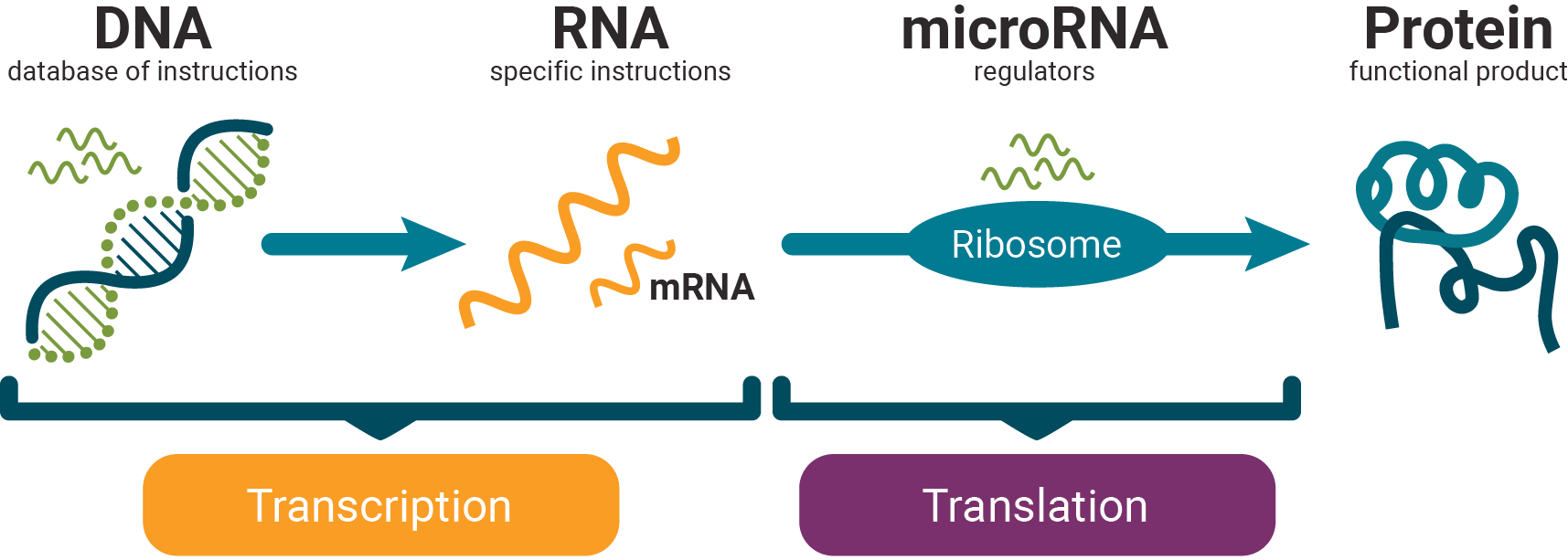
- Victor Ambros and Gary Ruvkun were jointly awarded for their discovery of microRNA and its role in post-transcriptional gene regulation.
- Gene regulation is the process by which a cell controls which genes are expressed, leading to the production of specific proteins.
- Genetic information moves from DNA to mRNA through transcription, and then to the cellular machinery for protein production.
- Different cell types in human organs and tissues have the same genetic information in their DNA, but gene regulation allows them to express unique sets of proteins for specialized functions.
About microRNA
- MicroRNAs are tiny RNA molecules that do not code for proteins but play a crucial role in regulating gene expression within cells.
- They control gene expression by either binding to mRNA and stopping them from creating proteins or by breaking down the mRNA completely.
- Humans have over a thousand genes that code for various microRNAs, and the regulation of genes by microRNAs is a common process in all multicellular organisms.
Other Roles of microRNA
- Cellular Development: miRNAs play a role in guiding stem cells to differentiate and in the formation of tissues and organs.
- Immune Response: miRNAs help regulate both innate and adaptive immune responses.
- Oncogenesis: Dysregulation of miRNAs can contribute to the development of cancer, but they can also have tumor-suppressing effects.
- Disease diagnostics: miRNAs are utilized as biomarkers for various diseases, including cancer and Parkinson's disease.
"Defence Ministry Unveils ADITI 2.0 and DISC 12 at DefConnect 4.0"
The event DefConnect 4.0 is being coordinated by Innovations for Defence Excellence - Defence Innovation Organisation (iDEX-DIO), which operates under the Ministry of Defence.
Key Initiatives
- The second edition of Acing Development of Innovative Technologies with iDEX (ADITI 2.0) includes 19 challenges in areas such as Artificial Intelligence, Quantum Technology, and anti-drone systems.
- Winners of iDEX can receive grants of up to ₹25 crore.
- The focus of ADITI 2.0 is on developing 30 critical and strategic defense technologies.
- The 12th edition of Defence India Start-up Challenges (DISC 12) includes 41 challenges in technology areas such as UAVs, AI, Networking, and Communication.
- Selected innovations can receive grants of up to ₹1.5 crore.
- DISC 12 is a collaboration with Atal Innovation Mission to assist start-ups, MSMEs, and innovators in creating prototypes and bringing products to market.
- The initiative also introduces the Medical Innovations and Research Advancement (MIRA) program, focused on developing medical technologies for the Armed Forces.
Scheme for Innovations for Defence Excellence (iDEX)
- Established in 2021 by the Ministry of Defence and operated by DIO, a non-profit organization under the Ministry of Defence.
- Funding: Offers grants of up to Rs. 1.50 Cr (up to Rs. 10 Cr for iDEX Prime) to Start-ups/MSMEs through the Support for Prototype and Research Kick start (SPARK Framework) in DISC and Open Challenge.
- 26 products have been created through iDEX, with procurement orders totaling over Rs 1,000 crore.
Other Initiatives for Defence Technology Absorption
- Changes made to the Defence Acquisition Procedure 2020
- Group focused on evaluating and adapting signals technology
- Plan for the indigenisation of the Indian Naval forces from 2015 to 2030
"Boosting Nutrition Support for TB Patients"
These efforts align with India's dedication to speeding up the accomplishment of Sustainable Development Goals pertaining to the eradication of tuberculosis.
Key Initiatives announced by Ministry of Health and Family Welfare
- Nutrition support under Ni-Kshay Poshan Yojana will be increased from Rs. 500 to Rs. 1,000 per month per patient for the entire duration of treatment.
- Energy Dense Nutrition Supplementation (EDNS) will be introduced for underweight patients with a Body Mass Index less than 18.5kg/m2, provided for the first two months of treatment.
- The distribution of EDNS share will be on a 60:40 basis between the center and states.
- The Ni-Kshay Mitra initiative under Pradhan Mantri TB Mukt Bharat Abhiyaan will be expanded to include family members of TB patients, improving their immunity and reducing out-of-pocket expenses.
About Tuberculosis (TB)
- Tuberculosis is a contagious bacterial infection caused by Mycobacterium tuberculosis that primarily affects the lungs and is spread through the air.
- The Bacille Calmette-Guerin vaccine can protect against tuberculosis.
- The main antibiotics used to treat tuberculosis are Isoniazid, Rifampin, Pyrazinamide, and Streptomycin.
Challenges faced in Treatment:
Social stigma and taboo, co-occurring conditions (such as HIV and diabetes), a high rate of patients discontinuing treatment, and the development of drug resistance are all challenges faced in the treatment of certain conditions.
Other Initiatives to tackle Tuberculosis
- Ni-Kshay Mitra offers extra nutritional, investigative, and vocational assistance to TB patients undergoing treatment.
- PMTBMBA unites community members to help the country move closer to eliminating TB.
- Mission Indradhanush involves providing vaccinations for Tuberculosis.
- RePORT India is a collaborative initiative between multiple organizations from India and the US, established in 2013 under the Indo-US Vaccine Action Program, to conduct observational research on TB.
"Supreme Court Notices 8 States on DGP Appointment"
With the exception of Odisha, all of these states currently have interim police chiefs serving as Acting DGP, which goes against the Supreme Court Guidelines established in the 2006 Prakash Singh Case and the 2018 judgment.
Supreme Court Guidelines in Prakash Singh Case (2006)
- Ensure that the appointment of the DGP is based on merit and transparency, with a minimum fixed tenure of two years.
- The DGP of the state should be chosen by the State Government from the three most senior officers recommended for promotion by the Union Public Service Commission.
- Establish a State Security Commission (SSC) to prevent undue influence or pressure from the state government on the police force.
- The DGP can only be removed by the state government with input from the State Security Commission, in cases of disciplinary issues, criminal convictions, corruption, or incapacitation.
- Create a Police Establishment Board (PEB) to handle transfers, postings, promotions, and other service-related matters for police officers below the rank of Deputy Superintendent of Police (DSP), and to make recommendations for transfers and postings for officers above the rank of DSP.
- Police officers in operational roles in the field, such as the Inspector General of Police (IGP), Deputy IGP, and Superintendent of Police, should also have a minimum tenure of two years.
Supreme Court’s Directions in 2018 Judgement
- The Supreme Court has instructed all states and Union Territories to avoid appointing police officers as acting DGP.
- States must submit the names of senior police officers to the UPSC for potential consideration as DGPs or Police Commissioners.
- The UPSC will then create a list of the top three candidates, from which states can choose one to appoint as the police chief.