
Daily Current Affairs UPSC 06 November 2024
Welcome to our daily current affairs blog post for UPSC aspirants! In today's edition, we will be discussing the most significant events and news updates that took place on 6th November 2024. Staying updated with current affairs is crucial for UPSC preparation, as it not only helps you stay informed but also enhances your understanding of various subjects. So, let's dive into the important happenings of the day and explore their potential impact on the upcoming UPSC examinations.

IUCN Red List
The IUCN Red List is celebrating its 60th anniversary.
About Red List:
- Established in 1964, it provides information on the conservation status of animal, fungi, and plant species.
- The Red List includes nine categories ranging from Not Evaluated to Extinct.
- Assessors determine a species' status based on specific criteria.
About IUCN:
- The IUCN was created in 1948 and consists of over 1,400 government and civil society organizations.
- It focuses on developing effective conservation practices and approaches.
LignoSat
- Japan has launched the world's first wooden satellite, LignoSat.
- The satellite will study how wood performs in space.
About LignoSat:
- LignoSat is a small satellite made from honoki wood, a type of magnolia tree from Japan.
- It also includes traditional aluminium structures and electronic components.
Significance:
- Using renewable materials like wood for space structures is part of a sustainable plan.
- Wood is more resistant to space conditions than metal and burns up harmlessly when decommissioned.
Traditional Artisans' Upliftment Livelihood Programme (TULIP)
Ministry of Social Justice and Empowerment launched 'TULIP' brand.
About TULIP:
- Goal: Empower marginalized artisans through e-marketing.
- Target group: SCs, OBCs, sanitation workers, persons with disabilities.
- TULIP Digital Platform: Provides global exposure and sales opportunities.
- Aims for economic self-reliance and global exposure for artisans.
IL-35 Protein
- Researchers discovered IL-35 protein protects against type 1 and autoimmune diabetes.
- Type 1 diabetes: Body doesn't produce enough insulin.
- Type 2 diabetes: Body produces insulin but can't use it effectively.
- Autoimmune diabetes: Characteristics of both type 1 and type 2.
About IL-35-Protein:
- IL-35 Protein: Lowers immune cells producing inflammatory chemicals.
- Regulates macrophage activation, T-cell proteins, and regulatory B cells.
- Macrophages derived from monocytes, which come from bone marrow.
- T cells and B cells are types of lymphocytes, a type of white blood cell.
Mount Lewotobi Laki-Laki
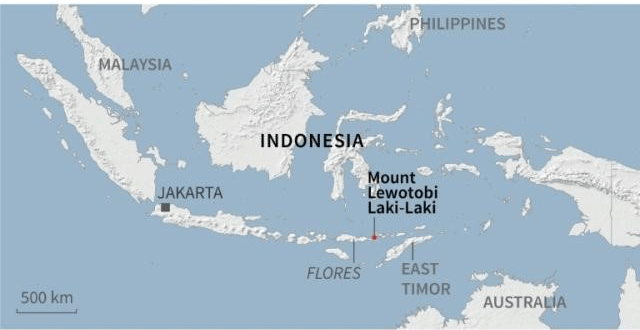
Indonesia's Mount Lewotobi Laki-Laki volcano has erupted.
About Mount Lewotobi Laki-Laki:
- Located on Flores Island in East Nusa Tenggara province.
- Part of a twin-volcano system perceived as male and female mountains by local residents.
- Ongoing volcanic eruption at the male counterpart of the system (Lewotobi Lakilaki).
- Twin volcanoes are stratovolcanoes formed by layers of lava oozing out of the crater.
Sea Foam
Recently, Sea Foam concept was widely seen in news.
About Sea Foam:
- Sea foam in the ocean is created by organic material, wind, and waves forming bubbles on the beach.
- Made up of micelles, small spheres made of surfactants surrounding air.
- Surfactants are proteins and fats from decaying marine life like plankton.
- Surfactants are found in soaps, detergents, and industrial processes.
- Algal blooms are a common source of thick sea foams.
MAHASAGAR (Maritime Heads for Active Security and Growth for All in Region)
Third edition of high-level virtual interaction conducted by Indian Navy.
About MAHASAGAR:
- Launched in 2023 to promote cooperation among Indian Ocean Region countries.
- Brings together naval leaders and maritime officials from 10 countries.
- Aligns with India's SAGAR vision to strengthen economic and security ties with maritime neighbors.
Titanium (Ti)
India and Kazakhstan signed agreement to establish Indo-Kazakh Joint Venture Company for Ti Slag production.
About Titanium:
- Titanium is a hard, shiny, light and strong refractory metal.
- 9th most abundant element on Earth, occurs naturally in chemical combinations.
- Ores include Rutile and ilmenite.
- Properties include low density, high strength, low thermal conductivity, non-magnetic, corrosion resistance.
- Uses in aircraft, spacecraft, surgical applications, paints, sunscreens, toothpastes.
Deshbandhu Chittaranjan Das (1870-1925)
- Parliamentarians honored C. R. Das on his birth anniversary.
- Born in Calcutta, studied at Presidency College and law in London.
Key Contributions of C. R. Das:
- Successfully defended Aurobindo Ghosh in Alipore bomb case.
- Participated in Non-Cooperation Movement.
- Served as Congress President in Gaya Session.
- Founded Swaraj Party with Motilal Nehru.
- 1st elected mayor of Calcutta Municipal Corporation.
- Established National University at Dacca.

Literary Work of C. R. Das:
- Newspaper 'Forward' later named 'Liberty' (edited by Subhash Chandra Bose).
- Books 'India for Indians' and 'Freedom through Disobedience'.
- Values of C. R. Das: Leadership, courage, etc.
Supreme Court upheld constitutional validity of Uttar Pradesh Board of Madarsa Education Act 2004 (Madarsa Act)
- SC overturns Allahabad High Court's decision striking down the Madarsa Act.
- Act was previously deemed unconstitutional for violating secularism and certain articles of the Constitution.
Key Highlights of Judgement:
- SC states that a statute can only be struck down if it violates Fundamental Rights under Part III, not the basic structure of the Constitution.
- Madarsa Act aims to regulate education standards in recognized Madarsas to ensure students are competent for socio-economic participation.
- Act falls within State Legislature's legislative competence under Entry 25 of the concurrent list.
- Provisions regulating higher education degrees like 'fazil' and 'kamil' are deemed unconstitutional as they conflict with the UGC Act.
Regulation of Minority Education Institutions
- Articles 29 and 30 protect cultural and educational rights of minorities.
- Article 30(1) guarantees minorities the right to establish and administer educational institutions of their choice.
- National Commission for Minority Educational Institutions (NCMEI) safeguards minority educational rights under Article 30(1).
- NCMEI has adjudicatory, advisory, and recommendatory roles with powers similar to a civil court.
UN Environment Programme World Conservation Monitoring Centre (UNEP-WCMC) and IUCN released Protected Planet Report 2024
- Released by UNEP-WCMC and IUCN.
- Assesses global status of Protected and Conserved Areas (PCA) in relation to Target 3 of Kunming-Montreal Global Biodiversity Framework (GBF).
Key Findings:
- Global coverage of PCAs: 17.6% terrestrial/inland waters, 8.4% marine/coastal areas.
- Majority of Key Biodiversity Areas partially or fully covered by PCAs, but 32% remain unprotected.
- Only 8.5% of land is both protected and connected.
- Limited data on management effectiveness, with only 4% of protected areas governed by IPLC.
Way Ahead:
- Recognition and support for Indigenous and Traditional Territories in conservation efforts.
- Provide international financing to developing countries for PCA expansion.
Initiatives Promoting PCAs:
- Wildlife (Protection) Act, 1972: Sanctuaries, National Parks, Conservation Reserves, Community Reserves, Tiger Reserves.
- Biodiversity Beyond National Jurisdiction (BBNJ) Agreement: India signed to protect ocean life.
- Climate Adaptation and Protected Areas (CAPA) Initiative: Aims to strengthen climate resilience and protect biodiversity in and around protected areas using nature-based solutions.
Finance Ministry proposes 4th phase of consolidation of Regional Rural Banks (RRBs) as per reports
- Proposed merger reduces number of RRBs from 43 to 28 for increased efficiency.
- Consolidation aligns with vision of One State-One RRB.
Consolidation of RRBs:
- Phased consolidation based on Dr. Vyas Committee recommendations.
- Started in 2004-05, reducing institutions from 196 to 43 through 3 phases.
- Significance: Minimizes expenses, adopts technology, enhances capital base and area of operation.
About Regional Rural Banks (RRBs):
- Established in 1975 on Narsimhan Working Group recommendations.
- Objectives: Develop rural economy by providing credit to small farmers, entrepreneurs.
- Shareholding: GoI (50%), State Govt (15%), Sponsor Bank (35%).
- Scheduled Commercial Banks regulated by RBI, supervised by NABARD.
Other Initiatives to Boost RRB Functioning
- Recapitalization: GoI to infuse ₹10,890 crore in RRBs during FY 2021-22 and FY 2022-23.
- Sustainable Viability Plan: Focus on credit expansion, NPA reduction, cost rationalization.
- Supervisory Action Framework for PCA: Enhances financial stability and capital structure.
International Solar Alliance (ISA) Hosts Seventh Session of its Annual Assembly in New Delhi
Key Outcomes of 7th Assembly of ISA:
- India re-elected as President of ISA from 2024 to 2026, with France as Vice-President.
- Release of the 3rd edition of the World Solar Report series consisting of 4 reports.
Major Findings of 4 Reports:
World Solar Market Report 2024:
- Global Solar Capacity has increased significantly from 1.22 GW in 2000 to ~1,419 GW in 2023.
- Solar manufacturing is set to exceed demand by 2024, with a significant reduction in prices of solar panels.
- There are 16.2 million clean energy jobs worldwide, with 7.1 million in solar alone.
- World Investment Report 2024: Global energy investments are rising, with solar accounting for 59% of renewable energy investments.
World Technology Report 2024:
- Technological breakthroughs like multijunction perovskite cells are emerging.
- Utility-scale solar PV costs have dropped by 90% since 2010.
- GH2 Readiness Assessment for African Countries Report: Highlights the potential of GH2 to decarbonize industries heavily reliant on fossil fuels.
About ISA:
- A global intergovernmental organization headquartered in India.
- Conceptualized in 2015 on the sidelines of COP21 in Paris.
- Comprises 103 Member Countries and 17 Signatories Countries.
- The ISA Assembly is the apex decision-making body responsible for implementing ISA's Framework Agreement.
Asia–Pacific Climate Report Released by Asian Development Bank (ADB)
A recent report by the Asian Development Bank highlighted India's shift from fossil fuel subsidies to clean energy initiatives.
Initiatives for Transitioning to Clean Energy:
- Fossil Fuel Subsidy Reform:
- Adopted "remove, target, and shift" approach
- Reduced subsidies in oil and gas sector by 85%
- India phased out subsidy on petrol and diesel from 2010 to 2014
- Created fiscal space for government support to renewable energy initiatives
- Role of Taxation:
- Government implemented a cess on coal production and imports from 2010 to 2017
- 30% of collections allocated to national clean energy and environment fund
- Boosted tax revenues with rising excise duties on petrol and diesel from 2014 to 2017
- Major Government Schemes and Programmes:
- National Green Hydrogen Mission
- PM-KUSUM scheme
About Asian Development Bank (ADB)
- Established in 1966, ADB supports projects in developing member countries for economic and development impact.
- Membership includes 69 countries, with Japan and the United States as the largest shareholders.
- Headquarters located in Manila, Philippines.
All private properties cannot form part of the material resources of the community: Supreme Court (SC)
- SC ruled that private properties cannot be considered as part of the material resources of the community under Article 39(b) of the Constitution.
- Overruled previous judgments that allowed private properties to be regarded as community resources.
Key Observations from the ruling:
- Scope of Article 39(b) should consider the nature and scarcity of the resource.
- Public Trust Doctrine can ensure equal access to natural resources.
- Upheld Keshavananda Bharati verdict allowing judicial review of laws under Article 31C.
- Emphasized the need for adaptable economic policies over fixed doctrines.
About Article 39(b) and Article 31C:
- Article 39(b) directs policies to distribute material resources for public welfare.
- 'Material resources of the community' can include public or private resources for producing goods or wealth.
- Private resources can be turned into community resources through various means.
- Article 31C protects laws implementing Article 39(b) and (c) from challenges based on Articles 14 or 19.