
Daily Current Affairs UPSC 27 August 2024
Welcome to our daily current affairs blog post for UPSC aspirants! In today's edition, we will be discussing the most significant events and news updates that took place on 27th August 2024. Staying updated with current affairs is crucial for UPSC preparation, as it not only helps you stay informed but also enhances your understanding of various subjects. So, let's dive into the important happenings of the day and explore their potential impact on the upcoming UPSC examinations.

Plea Bargaining
- According to the Ministry of Law and Justice, only 0.11% of cases were resolved through plea bargaining in 2022.
- Plea bargaining is an agreement between the defense and prosecution where the accused pleads guilty for a lesser offense or reduced sentence.
- It was introduced in 2006 as part of amendments to the CrPC.
- In section 290 of the Bharatiya Nagarik Suraksha Sanhita, 2023 (BNSS), plea bargaining has been made time-bound and applications can be made within 30 days from the date of framing of charges.
- The application of plea bargaining only applies to offenses punishable by up to seven years of imprisonment, with further restrictions excluding cases involving crimes against women, children, or socio-economic offenses.
Unified Lending Interface (ULI)
- The Reserve Bank of India is set to introduce the Unified Land Interface (ULI).
- ULI is a technology platform that allows for easy access to credit.
- It will streamline the process of sharing digital information, such as land records, from different data providers to lenders.
- ULI will have a standardized Application Programming Interface for a simple and efficient approach.
- The benefits of ULI include faster credit delivery, reduced documentation requirements, and addressing credit gaps in agriculture and MSME sectors.
New Districts in Ladakh
- The MHA has declared the establishment of five additional districts in Ladakh: Zanskar, Drass, Sham, Nubra, and Changthang.
- Currently, Ladakh only has two districts, Leh and Kargil.
- The process of creating new districts or modifying existing ones in states is within the authority of the state government.
- These changes can be implemented through an executive order or legislation passed in the state assembly.
Prime Minister’s Wi-Fi Access Network Interface (PM-WANI)
- According to TRAI, there are currently 2,07,642 PM-WANI Wi-Fi hotspots deployed in the country as of 22.07.2024, falling significantly short of the target of 10 million public Wi-Fi hotspots by 2022 and 50 million by 2030.
- PM-WANI was launched by the Department of Telecommunication in 2020 with the goal of increasing the number of public Wi-Fi hotspots to improve digital communication infrastructure, particularly in rural areas.
- The initiative encourages local businesses to offer Wi-Fi services for last-mile internet delivery without the need for a license or registration fee.
- PM-WANI consists of four components: Public Data Office, Public Data Office Aggregator, App Provider, and Central Registry.
Wular Lake
- Steps are being taken to clean the siltation in the critically silted Wular Lake.
- Wular Lake is the largest freshwater lake in India and the second largest in Asia, located at the foothills of Haramuk Mountain in Jammu and Kashmir.
- The main source of water for Wular Lake is the River Jhelum.
- Zaina Lank is a small island in the lake that was constructed by King Zainul-Abi-Din.
- Wular Lake is designated as a Ramsar Site, recognized as a Wetland of International Importance.
- The lake is a site for migratory waterfowl species such as Little Egzet, Cattle Egzet, and Common Pochard.
- Major problems facing Wular Lake include pollution from fertilizers, animal and human waste, conversion of catchment areas into agricultural land, and hunting pressure on waterfowl and migratory birds.
Hoolock Gibbon
- Assam has permitted oil and gas exploration in the Hollongapar Gibbon wildlife sanctuary.
- The sanctuary in Jorhat, Assam is home to India's only gibbons and the only nocturnal primate in North-eastern India, the Bengal slow loris.
- It is the only sanctuary in India named after gibbons due to its high density of these animals.
- The hoolock gibbon is the only ape found in India, specifically in the northeast region.
- The Western hoolock gibbon is found in all states of the northeast, while the Eastern hoolock gibbon is found in specific areas of Arunachal Pradesh and Assam in India, as well as southern China and northeast Myanmar.
- The Western hoolock gibbon is classified as Endangered by the IUCN, while the Eastern hoolock gibbon is classified as Vulnerable.
Mass wasting
- Environmental scientists have expressed concern over the frequent occurrence of mass wasting events in Sedongpu Gully on the Tibetan Plateau since 2017.
- Mass wasting refers to the movement of rock and soil down a slope due to gravity.
- Rapid earth movements such as rock falls, slumps, and debris flows are typically triggered by rain or seismic activity.
- Sedongpu Gully is situated near the Arunachal Pradesh Border on the Tibetan Plateau.
- It is located in the catchment area of the Sedongpu glacier and its valley, ultimately draining into the Yarlung Zangbo or Tsangpo river.
Leptospirosis (Rat Fever)
- An increase in Leptospirosis cases has impacted nearly every district in Kerala.
- Leptospirosis is an infectious disease caused by bacteria called leptospires that are transmitted from animals to humans, making it a zoonotic disease.
- The bacteria enter the body through cuts or abrasions on the skin, and human-to-human transmission is rare.
- Leptospirosis is most common in tropical and subtropical regions with high rainfall.
- The Ministry of Health and Family Welfare has implemented a Programme for Prevention and Control of leptospirosis to address the issue.
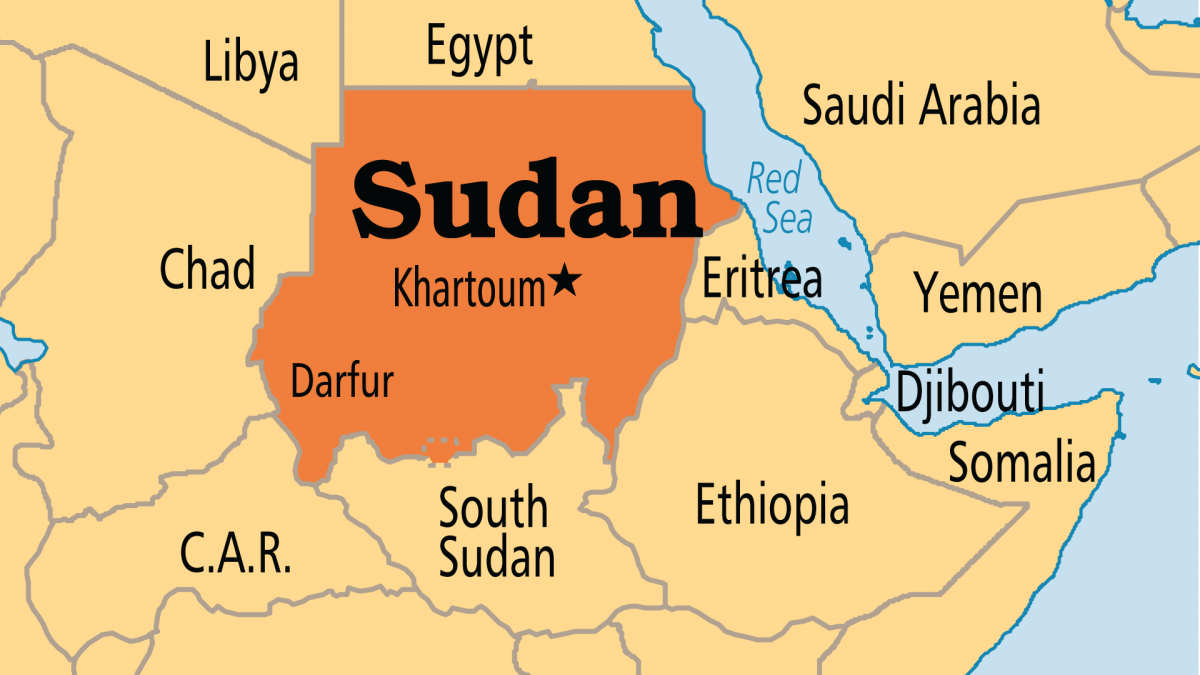
Sudan (Capital: Khartoum)
Dam collapse in eastern Sudan due to heavy rainfall.
Political features of Sudan
- Land borders with Egypt, Eritrea, Ethiopia, South Sudan, Central African Republic, Chad, and Libya.
- Maritime border along the Red Sea.
Geographical features of Sudan
- Highest point at Deriba Caldera in Jebel Mara.
- Major rivers include the Nile and Tekeze.
- Climate varies from desert in the north to tropical savannah in the south.
"India's Quantum Leap: National Quantum Mission to Launch First Quantum Computer"
- Goal of mission is to establish a quantum computer with a capacity of 20-50 qubits in next three years, 50-100 qubits in next five years and 50-1000 qubits in next 10 years.
- Four companies (under Companies Act, 2013) & a grant for start-ups will also be set up for achieving objectives of NQM.
About NQM
- Aim: To scale up scientific and industrial R&D and create innovative ecosystem in Quantum Technology.
- Implementing agency: Department of Science & Technology under Ministry of Science & Technology.
- Mission duration: 2023 to 2031.
- Mission objectives:
- Quantum Communication Network: A secure and high-bandwidth communication infrastructure that spans 2,000 kilometers.
- This network also includes inter-city quantum key distribution (QKD) over the same distance, allowing for future-proof security using quantum mechanics.
- Quantum Computing Power: Efforts are being made to develop quantum computers with a processing capacity of 50-1,000 qubits.
- Qubits are the fundamental units of information in quantum computing.
- Developing Magnetometer and Atomic Clocks: Research is being conducted to create precise measurement tools such as magnetometers for measuring magnetic fields and atomic clocks for accurate timekeeping.
- Quantum Materials Design: Focus is on designing cutting-edge materials for device fabrication, advancing the field of quantum technology.
- Quantum Communication Network: A secure and high-bandwidth communication infrastructure that spans 2,000 kilometers.
- Establishing thematic hubs in Quantum Computing, Quantum Communication, Quantum Sensing & Metrology, and Quantum Materials & Devices.
Significance of NQM
- Developing Innovation Ecosystem: By establishing thematic hubs fostering collaboration and expertise across diverse sectors.
- Applications in Different sectors e.g. Healthcare and drug discovery, Finance and banking industries etc.
- Global Leadership: By developing Secure Communication, Precision Measurement etc.
Challenges in NQM
- Poor Expenditure on Research, Lack of Private Investment, Delayed progress of NQM, Lack of Skilled Workforce, Lack of Availability of Infrastructure.
"PMJDY Celebrates Ten Years of Financial Inclusion"
- PMJDAY was introduced in 2014 by the Ministry of Finance with the goal of providing affordable access to financial services such as Basic Savings Bank Accounts (BSBD), remittance, credit, insurance, and pension.
Key Features of PMJDY:
- BSBD account can be opened by individuals without any other account in any bank branch or Business Correspondent outlet.
- Focus on providing banking services to every unbanked adult.
- Free accidental insurance cover on RuPay cards increased to Rs. 2 lakhs for PMJDY account holders.
- Rs. 10,000 Overdraft facilities available with an upper age limit of 65 years.
- PMJDY accounts eligible for Direct Benefit Transfer, insurance schemes, pension schemes, and bank schemes.
Key Achievements under PMJDY:
- 52.74 crore Jan Dhan accounts opened by July 2024.
- More than 55% of account holders are women.
- Almost all villages have banking outlets within 5 km as per Jan Dhan Darshak App.
- Average deposit in PMJDY accounts increased by 4.12 times between 2015-2024.
- Number of zero balance accounts decreased to 4.26 crores from 8.52 crores in March 2015.
6 PILLARS OF PMJDY
- Ensuring everyone has access to banking services.
- Establishing a fund to guarantee credit.
- Educating people on financial matters.
- Providing a pension plan for those in the unorganized sector.
- Offering a basic savings account with an overdraft option of Rs. 10,000 for eligible adults.
- Providing micro-insurance and financial literacy programs.
Defining Literacy in India's Education Ministry
- In order to promote adult education and literacy in line with NEP 2020 and SDG 4.6, which aims to ensure all youth and adults achieve literacy and numeracy by 2030, it is crucial to clearly define both Literacy and Full Literacy.
- Literacy refers to the ability to read, write, and compute with comprehension, as well as critical life skills like digital and financial literacy.
- Full Literacy, considered equivalent to 100% literacy, is achieved when a State/UT reaches 95% literacy rates.
New India Literacy Programme (NILP)
- Also known as ULLAS (Understanding of Lifelong Learning for All in Society).
- Launched by the Ministry of Education as a Centrally Sponsored Scheme for the period of FYs 2022-27.
- Objective is to target all non-literates aged 15 and above, with a focus on females and educationally backward states.
- Aims to reach 5 crore learners (1 crore per year) using the "Online Teaching, Learning and Assessment System (OTLAS)" in collaboration with National Informatics Centre, NCERT, and NIOS.
- Implemented through volunteer teachers, students of schools and Higher Education Institutions, and Teacher Education Institutions, in alignment with NEP 2020 recommendations.
- The need for the program is highlighted by the 25.76 crore non-literates in the 15 years and above age group according to Census 2011 data.
Five Components of NILP
- Foundational Literacy and Numeracy (FLN) refers to the basic skills of reading, writing, and math.
- Critical Life Skills encompass a range of important abilities such as financial literacy and environmental awareness.
- Basic Education includes preparatory, middle, and secondary stages of schooling.
- Vocational Skills are practical abilities that prepare individuals for specific careers or trades.
- Continuing Education involves taking adult education courses in various subjects like arts, sciences, technology, and culture to further one's knowledge and skills.
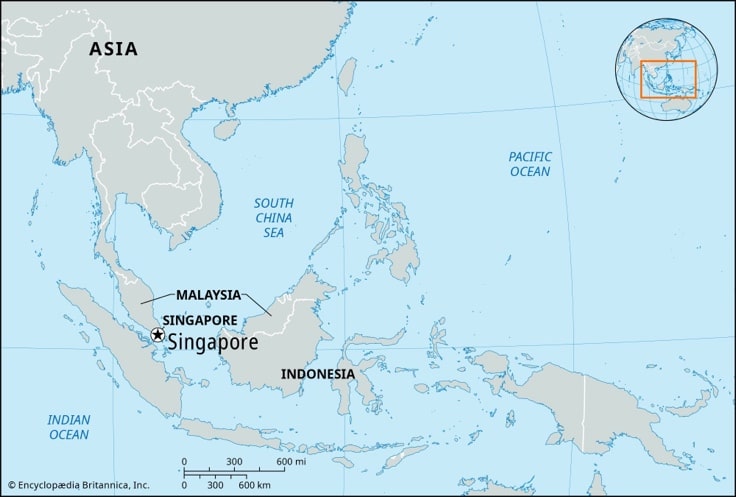
"India-Singapore Ministerial Roundtable: Round 2"
- Both countries discussed six key areas outlined in the Roundtable, including digitalization, skill development, sustainability, healthcare, advanced manufacturing, and connectivity.
About ISMR
- The inaugural session took place in New Delhi in September 2022.
- The main goal was to assess different aspects of the Strategic Partnership and discover new opportunities for collaboration between India and Singapore.
India-Singapore Bilateral Relations
- Key agreements such as the Comprehensive Economic Cooperation Agreement (CECA), Double Taxation Avoidance Agreement, and Mutual Legal Assistance Treaty form the framework of the relationship between India and Singapore.
- Singapore is the largest source of foreign direct investment for India and is the sixth largest global trade partner.
- Both countries are members of international forums such as the East Asia Summit, G20, Commonwealth, IORA, and IONS.
- Military exercises like SIMBEX and Bold Kurukshetra are conducted between India and Singapore.
- The Indian diaspora in Singapore makes up about 9.1% of the resident population, with Tamil being one of the official languages.
- The ASEAN-India Pravasi Bharatiya Divas was held in Singapore in 2018 to mark 25 years of ASEAN-India Partnership.
- Science & Technology Cooperation:
- In 2023, ISRO successfully launched the PSLV-C55 mission carrying two Singapore satellites, showcasing the collaboration between India and Singapore in the field of science and technology.
"India-US Defense Cooperation Agreements Signed"
These Include
- Security of Supplies Arrangement (SoSA) enables the US and its partners to request priority support for defense-related goods and services to ensure supply chain resilience during emergencies.
- SoSA is not a legally binding agreement and is not immune to sanctions. India is the 18th partner of the US under SoSA.
- The Memorandum of Agreement regarding Assignment of Liaison Officers aims to enhance information sharing and involve the posting of Indian armed forces officers in strategic US Commands.
Other initiatives to boost India-US Defence and Security Cooperation
- The US designated India as a Major Defence Partner in 2016.
- Signed foundational agreements such as Logistics Exchange Memorandum of Agreement (LEMOA) in 2016.
- Communications Compatibility and Security Agreement (COMCASA) in 2018 for interoperability and sale of high-end technology to India.
- Basic Exchange and Cooperation Agreement (BECA) in 2020 for sharing high-end military technology, logistics, and geospatial maps.
- Initiative on Critical and Emerging Technologies (iCET) in 2023 for technology cooperation covering commercial and defense technologies.
- India-US Defence Acceleration Ecosystem (INDUS-X) in 2023 to coordinate efforts in defense innovation in technology, systems, and products.
Significance of SoSA
- A crucial element in enhancing the Defense Technology and Trade Initiative between the two nations.
- Assists in creating investment plans to guarantee security.
- Offers a chance for Indian defense companies to increase their presence in the international defense industry.
"Government's New Guidelines for Public Grievances"
- The Department of Administrative Reforms and Public Grievance has reviewed the existing processes to make the Centralised Public Grievance Redress and Monitoring System (CPGRAMS) more sensitive and accessible to citizens through new guidelines.
Key Highlights of the Guidelines
- Appointment of Nodal Officers: Each Ministry/Department will have designated Nodal Officers for efficient handling of grievances.
- Dedicated Grievance Cells: Every Ministry/Department will have dedicated Grievance Cells with sufficient resources.
- Feedback and Appeal System: Citizens can provide feedback on resolved grievances through SMS, email, and a call center. If unsatisfied, they can file an appeal to a senior authority.
- AI-Powered Analysis: Citizen feedback will be analyzed using artificial intelligence.
- Training and Capacity Building: Grievance officers will receive training on CPGRAMS under the SEVOTTAM scheme.
About CPGRAMS
- CPGRAMS is a common open platform for citizens to register complaints against any public authority in the Central Government or States/UTs.
- Genesis: CPGRAMS was established by the Department of Administrative Reforms and Public Grievances in 2007.
- Achievements: The CPGRAMS portal has resolved nearly 60 lakh public grievances from 2022-2024. Timelines for grievance redressal have been reduced to 21 days from 30 days. In 2022, the government implemented 10-step reforms for CPGRAMS, including Universalization of CPGRAMS 7.0 and automatic flagging of urgent grievances.
Other Initiatives for Grievance Redressal
- Pro Active Governance and Timely Implementation (PRAGATI) platform by MeiTY addresses grievances from the common person.
- Integrated Grievance Redressal Mechanism (INGRAM) portal by the Department of Consumer Affairs handles consumer grievances.
- Sevottam Service Delivery Excellence Model was developed by DARPG in 2006 to improve the quality of public service delivery in the country.