
Daily Current Affairs UPSC 01 Aug 2024
Welcome to our daily current affairs blog post for UPSC aspirants! In today's edition, we will be discussing the most significant events and news updates that took place on 1st Aug 2024. Staying updated with current affairs is crucial for UPSC preparation, as it not only helps you stay informed but also enhances your understanding of various subjects. So, let's dive into the important happenings of the day and explore their potential impact on the upcoming UPSC examinations.

Privilege Motion
- Recent breach of Privilege notice in Rajya Sabha against Union Home Minister.
Privilege motion explained
- Member can raise motion if they believe their privilege has been breached.
- Motion/complaint can be raised to Chairman or Speaker.
Parliamentary privileges defined
- Rights enjoyed collectively by each House and individually by members.
- Includes freedom of speech, etc.
- Article 105 deals with Powers, privileges, etc., of Parliament and members.
Conditions for raising question of privilege
- Question must be about a specific recent matter.
- Matter must require intervention of the House.
Nirbhaya Fund
- Government has allocated ₹7,212 crore to the Nirbhaya Fund for the financial year 2023-24.
- Nirbhaya Fund was created to implement initiatives that enhance safety and security for women in the country.
- It is a non-lapsable corpus fund managed by the Ministry of Finance.
- The Ministry of Women and Child Development is responsible for appraising and recommending proposals and schemes to be funded under the Nirbhaya Fund.
- The funding pattern is 60:40 for all States, 90:10 for States with difficult terrains, and 100% for Union Territories.
- The fund covers the One Stop Centres scheme, which is a component under Mission Shakti.
Additional Factor Authentication (AFA)
- RBI Draft Framework on Alternative Authentication Mechanisms for Digital Payment Transactions.
- RBI has released a draft Framework on Alternative Authentication Mechanisms for Digital Payment Transactions.
- The Framework will apply to all Payment System Providers and Payment System Participants as defined in the Payment and Settlement Systems (PSS) Act, 2007.
About AFA Framework
- All digital payment transactions must be authenticated with an additional factor(s) of authentication (AFA), unless exempted.
- For digital payment transactions other than card present transactions, one of the factors of authentication must be dynamically created, specific to the transaction, and cannot be reused.
Exercise Tarang Shakti 2024
- Indian Air Force to host first multinational air exercise, Tarang Shakti.
- Exercise to take place in Sulur (Tamil Nadu) and Jodhpur (Rajasthan)
- Over 30 countries to participate in the exercise.
- Goal of exercise is to enhance strategic relationships between participating countries.
Bagless Days
Guidelines for Implementation of Bagless Days for Classes 6 to 8.
Objectives of the Guidelines:
- Build observation-based learning capacity.
- Develop understanding of connectedness of community and interdependence.
- Promote dignity of labour through hands-on activity.
Activities Covered in the Guidelines:
- Visit and survey of vegetable markets.
- Charity visits.
- Survey and report writing on pet care.
- Doodling.
Krishna Raj Sagar Dam
- Increased water release from KRS Dam due to heavy rainfall in Cauvery basin.
- KRS Dam built across River Cauvery at Kannambadi during Wodeyar dynasty.
- Named Krishnaraja Sagara in 1917 after King Krishnaraja Odeya IV.
- Significance: Supplies water to hydro-electric power station at Shivasamudra, drinking water to Mysore City, and continuous supply of Kaveri water for irrigation purposes.
Nano-MIND
- Nano-MIND technology developed by South Korean researchers.
- Uses magnetic fields and magnetized nanoparticles to control specific brain regions in mice.
- Allows for wireless, remote, and precise modulation of targeted brain circuits.
- Significance: Can lead to better understanding and manipulation of complex brain functions like cognition, emotion, and motivation; improve understanding of artificial neural networks.
Alzheimer Disease
- Study shows Leqembi slows Alzheimer's disease progression
- Leqembi is an IV infusion therapy targeting beta-amyloid.
- Alzheimer's Disease Overview
- Most common type of dementia.
- Starts with mild memory loss, can progress to loss of. communication skills.
- Symptoms typically appear after age 60, risk increases with age.
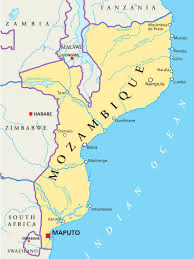
Mozambique (Capital: Maputo)
- Import of Tur dal by India has resumed from the Nacala Port in Mozambique after a disruption.
Political Features of Mozambique
- Location: South-east African country with a long coastline bordering the Indian Ocean.
- Mozambique Channel separates it from the island of Madagascar.
- Bordering Countries: Tanzania (North), Malawi & Zambia (North West), Zimbabwe (West), South Africa and Eswatini (South West).
Geographical Features of Mozambique
- Major rivers: Zambezi (largest) and Limpopo (both empty into Indian Ocean), Ruvuma etc.
- Highest Peak: Mount Binga (part of the Chimoio highlands).
- Resources: Gold, emeralds, copper, iron ore and bauxite.
WHO's New Initiative: Advancing mRNA Vaccine for H5N1
Accelerating Development and Accessibility of H5N1 mRNA Vaccines
- Initiative aims to speed up the development and availability of H5N1 mRNA vaccine candidates for manufacturers in LMICs.
- WHO's mRNA Technology Transfer Programme (MTTP) will support this effort alongside the Pandemic Influenza Preparedness (PIP) Framework.
Importance of Vaccine Equity and Pandemic Preparedness
- Promotes fair access to vaccines and prepares for future pandemics in a decentralized manner.
Understanding mRNA Vaccine Technology
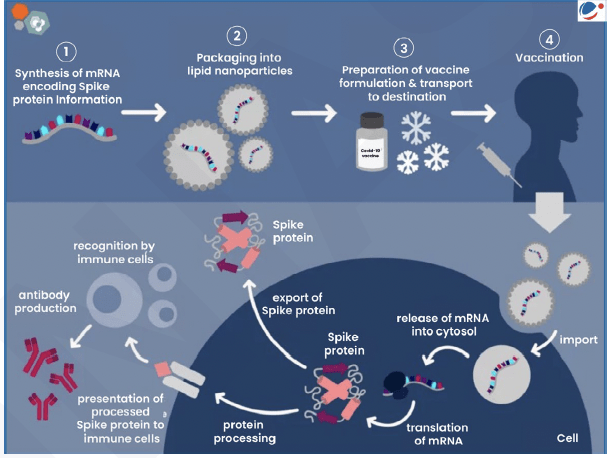
- mRNA vaccines work by introducing genetic instructions for cells to produce viral proteins, triggering an immune response.
- Cells create viral proteins, prompting the immune system to produce antibodies and enhance immunity.
- For example, mRNA vaccines for COVID-19 instruct cells to produce copies of the spike protein found on the coronavirus.
India named Vice-Chair of IPEF Supply Chain Council
Establishment of Supply Chain Bodies under IPEF
- Supply Chain Council: Focuses on strengthening supply chains for critical sectors.
- Crisis Response Network: Provides emergency response to disruptions.
- Labor Rights Advisory Board: Aims to improve labor rights and workforce development.
Supply Chain Resilience (SCR)
- SCR is the ability of a supply chain network to withstand disruptions.
- Supply chain involves the journey of raw materials or products from assembly to sale.
Threats to SCR
- Geo-political and economic factors can disrupt the supply chain.
Measures taken for SCR by India
- Global initiatives like Supply Chain Resilience Initiative and Quad Supply Chain Initiative.
- National initiatives like PM Gati Shakti National Master Plan and PLI Scheme for different sectors.
About IPEF
- IPEF was launched in 2022 in Tokyo, Japan.
- There are 14 members of IPEF including Australia, Brunei, Fiji, India, Indonesia, Japan, Republic of Korea, Malaysia, New Zealand, Philippines, Singapore, Thailand, Vietnam, and USA.
- The objective of IPEF is to strengthen economic engagement among partner countries in the Indo-Pacific region to promote growth, peace, and prosperity.
- IPEF is based on four pillars: Trade (Pillar I), Supply Chain Resilience (Pillar II), Clean Economy (Pillar III), and Fair Economy (Pillar IV).
- India has joined Pillars II to IV of IPEF and has observer status in Pillar I.
Supreme Court Emphasizes Legislative Assessment
- Supreme Court Directive on Maharashtra Slum Areas Act
- 2-Judge bench suggests comprehensive statutory audit.
- Emphasizes importance of reviewing and assessing statute implementation for Rule of Law.
Legislative Impact Assessment (LIA)
- Systematic approach to analyze effects of legislations.
- Components include problem identification, comparative analysis, stakeholder consultations, impact assessment, etc.
Need for LIA in India
- Evidence-based policymaking.
- Policy predictability and coherence.
- Absence of sunset clauses in Indian legislative system.
Challenges for LIA in India
- Absence of institutionalized framework.
- Sub-optimal interdepartmental coordination.
- Inadequate stakeholder engagement.
Existing mechanisms to assess legislations post-enactment in India
- Current methods for evaluating laws after they are passed in India.
- Includes parliamentary committees, the Finance Commission, the Law Commission, and NITI Aayog.
- Also involves input from civil society organizations, industry associations, and academic institutions.
- Suggestions from the Administrative Reforms Commission-II.
- Calls for regulators to undergo impact assessments by external agencies on a regular basis.
NSDC Launches Women Entrepreneurship Program
Program Details:
- Goal: Empower 25 lakh women entrepreneurs with skills, knowledge, resources, and financial grants.
- Partners: NSDC and NIESBUD offering free online entrepreneurship courses through SIDH.
- Ministry Involvement: NIESBUD and SIDH under MSDE providing training and apprenticeship opportunities.
- NSDC: Not-for-profit public limited company.
Significance of Women Entrepreneurship:
- Economic Impact: Job creation, GDP increase, innovative business practices.
- Social Impact: Empowerment, education, awareness, networking opportunities.
- Political Impact: Policy advocacy, strong women agency.
- Cultural Impact: Advancement of India's cultural heritage through traditional crafts and arts.
Challenges faced by Women Entrepreneurs in India:
- Gender gap in access to finance.
- Male dominated family structure.
- Social cultural barriers.
- Balancing work and traditional gender roles.
- Lack of literacy, safety at workplace, access to advanced technology.
Initiatives to Support Women Entrepreneurs
- Mudra Loans: Women can access loans up to 10 lakh without needing collateral.
- Stand-Up India: This initiative provides financing specifically for women entrepreneurs.
- TREAD: Women can receive financing through NGOs under this program.
- Women Entrepreneurship Program by NITI Ayog: This program aims to support and empower women in entrepreneurship.
New Aviation Bill Introduced in Lok Sabha 2024
- The new legislation will supersede the outdated Aircraft Act, 1934, which has been in place for 90 years and governs the regulation of aircraft manufacturing, possession, use, operation, sale, import, and export.
Key Highlights of the Aircraft (Amendment) Bill
- Aim: To update and modernize the existing Aircraft Act, 1934 for the ease of doing business and manufacturing in the aviation sector.
Important Provisions:
- Empower the Central Government to implement international aviation conventions like the Chicago Convention (1944) and the International Telecommunication Convention (1932).
- Increase powers of DGCA, BCAS, and AAIB.
- Allow the Central Government to issue emergency orders for public safety, such as detaining aircraft.
Significance of the Bill
- Aligns with the Atmanirbhar Bharat initiative by regulating aircraft design and manufacturing.
- Expands coverage to include drones, UAVs, flying taxis, and electronic gliders.
- Addresses the needs of a growing aviation market, with domestic air passenger traffic expected to grow by 8-13% in FY2024 according to ICRA.
Private Sector Communication Satellite AO
IN-SPACe's AO for Indian Orbital Resources to NGEs
- IN-SPACe released an AO for NGEs to own, establish, and operate a Geosynchronous Orbit satellite.
- Objective is to enable eligible NGEs to utilize unutilized ITU Filing.
Significance of Private Sector Participation in Space
- Innovation and cost reduction through competition and economies of scale.
- Commercialization of space with new business models like satellite services and space tourism.
- Complementing government efforts by allowing ISRO to focus on advanced research and exploration missions.
Challenges with Private Sector Participation in Space
- Legal and regulatory challenges due to absence of clear national space legislation.
- Funding issues like limited venture capital for space startups and inadequate R&D expenditure.
- Other challenges include space debris, compliance with international conventions, and liabilities.
Encouraging Private-sector Participation in Space Sector
- Foreign Direct Investment: 100% allowed in space sectors such as satellite manufacturing and operation
- IN-SPACe: Established in 2020 as a single-window, independent agency to promote, enable, authorize, and supervise various space activities of Non-Governmental Entities (NGEs)
- Indian Space Policy 2023: Enshrined a holistic approach to encourage and promote greater private sector participation in the entire value chain of the Space Economy.