
Daily Current Affairs UPSC 18 September 2024
Welcome to our daily current affairs blog post for UPSC aspirants! In today's edition, we will be discussing the most significant events and news updates that took place on 18th September 2024. Staying updated with current affairs is crucial for UPSC preparation, as it not only helps you stay informed but also enhances your understanding of various subjects. So, let's dive into the important happenings of the day and explore their potential impact on the upcoming UPSC examinations.

India-Germany Platform for Investments in Renewable Energies Worldwide
- The India-Germany Platform for Investments in Renewable Energies was launched at the 4th Global Renewable Energy Investor's Meet and Expo (RE-INVEST).
- RE-INVEST is organized by the Ministry of New and Renewable Energy.
- The India-Germany Platform aims to create sustainable solutions for the rapid expansion of renewable energy in India and globally.
- It will provide an international forum for stakeholders worldwide to collaborate on supporting India's goal of achieving 500 GW of non-fossil energy capacity by 2030.
- The platform is part of the Green and Sustainable Development Partnership (GSDP) signed between India and Germany in 2022.
Energy Trilemma
- At the 52nd Gastech Exhibition & Conference, the Union Minister of Petroleum & Natural Gas discussed the energy trilemma facing India as it is projected to account for 35% of global energy demand in the next two decades.
- The Energy Trilemma involves three conflicting challenges related to energy that must be balanced in the rapidly changing energy sector.
- The trilemma includes Energy Security, which is the ability to meet current and future energy demand reliably through strong supply chains.
- Affordability is another aspect of the trilemma, focusing on ensuring equitable access to energy for all.
- Sustainability is the third component of the trilemma, emphasizing the need to transition towards reducing the environmental impact of energy use and addressing climate change.
Coelacanths
- A recent study on Australian fossils showed that tectonic activity played a significant role in the evolution of Coelacanths.
- Coelacanths are deep-sea fish found near the coasts of southern Africa and Indonesia.
- These fish are unique in evolution as they have lobe fins with robust bones similar to those in human arms.
- Coelacanths are more closely related to tetrapods like frogs, which are animals with backbones and four limbs, than to other fish species.
UNESCO International Convention against Doping in Sport
- India is currently hosting the COP9 Bureau and Fund's Approval Committee meetings for the UNESCO International Convention against Doping in Sport in New Delhi.
- The Convention was adopted in 2005 in Paris, France with the objective of preventing and eliminating doping in sport.
- It is the only international treaty in this area and works to harmonize anti-doping legislation globally to ensure fair competition.
- The Convention also aims to protect public health and uphold the ethics, integrity, and universal values of sport.
Battle of Saragarhi
- The 127th Anniversary of the Battle of Saragarhi was recently celebrated.
- The battle took place on September 12, 1897, between 21 soldiers of the 36th Sikh Regiment of the British Raj and over 8,000 Afridi and Orakzai tribal militants.
- It occurred during the Tirah campaign at Saragarhi in the North West Frontier Province.
- Saragarhi, located in Kohat, Pakistan, was an important communication post.
- The Sikh soldiers, led by Havildar Ishar Singh, displayed exceptional bravery and fought until the end.
- All 21 Sikhs were posthumously awarded the Indian Order of Merit, the highest British gallantry award given to Indian troops at that time.
Naga King Chilli or Raja Mircha
- Seiyhama village in Nagaland celebrated the Naga king chili festival, showcasing a strong sense of community farming.
- The Naga King Chili, also known as Bhoot Jolokia and Ghost pepper, is one of the hottest chillies in the world, with over 1 million Scoville Heat Units.
- This chili received the Geographical Indication (GI) tag in 2008 and is primarily grown in Nagaland, Assam, Manipur, and other states.
- During the peak harvest months of August-September, the Naga King Chili is cultivated in large bamboo groves.
Karma Festival
- The Karma festival is a traditional celebration in Jharkhand and other states of India.
- It is a harvest festival that is popular among various indigenous communities such as Munda, Ho, Oraon, Baiga, Kharia, and Santhal people.
- The festival is typically observed on the eleventh day of the lunar fortnight in the month of Bhado/Bhadra, which falls in August-September in the Gregorian calendar.
- The Karam tree, considered a symbol of Karam Devta/Karamsani, is worshipped during the festival and represents fertility and prosperity.
- During the festival, Karma dancers carry branches of the Karam tree while singing and dancing.
Kleptoparasitism
- Recent reports suggest that Kleptoparasitism among birds is contributing to the spread of avian influenza.
- Kleptoparasitism, also known as Cleptoparasitism, is a feeding behavior where one animal steals prey from another that has caught or prepared it.
- Examples of animals that exhibit Kleptoparasitism include Sperm Whales, Western Gulls, and Hyenas.
- Kleptoparasitism can be either intraspecific, involving the same species, or interspecific, involving different species.
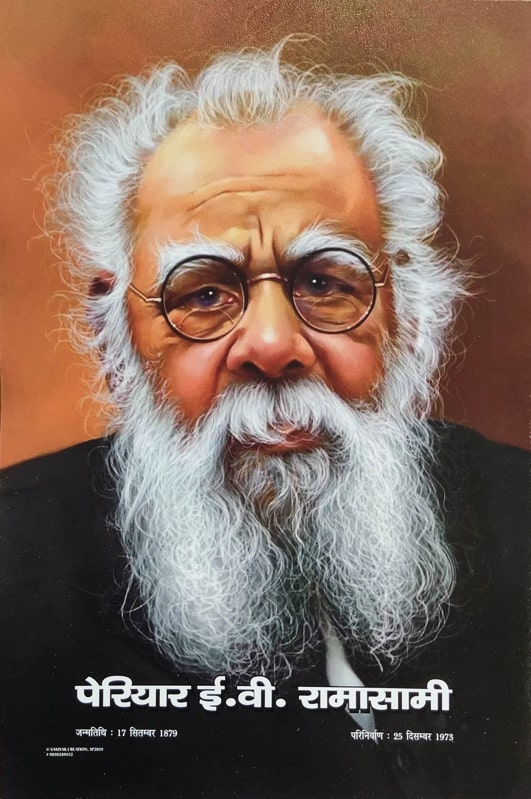
Periyar E V Ramasamy (1879 - 1973)
Remembering Periyar Erode Venkatappa Ramasamy on his 146th Birth Anniversary
- E V Ramasamy, a prominent social reformer and rationalist, was born in Erode, Tamil Nadu.
- He is often referred to as the 'Father of the Dravidian movement' for his significant contributions.
Key Contributions of E V Ramasamy
- He challenged Brahminical dominance and fought against gender and caste inequality in Tamil Nadu.
- E V Ramasamy took part in the Vaikom Satyagraha in 1924, advocating for the rights of lower castes to access a public path near Vaikom temple.
- He opposed the traditional views of the Indian National Congress and left the party in 1925.
- E V Ramasamy was associated with the Justice party, which was established in 1916 to counter the political and economic influence of Brahmins.
- In 1925, he founded the Self Respect Movement to promote freedom from slavery and irrational beliefs.
Ethical Values upheld by E V Ramasamy
- E V Ramasamy believed in principles such as self-respect, egalitarianism, rationality, and courage of conviction.
"SCEP Ministerial Meeting in Washington, D.C."
- Joint Statement reviewed progress made under partnership to promote clean energy innovation and accelerate clean energy transitions.
- Both sides highlighted joint efforts under five core pillars: Power and Energy Efficiency, Responsible Oil and Gas, Renewable Energy, Emerging Fuels and Technologies, and Sustainable Growth.
Key Initiatives at SCEP Ministerial
- Renewable Energy Technology Action Platform launched in 2023 to develop actionable roadmaps for hydrogen, long duration energy storage, offshore wind, etc.
- National Centre for Hydrogen Safety launched in India.
- Public-private Energy Storage Task Force established to address policy frameworks, safety, manufacturing, and supply chains.
- Launch of projects like technical feasibility study of Battery Energy Storage System (BESS) in Assam and BESS pilots in Haryana.
- Pumped storage recognized as a long-term energy storage option.
- Engagement on Sustainable Aviation Fuels (SAF) to support training, supply chain capacity building, fuel certification, etc.
- New developments in smart grid under US-India Collaborative for Smart Distribution System with Storage (UI-ASSIST) program funded by US Department of Energy & India's Department of Science & Technology.
- UI-ASSIST program bridges gap between smart grid, storage, and renewable energy research under U.S.-India Partnership to Advance Clean Energy-Research (PACE-R).
US- India SCEP Overview
- Launched in 2021 to focus on advancing energy security and innovation through clean energy technologies, electrification, and decarbonization.
- Part of the U.S.-India Climate and Clean Energy Agenda 2030 Partnership.
Importance of Clean Energy
- Enhances energy security by reducing dependence on fossil fuels.
- Transitioning to cleaner renewable sources can help decrease air pollutants and improve air quality.
- Plays a crucial role in achieving Sustainable Development Goals like clean energy (SDG 7) and climate action (SDG 13).
Other Initiatives Supporting Clean Energy
- International Solar Alliance.
- EU-India Clean Energy and Climate Partnership.
- Clean Energy International Incubation Center (CEIIC) established in 2018.
"New Guidelines for Battery Waste Management"
The Central Pollution Control Board (CPCB) has released guidelines under the Battery Waste Management Rules 2022 to encourage the proper management of battery waste and improve environmental sustainability nationwide.
What is Environmental Compensation (EC)?
- The 2022 Rules give the CPCB the authority to impose and collect Environmental Compensation (EC) from producers and entities involved in refurbishing and recycling waste batteries if they do not comply with the rules.
- EC can also be imposed on entities that operate without registration, provide false information, or intentionally hide material facts, following the polluter pays principle.
- Producers can be charged EC for not meeting their Extended Producer Responsibility (EPR) targets and obligations outlined in the rules.
- EPR refers to a producer's responsibility for environmentally sound management of waste batteries.
- Paying EC does not release producers from their EPR obligations. If a producer does not fulfill their EPR obligation in a particular year, it will be carried over to the next year.
Key Highlights of the Guidelines issued
- The EC to be charged will be split into two categories:
- EC Regime 1 involves charging producers for not meeting metal-specific EPR targets for Lead Acid Batteries and Lithium-ion and Other Batteries.
- EC Regime 2 involves charging any entity for not following the BWM Rules, 2022, with fees based on the application.
"Regional Disparity in Indian States Exposed"
A recent Working Paper by the Economic Advisory Council to the Prime Minister (EAC-PM) titled 'Relative Economic Performance of Indian States: 1960-61 to 2023-24' brought attention to the unequal distribution of India's GDP and per capita income among different states, particularly after the liberalization period.
Key Observations of the Working Paper
- Regional Disparities: The paper highlighted the disparities in GDP share and per capita income among Indian states, especially after economic liberalization in 1991.
- Maritime States: States with access to the sea have performed better economically, with the exception of West Bengal.
- Punjab and Haryana: Punjab's GDP contribution has declined post-1990s while Haryana's has grown, leading to questions of Dutch disease.
- Dutch Disease: Rapid growth in one sector leading to decline in others, such as agriculture affecting industry and services.
Reasons for Regional Disparities
- Industrialization levels, resource curse, geographical location, and environmental challenges contribute to regional disparities.
- Resource-rich states may show low economic growth, while coastal states may have advantages over landlocked states.
Measures to Reduce Regional Disparities
- NITI Aayog's interventions like the Aspirational Districts Programme and NITI Forum for North-East aim to reduce disparities.
- The Finance Commission transfers resources from the Centre to backward states to support their development.
- Industrial projects like Industrial Corridor Projects and Bharatmala Pariyojna aim to spread industrial activity across regions and reduce disparities.
"Revolutionizing Energy: CO2-to-Methanol Pilot Plant in Pune"
Implementation of a plant with a capacity of 1.4 tons per day is underway through a Public-Private Partnership with support from the Department of Science and Technology.
CO2-to-Methanol Conversion
- Carbon Utilization Technologies such as CO2-to-methanol are not as developed as carbon capture technologies.
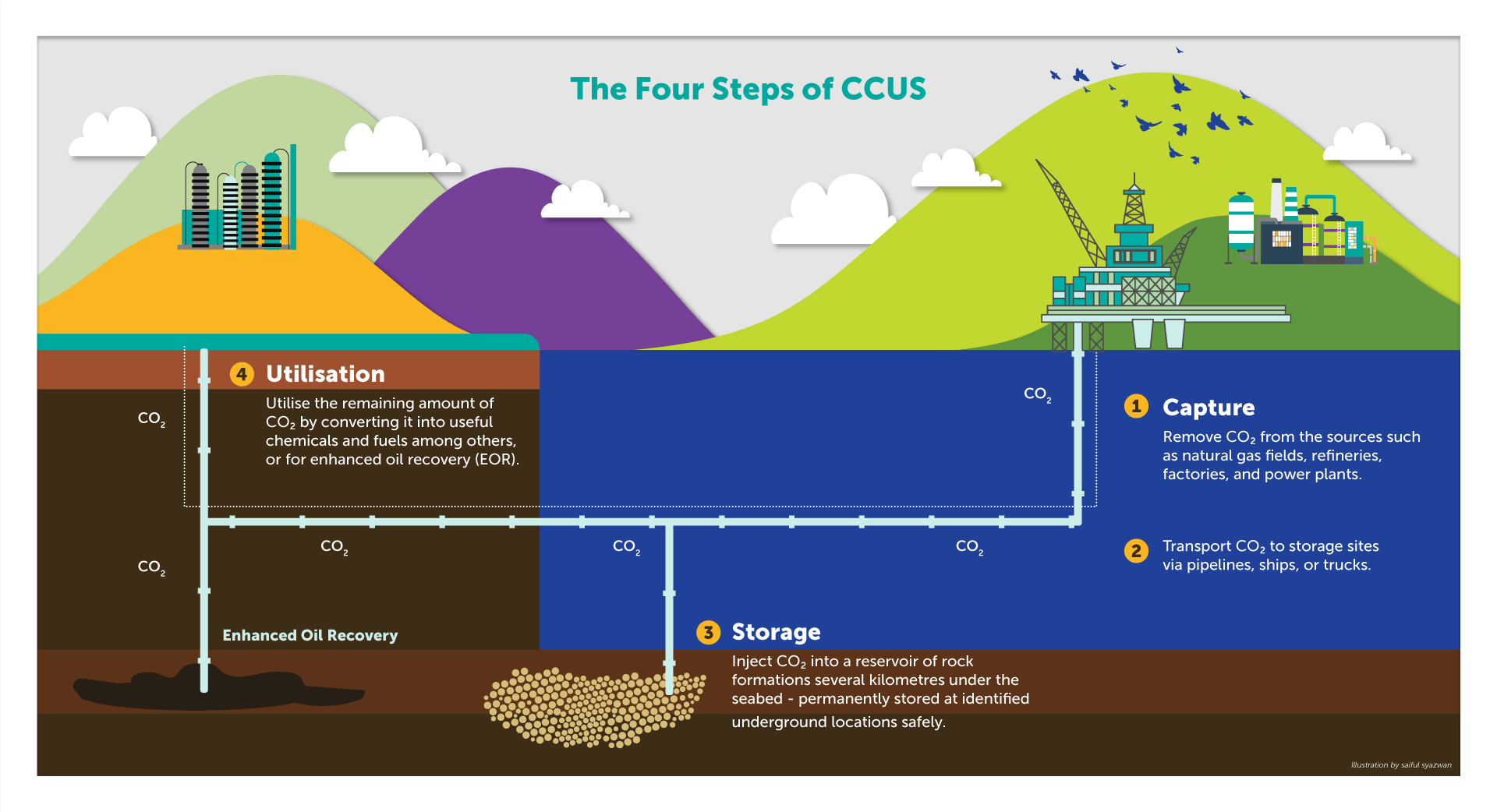
- CO2-to-methanol involves capturing carbon emissions from industrial sources or directly from the air, and then reacting the captured CO2 with hydrogen to produce methanol.
- This conversion process has the potential to reduce greenhouse gas emissions and provide a sustainable fuel source.
- The CO2-to-Methanol plant in Pune will advance indigenous Carbon Capture and Utilisation (CCU) technologies, aligning with India's Panchamrit declaration.
Carbon Capture, Utilization and Storage (CCUS)
- CCUS refers to a group of technologies for capturing CO2 emissions from large sources like power plants and industries, transporting the captured CO2 for utilization or storage in geological formations.
- This process helps in decarbonizing hard-to-abate sectors like cement and steel, and can also support the production of low carbon hydrogen.
Significance of CCUS
- Helps in decarbonizing sectors that heavily rely on fossil fuels.
- Supports the production of low carbon hydrogen through coal gasification with CCUS.
- Contributes to achieving net zero targets with advancements in Direct Air Capture technology.
Issues with CCUS adoption in India
- Carbon capture costs vary across sectors based on the source and concentration of CO2.
- Limited storage capacity for CO2, especially in saline aquifers and basaltic storage.
- Lack of infrastructure for transporting and storing captured CO2 downstream.
"Private Spacewalk Success: Polaris Dawn Mission"
- Polaris Dawn Mission is a privately funded and operated mission led by Jared Isaacman in collaboration with SpaceX.
- Recently, Polaris Dawn has journeyed through Earth's high radiation areas, such as the South Atlantic Anomaly and Van Allen Radiation Belt, to research the effects of space radiation on human health.
Van Allen Radiation Belt (Discovered in 1958 by astrophysicist James Van Allen)
- The Earth's magnetosphere protects it from high energy radiation particles from solar storms and solar winds.
- The Van Allen Belts are two belts of radiation surrounding the Earth, formed by trapped particles.
- The inner belt is created by cosmic rays interacting with Earth's atmosphere, while the outer belt consists of high-energy particles from the Sun.
- Astronauts and spacecraft must pass through the Van Allen Belts quickly to minimize radiation exposure.
- NASA's Artemis missions aim to send astronauts beyond the Van Allen Radiation Belt to land on the South Pole of the Moon by 2025 and eventually on to Mars.
South Atlantic Anomaly
- The South Atlantic Anomaly is a specific area over the South Atlantic Ocean where the inner Van Allen radiation belt comes closer to Earth.
- This results in higher levels of ionizing radiation, which can have negative effects on spacecraft in Low Earth Orbits.
- These effects include increased radiation exposure for astronauts and electronic components on the International Space Station.
Antitrust Concerns: Amazon and Walmart's Exclusive Launch
The Competition Commission of India (CCI) recently discovered that Amazon and Flipkart were in violation of local competition laws by providing exclusive launches, favoring specific sellers, and prioritizing certain listings.
Anti-trust regulations in India for e-Commerce
- The Competition Act, 2002 (amended in 2023) aims to promote competition, prevent anti-competitive practices, and regulate mergers and acquisitions.
- The Consumer Protection (E-Commerce) Rules, 2020 place responsibilities on e-Commerce entities to ensure fair competition and protect consumers from deceptive practices.
Restrictions on e-Commerce operations in India
- Exclusive selling is prohibited, and all vendors on a platform must be treated fairly and equally in terms of services provided.
- Vendors who purchase a significant portion of their inventory from an e-Commerce group company are restricted from selling on the platform.
Models for e-Commerce Services in India
- The Inventory Model involves the e-Commerce entity owning and selling goods directly to customers, with restrictions on FDI to protect local retail.
- The Marketplace Model allows e-Commerce platforms to act as facilitators between buyers and sellers, with 100% FDI permitted under the Automatic Route.