
Daily Current Affairs UPSC 16 July 2024
Welcome to our daily current affairs blog post for UPSC aspirants! In today's edition, we will be discussing the most significant events and news updates that took place on 16th July 2024. Staying updated with current affairs is crucial for UPSC preparation, as it not only helps you stay informed but also enhances your understanding of various subjects. So, let's dive into the important happenings of the day and explore their potential impact on the upcoming UPSC examinations.

Indian Leopard
- According to the IUCN, the Indian leopard has experienced a decline of 24.5% over the last three generations.
- The Indian leopard is found in India, Nepal, Bhutan, and parts of Pakistan, excluding mangrove forests and deserts.
- Characteristics of the Indian leopard include being nocturnal, skilled climbers, and solitary predators.
- The leopard population in India in 2022 is estimated to be 13,874.
- The top three states with the largest population of leopards in India are Madhya Pradesh, Maharashtra, and Karnataka.
- The Indian leopard is classified as Vulnerable by the IUCN and is listed under Schedule 1 of the Wildlife Protection Act 1972.
- Threats to the Indian leopard include habitat loss, fragmentation, human-wildlife conflict, poaching, and illegal trade.
Biotechnology Research and Innovation Council (BRIC)
- BRIC-THSTI recently hosted an industry meet called 'SYNCHN 2024' to promote collaboration and high-quality data in the NCR Biotech Cluster.
- BRIC is a registered society created by the Department of Biotechnology, Ministry of Science and Technology, integrating research, training, and innovation programs.
- BRIC-THSTI serves as a catalyst for translating fundamental discoveries into clinical research capacity.
- THSTI is located within the NCR Biotech Science Cluster in Faridabad, promoting synergy in science through collaboration and expertise.
Article 341
- The Supreme Court ruled that the State does not have the authority to change the Schedule Caste (SC) list published under Article 341.
- The Court invalidated a resolution by the Bihar government to merge the Economically Backward Class Community into the SC list.
- Article 341 allows the President to officially designate certain groups as Scheduled Castes for specific States or Union Territories.
- The designation process involves consultation with the Governor for States and may include entire castes, races, tribes, or subgroups within these categories.
- Parliament has the power to add or remove groups from the list of Scheduled Castes through legislation.
Uniform GST on Aircraft Parts
- The Ministry of Civil Aviation has introduced a consistent 5% IGST rate on aircraft and aircraft engine parts.
- This move aims to support the domestic MRO industry and enhance India's position as a global aviation hub.
- The uniform tax rate simplifies the tax structure, lowers operational expenses, resolves tax credit problems, and attracts investment.
Pheromone Traps
- The Central Institute for Cotton Research (CICR) and Indian Council of Agricultural Research (ICAR) are using AI powered Pheromone traps in a pilot project to protect cotton crops from Pink Bollworm pest infestation.
- Pheromone traps use chemical signals emitted by female moths to attract males of that species, helping to control the pest population.
- These traps can be used to monitor target pests in agriculture or residential areas, providing early detection of infestations.
- Constant monitoring for insects with Pheromone traps may help detect infestations before they become a serious problem for crops.
Tizu and Zungki River
- The MV Sea Change is the first passenger ferry powered by hydrogen fuel cells, which was launched in San Francisco.
- The ferry can travel 300 nautical miles and operate for 16 hours before needing to refuel.
- Hydrogen fuel cells produce electricity by combining oxygen and hydrogen in an electrochemical reaction.
- Vehicles powered by hydrogen fuel cells do not produce any tailpipe pollutant emissions, including particulates, oxides of nitrogen, carbon monoxide, and carbon dioxide.
Hydrogen-Fuel Cells
- Inland Waterways Authority of India and Transport Department of Government of Nagaland will be conducting a detailed feasibility study for the development of Tizu and Zungki River (National Waterways 101).
- Tizu River originates near Longkhim, Tuensang district, of Nagaland and flows into the Chinwin River, also known as Ningthi river in Myanmar.
- The main tributaries of Tizu River are river Zungki, Lanye, and Likimro.
- Zungki is the largest tributary of Tizu in Nagaland.
Electroencephalography (EEG)
- The year 2024 will be the 100th anniversary of EEG, a medical test that measures brain electrical activity.
- EEG uses electrodes attached to the scalp to detect the electrical impulses generated by brain cells.
- The activity recorded on an EEG appears as wavy lines, showing how the brain cells communicate.
- EEG is commonly used to detect epilepsy, neurological disorders, brain tumors, and other brain-related issues.
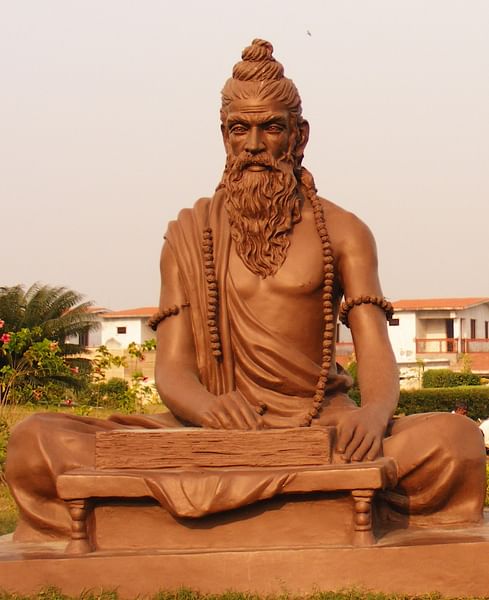
Maharishi Sushruta (c. 7th or 6th century BCE)
- AIIA organized Second National Seminar SAUSHRUTAM Shalya Sangoshti on Sushruta Jayanti-2024
- Sushruta, ancient physician from Kashi, known as Father of Indian Medicine and Surgery
- Key Contributions of Sushruta:
- Author of Sushruta Samhita, part of Great Trilogy of Ayurvedic Medicine
- Covers pathology, anatomy, surgical management, treatment of fractures, dislocations, skin grafting, rhinoplasty
- Values promoted by Sushruta: Courage, hard work, composure, proficiency, dedication
"Exploring India's Energy Storage Landscape"
Key Findings:
- India's cumulative installed Battery Energy Storage System (BESS) capacity is 219.1 Megawatt-hours (MWh).
- Chhattisgarh has the highest BESS capacity, accounting for 54.8% of the cumulative installed capacity.
- Solar photovoltaic (PV) systems, combined with BESS, make up 90.6% of the total installed capacity.
About BESS:
- BESS refers to an electrochemical device that stores and releases renewable energy like solar and wind energy when needed.
- Types of batteries used in BESS include Lithium-ion (Li-ion) batteries, Lead-acid batteries, and Sodium-sulfur batteries.
Significance of BESS:
- Minimizes greenhouse gas emissions, aiding in achieving the Panchamrit target of net zero emissions by 2070.
- Reduces energy costs by using stored energy during peak hours when prices are highest.
- Reduces grid dependency and improves grid stability by sourcing, storing, and balancing power supply and demand.
Concerns with BESS:
- Increased need for maintenance and monitoring.
- High initial costs may deter users from investing in these systems.
- Extraction of raw materials like lithium can be energy-intensive and lead to water pollution and land degradation.
Initiatives to promote BESS:
- Viability Gap Funding (VGF) scheme for the development of 4,000 MWh of BESS projects by 2030-31.
- Waiver of Inter-State Transmission Charges on BESS projects commissioned up to June 2025.
- Production Linked Incentive Scheme for the National Programme on Advanced Chemistry Cell Battery Storage.
- National Framework for Promoting Energy Storage Systems by the Ministry of Power.
"World Bank Group Guarantee Platform Launches"
- Established in 2024, WBG Guarantees brings together guarantee products and experts from various WBG institutions under MIGA.
- These guarantees are aimed at private lenders for infrastructure financing in situations where there is a high demand for debt funding, significant political and sovereign risks, and long-term financing is crucial for project success.
- Prior to the platform's launch, the WBG offered 20 different guarantee solutions with varying processes, rules, and standards that made it difficult for clients to access.
WBG GP
- The WBG aims to increase annual guarantee issuance to $20 billion by 2030.
- In 2024, the WBG issued around $10.3 billion in new guarantees using products from the platform.
- The platform offers three types of coverages: credit guarantees for loans, trade finance guarantees, and political risk insurance for non-commercial risks in private sector projects or public-private partnerships.
Significance of WBG Guarantees Platform
- The platform provides a simplified menu of guarantee options that are market-friendly and offer multiple choices to WBG clients.
- By streamlining processes, removing redundancies, and de-risking investments in developing countries, the platform aims to increase accessibility to financing.
- Prioritizing high-impact projects and promoting growth, the platform contributes to sustainable development and inclusive growth through innovative financing.
About the WB Group
- The WB Group is a global partnership of five institutions, with India being a part of the first four institutions (not ICSID).
- IBRD (The International Bank for Reconstruction and Development),
- IDA (The International Development Association),
- IFC (The International Finance Corporation),
- MIGA (The Multilateral Investment Guarantee Agency),
- ICSID (The International Centre for Settlement of Investment Disputes),
- IBRD and IDA form the WB.
"Ratna Bhandar Reopens After 46 Years"
- A high-level committee, headed by retired Justice Biswanath Rath, was set up by the Odisha government to oversee the inventory of valuables, including jewelry, stored in the Ratna Bhandar.
- The Magji Ladoo, a special sweet from Odisha's Dhenkanal district, which is part of the 'chappan bhog' prasad at the Shree Jagannath Temple, has been granted a Geographical Indication (GI) Tag.
Ratna Bhandar Overview
- Situated on the north side of Jagamohana.
- Consists of Bahar Bhandar and Bhitar Bhandar.
- Houses the jewels of Lord Balabhadra, Lord Jagannath, and Devi Subhadra.
Shree Jagannath Temple, Puri, Odisha
- The temple is dedicated to Lord Jagannath, Sister Devi Subhadra, and elder brother Lord Balabhadra, who are considered a holy trinity in Hinduism.
- It was constructed during the reign of Anantavarman Chodaganga Deva, the founder of the Ganga dynasty, in the early 12th century A.D.
- The temple is a significant religious site for followers of Hinduism, particularly those who worship Lord Vishnu and his incarnations.
Architectural Style of Shree Jagannath Temple
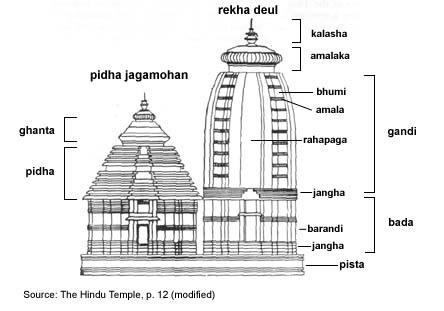
- Style of Architecture: Kalinga Architecture.
- Components of Kalinga Architecture:
- Vimana or Deula (Garbhagriha): Built in the nagara style.
- Rekha deula: Characterized by a curvilinear tower known as sikhar.
- Jagamohana: Formed in the Pidha deula style with tiers of diminishing platforms.
- Natamandapa: Audience/Dancing Hall.
- Bhogamandapa: Hall for residuary offerings.
- Vishnu Figures: Carved on the outer wall of the main temple, depicting 24 forms of Vishnu such as Keshava, Madhava, Damodara, and Narayana.
"India's G20 Task Force Report on DPI Released"
- A task force was created in 2023 during India's G20 Presidency to focus on priorities related to Digital Public Infrastructure (DPI) and Financial Inclusion.
- The task force aims to support and enhance global efforts in promoting the adoption of DPI.
- The establishment of the task force demonstrates India's commitment to advancing digital infrastructure and financial inclusion on a global scale.
About Digital Public Infrastructure (DPI)
- Building blocks or platforms such as digital identity, financial infrastructure, and data exchange solutions help governments empower individuals and enhance lives through digital inclusion.
- India's Digital Public Infrastructure (DPI), known as India Stack, consists of three key layers: Digital identification (Aadhaar), Real-time fast payment (UPI), and a platform for secure sharing of personal data while maintaining privacy.
- These foundational layers of India Stack work together to provide a comprehensive digital infrastructure that supports various government initiatives and services, ultimately benefiting the population through improved access and efficiency.
Achievements of India's DPI
- UPI sees 10 billion transactions per month.
- DigiLocker stores over 6 billion documents for 211 million users.
- Rich and Poor divide in bank account ownership reduced from 14% to 1% (2011-2022).
Significance of DPI
- Gives individuals the ability to manage their finances and personal information, providing them with autonomy and security.
- Encourages advancements in the market by lowering transaction expenses, promoting competition through compatibility, and drawing in private investments.
- Allows marginalized groups, such as those in remote areas and women, to utilize services, aiding in the reduction of disparities between different groups, like gender inequalities.
- The disparity in bank account ownership between genders has decreased significantly from 18% to nearly 0% over the span of 2011 to 2022.
5 Major Digital Public Infrastructure Categories within & across Sectors
Verifiable Identity & Registries:
- Confirming identification and retrieving profile information for individuals, organizations, and items.
- Examples: ID Authentication; ekYC.
Data Sharing, Credentials, and Models:
- Exchanging information (such as personal background, characteristics, and details) between individuals or making it available to the public.
- Examples: Giving permission to share personal information.
Signatures & Consent:
- Ensuring that the data/agreements were obtained with the source's permission.
- Examples: Digital signatures that cannot be tampered with and are unable to be denied or disputed.
Discovery & Fulfillment:
- Utilizing open protocols and APIs to access goods and services.
- Examples: Access APIs for services such as business registration and tax filing.
Payments:
- Completing financial transactions effortlessly.
- Examples: Peer-to-peer, person-to-machine, business-to-business, and government-to-person transactions for social benefit transfers.
"Charting a Course: UNEP's Foresight Report"
- The report points out that there are significant global changes happening that are worsening pollution, biodiversity loss, and climate change.
- It emphasizes that the current global crisis, which includes various challenges like wars, extreme weather events, and pandemics, are interconnected and are a result of globalization.
Various Shifts, Signals, and Potential Disruptions
- Changing relationship between humans and the environment leading to rising AMR and uninhabitable spaces due to climate change.
- Scarcity and competition for critical resources reshaping global security dynamics, like orbital space debris.
- Waves of innovation in the digital landscape, including Internet of Things and AI adoption.
- Risks of biological agents misuse with autonomous and artificial intelligence weapons systems.
- Mass forced displacement affecting 1.5% of the world's population.
- Eco-anxiety causing negative emotional responses related to environmental and climate crises.
Recommendations
- Implementing 'A new social contract' as proposed in the UN Secretary General's report 'Our Common Agenda' by engaging diverse stakeholders.
- Establishing agile and adaptive governance for a sustainable future using technology and funding.
- Guiding governance through data and knowledge to address global challenges.
"RBI Updates Rules on Financial Fraud"
- Revised Master Directions on Fraud Risk Management by RBI.
Regulated Entities under RBI:
- Commercial banks, including regional rural banks, and all India financial institutions are included in this category.
- Cooperative banks, such as urban cooperative banks, state cooperative banks, and central cooperative banks, are also part of this group.
- Non-banking finance companies, including housing finance companies, are also considered in this classification.
Key Points of Master Directions:
- REs must follow principles of natural justice before classifying Persons/Entities as fraud.
- Data Analytics and Market Intelligence Unit required to enhance risk management.
- Framework for Early Warning Signals and Red Flagging of Accounts has been improved for fraud prevention.
- Timely reporting to law enforcement agencies and supervisors is also necessary.
Significance:
- Simplifying and streamlining the regulatory requirements for financial institutions by removing 36 Circulars.
- Implementing strong internal audit processes and control mechanisms within financial institutions to ensure compliance and prevent fraud.
- Expanding the scope of fraud risk management to include Regional Rural Banks, Rural Cooperative Banks, and Housing Finance Companies for a more comprehensive approach to safeguarding financial institutions.