
Daily Current Affairs UPSC 19 July 2024
Welcome to our daily current affairs blog post for UPSC aspirants! In today's edition, we will be discussing the most significant events and news updates that took place on 19th July 2024. Staying updated with current affairs is crucial for UPSC preparation, as it not only helps you stay informed but also enhances your understanding of various subjects. So, let's dive into the important happenings of the day and explore their potential impact on the upcoming UPSC examinations.

Foreigners Tribunals
- The Supreme Court recently overturned a decision by the Assam Foreigners' Tribunal, declaring a resident of the state as an Indian citizen.
- Foreigners Tribunals are quasi-judicial bodies established under the Foreigners (Tribunals) Order, 1964 by the Central Government, according to Section 3 of The Foreigners Act, 1946.
- Only Foreigners Tribunals have the authority to declare a person as a foreigner, meaning exclusion from the National Register of Citizens (NRC) in Assam does not automatically classify someone as a foreigner.
- Foreigners Tribunals have powers similar to a civil court under the Code of Civil Procedure, 1908.
- These tribunals are set up by the state government.
United Nations Water Convention
- Ivory Coast has become a member of the United Nations Water Convention, which focuses on the protection and use of transboundary watercourses and international lakes.
- The United Nations Water Convention was adopted in Helsinki in 1992 and came into effect in 1996.
- The convention is legally binding and requires parties to use transboundary waters reasonably and equitably, as well as ensure their sustainable management.
- India is not a party to the United Nations Water Convention, but the Indus Waters Treaty from 1960 aligns with the UN Watercourses Convention adopted in 1997.
Coal in India
- Gevra and Kusmunda coal mines in Chhattisgarh are ranked 2nd and 4th in the list of world's 10 largest coal mines by WorldAtlas.com.
- India is the world's second largest coal producer and has the 5th largest coal deposits.
- Around 80% of India's coal deposits are bituminous type and non-coking grade.
- Indian coal is high in ash content but low in sulfur content, with a high ash fusion temperature.
- India imports coal, especially coking coal.
Transiting Exoplanet Survey Satellite (TESS)
- A recent study using TESS observations found a smaller black hole orbiting a larger black hole at the center of the galaxy OJ 287, located four billion light years away.
- Scientists from 10 countries, including India, participated in the study.
- A black hole is a region of space with extremely strong gravity that not even light can escape from.
- TESS, launched by NASA in 2018, aims to discover exoplanets orbiting the brightest dwarf stars in the sky.
- The data collected by TESS will be crucial in studying the formation and evolution of habitable worlds.
Mascho Piro (Mysterious tribe)
- The Mashco Piro tribe, a large uncontacted indigenous group, was recently found in the remote Peruvian Amazon.
- The tribe is believed to number more than 750 people and is one of the largest uncontacted tribes in the Amazon and Southeast Asia.
- The Mashco Piro are nomadic hunter-gatherers who have had no contact with the outside world.
- Contact with the tribe is prohibited due to the fear of spreading diseases to which they have no immunity.
- The Madre de Dios Territorial Reserve was established in 2002 to protect the tribe's territory, but large parts of the land have been sold to companies for timber and other resources.
National Centre for Polar and Ocean Research (NCPOR)
- NCPOR has signed a contract with a Defence PSU to build an Indigenous Ocean Research Vessel for exploring deep oceans.
- NCPOR is headquartered in Goa and was established in 1998 as an autonomous Research and Development Institution of the Ministry of Earth Sciences.
- The Governing Body of NCPOR has 13 members, with the Chairman being the Secretary of the Ministry of Earth Sciences.
- NCPOR's mandate includes facilitating scientific research in Antarctica, the Arctic, and the Indian Ocean sector of the Southern Ocean.
- NCPOR also manages Indian Antarctic Research Bases "Maitri" and "Bharati", as well as the Indian Arctic base "Himadri".
Khelo India Rising Talent Identification (KIRTI) Program
- Ministry of Youth Affairs and Sports is launching the second phase of the KIRTI Program in New Delhi.
- The KIRTI Program aims to streamline the process of identifying grassroots talent between the ages of 9 to 18 on a single platform.
- The goal is to conduct 20 Lakh assessments by 2024-25 by involving all states in identifying talent through Talent Assessment Centers.
- The approach of the program is athlete-centric, making the talent identification process more inclusive, transparent, and accessible.
- The KIRTI Program is significant as it helps achieve the goals of the Khelo India Scheme, which include promoting excellence in sports and increasing mass participation in sports.
Dual Tower Solar Thermal Plant
- China has introduced the first dual-tower solar thermal power plant in the world, increasing energy efficiency by 24%.
- The plant has two 200-meter tall towers surrounded by thousands of mirrors that track the sun's movement and reflect sunlight with 94% efficiency.
- Excess heat collected during the day is stored using molten salt storage, acting as a thermal battery for continuous power generation at night.
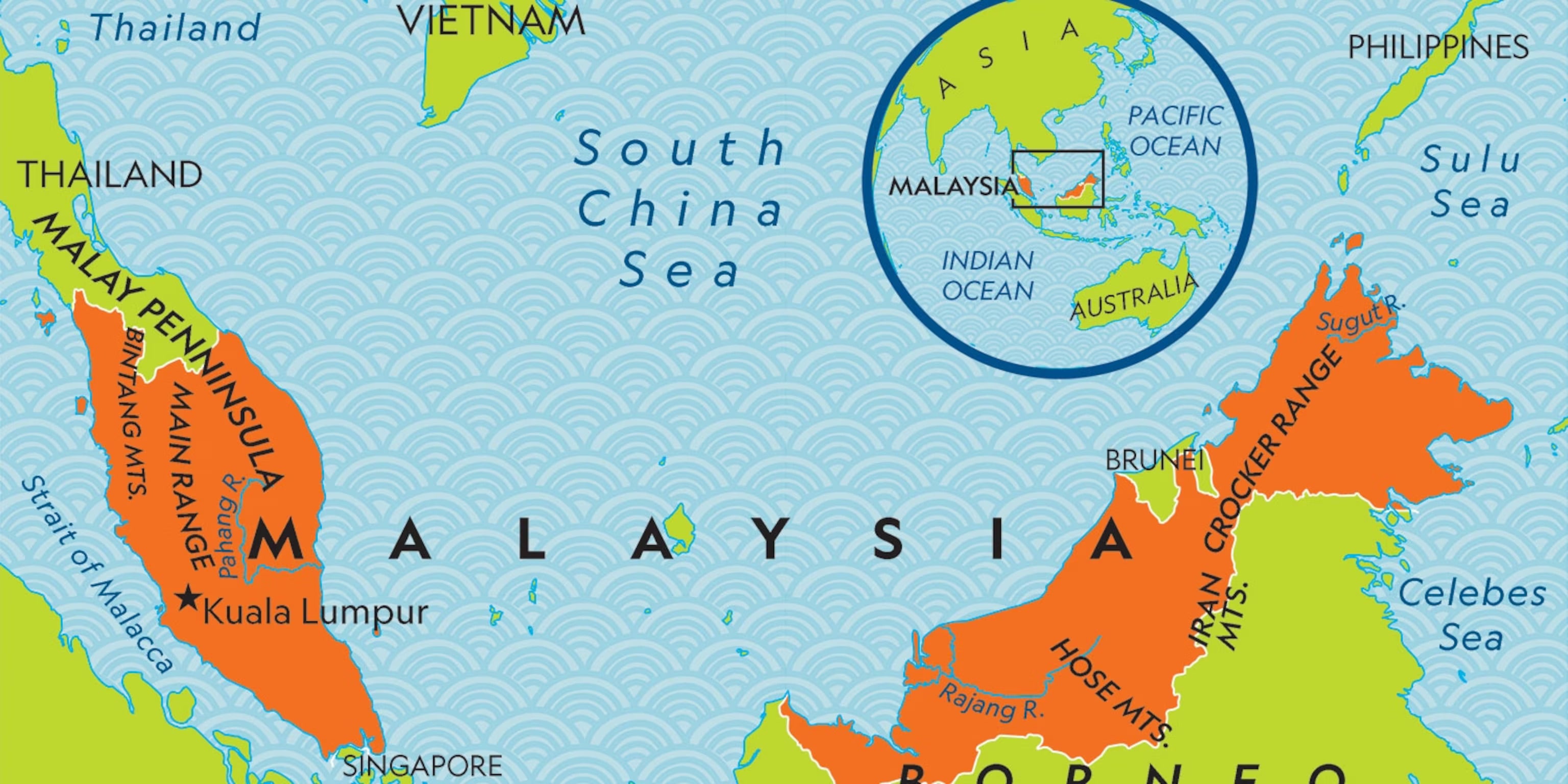
Malaysia (Capital: Kuala Lumpur)
- India and Malaysia have agreed to increase cooperation in the Oil Palm and other sectors.
- Political features of Malaysia:
- Southeast Asian country separated by the South China Sea.
- Land borders with Thailand, Brunei, and Indonesia.
- Maritime borders with the Philippines, Vietnam, and Singapore.
- Membership in foreign groupings such as ASEAN, Organisation of Islamic Cooperation, and APEC.
- Geographical features of Malaysia:
- Climate: Tropical climate.
- Highest peak: Mount Kinabalu.
- Major rivers: Rajang, Pahang, Perak, etc.
- Major lakes: Natural (Bera Lake, Tasik Chini) and Artificial (Kenyir Lake).
- Agriculture: World's 2nd largest palm oil producer and exporter after Indonesia.
iCAL Inaugurated in Rajkot, Gujarat
- It is the first of its kind in the country and strives to establish international benchmarks for auditing local government entities.
About iCAL
- iCAL is the first of its kind in India and aims to establish global standards for auditing local governance bodies.
- It is a collaborative platform for policymakers and auditors, focusing on capacity building and enhancing the independence of local government auditors.
Need of iCAL in India
- iCAL will facilitate collaboration among the numerous panchayats and Urban Local Bodies in India, promoting knowledge exchange and best practices.
- The establishment of iCAL aligns with global practices, as many countries have their own Supreme Audit Institutions.
- The need for iCAL is highlighted by inefficiencies in fund utilization by local bodies, as revealed by the Reserve Bank of India.
Current Auditing Mechanism of Local Bodies
- Local bodies in India are audited by Examiner of Local Fund Accounts (ELFA) or Director of Local Fund Accounts (DLFA) in most states.
- The Comptroller and Auditor General (CAG) also plays a role in auditing local bodies and providing guidance to ELFA/DLFA.
- CAG oversees the proper maintenance of accounts and auditing for all levels of Panchayati Raj Institutions (PRIs) and Urban Local Bodies (ULBs).
Local Governance in India
- The 73rd and 74th Constitutional Amendment Acts of 1992 introduced provisions for Local Governance in India.
- Local Governance is a State subject, with Article 243G emphasizing the devolution of power to Local Bodies.
- Article 243J allows State Legislatures to make provisions for the maintenance and auditing of accounts by Panchayats.
"Empowering India's Electronics Industry: NITI Aayog Report"
Key Findings:
- The global electronics market is valued at US$4.3 trillion, with India's market estimated at US$155 billion in 2022.
- China is the largest producer of electronics globally, accounting for 60% of worldwide production.
- India currently exports around US$25 billion annually, which is less than 1% of the global share.
- India aims to achieve US$500 billion in electronics production by 2030.
- Over 75% of electronics exports are part of Global Value Chains (GVCs), with products like mobile phones being exported worldwide.
Driving Factors:
- Increasing demand in developing countries due to rising broadband penetration is driving the electronics market.
- Diversification of the supply chain beyond China is necessary to mitigate risks like those seen during the Covid-19 pandemic and ongoing trade tensions between China and the USA.
Challenges in India’s Electronics Production:
- High import tariffs compared to countries like China and Vietnam make Indian products less competitive in global markets.
- India lacks a robust electronics component ecosystem, such as semiconductors and discrete actives.
- The high cost of capital in India (9%-13%) compared to countries like China, Vietnam, and Taiwan (2%-7%) hinders competitiveness.
- Other challenges include inadequate infrastructure, lack of R&D and design ecosystem, and a shortage of skilled engineers and workforce.
Recommendations:
- Fiscal interventions like capital expenditure support for high-complexity components and innovation schemes can promote R&D.
- Non-fiscal interventions like simplifying tariffs and taxes, supporting industries for skilling, and streamlining the tech transfer process can improve the ease of doing business in the electronics sector.
Steps taken by India to promote Electronic Sector:
- Initiatives like the Electronics Manufacturing Cluster (EMC) 2.0 scheme, Scheme for Promotion of Manufacturing of Electronic Components and Semiconductors (SPECS), Design Linked Incentive Scheme, and India Semiconductor Mission have been implemented to promote the electronics sector in India.
WEF Report: The Future of Financial Advice
- The report highlights the importance of traditional financial advisors in light of the increasing popularity of finfluencers.
- Finfluencers are individuals who use social media to share financial advice, news, and recommendations, potentially influencing individuals' financial decisions.
Key highlights of the Report
Reasons for the Rise in Finfluencers
- Accessibility of social media: With around 60% of the global population using social media, finfluencers have a wide reach.
- Inclusivity in content: Finfluencers from diverse backgrounds cater to a wider audience, making individuals feel included.
- Engaging content: Finfluencers use short, entertaining videos, memes, and metaphors to explain financial concepts, making learning about finance more engaging for novice investors.
Importance of Traditional Financial Advisors
- Risks associated with finfluencers' advice: Due to opaque algorithms, catchy posts may be prioritized over quality advice.
- Ensuring individuals' well-being: Traditional financial advisors play a critical role in providing holistic, personalized advice, risk management, and education to ensure successful investor outcomes.
- Retail investing volume has doubled in the past decade, with 19.5% of stock market shares traded by retail investors in 2020 globally, highlighting the importance of traditional financial advisors.
SEBI Actions for Regulating Finfluencers
- SEBI recently approved a proposal to ban regulated entities from associating with unregistered finfluencers to protect investors.
- Many finfluencers have been linked to misleading investors with false profit claims, prompting regulatory action to safeguard investor interests.
Boosting Indian e-commerce exports
- A report has acknowledged that India is experiencing rapid growth in the e-commerce sector.
- E-commerce refers to the buying and selling of goods and services online, as well as the transfer of money and information through the Internet.
Key Findings:
Global:
- Crossborder e-commerce is boosting the international B2C market.
- The global B2C market is currently worth US$6 trillion and is expected to grow to over US$8 trillion by 2026.
India:
- The domestic e-commerce market is currently valued at US$83 billion in FY22 and is projected to reach US$150 billion by FY26.
- Key drivers for this growth include a growing middle class, increasing internet penetration, and the digitization of payments through UPI.
- E-commerce exports for FY2023 were between US$4-US$5 billion, accounting for 0.9% to 1.1% of India's total merchandise exports.
- To reach the target of $200-300 billion in e-commerce exports by FY2030, there needs to be a 50-60 times increase in current export levels.
Key Challenges:
- Regulatory ecosystem favors B2B exports over B2C.
- Lack of a separate law for e-commerce exports.
- Unclear responsibilities between sellers and e-commerce operators.
- Complex customs procedures.
Key Recommendations:
- Implement and expand E-commerce Export Hubs (ECEH).
- Increase courier consignment limit and streamline clearance processes.
- Create Customs Supervision Codes.
India's Initiatives for Promoting E-commerce:
- Foreign Trade Policy 2023 includes initiatives like Dak Niryat Kendra and extending export benefits to e-commerce exports.
- E-commerce exports are zero-rated supplies eligible for GST refund.
- States like Telangana, Gujarat, and Uttar Pradesh have signed MOUs with marketplaces to support MSME capacity building.
"Telangana Government's Crop Loan Waiver"
- Government has instructed bankers to ensure that crop loan waiver funds are not diverted to other accounts of farmers.
- Warning of action against those who deposit released funds in accounts other than intended.
About Farm Loan Waiver
- Farm loans can be either crop loans or investment loans used for purchasing inputs or agricultural equipment.
- Governments can offer waivers of penal or loan interest, or even a full waiver of outstanding farm loans.
Need for Farm Loan Waiver
- To address agricultural distress caused by factors like deteriorating soil and water quality, increasing input costs, and low productivity.
- Natural calamities and poor monsoons can impact farmers' ability to repay loans, leading to financial difficulties.
- Farm loan waivers can help prevent farmer suicides due to indebtedness, as seen in regions like Vidarbha in Maharashtra.
Arguments Against Farm Waivers
- Farm loan waivers can put a strain on government finances, as seen in Maharashtra where a waiver cost around Rs 45,000 crore.
- Critics argue that waivers provide only temporary relief and may encourage farmers to default on loans.
- Waivers do not address underlying issues like low productivity and lack of formal credit.
- Poor implementation of waivers has been observed, with only half of beneficiaries actually receiving write-offs according to a study by SBI.
Way Forward
- Solutions to address agricultural distress include improving access to formal credit, investing in infrastructure, enhancing crop insurance, and ensuring farmers receive fair prices for their produce.
"India's Jan Aushadhi Kendra Goes Global: Inaugurated in Mauritius"
- This initiative showcases the strengthening of ties between India and countries located along the Indian Ocean.
- The Indian Ocean region includes 36 countries along the coast and 11 countries located inland.
Importance of India's Relations with IOR Nations
Strategic Location
- Proximity to sea lines of communications like Malacca strait crucial for global trade.
- Prevents piracy and ensures maritime security.
- 80% of India's external trade and 90% of energy trade happens through IOR.
Vision of Regional Leadership
- IOR emerging as new theatre for geo-political competition between global powers.
- Crucial for pursuing India's vision of a net security provider.
- Containing the rising footprint of China in the region.
Blue Economy
- Marine fisheries in IOR supplies about 15% of world fish catch.
- IOR important for sustainable deep sea mining.
Climate Security
- Indian Ocean has warmed faster than any other ocean since 1950s.
- Rapid population growth and rising climate disasters require collective action.
- Preventing human vulnerability and regional insecurity through collaborative efforts.
India's Initiatives in IOR
- The Indian Navy is hosting the Information Fusion Centre – Indian Ocean Region (IFCIOR) to enhance maritime safety and security in the Indian Ocean Region (IOR).
- The Indian Navy is involved in Humanitarian Assistance and Disaster Relief (HADR) operations such as Vaccine Maitri and Operation Karuna.
- The Indian Navy's outreach initiative MAHASAGAR (Maritime Heads for Active Security and Growth for All in the Region) aims to promote security and growth in the region.
- The Indian Navy follows the SAGAR doctrine (Security and Growth for All in the Region) and Neighbourhood First Policy to strengthen relationships with neighboring countries.