
Daily Current Affairs UPSC 28 September 2024
Welcome to our daily current affairs blog post for UPSC aspirants! In today's edition, we will be discussing the most significant events and news updates that took place on 28th September 2024. Staying updated with current affairs is crucial for UPSC preparation, as it not only helps you stay informed but also enhances your understanding of various subjects. So, let's dive into the important happenings of the day and explore their potential impact on the upcoming UPSC examinations.

Lokayukta
- Karnataka Lokayukta has filed a FIR against the Chief Minister of Karnataka for irregularities in land allotment.
- Lokayukta is an anti-corruption organization at the State level in India, similar to Lokpal at the Center.
- It was established under the Lokpal and Lokayuktas Act, 2013 through legislation by the State legislature.
- The structure of Lokayukta varies across different states.
- The appointment of Lokayukta is typically done by the Governor in consultation with the Chief Justice of the State High Court and Leader of Opposition in the State Legislative Assembly.
Committee of Ten (C-10) Group
- The Indian External Affairs Minister attended the inaugural Joint Ministerial Meeting of the C-10 and L.69 groupings.
- The L69 grouping consists of countries from Africa, Latin America, Caribbean, Pacific Island states, and Asia, with India being a member as well.
- The C-10 Group was established in 2008 and includes members such as Algeria, Botswana, Cameroon, Egypt, Kenya, Nigeria, South Africa, Tanzania, the Central Bank of West African States (CBWAS), and the Central Bank of Central African States (CBCAS).
- The C-10 Group's mandate involves advocating for increased African participation in the governance of international financial institutions (IFIs) and other related matters.
India, Brazil and South Africa (IBSA) Forum
- IBSA Foreign Ministers have united against global terrorism.
- They are calling for strict actions against UN-listed groups like Al-Qaeda.
- They are committed to speeding up the adoption of the Comprehensive Convention on International Terrorism at the UNGA.
- The IBSA Trilateral Forum consists of India, Brazil, and South Africa.
- The Brasilia declaration in 2003 established and named the IBSA Dialogue Forum.
- The main goals are to help build a new international structure and unite their voices on global matters.
Ethanol
- The Union Minister of Food and Public Distribution pointed out that India is now the third largest producer and consumer of Ethanol in the world, with the US and Brazil being the top two producers.
- Ethanol, also known as Ethyl Alcohol, is a colourless liquid with a distinct smell that is primarily produced through the fermentation of sugars. It is a renewable fuel made from corn and other plant materials, used for various purposes including as a fuel, solvent, and in alcoholic beverages.
- Ethanol offers environmental and long-term economic benefits over fossil fuels.
- India's Ethanol Blended Petrol (EBP) Programme aims to blend 20% ethanol with petrol by the end of the financial year 2025-26.
- The PM Ji-VAN Yojana encourages the development of 2G Ethanol capacity from non-food sources.
GST Compensation Cess
- The GST Council has formed a Group of Ministers to determine the taxation of luxury, sin, and demerit goods after the compensation cess expires in March 2026.
- The GST Compensation Cess was established through the GST (Compensation to States) Act, 2017 to provide compensation to states for revenue loss due to GST implementation.
- Various rates of compensation cess are imposed on luxury, sin, and demerit goods in addition to the 28% tax rate.
- Demerit goods are items or services that are deemed harmful to consumers and society, such as alcohol and gambling.
Thermobaric Weapons
- Recent reports indicate that Russia has used a thermobaric weapon, specifically the ODAB-1500 bomb, in Ukraine.
- A thermobaric weapon releases a fuel cloud upon impact, which, when ignited, results in a high-temperature explosion.
- Unlike conventional explosives that use an oxidizer, a thermobaric weapon uses atmospheric oxygen to ignite the fuel.
- The weapon creates a vacuum effect after the high-pressure blast as the oxygen is consumed.
- Thermobaric weapons are also known as vacuum bombs or enhanced blast weapons.
- These weapons have a high destruction capacity, capable of destroying structures and causing damage to the human body by rupturing organs with extreme heat and pressure.
Augmented Reality
- Meta introduces Orion, a prototype of AR Glasses.
- Augmented Reality (AR) involves blending digital information into a user's surroundings in real-time.
- AR devices come with cameras, sensors, and displays to capture the physical world and overlay digital content.
- AR projects computer-generated images onto real-life objects or environments.
- In contrast, Virtual Reality (VR) creates a simulated environment that blocks out the physical world entirely.
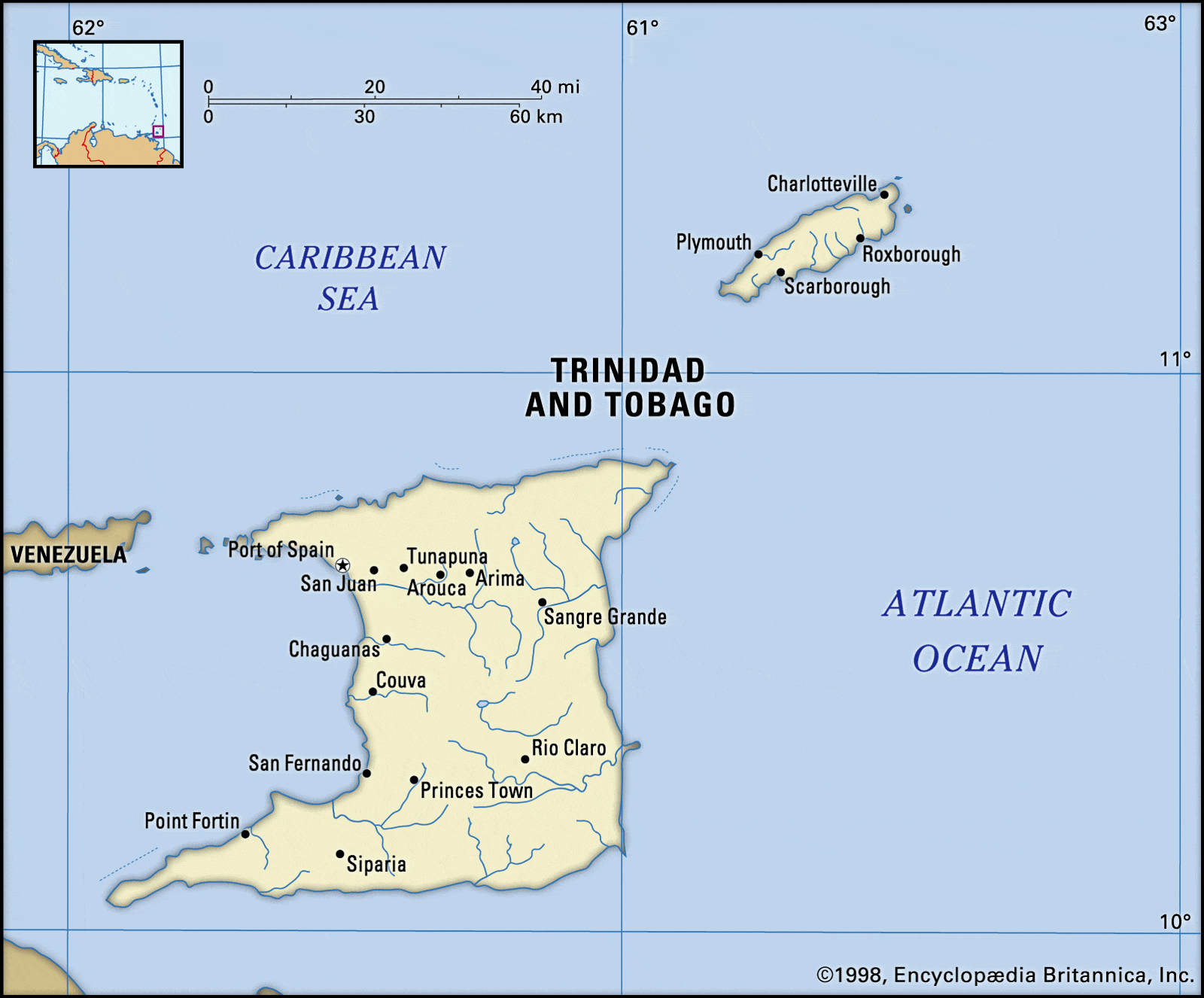
Trinidad & Tobago (Capital: Port of Spain)
Trinidad & Tobago is the first country in the Caribbean to implement India's Unified Payments Interface (UPI) platform.
Political Features:
- Trinidad & Tobago is the first country in the Caribbean to adopt India's UPI platform.
- Located in the southeastern West Indies in the Atlantic Ocean, close to South America.
- Positioned northeast of Venezuela and northwest of Guyana.
Geographical Features:
- The country has mountain ranges like the Northern Range, which is an extension of the Andes Mountains in Venezuela.
- Trinidad is home to the world's largest natural reservoir of asphalt, known as Pitch Lake.
- Mount Aripo is the highest point in Trinidad & Tobago.
- Major rivers in the country include the Ortoire and Caroni.
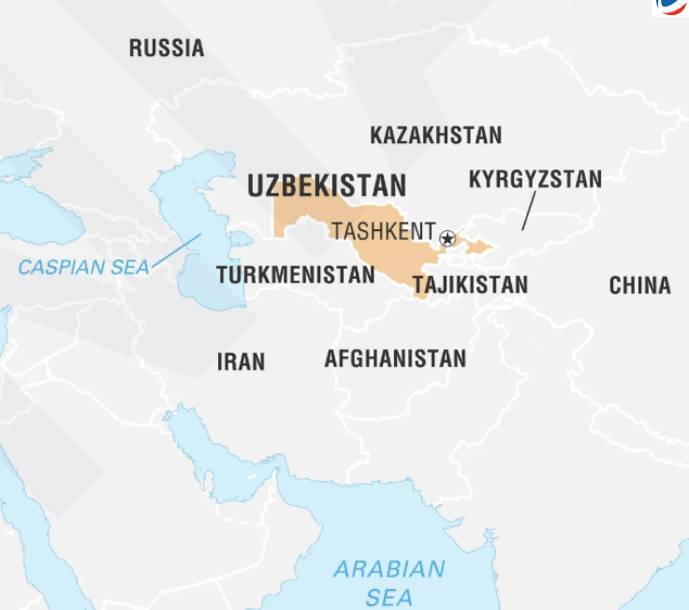
"India and Uzbekistan Ink Bilateral Investment Treaty"
- The BIT signed by both countries will enhance economic collaboration and strengthen the investment environment.
- This agreement will improve investor confidence and make them feel more secure in their investments.
About BIT
- BIT is an agreement that provides protection to investments made by nationals and companies of one country in another country.
- In 2015, India adopted a new Model BIT text to replace the previous Indian Model BIT from 1993.
- The Model text from 2015 is now used for renegotiating BITs and investment chapters in FTAs and Economic Partnership Agreements.
Key Features of Model BIT
- National Treatment: Foreign investors should receive the same treatment as domestic investors in a country.
- Protection from expropriation: Countries are restricted in their ability to seize foreign investments within their borders.
- Settlement of Disputes: Before turning to international arbitration, investors must first try to resolve disputes through local remedies.
- Other: The definition of investment is based on the enterprise involved, among other factors.
India - Uzbekistan Relations
- Uzbekistan is an important partner for India in the Central Asian region.
- The engagement between the two countries includes various aspects such as economic relations, security and defense cooperation, multilateral engagement, energy security, and people-to-people ties.
- India is one of Uzbekistan's top 10 trade partners for the year 2023-24.
- The two countries conduct joint military exercises called "DUSTLIK".
- They collaborate in international forums like the UN, G20, BRICS, and SCO.
- India has signed a contract with Uzbekistan for the supply of uranium ore concentrates.
- There is an estimated Indian community of 14,000 people living in Uzbekistan.
"AI for a Greener Future"
- Experts have recently emphasized the role of AI in addressing environmental issues.
- AI encompasses a range of technologies that empower computers to carry out complex tasks such as interpreting language and analyzing data.
How can AI be used to tackle environmental challenges?
- AI has the ability to analyze data patterns to predict future outcomes based on historical knowledge.
- AI is used for monitoring various environmental factors such as air pollution, deforestation, and plastics in the ocean.
- An example of AI's monitoring capabilities is its ability to measure changes in icebergs much faster than a human could.
- The UNEP uses AI for tracking air pollution through the Global Environment Monitoring System Air Pollution Monitoring platform.
- AI is assisting companies in tracking, tracing, and reducing their emissions by 20-30%, thus facilitating decarbonization efforts.
Negative impacts of AI on environment
- ChatGPT, an AI virtual assistant, uses 10 times more electricity than a Google Search according to the International Energy Agency.
- Data centers that host AI generate e-waste that can contain harmful substances like mercury and lead.
- AI technology consumes significant amounts of water and relies on rare minerals that are often mined in unsustainable ways.
United Nations Environment Programme (UNEP) recommendations for effective utilisation of AI
- Countries have the ability to create consistent methods for evaluating the environmental effects of AI.
- Countries can promote the use of renewable energy in data centers by companies.
- Governments have the ability to create rules that mandate companies to reveal the immediate environmental impacts of AI products and services.
- Tech companies can enhance AI algorithms to be more effective, decreasing their energy consumption, and also recycle water and reuse components when possible.
Celebrating Three Years of Ayushman Bharat Digital Mission
- The Ministry of Health and Family Welfare introduced ABDM in 2021.
- ABDM is in line with the goals of the National Health Policy (2017).
- It utilizes Digital Public Infrastructure (DPI) to promote interoperability in digital health transactions.
About ABDM
- The goal is to establish a digital health system nationwide that promotes universal health coverage in a cost-effective, accessible, inclusive, affordable, timely, and secure way.
- This initiative aims to address current deficiencies in the healthcare system by utilizing digital technology.
- The National Health Authority will be responsible for implementing this project from 2021 to 2025.
Key Features:
- ABHA ID is a special health identifier for citizens to keep track of their health records, with over 67 crore IDs created.
- HPR is a database of all healthcare professionals, with over 4.7 lakh doctors and nurses registered.
- HFR is a registry for both public and private health facilities, with over 3.3 lakh facilities registered under NHPR.
Key Initiatives taken under ABDM
- DHIS offers financial incentives to encourage the use of digital health practices.
- The Microsites Initiative aims to promote the adoption of digital health practices in the private sector.
- Additional initiatives include Scan and Share, a QR-code based OPD registration service.
ABDM Ecosystem

"Global Leaders Unite Against Antimicrobial Resistance"
- A political declaration was approved by global leaders at the 79th UNGA High-Level Meeting on Antimicrobial Resistance.
- AMR is the result of bacteria, viruses, fungi, and parasites becoming resistant to medicines, making infections harder to treat and increasing the risk of disease transmission.
AMR Declaration
- The goal is to decrease the 4.95 million annual deaths caused by bacterial AMR by 10% by 2030.
- It requires sustainable national funding and $100 million in initial funding to ensure that at least 60% of countries have funded national action plans on AMR by 2030.
- This objective will be achieved by expanding funding options and attracting more donors to the Antimicrobial Resistance Multi-Partner Trust Fund.
- The WHO recommends that at least 70% of antibiotics used for human health worldwide should be from the Access group, which have fewer side effects and lower potential for causing antimicrobial resistance.
- The Access group is part of the WHO AWaRE classification, which also includes the Watch and Reserve Groups.
- By 2030, there will be a significant decrease in the amount of antimicrobials used in the global agri-food system.
- The declaration establishes the Quadripartite Joint Secretariat on AMR (consisting of FAO, WHO, WOAH, UNEP) as the main coordinating body to address antimicrobial resistance on a global scale.
Initiatives to tackle AMR
- Implementing the One Health Approach involves integrating efforts to maintain the health of people, animals, and ecosystems in a sustainable manner.
- The WHO's Good Manufacturing Practices in 2020 now include considerations for environmental factors in manufacturing processes, such as waste management.
- The National action plans on containment of Antimicrobial Resistance (NAP-AMR) were introduced in 2017 and updated to NAP-AMR 2.0 in 2022.
- India initiated the Red Line campaign to educate the public about the inappropriate use of antibiotics.
"Agroforestry: A Missing Piece in the Forest"
- The EAC-PM emphasizes the untapped potential of agroforestry in India.
- Agroforestry involves using trees, shrubs, palms, bamboo, etc. alongside crops and animals on the same land.
- Currently, only 17% of agricultural land in India practices agroforestry, which is lower than the global average of 43%.
Significance
- Enhancing farmers' income by growing high-value trees such as Teak.
- Agroforestry serves as a major source of timber and other resources, providing a significant percentage of small timber, wood for furniture and construction, and raw material for paper and pulp.
- Increasing Soil Organic Carbon (SOC) content to boost crop yields, sequester carbon, and improve water use efficiency.
Challenges
- The Conservation-First Policy Approach has led to a decrease in timber production due to restrictions on tree felling.
- Policies like the National Forest Policy of 1988 and the Godavarman Case have limited tree felling, resulting in a significant increase in timber imports.
- The complicated process of obtaining felling and transit permits hinders the adoption of agroforestry.
- The National Transit Pass System (NTPS) is not being fully utilized for the transportation of forest products like timber and bamboo.
- India's import dependency on timber is evident, with $2.7 billion worth of timber being imported according to the ITTO in 2023.
Recommendations
- Removing regulations on valuable native timber species such as Teak, Gurjan, and Meranti.
- Giving more importance to owning trees rather than owning land to make it easier to prove ownership using technology like TiGram.
- Implementing a centralized system for permits related to transporting and cutting down trees through a single platform.
"India's Commitment to Health Equity"
India restated its dedication to improving Social Determinants of Health during the G20 Joint Finance-Health Task Force High-Level Meeting at the 79th session of the UN General Assembly.
Social Determinants of Health (SDH)
- Social determinants of health (SDH) are external factors that impact health results.
- They encompass the environments in which individuals are raised, work, reside, and age, as well as the broader influences and structures that shape daily living conditions.
- These influences and structures consist of economic policies, development priorities, societal standards, social policies, and governmental systems.
- SDH examples include education, income, social protection, unemployment, working conditions, food insecurity, housing, early childhood development, and social inclusion.
- The WHO Commission on SDH has set three main goals to reach by 2040.
- These goals include reducing the life expectancy gap between countries and social groups by half.
- They also aim to cut adult mortality rates in all countries by half.
- Lastly, the commission hopes to achieve a 90-95% reduction in child and maternal mortality rates.
Role of SDH in Health outcomes
- Many research studies indicate that social determinants of health (SDH) contribute to 30-55% of health outcomes.
- SDH play a role in creating health inequities, which are unjust and preventable differences in health status observed within and among nations.
- Regardless of a country's income level, there is a social gradient in health, where individuals in lower socioeconomic positions tend to have poorer health outcomes.
India’s approach for SDH
- India is promoting a comprehensive approach involving all government sectors and the One Health concept.
- India is looking into the possibility of using debt-for-health swaps to alleviate financial burdens while improving health equity.
- India is urging G20 countries to work together on data collection and analysis to strengthen global health systems.
- India's key initiatives such as Ayushman Bharat, Swachh Bharat Mission, Jal Jeevan Mission, and Pradhan Mantri Awas Yojana are highlighted.