
Daily Current Affairs UPSC 14 September 2024
Welcome to our daily current affairs blog post for UPSC aspirants! In today's edition, we will be discussing the most significant events and news updates that took place on 14th September 2024. Staying updated with current affairs is crucial for UPSC preparation, as it not only helps you stay informed but also enhances your understanding of various subjects. So, let's dive into the important happenings of the day and explore their potential impact on the upcoming UPSC examinations.

Assam cascade frog (Amolops formosus)
- Researchers from the Wildlife Institute of India examined Assam cascade frogs in two Himalayan streams within the Churdhar Wildlife Sanctuary in Himachal Pradesh.
- The study aimed to determine how different water parameters relate to the population abundance and density of the Assam cascade frog species.
- The Assam cascade frog is native to the Himalayan regions of India, Bangladesh, Bhutan, and Nepal.
- This species is utilized as an indicator species to monitor the long-term health of mountain streams.
- Indicator species like the Assam cascade frog can provide insights into the environmental conditions and changes within an ecosystem.
- These species can also indicate the overall diversity of other species, taxa, or communities present in a specific area.
Nidhi companies
- Ministry of Corporate Affairs is taking action against Nidhi companies that are not following regulations.
- Nidhi companies are established under the Companies Act, 2013 and must adhere to the Nidhi Rules, 2014 set by the Central Government.
- The rules for Nidhi companies have been updated in 2022.
- The main goal of Nidhi companies is to promote saving and thriftiness among members by accepting deposits and providing loans exclusively to members.
- Nidhi companies must have at least 200 members and a net owned fund of at least ten lakh rupees.
Cluster Munition (CM)
- According to CM Monitor 2024, Cluster Munitions (CM) were responsible for 93% of global casualties in 2023, with children making up half of the victims.
- Cluster Munitions are weapons that release multiple submunitions or bomblets over a wide area, many of which are unreliable and can remain unexploded, posing dangers to civilians during and after conflicts.
- The Convention on Cluster Munitions is an international treaty that came into effect in 2010, with over 100 states agreeing to prohibit the use, production, transfer, and stockpiling of CM. India is not a party to this convention.
Zorawar tanks
- DRDO has successfully completed the first phase of field firing trials for the Zorawar tanks.
- The Zorawar tanks are light tanks created to improve the Indian army's capabilities at high altitudes.
- Developed collaboratively by DRDO and L&T, the tanks are named after General Zorawar Singh, known for his victories in Tibet.
- Key features of the Zorawar tanks include integration with drones and battle management systems for better situational awareness.
- The tanks are designed for quick deployment and maneuverability in mountainous areas, and are amphibious for versatility in riverine operations.
Tardigrades
- A recent study on the first tardigrade fossil discovered has allowed researchers to classify them and trace their evolutionary history.
- Tardigrades, also known as Water Bears or Moss Piglets, are small eight-legged aquatic creatures that can be found in various habitats around the world.
- There are two main classes of tardigrades: Heterotardigrada and Eutardigrada.
- Tardigrades have the remarkable ability to survive extreme environmental conditions such as intense heat, freezing cold, ultraviolet radiation, and even outer space.
- These resilient creatures can survive harsh conditions by almost completely stopping their metabolism, a process known as cryptobiosis, and only reviving when conditions improve.
INDUS-X Initiative
- The third edition of the India-US Defence Acceleration Ecosystem (INDUS-X) Summit recently concluded in the USA.
- Key highlights of the Summit included the release of the INDUS-X Impact Report and the launch of the official INDUS-X webpage.
- The INDUS-X Initiative was launched in June 2023 by the U.S. Department of Defense (DoD) and the Indian Ministry of Defense (MoD).
- The objective of the initiative is to expand the strategic technology partnership and defense industrial cooperation between the two governments, businesses, and academic institutions.
- INDUS-X acts as an 'Innovation Bridge' connecting defense startups from India and the USA.
- It is part of the U.S.-India initiative on Critical and Emerging Technology (iCET) and is steered by iDEX on behalf of the Ministry of Defence and DIU under the U.S. Department of Defense (DoD).
Co-location Facility
- SEBI closed the case against NSE regarding co-location allegations.
- Co-location, also known as Proximity Hosting, enables brokers to place their servers at stock exchanges for a fee.
- This proximity allows for faster price feeds and trade execution, resulting in substantial profits.
- SEBI issued guidelines for co-location in 2015 and announced additional measures to enhance the Algorithmic Trading and Co-location framework in 2018.
Quality Control Orders (QCO)
- The government has implemented strict regulations through the Quality Control Order (QCO) to improve fire safety in non-domestic furniture.
- QCOs are published by the Central Government in consultation with BIS to bring products under mandatory certification.
- Products covered by QCOs must meet Indian Standards and display the Standard Mark with a License or Certificate of Conformity from BIS.
- Examples of products covered by QCOs include textiles conforming to IS 15768:2008.
Nigeria (Capital: Abuja)
The flooding in Northeast Nigeria was caused by heavy rains and the failure of the Alau Dam.
Political Features of Nigeria
- Located on the west coast of Africa.
- Nigeria is the most populous African country.
- Territorial boundaries include Niger to the North, Chad and Cameroon to the East, and Benin to the West.
- Maritime boundaries include the Gulf of Guinea of the Atlantic Ocean to the South.
Geographical Features of Nigeria
- Major relief features include Sokota Plains in the northwest and Borno Plains in the northeast.
- The highest point in Nigeria is Chappal Waddi.
- Major rivers in Nigeria include Sokoto and Niger, which form the Niger delta draining into the Gulf of Guinea.
- The major lake in Nigeria is Lake Chad, a freshwater lake at the conjunction of Chad, Cameroon, Nigeria, and Niger.

"Port Blair Renamed Sri Vijaya Puram"
- Sri Vijaya Puram symbolizes the triumph of the Indian freedom movement and showcases the unique contributions of the A&N Islands.
- Netaji Subhash Chandra Bose raised the Tiranga for the first time at this location, which also houses the Cellular Jail.
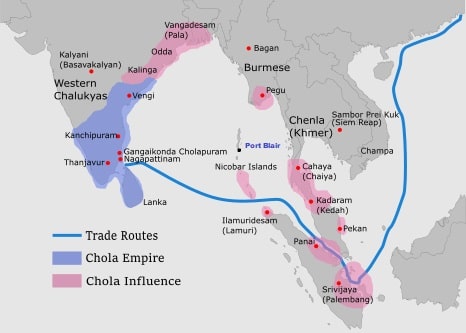
- The renaming of the area signifies a break from its colonial past and emphasizes the modern strategic importance of the A&N Islands, once a naval base for the Chola Empire.
Naval Power of the Chola Empire
- The Chola rulers Rajaraja and Rajendra I were instrumental in building a formidable navy during their reigns from 985 to 1044.
- Their aggressive military policies and control over peninsular India gave them dominance over the seas, transforming the Bay of Bengal into the 'Chola lake'.
- This naval strength facilitated extensive trade with Southeast Asian countries through key trading centers like Nagapattinam.
Significant Naval Expeditions of the Chola Empire
- Rajaraja's naval victories included defeating the Chera navy and annexing parts of Sri Lanka and the Maldives.
- Rajendra I's conquest of Sri Lanka made it a Chola province, and his expedition against the Sailendra Empire led to the conquest of regions in the Malay Peninsula and Sumatra.
"IISc Scientists Achieve Neuromorphic Computing Breakthrough"
- Memristor semiconductor devices have been created using metal-organic films instead of traditional silicon-based technology.
- This new material allows Memristors to imitate the information processing methods of the human brain, utilizing networks of neurons and synapses.
Understanding Neuromorphic Computing
- Neuromorphic computing, also known as neuromorphic engineering, replicates the structure and function of the human brain.
- It involves the design of hardware and software that simulate neural networks and synapses to process information.
Mechanism of Neuromorphic Computing
- Neuromorphic computing imitates biological brains through hardware like spiking neural networks (SNNs).
- SNNs are made up of nodes (spiking neurons) connected by artificial synapses, which use analog circuitry to transmit signals.
- This method encodes data through discrete analog signal changes, unlike binary systems used in standard computers.
Advantages of Neuromorphic Computing
- Adaptability: Capable of excelling at solving new problems in real-time.
- Event-driven computation: Efficient power usage by only activating necessary components.
- High performance: Reduced latency by integrating memory and processing in neurons.
- Parallel processing: Faster operation by handling multiple tasks across different neurons simultaneously.
Challenges in Neuromorphic Computing
- Lack of benchmarks and standards, limited accessibility to software, decreased accuracy, etc.
Information Processing in the Brain
- Neurons are the basic units of the brain and nervous system, transmitting information between different brain areas and the body.
- When a neuron becomes active or "spikes," it triggers the release of chemical and electrical signals.
- These signals travel through synapses, connection points that allow neurons to communicate with each other.
"New Rules for GNSS-Based ETC System"
- The Ministry of Road Transport and Highways has introduced the National Highways Fee (Determination of Rates and Collection) Amendment Rules, 2024 in line with the National Highways Act, 1956.
- The rules have been updated to include provisions for GNSS-based ETC, alongside existing methods such as FASTag and Automatic Number Plate Recognition (APNR) Device.
- Mechanical vehicles (excluding National Permit vehicles) can travel up to 20 kms on National Highways in each direction once a day without paying any toll fees.
- A dedicated lane for GNSS at Fee Plazas has been established, with non-GNSS vehicles incurring a double fee if they enter this lane.
- The GNSS-based ETC system is expected to eventually replace FASTag for toll collection on highways.
About GNSS-based ETC
- Working of the system: The system utilizes satellite-based imaging to monitor the vehicle's location and calculate tolls based on the distance traveled. This is achieved through the use of an On-Board Unit (OBU) and Automatic Number Plate Recognition (ANPR) cameras.
- Main components of the system: The OBU is a GNSS-enabled device that is installed in the vehicle to track the vehicle's route and calculate toll fees. ANPR cameras are installed on highways to identify the vehicle's number plate and deduct the appropriate toll amount.
- Benefits of the system: By utilizing satellite-based imaging and these components, the system reduces the need for traditional roadside tolling infrastructure, leading to decreased congestion and improved traffic flow.
Comparison between FASTags & GNSS-based ETC
| Parameters | GNSS-based ETC | FASTags |
|---|---|---|
| Technology | The use of satellite imaging and ANPR technology | RFID technology is used for FASTag |
| Equipment needed to be installed in Vehicles | OBU equipped with GNSS connectivity | The RFID tag is attached to the windshield |
| Calculation of Toll tax | Utilizing real-time data on vehicle movement | Rates are predetermined and do not change |
"Importance of Indigenous EW Systems"
- The Spectrum EW Conference focused on the importance of EW in Air Strategy.
- The conference highlighted the need for developing Indigenous EW systems with collaboration from Indian academia, Defence Public Sector Undertakings, and Indian Private Industries.
About Electronic Warfare (EW)
- Definition of Electronic Warfare (EW)
- Electronic Warfare is a military strategy that involves using electromagnetic energy to detect, exploit, reduce, or prevent the hostile use of signals in the electromagnetic spectrum, such as radio, infrared, or radar.
- Three Major Areas of Electronic Warfare
- Electronic Support Measures (ESM): Involves intercepting and analyzing electromagnetic signals to recognize threats, gather intelligence, and plan operations.
- Electronic Counter-Measures (ECM): Focuses on defending against jamming and deception using cyber and multispectral tools to protect friendly forces' communications.
- Electronic Counter-Countermeasures (ECCM): Utilizes electromagnetic signals or directed energy to disrupt and neutralize enemy electromagnetic capabilities.
- Challenges Faced by EW Systems
- Rapid technological changes require continuous updates in EW capabilities to stay ahead of potential threats, including cyber-attacks that can compromise the effectiveness of electronic warfare systems.
Need of EW for India
- Strengthening national defense by countering advanced threats in the electromagnetic spectrum from enemy countries, such as China's Y-9LG electronic warfare platform.
EW systems of India
- India's Shakti EW system serves as an electronic defense against modern radars and anti-ship missiles.
- The Programme Sangraha is a joint initiative between DRDO and the Navy for the development of five different types of indigenous EW systems.
- The Integrated Electronic Warfare System (IEWS) is specifically designed for use in plains, semi-desert regions, and mountainous terrain.
- Other systems include Himshakti (IEWS) and Samyukta, which is designed for multiple jamming capabilities.
"New Delhi Conference: International Arbitration & Rule of Law"
- The Supreme Court (SC) and Permanent Court of Arbitration (PCA) worked together with the United Nations Commission on International Trade Law (UNCITRAL) to organize the event.
- The event celebrated the 75th anniversary of the SC and the 125th anniversary of the PCA.
Arbitration
- Arbitration is one of several methods of Alternative Dispute Resolution, such as Mediation and Negotiations.
- In arbitration, the parties agree to submit their dispute to one or more arbitrators who will make a final decision.
- Arbitration is known for its neutrality, confidentiality, and the fact that decisions made are binding.
Existing Frameworks on Arbitration
Domestic
- The Arbitration and Conciliation Act of 1996, based on the UNCITRAL Model Law, is used for various types of arbitrations, including those involving commercial disputes.
- The New Delhi International Arbitration Centre Act of 2019 was created to support institutional arbitration.
- The Indian Council of Arbitration is a registered society under the Societies Registration Act of 1860.
Global
- The International Court of Arbitration was created in 1923 by the International Chamber of Commerce.
- The Permanent Court of Arbitration was established in 1899 in The Hague through the Convention for the Pacific Settlement of International Disputes, with India being a party to it.
- The UNCITRAL Model Law on International Commercial Mediation and International Settlement Agreements is a set of guidelines for resolving international commercial disputes through mediation.
Rule of law
- The concept of the rule of law emphasizes the importance of regular laws over arbitrary government power.
- Law plays a crucial role in promoting arbitration and resolving disputes.
- It ensures a level playing field, which leads to stability, fairness, and predictability.
- The rule of law protects rights, enforces contracts, and facilitates amicable resolutions of conflicts.
"New Guidelines for Offshore Wind VGF Scheme"
The guidelines notified by the Ministry of New and Renewable Energy (MNRE) are a crucial step towards implementing the National Offshore Wind Energy Policy, 2015.
VGF Scheme for Offshore Wind Energy Projects
- The VGF Scheme aims to install 1000 MW Offshore Wind Energy Projects off the coast of Gujrat and Tamil Nadu, with an outlay of ₹6853 crore.
- The VGF will be provided until FY 2031-32 and will also include the upgradation of two ports to meet logistical requirements, with an outlay of ₹600 crore.
- The implementation will be carried out by MNRE in collaboration with Solar Energy Corporation of India Limited (SECI) as the Implementing Agency, and the National Institute of Wind Energy (NIWE) will provide technical support as the Nodal Agency.
- The projects will be selected through competitive bidding by SECI, with an option for a Greenshoe option allowing for an overallotment of 50 MW in addition to the initial 500 MW.
Offshore Wind Energy Potential in India
- India's long coastline of 7600 km and large Exclusive Economic Zones (EEZ) present significant potential for offshore wind energy projects.
- Offshore wind energy is crucial in achieving the Renewable energy target of 500 GW installed capacity by 2030 and helps address issues of land availability.
- However, challenges such as higher costs per MW for offshore turbines due to stronger structures and foundations needed, as well as concerns about corrosion and negative impacts on marine biodiversity, need to be addressed.