Daily Current Affairs UPSC 19 September 2024
Welcome to our daily current affairs blog post for UPSC aspirants! In today's edition, we will be discussing the most significant events and news updates that took place on 19th September 2024. Staying updated with current affairs is crucial for UPSC preparation, as it not only helps you stay informed but also enhances your understanding of various subjects. So, let's dive into the important happenings of the day and explore their potential impact on the upcoming UPSC examinations.

India-Denmark Green Strategic Partnership
- Recently, MoUs were signed to enhance maritime relations between India and Denmark under the Green Strategic Partnership.
- The Green Strategic Partnership (GSP) was established in 2020 to boost economic relations, promote green growth, create jobs, and address global challenges.
- The focus of the GSP is on implementing the Paris Agreement and the UN Sustainable Development Goals.
- A Joint Action Plan for the Green Strategic Partnership for the years 2021-2026 has been developed to further strengthen cooperation.
- Collaboration under the GSP has expanded to include areas such as Quality shipping, Cooperation on Port State Control, and Maritime training and education.
NPS Vatsalya Scheme
- The NPS Vatsalya scheme is a pension scheme specifically designed for minors.
- Eligibility for the scheme includes all citizens under the age of 18.
- The scheme can be seamlessly converted into a regular NPS account once the minor reaches the age of majority.
- The scheme is regulated and administered by the Pension Fund Regulatory and Development Authority (PFRDA).
- The objective of the scheme is to promote long-term financial planning, savings habits, and provide a dignified life in old age.
- Subscribers are required to contribute a minimum of Rs 1000 per annum, with no maximum limit.
- PFRDA offers multiple investment choices to subscribers, including government securities, corporate debt, and equity.
AVGC-XR sector
- The Union Cabinet has approved the establishment of the National Centre of Excellence (NCoE) for Animation, Visual Effects, Gaming, Comics, and Extended Reality (AVGC-XR).
- NCoE will be located in Mumbai and will operate as a Section 8 Company under the Companies Act, 2013.
- The center will provide specialized training programs, support research and development, and serve as an incubation center for the AVGC-XR sector.
- The AVGC-XR industry currently employs 2.6 lakh people and is projected to create 23 lakh direct jobs by 2032.
- Revenues in the industry are expected to reach $26 billion by 2030, a significant increase from the current $3 billion.
- Challenges facing the sector include a lack of standardization, limited availability of skilling and vocational training centers, among others.
Greater One-Horned Rhino
- The International Rhino Foundation (IRF) released the 'State of the Rhino' report.
- The report shows that Greater One-Horned Rhinos are benefiting from improved habitats and wildlife corridors.
- The population of Greater One-Horned Rhinos has increased by 20% in the last decade, now exceeding 4,000 animals.
- Greater One-Horned Rhinos are found in the Indo-Nepal Terai, northern parts of West Bengal, and Assam.
- They are classified as Vulnerable by the IUCN.
- Greater One-Horned Rhinos are usually solitary, except for females with young, and males maintain loosely-defended territories.
- Gestation for Greater One-Horned Rhinos lasts approximately 15-16 months, with mothers giving birth to one calf every 2-3 years.
- The population of Greater One-Horned Rhinos in India is 3,262 as of 2021, with Assam having the largest population.
- More than 90% of Greater One-Horned Rhinos in India are found in Kaziranga National Park.
Chandrayaan-4
- The Union Cabinet has approved the Chandrayaan-4 Mission as a follow-up to Chandrayaan-3, which successfully landed on the Moon.
- Chandrayaan-4 aims to develop and showcase technologies for landing on the Moon, collecting lunar samples, and safely returning to Earth.
- The mission will lay the groundwork for an Indian moon landing by 2040 and the safe return of astronauts.
- ISRO will oversee the development of the spacecraft and its launch.
- The mission is expected to be completed within 36 months with a budget of ₹2104.06 crore.
Pheromone
- Indian scientists have created a sustainable pheromone dispenser that releases pheromones at a controlled rate to reduce pest control costs.
- The released pheromones change the behavior of insects and lure them to sticky traps.
- Pheromones are chemical signals that prompt a response or specific behaviors from the same or opposite sex of the same species.
- Pheromones can be present in body fluids such as urine, sweat, specialized glands, and genital secretions.
- Insects use pheromones to attract mates, warn about predators, and locate food.
Circumnutation
- A new study has highlighted the importance of circumnutations in plant growth patterns.
- Circumnutation refers to the continuous small movements made by plants to explore their surroundings.
- These movements can appear as spirals or zigzags.
- Circumnutation is a common behavior across plant species that helps them adapt to their environment and optimize their growth potential.
- For example, sunflowers exhibit a zigzag pattern when grown in dense rows to avoid shade and maximize sunlight exposure.
- Researchers have found that circumnutation movements in plants often appear random and unpredictable.
Trademark Search Technology
- The Ministry of Commerce & Industry introduced new technology for trademark search using Artificial Intelligence and Machine Learning.
- The IP Saarthi Chatbot is a digital assistant that helps users with Intellectual Property registration.
- The Trademark Search Technology uses advanced AI and ML algorithms for accurate trademark identification.
- It simplifies search processes for both domestic and international businesses and enhances trademark protection.
- The benefits include faster trademark registration, better user experience, and increased international cooperation.
Amazon River
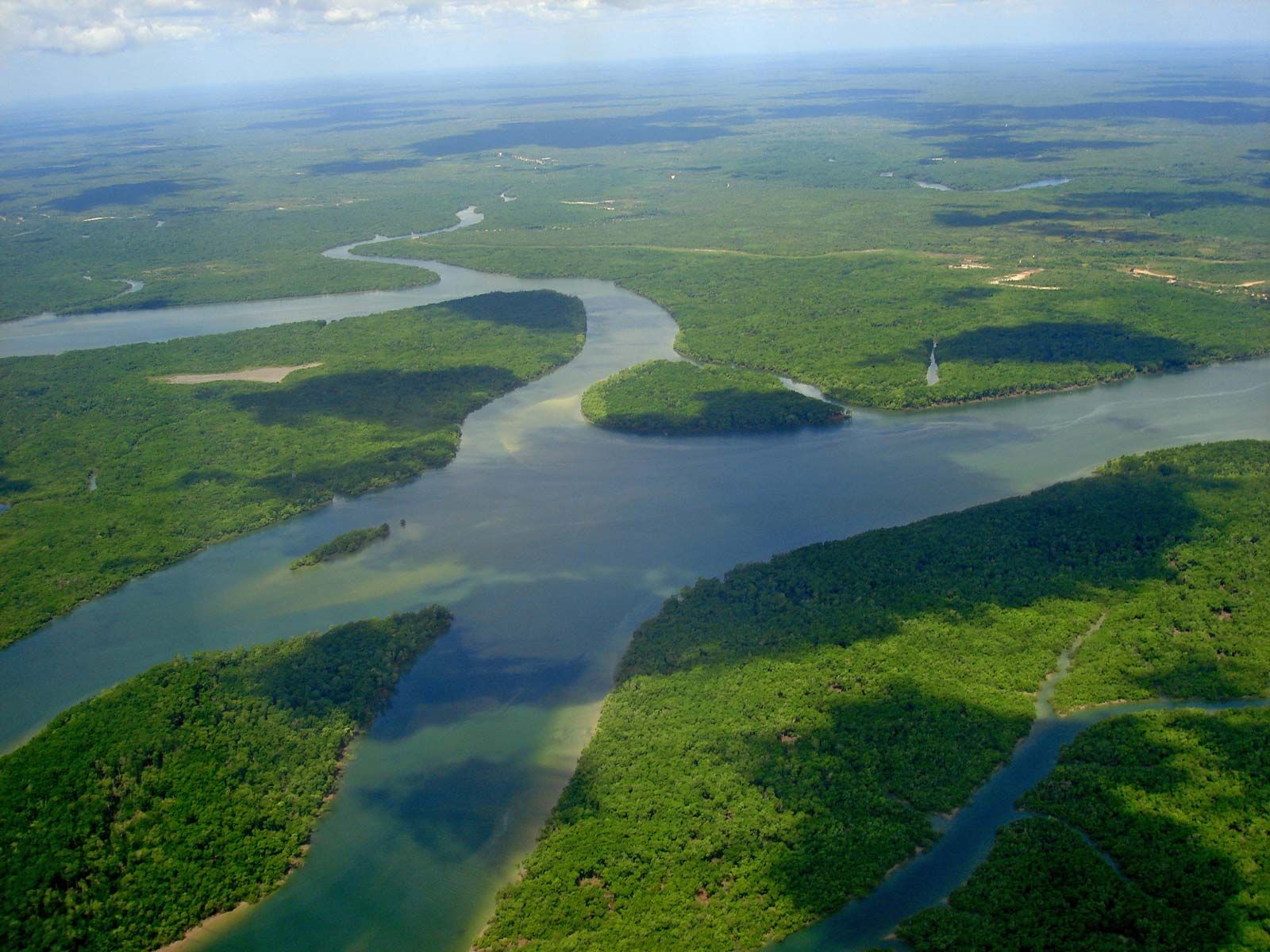
- Solimoes, a major tributary of the Amazon River, is currently experiencing its worst drought on record.
- Lake Tefé, located nearby, has also dried up due to the drought.
- The Amazon River is the largest river system in the world in terms of water volume and basin area.
- It originates in the Peruvian Andes and its basin includes parts of Brazil, Peru, Colombia, Ecuador, Bolivia, and Venezuela.
- The Amazon River has approximately 1,100 tributaries, with notable ones including the Japurá, Juruá, Madeira, Negro, Purus, and Xingu rivers.
- The river ultimately drains into the Atlantic Ocean on the northeastern coast of Brazil.
"Union Cabinet Approves PM-JUGA Initiative"
PM-JUGA is built on the knowledge and achievements of PM-JANMAN.
- Goal: Enhancing the socio-economic status of tribal communities through comprehensive coverage of tribal families in villages with a majority tribal population and in aspirational districts.
- India has a Scheduled Tribe population of 10.45 crore according to the 2011 census, belonging to over 705 tribal communities.
- Total budget: Rs.79,156 crore, with the Central government contributing Rs.56,333 crore.
- Reach: 63,000 villages will benefit, impacting over 5 crore tribal individuals in 549 districts across 30 States/UTs.
- Implementation: Involves 25 interventions to be carried out by 17 different ministries using funds allocated under the Development Action Plan for Scheduled Tribes (DAPST) over the next 5 years.
- Tribal villages will be mapped and their progress monitored on the PM Gati Shakti platform.
- This initiative demonstrates cooperative federalism and a comprehensive government approach.
Mission’s Four Goals:
- Goal 1: Creating better infrastructure like solid houses for families and enhancing village facilities.
- Goal 2: Supporting economic empowerment through training, promoting entrepreneurship, and improving self-employment opportunities.
- Goal 3: Ensuring everyone has access to quality education.
- Goal 4: Promoting healthy living and ensuring a dignified aging process.
Innovative Schemes under PM JUGA
- 1000 Home stays will be promoted under Swadesh Darshan to support tribal tourism and provide alternative livelihood opportunities.
- Special focus will be given to 22 lakh Forest Right Holders (FRA) residing in forest areas to recognize and secure their forest rights.
- Government residential schools and hostels will be improved to match the standards of PM-Shri Schools.
- Advanced facilities for diagnosing sickle cell disease will be provided.
- A Tribal Multipurpose Marketing Centre will be established to market tribal products.
"Government Approves One Nation One Election Proposal"
The recommendations of the High-Level Committee on ONOE/Simultaneous Elections, chaired by former President Shri Ram Nath Kovind, have been approved.
What is meant by ONOE?
This involves conducting elections for the House of Representatives, all state legislatures, and local government bodies such as municipalities and village councils simultaneously.
Benefits of ONOE:
- The government spent Rs 60,000 crore in the 2019 LS elections, leading to a decrease in the government exchequer.
- Frequent elections can cause 'voters' fatigue' and impact voter turnout.
- The frequent imposition of the Model Code of Conduct causes policy paralysis, affecting supply chains, business investments, and economic growth.
- The frequent use of government officials and security forces in elections can adversely affect the smooth delivery of services.
Issues With ONOE
- Marginalization of regional parties: National parties can overpower smaller parties at the state level, diminishing their influence and representation in government decision-making.
- Reduction of accountability of political leadership: Frequent elections ensure that lawmakers are constantly under scrutiny and pressure to perform well in order to secure re-election.
- Concerns Regarding Federalism: The frequent imposition of article 356 raises concerns about the autonomy and power of state governments in the federal system.
- Concerns regarding Principle of free and fair elections: Synchronised elections may lead to voters mixing national and state issues, potentially impacting the fairness and accuracy of election outcomes.
Roadmap Suggested by High Level Committee
Amendments to Constitution in two steps:
- First step: Simultaneous conduct of Lok Sabha and Assembly elections without requiring ratification of states.
- Second step: Synchronization of first step with local elections by conducting Municipalities and Panchayat elections within 100 days of general elections, requiring ratification by at least half of the states.
Dealing with Hung House/No-Confidence Motion:
- Fresh elections to constitute a new House of People or State Legislative Assembly for the unexpired term of the previous House.
Common electoral roll for all three tiers of Government:
- Implementing a single electoral roll for Lok Sabha, Assembly, Municipalities, and Panchayats to streamline the electoral process.
"Union Cabinet Approves Bharatiya Anthariksh Station under Gaganyaan Programme"
- The Cabinet has approved the development of the first module of Bharatiya Anthariksh Station (BAS-1) and missions to demonstrate and validate technologies for building and operating the station.
- Currently, there are two space stations in orbit: the International Space Station and China's Tiangong Space Station.
Revised Gaganyaan Programme
- The Gaganyaan Programme, approved in 2018, aims to conduct human spaceflight to Low Earth Orbit (LEO) and develop critical technologies for long-duration missions.
- Under the revised programme, ISRO will undertake four missions by 2026 for the ongoing Gaganyaan Programme and develop BAS-1 with four missions for technology demonstration by December 2028.
- ISRO plans to construct additional modules by 2035 to achieve full operational status for the space station, which is currently in the conceptualization phase.
Significance of BAS
- The development of BAS aims to fulfill the Amrit Kaal vision for creating the station by 2035 and conducting an Indian Crewed Lunar Mission by 2040.
- BAS will boost microgravity-based scientific research, technology development activities, and encourage innovations.
- The station will also increase employment opportunities in high-tech space and allied sectors with enhanced industrial participation.
Related News
- The Union Cabinet has given approval for the development of the Next Generation Launch Vehicle (NGLV), which is a key milestone in the establishment and operation of the BAS.
- The NGLV will have three times the payload capacity of the Launch Vehicle Mark-3 (LVM3), allowing it to carry up to 30 tonnes to Low Earth Orbit (LEO).
- The NGLV will feature a reusable first stage, leading to cost-effective access to space, as well as modular green propulsion systems.
- The development of the NGLV will involve three test flights and is expected to be completed within 8 years.
"Union Cabinet Approves Bio-RIDE Scheme"
Bio-RIDE is a component of the Indian government's initiative to utilize bio-innovation to address both national and global issues in areas like healthcare, agriculture, and environmental sustainability.
About Bio-RIDE Scheme
Nodal Department and Objectives
- Nodal Department: Department of Biotechnology, Ministry of Science & Technology
- Objectives:
- Strengthen India's position as a global leader in biomanufacturing and biotechnology
- Make India a US$300 billion Bioeconomy by 2030
Three Components of the Scheme
- Biotechnology Research and Development (R&D):
- Assistance for human resource development, Bioinformatics, Biotech facilities, Centre of Excellence, etc.
- Industrial and Entrepreneurship Development (I&ED):
- Assistance for schemes including Public Private Partnership Programmes, Bio-clusters, and Biotech parks.
- Biomanufacturing and Biofoundry (B&B):
- Aims to further India's goal of creating a Circular Bioeconomy in alignment with the Lifestyle for the Environment (LiFE) mission
- A circular bioeconomy offers a conceptual framework for using renewable natural capital to transform and manage land, food, health, and industrial systems, with the goal of achieving sustainable wellbeing in harmony with nature
Funding
- Rs.9,197 crore during the 15th Finance Commission (2021-22 to 2025-26)
Significance of Scheme
- Support bio-entrepreneurship by providing seed funding, incubation, and mentorship
- Promote innovation through grants and incentives for R&D in various bio-related fields
- Foster collaboration between industry and academia to speed up the commercialization of bio-based products
- Promote sustainable biomanufacturing practices and develop human resources in biotechnology
- Seek extramural funding to support research and development efforts outside of traditional institutions
"Continuation of PM-AASHA Schemes Approved"
- The government has combined the Price Support Scheme (PSS) and Price Stabilization Fund (PSF) into PM AASHA to better assist farmers and consumers.
- PM-AASHA will now include elements of the Price Support Scheme (PSS), Price Stabilization Fund (PSF), Price Deficit Payment Scheme (PDPS), and Market Intervention Scheme (MIS).
Key Features of Renewed PM-AASHA Scheme:
Objectives of the Scheme
- The main goal of the scheme is to ensure that farmers receive fair prices for their oilseeds, pulses, copra, etc.
- This is important to support the livelihoods of farmers and encourage agricultural production in the country.
Total Financial Outlay
- The scheme has a total financial outlay of Rs. 35,000 crore during the 15th Finance Commission Cycle up to 2025-26.
- This funding will be used to implement various components of the scheme to achieve the objectives set out.
Components of the Scheme
- Price Support Scheme (PSS)
- This component involves the procurement of notified pulses, oilseeds, and copra at the Minimum Support Price (MSP) set at 25% of national production.
- Ceilings will not be applicable for certain crops for the 2024-25 season, such as Tur, Urad, and Masur.
- Price Stabilization Fund (PSF)
- Under this component, the government will procure pulses at market price when it is above the MSP, including from pre-registered farmers on specific portals.
- Price Deficit Payment Scheme (PDPS)
- The coverage for oilseeds under this scheme has been increased to 40%, with a 4-month implementation period.
- Market Intervention Scheme (MIS)
- The coverage under the MIS has been increased to 25%, and now differential payments will go directly into the farmers' accounts.
- The government will also cover transport and storage costs for Tomato, Onion, and Potato (TOP) crops under this scheme.
- By implementing these components effectively, the scheme aims to support farmers by ensuring fair prices for their produce and providing financial assistance where needed.
Benefits from converged Schemes:
- PSS promotes growing a variety of crops and decreases reliance on imported pulses, oilseeds, and copra.
- PSF safeguards consumers from price fluctuations by holding strategic reserves of pulses and onions.
- MIS ensures that farmers receive fair prices for perishable horticulture crops and helps stabilize prices for consumers.
"FDA Grants Breakthrough Status to Neuralink's 'Blindsight'"
- Blindsight is a new implant designed to restore vision for those who are blind, providing low-resolution vision initially.
- Breakthrough device designation is meant to speed up the development of devices that offer new treatments or diagnostics for serious conditions.
- Neuralink, established by Elon Musk in 2016, is a company dedicated to developing Brain Computer Interfaces (BCIs) for healthcare purposes.
About BCIs:
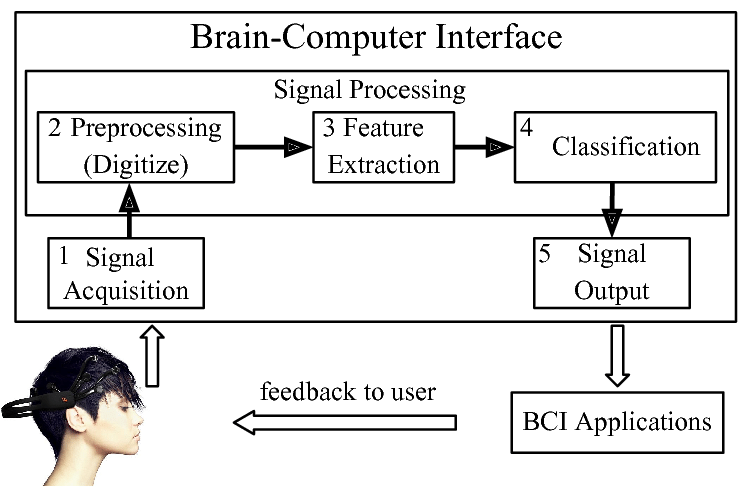
Users can communicate or manipulate external devices using only their brain signals, without the need for any physical actions.
Types of BCIs
- Invasive BCIs involve placing chips/sensors directly into the cortex, like Neuralink's implant.
- Non-invasive BCIs place sensors on the scalp.
- Partially invasive BCIs are implanted inside the skull but rest outside the brain.
Applications of BCIs
- Medical applications include restoring lost functions like controlling prosthetic limbs or aiding patients with neurological disorders.
- Mental wellness applications provide real-time feedback on mental well-being and support effective mental health practices.
- Defense applications improve battlespace awareness and management of autonomous systems.
- Gaming and entertainment applications offer immersive experiences through neural communication.
Issues with BCIs
- Cybersecurity risks like brain tapping, which intercepts brain signals.
- Ethical concerns regarding informed consent.
- Safety issues such as tissue damage, seizures, and cognitive impairment.