
Daily Current Affairs UPSC 11 September 2024
Welcome to our daily current affairs blog post for UPSC aspirants! In today's edition, we will be discussing the most significant events and news updates that took place on 11th September 2024. Staying updated with current affairs is crucial for UPSC preparation, as it not only helps you stay informed but also enhances your understanding of various subjects. So, let's dive into the important happenings of the day and explore their potential impact on the upcoming UPSC examinations.

Sanchar Saathi
- More than one crore fraudulent mobile connections have been disconnected with the help of Sanchar Saathi, a citizen-centric platform launched by the Department of Telecommunication.
- The objective of Sanchar Saathi is to fight cyber fraud by enabling citizens to report suspicious calls and messages.
- Sanchar Saathi contains various modules including Chakshu for reporting suspected fraud communication, CEIR for blocking lost or stolen mobile phones, TAFCOP for knowing mobile connections taken in your name, KYM for IMEI verification, RICWIN for reporting incoming international calls with Indian numbers, and KYI for knowing your wireline internet service provider.
Northern United-2024
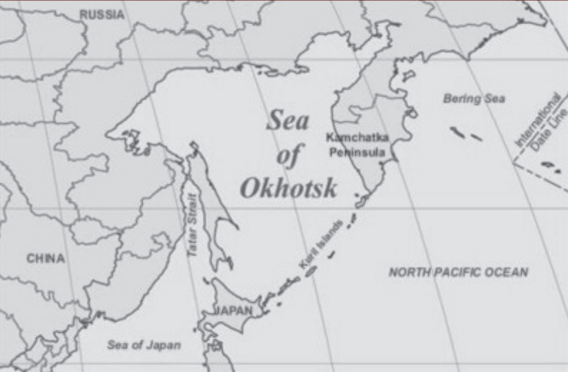
- China and Russia have recently announced joint naval and air drills called 'Northern United-2024' in the Sea of Japan and the Sea of Okhotsk.
- The purpose of Northern United 2024 is to enhance strategic cooperation between China and Russia and improve their ability to address security threats together.
- The Sea of Japan is a marginal sea in the western Pacific Ocean, bordered by Japan and Sakhalin Island to the east, and by Russia and Korea to the west.
- The Sea of Okhotsk is surrounded by the Kamchatka Peninsula and the Kuril Islands to the east and southeast, the northern coast of Hokkaido in Japan to the south, and Sakhalin Island to the southwest.
Paraguay River
- The Paraguay River is currently experiencing its lowest water level in over 100 years.
- The Paraguay River is the fifth largest river in South America and is the main tributary of the Paraná River.
- It begins in the Brazilian state of Mato Grosso, south of Diamantino.
- The river flows from north to south, passing through Brazil, Paraguay, and Argentina.
- The upper basin of the river includes the seasonal swamp known as the Pantanal.
- The climate in the drainage basin is typically hot and humid, with dry winters and heavy summer rains.
Digital Public Goods
- The Ministry of Electronics and Information Technology has launched Phase III of capacity-building initiatives as part of the Digital India vision to improve skills in Digital Public Goods Projects.
- Digital Public Goods (DPGs) are open-source technologies such as open data, open AI models, open standards, and open content that are used to create digital public infrastructure in a country.
- Examples of DPGs include Aadhaar, UPI, and Digilocker, among others.
- DPGs can help prevent economic monopolies over digital solutions and knowledge.
- The introduction of DPGs is aimed at promoting inclusivity and accessibility, fostering innovation, and increasing transparency in public service delivery.
Proton Fusion Engine
- A US startup company called RocketStar has developed a concept for a proton fusion propulsion engine.
- The Proton Fusion Engine was first thought of by Albert Einstein in 1929 and uses nuclear fusion to propel spacecraft at speeds close to the speed of light.
- This engine aims to create a cleaner and more efficient alternative to traditional chemical fuels by using hydrogen fusion to produce large amounts of energy.
- The design of the engine involves a funnel-shaped magnetic field that compresses and heats protons to extreme temperatures, creating a plasma jet that provides the necessary thrust.
- There is potential to expand this technology to vehicles on Earth, which could potentially revolutionize transportation.
Presbyopia
- The Drug Controller General of India has given approval for a new eye drop called PresVu, designed to help those with presbyopia reduce their reliance on reading glasses.
- Presbyopia is a refractive error that causes a gradual loss of the ability to focus on close objects as the lens in the eye becomes less flexible with age.
- This condition typically affects individuals around the age of 40 and occurs when the lens is no longer able to focus light properly on the retina.
Siddha Medical System
- A recent study found that Siddha drugs can effectively reduce Anaemia in Adolescent Girls.
- The treatment involved using a combination of Siddha drugs known as ABMN.
- The Siddha System was founded by Sage Agasthiyar or Agasthya.
- Siddha literature is written in Tamil and is mainly practiced in Tamil-speaking regions of India and by the Indian Diaspora in South East Asia.
- This ancient medical system in India focuses on spiritual, mental, and physical well-being.
- Siddha principles are based on Panchabootham, taste, and three humours (doshas) - Vali, azhal, and iyyam.
Sakthan Thampuran
- The statue of Sakthan Thampuran, the greatest ruler of the Cochin dynasty in Kerala, has fallen.
- Sakthan Thampuran, also known as Raja Rama Varma Kunjipillai, ruled the Cochin kingdom from 1790 to 1805.
- He moved the seat of the Cochin kingdom from Thrippunithura to modern-day Thrissur.
- Sakthan Thampuran initiated the Thrissur Pooram, a major temple festival in Kerala dedicated to Lord Shiva.
- He abolished the Yogiatirippads and handed over temple management to the government.
Gaza Strip
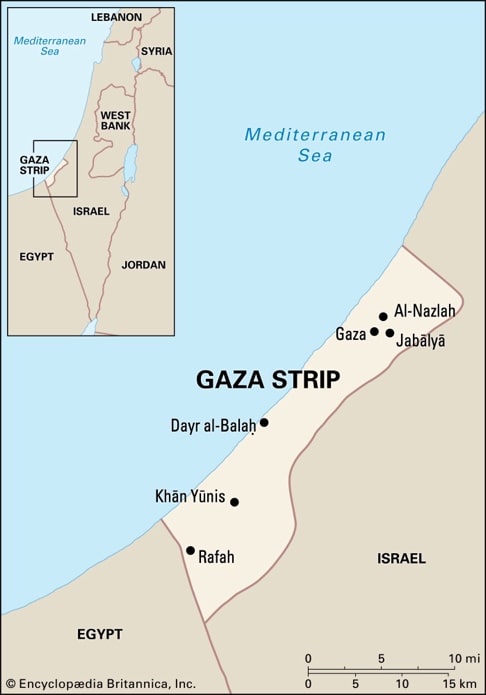
Israel launches strike on Khan Younis safe zone in Gaza.
Political Features:
- Gaza is a territory occupying 140 square miles along the Mediterranean Sea.
- Bordering countries are Egypt to the southwest and Israel to the east and north.
- It is the smaller of the two Palestinian territories, the other being the West Bank.
- Gaza was taken by Israel in the 6-Day War of 1967 and occupied for the next 25 years.
- In 1994, Israel began transferring governmental authority in Gaza to the Palestinian Authority under the Oslo Accords.
Geographical Features:
- Gaza is part of the Levant region along the eastern shores of the Mediterranean Sea.
- The climate in Gaza is Mediterranean with hot semi-arid conditions.
- Major crops grown in Gaza include citrus fruit, dates, and olives.
"Responsible AI in Military: Blueprint for Action"
- The 2024 REAIM Summit in Seoul introduced a "Blueprint for Action" to regulate the ethical use of AI in the military, although it is not legally binding.
- REAIM, which had its first summit in 2023, serves as a forum for worldwide conversations involving all parties to promote the responsible deployment of AI in military settings.
Key Points from the REAIM Summit 2024 Blueprint for Action
- Impact of AI on International Peace and Security: The blueprint emphasizes the importance of developing and using AI in the military in a way that does not undermine international peace, security, and stability. It also highlights the risks associated with AI applications, such as the potential for an arms race, miscalculation, escalation, and lowering the threshold of conflict.
- Human Control and Involvement: The blueprint stresses the need for maintaining human control and involvement in critical actions related to informing and executing sovereign decisions concerning nuclear weapons employment. This is important for ensuring responsible use of AI in the military while working towards a world free of nuclear weapons.
- Implementing Responsible AI: The blueprint calls for ethical and human-centric applications of AI in the military, in accordance with national and international law. It also promotes dialogue on testing and evaluation protocols to ensure the responsible development and deployment of AI.
- Future Governance of AI in the Military Domain: The blueprint suggests that discussions on governance should be open and inclusive to reflect a wide range of views. It also emphasizes the importance of international cooperation to build capacity and reduce knowledge gaps in responsible development and deployment of AI in the military.
"India and GCC Unite: Joint Action Plan"
The Joint Action Plan 2024-2028 was approved during the inaugural India-Gulf Cooperation Council (GCC) Joint Ministerial Meeting for Strategic Dialogue.
Key Outcomes of the India-GCC Joint Ministerial Meeting
- Joint Action Plan 2024-2028: Agreement to undertake joint activities in various areas such as health, trade, security, agriculture, transportation, energy, and culture.
- Expansion of Cooperation: Possibility of including more areas of cooperation in the Joint Action Plan in the future.
- 3P Framework: India's commitment to the framework of People, Prosperity, and Progress to strengthen the partnership between India and GCC.
- Humanitarian Crisis in Gaza: India's stance on the crisis and the importance of considering humanitarian law in any response.
India-GCC Relations
- Political: Establishment of the first India-GCC Political Dialogue in 2003 and strategic partnerships with Saudi Arabia, UAE, and Oman.
- Trade & Investment: Bilateral trade reaching USD 161.59 billion in FY 2023-24, with UAE being the 7th largest source of FDI in India.
- Diaspora: Approximately 8.9 million Indian expats (66% of NRIs) residing in GCC countries and 30% of inward remittances coming from the region.
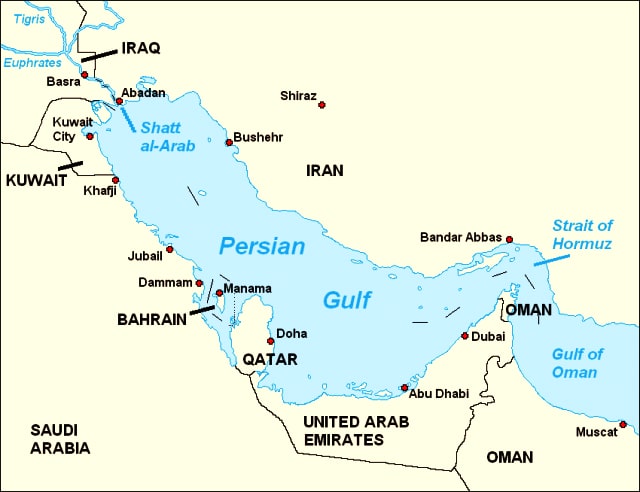
- Energy: GCC countries contributing to 35% of India's oil imports and 70% of gas imports.
About Gulf Cooperation Council (GCC)
- Founded in 1981.
- Based in Riyadh, Saudi Arabia.
- Goal is to promote unity among members through shared objectives and cultural identities.
"Health Ministry Unveils Health Dynamics Report 2022-23"
Formerly called the Rural Health Statistics, this report offers detailed yearly information on health facilities and personnel.
Key Findings:
There are 714 district hospitals and 362 medical colleges in India.
Rural Areas:
- Increase in health facilities: The number of Sub-Centres (SCs), Primary Health Centres (PHCs), and Community Health Centres (CHCs) has increased between 2005 and 2023.
- More PHCs in rural areas: Around 32,000 PHCs are operational in the country, with approximately 25,000 in rural areas.
- Shortage of doctors: While the availability of doctors and medical officers in PHCs has increased, there is still a significant vacancy in these positions.
- Infrastructure gap: Many SCs in states like Andhra Pradesh, Bihar, Karnataka, Rajasthan, and Uttar Pradesh are operating in rented buildings.
Urban Areas:
- Disparity in availability of services: There is a 36% shortfall of Urban PHCs (U-PHCs) based on urban population norms.
- Infrastructure gap: U-PHCs in states like Andhra Pradesh, Bihar, Karnataka, Uttar Pradesh, and Madhya Pradesh are also functioning in rented buildings.
About India’s Public healthcare system
- "Public Health and Hospitals" falls under the jurisdiction of the state government, with the main duty of improving the public healthcare system resting on the State Governments.
- India's public healthcare system is structured in three tiers.
- The doctor-to-population ratio in the country is 1:834, which includes both allopathy and AYUSH doctors.

Celebrating Five Years of IPOI
About IPOI
Genesis of IPOI
- IPOI was launched by India in 2019 at the East Asia Summit (EAS) in Bangkok as an open, inclusive, nontreaty-based global initiative.
Philosophy of IPOI
- Builds upon India’s ‘Security and Growth for All in the Region (SAGAR)’ initiative of 2015.
- IPOI seeks to build a sense of community by creating new partnerships with like-minded countries through practical cooperation.
7 pillars of collaboration
- One or two countries could take the lead for a pillar with others joining in voluntarily.
No institutional framework
- Leans on regional architecture like EAS, IORA, BIMSTEC, etc. for support and collaboration.
Pillars and leading Countries
- UK and India focus on maritime security.
- Australia and Thailand prioritize maritime ecology.
- France and Indonesia are concerned with maritime resources.
- Germany emphasizes capacity building and resource sharing.
- India and Bangladesh collaborate on disaster risk reduction and management.
- Italy and Singapore work together on science, technology, and academic cooperation.
- Japan and the US focus on trade, connectivity, and maritime transport.
Significance of IPOI
- The cooperation approach offers a different option to geopolitical rivalry in the Indo-Pacific region.
- Supports India's Maritime India Vision 2030 and Maritime Amrit Kaal Vision 2047.
- Shares similarities with other international efforts such as AIIPOIP, AOIP, IPEF, among others.
Way ahead to enhance effectiveness of IPOI
- Create a short-term plan and schedule for the next five years by the leaders of each pillar.
- Establish a truly international organization by including all island nations, East African countries, and Gulf states.
- Provide yearly updates and reports for each pillar from the top countries involved.
"PM Leads Inaugural ANRF Governing Board Meeting"
Key Initiatives Announced by ANRF:
- Partnerships for Accelerated Innovation and Research (PAIR): This initiative involves pairing universities with nascent research with established institutions for mentorship in a hub and spoke mode.
- Mission for Advancement in High-impact Areas (MAHA): This initiative aims to support priority-driven, solution-focused research in areas such as EV mobility, Advanced Materials, Solar Cells, Health & Medical Technology, etc.
- ANRF Centre of Excellence (ACE): This initiative aims to establish world-class research centers with substantial funding support.
About ANRF:
- Genesis: ANRF was established under the ANRF Act 2023, with the Science and Engineering Research Board being subsumed into ANRF.
- Aim: ANRF aims to seed, grow, and foster a culture of research and innovation throughout the country in line with the recommendations of the National Education Policy.
- Funding: ANRF aims to mobilize ₹50,000 crore for the period 2023-2028, with Rs 14,000 crore from the Centre and Rs 36,000 crore from private sources.
- Governance:
- Administrative department: ANRF is under the Department of Science and Technology (DST).
- Governing Board: The Governing Board includes the Prime Minister as the Ex-officio President, the Union Minister of Science and Technology, and the Minister of Education as Ex-Officio Vice-Presidents.
- Executive Council: The Executive Council is chaired by the Principal Scientific Adviser to the Government of India.
Issues in India’s research ecosystem that would be resolved by ANRF
- Research activities are only conducted by a small number of higher education institutions in India.
- Scientific research in India is primarily focused in specialized institutions such as IISC, TIFR, and IITs, unlike other countries where universities are the main hubs of research.
- Multiple ministries in India operate their own research and development programs, which can result in duplication and inefficiency.
"I4C Launches Four Major Initiatives"
- The Union Home Minister introduced four new initiatives as part of the Indian Cyber Crime Coordination Centre (I4C) to enhance the effectiveness of combating cybercrime.
- During the event, the Minister highlighted that cyber security is now a crucial component of national security, extending beyond just the digital realm.
- The I4C scheme, which was approved in 2018 and launched in 2020, aims to address cybercrimes and improve coordination among various Law Enforcement Agencies.
New Initiatives launched
Cyber Fraud Mitigation Centre (CFMC)
- CFMC is established for immediate action and seamless cooperation to address online financial crimes.
- It exemplifies "Cooperative Federalism" in law enforcement by bringing together different agencies to combat cyber fraud.
Cyber Commandos’ Program
- This program aims to create a specialized unit of trained 'Cyber Commandos' in States/UTs and Central Police Organizations to combat cyber security threats.
- The goal is to enhance the country's ability to respond to cyber threats effectively.
Samanvay platform (Joint Cybercrime Investigation Facilitation System)
- Samanvay is a web-based module that serves as a centralized portal for data repository of cybercrime, data sharing, crime mapping, data analytics, and cooperation among Law Enforcement Agencies nationwide.
- It provides a platform for collaboration and coordination in cybercrime investigations.
Cyber Suspect Registry
- This registry will be established based on the National Cybercrime Reporting Portal (NCRP) in partnership with banks and financial intermediaries.
- It aims to strengthen fraud risk management capabilities within the financial ecosystem by tracking cyber suspects.
How Cyber security is an important aspect of National security?
- Infrastructure protection: This involves protecting critical national infrastructure such as power grids, water systems, and transportation networks from digital attacks. An example of this is the 2019 malware attack on the Kudankulam Nuclear Power Plant.
- Economic security: This focuses on safeguarding businesses and financial institutions from cyber threats in order to maintain economic stability. An example of this is the 2017 WannaCry ransomware attack.
- National defense: This is aimed at protecting military communications, weapons systems, and other strategic information from cyber attacks. An example of this is the Stuxnet worm attack on Iranian nuclear facilities.