
Daily Current Affairs UPSC 05 September 2024
Welcome to our daily current affairs blog post for UPSC aspirants! In today's edition, we will be discussing the most significant events and news updates that took place on 5th September 2024. Staying updated with current affairs is crucial for UPSC preparation, as it not only helps you stay informed but also enhances your understanding of various subjects. So, let's dive into the important happenings of the day and explore their potential impact on the upcoming UPSC examinations.

Phrynarachne decipiens
- Phrynarachne decipiens was recently discovered in Assam's Kamrup and Kokrajhar districts, marking its first recorded presence in the country.
- The spider, also known as the bird dung or bird-dropping crab spider, resembles a blob of bird droppings and emits a smell similar to feces or urine.
- This unique appearance and odor may help the spider attract prey and avoid detection by predators.
- Phrynarachne decipiens is typically found in Malaysia, Java, and Sumatra in Indonesia.
Quantum gravity (QG)
- Indian Researchers have made progress in combining classical and quantum gravity by deriving an uncertainty relation from the noise of gravitons.
- Gravitons are theoretical particles thought to transmit gravitational forces.
- Quantum gravity is a branch of theoretical physics that aims to explain gravity using quantum mechanics principles.
- Quantum gravity is important in extreme environments like black holes or neutron stars where both gravitational and quantum effects are significant.
Pharmacopoeia Commission for Indian Medicine & Homoeopathy (PCIM&H)
- The PCIM&H has obtained the BIS IMS Certifications.
- The PCIM&H is a subordinate office under the Ministry of AYUSH.
- It is responsible for establishing and upholding standards for Indian medicine and homoeopathy.
- The PCIM&H serves as the Central Drug Testing cum Appellate Laboratory for IM&H.
- It provides training to drug regulatory authorities on quality control for IM&H.
- The PCIM&H maintains a Reference Raw Materials Repository for IM&H.
- The IPC, a separate Autonomous Institution under the Ministry of Health and Family Welfare, sets standards for drugs in India.
Household Savings Rate
- The RBI Deputy governor stated that household savings will continue to be the main source of lending to the economy in the future.
- He pointed out that the rate of household savings has increased from 10.6% to 11.5% in recent years.
- Household savings are measured as a percentage of GDP.
- Household savings are divided into financial savings (such as currency, deposits, and life insurance funds) and physical savings (including assets like gold and silver).
- The decrease in financial savings could create challenges for banks in terms of liquidity and credit risk management.
- In India, households typically save more than they invest, leading to surplus savings that are lent to other sectors.
Poshan Tracker initiative
- The Ministry of Women and Child Development received a National Award for e-Governance 2024 for their Poshan Tracker initiative.
- The Poshan Tracker initiative is a technological tool used to monitor the progress of Mission Poshan 2.0, which includes tracking growth measurements, Aadhar verification, and real-time monitoring of nutrition services.
- The initiative benefits from tracking last mile service delivery through 1.3 Million Anganwadi Workers and providing nutritional services to 101 Million beneficiaries.
- The technology utilized in Poshan Tracker is used for dynamically identifying stunting, wasting, and underweight prevalence among children.
Open Network for Digital Commerce (ONDC)
- ONDC received the Gold Award in the category of "Application of Emerging Technologies for Providing Citizen-Centric Services" at the National Awards for e-Governance.
- ONDC aims to promote open networks for the exchange of goods and services through digital or electronic platforms.
- The initiative is expected to make e-Commerce more inclusive and accessible for consumers.
- ONDC is an initiative of the Department of Promotion of Industry and Internal Trade.
- ONDC was established as a Section 8 (not for profit) company with the Quality Council of India and Protean eGov Technologies Limited as Founding Members.
Centralised Pension Payment System (CPPS)
- The Ministry of Labor and Employment has approved the CPPS for the Employees' Pension Scheme.
- The CPPS is a national-level centralized system that allows pensioners to receive their pensions from any bank, branch, or location in the country.
- Currently, the pension disbursement system is decentralized, with each zonal/regional office of EPFO having separate agreements with only 3-4 banks.
- The CPPS will be launched as part of EPFO's Centralized IT Enabled System (CITES 2.01) starting from January 1, 2025.
- In the future, the CPPS will facilitate a smooth transition to the Aadhaar-based payment system (ABPS).
India Graphene Engineering and Innovation Centre (IGEIC)
- The Ministry of Electronics and Information Technology (MeitY) introduced the Innovation and Growth of Excellence in Graphene (IGEIC) as part of the Graphene Aurora program (GAP) in 2022.
- GAP was created to support the development of graphene technology and innovation, with implementation by Digital University Kerala.
- IGEIC is a not-for-profit organization based in Trivandrum, Kerala, focused on establishing a center of excellence for commercializing graphene technology.
- The organization aims to bridge the gap between research and commercialization by offering comprehensive facilities to startups and industries.
- MeitY had previously launched the India Innovation Centre for Graphene (IICG) in Kerala, which was the country's first graphene center.
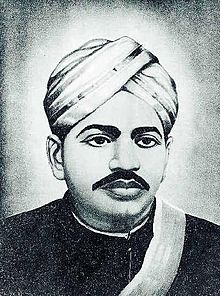
Vallinayagam Olaganathan Chidambaram Pillai
- Vallinayagam Olaganathan Chidambaram Pillai, also known as 'Kappalottiya Tamilan' and Sekkizuththa Semmal, was a prominent figure in Indian history.
- He was the first Indian to operate a Swadeshi Ship in 1906 and was a disciple of Lokamanya Tilak.
- Pillai was involved in labor welfare and took part in the Tuticorin Coral Mills strike in 1908.
- His literary works include Meyyaram, Meyyarivu, a commentary on the Thirukural, and compiled ancient Tamil grammar works like Tholkappiam.
- Pillai was known for his values of leadership, perseverance, and patriotism.
"India and Brunei Strengthen Ties"
- The term 'Enhanced Partnership' signifies a new chapter in the relationship between India and Brunei, emphasizing mutual cooperation and shared strategic interests.
- This visit marked the first time an Indian Prime Minister visited Brunei, highlighting the significance of the bilateral relationship that was established in 1984.
Key Highlights of the Visit
- Recognized the need to increase defense collaboration through activities such as joint exercises and training programs.
- Agreed on the significance of focusing on development rather than expansion in Southeast Asia.
- Seen as a way to counter Chinese influence by experts.
- Committed to collaborating for a more inclusive multilateral approach that aligns with current global conditions.
- Cooperation in operating Telemetry, Tracking, and Telecommand Station for Satellite and Launch Vehicles.
- Utilizing individual strengths in areas such as technology, finance, manufacturing, and processing.
Significance of Brunei Darussalam for India
- Brunei holds strategic importance for India's Act East Policy and Indo-Pacific Vision, as well as being a member of ASEAN.
- The presence of approximately 14,000 Indians in Brunei highlights the Indian diaspora's connection to the country.
- India's significant imports of crude oil from Brunei, valued at around USD 500-600 million annually, contribute to energy security.
- Brunei's participation in the Voice of the Global South Summit, an Indian-led initiative, underscores the country's alignment with India on global issues.

"India's Aditya L1 Solar Mission: One Year Anniversary"
- PLSV-C57 was launched on a mission to observe the Sun from a halo orbit.
- The spacecraft successfully entered its intended halo orbit in January 2024.
About Aditya-L1 Mission
- Understanding Coronal Heating and Solar Wind Acceleration
- Key objectives include understanding the processes of coronal heating and solar wind acceleration
- Initiation of Coronal Mass Ejection (CME), flares, and near-earth space weather
- Objectives include studying the initiation of CMEs, flares, and their impact on near-earth space weather
- Solar wind distribution and temperature anisotropy
- Aim to study the distribution of solar wind and temperature anisotropy in space
- Advantages of being placed at Lagrangian point L1
- Continuously viewing the Sun without any occultation/eclipses
- Reduced fuel consumption for the spacecraft
- Seven payloads on Aditya-L1
- Four payloads directly view the Sun
- Three payloads carry out in-situ studies of particles and fields at L1
- Provide insights into the propagatory effect of solar dynamics in the interplanetary medium
- Lifespan of Aditya-L1
- Expected to be 5 years
- Achievements of Aditya-L1
- Captured images of the Sun through payloads SUIT and VELC
- Completion of the First Halo Orbit in July
- Aditya-L1 takes 178 days to complete a revolution around the L1 point in the Halo orbit
- Full validation for state-of-the-art flight dynamics software developed by U R Rao Satellite Centre (URSC) of ISRO for the Aditya-L1 missions
Other Solar Missions:
- Hinotori (ASTRO-A) was launched by Japan in the 1980s.
- Parker Solar Probe was launched by the US in 2018, making it the first spacecraft to "touch" the sun.
- The Solar and Heliospheric Observatory Satellite (SOHO) mission was launched jointly by NASA and ESA and is the longest-lived Sun-watching satellite.
About Lagrange Points:
- At Lagrange points, the gravitational pull of two large masses, such as the Sun and Earth, equals the centripetal force required for a small object to move with them.
- Objects sent to Lagrange points tend to remain stationary.
- Of the five Lagrange points, three (L1, L2, L3) are unstable and two (L4, L5) are stable.
"Rajasthan Cabinet: 33% Reservation for Women in Police"
- States like Bihar, Gujrat, Odisha, and Maharashtra have implemented quotas for women in the police force.
- In 2022, women made up 12% of the state police, with Chandigarh having the highest representation at 22% and Jammu and Kashmir the lowest at 3.3%.
Need of Increasing Women in Police Force
- Legal Mandate: Laws like the POCSO Act require cases of sexual assault to be handled by female police officers.
- Better Reporting: Women in the police force can encourage female victims to report crimes.
- Improved Relations: Women officers are less likely to use excessive force, leading to better police-community relations.
Challenges in Increasing Women Representation
- Stereotypes: Women are often seen as unfit for the demanding hours of police work.
- Policy Gap: Some states lack reservation policies for women in the police force.
- Implementation Gap: Despite quotas, actual representation of women in the police force may still be low.
Initiatives to Increase Women Representation
- Establishment of all-women police stations in each district.
- Advisory to increase women's representation to 33% of the total police force.
- Provision of creches and day care centers for women police employees.
- Exemption of application fees for female candidates in CAPFs exams.
"MeitY Introduces Vishvasya-Blockchain Technology Stack"
- Blockchain is a type of Distributed Ledger Technology that is a shared, unchangeable ledger used for recording transactions and tracking assets within a business network.
- An analogy to understand the distributed nature of Blockchain technology is comparing it to Google Docs, where a document is distributed instead of copied or transferred when shared.
About Vishvasya (BaaS)
- Launched to provide Blockchain-as-a-Service (BaaS) with a distributed infrastructure for permissioned Blockchain applications.
- BaaS offers cloud-based infrastructure and management for companies developing and running blockchain apps.
- A component of the National Blockchain Framework within the National Strategy on Blockchain.
- NBF aims to leverage Blockchain technology in sectors like health, agriculture, education, and finance.
- Aims to tackle challenges in Blockchain adoption for Infrastructure Providers, Smart Contract Developers, and other stakeholders.
Vishvasya BaaS Features
- Quickly deployable and secure blockchain application development and deployment.
- Securely audited blockchain containers for production environments.
- Guidelines and best practices for blockchain security audits.
- Geographically distributed infrastructure across three data centers.
- Framework with documentation for easy stakeholder onboarding.
- NBF Lite offered for rapid prototyping, research, and learning purposes.
MeitY also unveiled:
- NBFLite is a lightweight blockchain platform designed for startups and academia to quickly prototype applications, conduct research, and build capacity.
- Praamaanik is a blockchain-based solution used to verify the source of mobile apps.
- The National Blockchain Portal is a platform that provides information and resources related to blockchain technology.
"Peace Pact: Centre and Tripura Sign Agreement with Insurgent Groups"
A Memorandum of Settlement was signed between the Union Economic Advisor government and the Tripura government and the National Liberation Front of Tripura (NLFT) and the All Tripura Tiger Force (ATTF).
Key highlights of agreement
- NLFT & ATTF have agreed to abjure path of violence, lay down all their arms and ammunition and disband their armed organisations.
- Centre has approved a special package of Rs 250 crore for the overall development of the tribal population of Tripura.
Reasons for Insurgency in North Eastern Region (NER)
- Historical neglect in integrating hill areas of Assam during pre-British and British colonial rule.
- Continuous lack of economic opportunities creates incentives for unemployed youths to join armed movements.
- Ethnic communities view ‘the use of force’ as more effective than non-violent dissent in getting attention.
- Existence of external help.
Major Initiatives and Peace Process in NER
- Peace accords/agreements in NER: Government has signed 12 important agreements in recent times.
- Reduction of ‘disturbed areas’ under AFSPA: For instance, AFSPA from Tripura lifted in 2015.
- Ceasefire/ Suspension of Operation/ other agreements in NER.
- Inter-state boundary agreements: In 2022, Assam and Meghalaya's chief ministers signed an MoU to resolve their decades-long inter-state boundary dispute.
"India's Caution Against Financialisation"
- Financialization refers to the increased control that financial markets, institutions, and elites have over economic decisions and results.
- This means that financial intermediaries and technologies now have more power over our everyday activities.
- It also involves shifting investments from tangible assets such as real estate and gold to intangible financial assets like mutual funds.
Factors driving financialisation
- The middle class is growing and has more money to spend.
- Inflation is causing households to look for higher returns than what fixed deposits offer.
- The government is offering incentives for these investment instruments.
- More people are using digital financial services and being included in the financial system.
Why is excessive financialisation a concern?
- Wealth Inequality: The top 1% of the population benefits from financial income through equity ownership, leading to increased inequality.
- Economic Distortion: Profits are increasingly coming from financial investments rather than the trade of goods and services, causing the stock market to have a greater impact on the economy than employment or living standards.
- Household Debt Increase: Stagnant real wages could result in households relying more on loans, as seen in the U.S. economy.
- Policy Effects: Financialization may lead to policies that support predatory lending, increased risk-taking, and the weakening of worker protections.
- Developing nations frequently encounter severe crises when financial market advancements and expansion outpace economic growth, as seen in the Asian crisis of 1997-98. As a result, India must ensure a methodical and gradual development of its financial market.