
Daily Current Affairs UPSC 18 June 2024
Welcome to our daily current affairs blog post for UPSC aspirants! In today's edition, we will be discussing the most significant events and news updates that took place on 18th June 2024. Staying updated with current affairs is crucial for UPSC preparation, as it not only helps you stay informed but also enhances your understanding of various subjects. So, let's dive into the important happenings of the day and explore their potential impact on the upcoming UPSC examinations.

5G Intelligent Village and Quantum Encryption Algorithm
- Department of Telecommunication seeking proposals for 5G Intelligent Village and Quantum Encryption Algorithms
- Proposals will be funded by Telecom Technology Development Fund (TTDF)
- 5G Intelligent Village Initiative focuses on agriculture, education, healthcare, governance, and sustainability
- Aims to use 5G technology to improve rural communities
- Quantum Encryption Algorithm (QEA) aims to develop cutting-edge digital communication security using quantum mechanics principles
- Goal is to create India-specific QEA for enhanced security
Direct Seeding of Rice (DSR)
- Punjab Government's promotion of DSR technique
- About DSR (Tar Wattar Technique)
- Modern rice cultivation technique
- Seeds directly sown into field
- Eliminates need for transplanting
- Significance of DSR technique
- Faster planting and maturing of crop
- Reduces water consumption and labor
- Effective in controlling stubble burning and reducing Methane emission
- Challenges of DSR technique
- Weed management
- Higher seed requirement
- Non-uniform crop establishment
Biological Hazards
- The International Labour Conference (ILC) is the annual meeting of the International Labour Organization's (ILO) member states
- The ILC is taking the first step towards international regulation of biological hazards at work
- Biohazards are of organic origin or conveyed by biological vectors, including pathogenic microorganisms, toxins, and bioactive substances
- People working in healthcare, agriculture, and laboratory settings are at greatest risk of biohazards
- Factors driving the development of biohazards include shifts in atmospheric and weather conditions, heat-related risks, and overuse of antimicrobials
- Measures taken to address biohazards include ILO Conventions 155 and 187, as well as India's Occupational Safety, Health and Working Conditions Code, 2020.
Chenab Rail Bridge
- The first trial train run has been conducted on the Chenab Rail Bridge in Reasi district of Jammu and Kashmir
- The bridge is part of the Udhampur Srinagar Baramulla Rail Link (USBRL) project
- The Chenab Rail Bridge, also known as the Chenab Arch Bridge, is the world's highest railway bridge on the Himalayan ranges
- It is 359 meters above the Chenab river, making it 35 meters taller than the Eiffel Tower in Paris
- The bridge can resist high-velocity winds up to 260 kmph, extreme temperatures, earthquakes, etc.
- The Chenab River, also known as Chandrabhaga, is formed by the confluence of the Chandra and Bhaga rivers in Lahaul-Spiti, Himachal Pradesh
- It flows southwest into Pakistan, meeting the Jhelum, Ravi, and finally the Sutlej rivers.
EU’s Nature Restoration Plan (NRP)
- The European Union has approved the first continent-wide and comprehensive law known as the NRP.
- The NRP is part of the EU's European Green Deal, which aims for net zero emissions of greenhouse gases by 2050.
- Key features of the NRP include binding restoration targets for the long-term recovery of nature in the EU's land and sea areas.
- The NRP aims to recover at least 20% of the EU's land and sea areas by 2030, and ultimately all ecosystems in need of restoration by 2050.
- The NRP covers existing legislation for wetlands, forests, grasslands, pollinating insects, forest ecosystems, and more.
- Implementation of the NRP will be through National Restoration Plans of the EU countries.
Bitumen
- India is planning to produce bio-bitumen on a large scale from biomass and agricultural waste
- Bitumen is a black substance made from distillation of crude oil and is also known as Asphalt
- India currently imports half of its bitumen requirement
- Bio-bitumen is made from organic elements like biochar and bio-oil
- It can be used as an addition to bitumen or to reduce the amount of bitumen in the binder mixture
- Benefits of bio-bitumen production include reduced imports, addressing stubble burning, saving on foreign exchange, and boosting the Bioeconomy.
Ultrasound Technology
- Scientists have successfully used Functional Ultrasound Imaging (fUSI) to map brain activity.
- fUSI is a new technique that provides detailed neural imaging on a large scale.
- Ultrasound technology uses high-frequency sound waves to view internal organs without radiation.
- Ultrasound works based on the Piezoelectric effect, where certain materials produce an electric charge when under mechanical stress.
- Applications of ultrasound include diagnostic medicine, underwater acoustics, non-destructive testing, welding, and cleaning.
Mercury Island
- A documentary film about the conservation of Mercury Island was shown at the 18th Mumbai International Film Festival.
- Mercury Island is a small rocky island located off the diamond coast of Namibia in the Atlantic Ocean.
- It is recognized as an Important Bird Area (IBA) by Bird Life International.
- The island is one of three important coastal seabird-breeding islands along the coast.
- It is important to note that New Zealand also has a group of islands called the Mercury Islands.
Personality in News
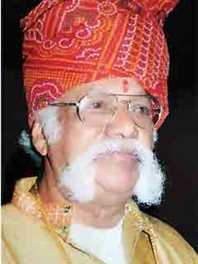
Laxman Satpathy (1916-2001)
- Observance of Laxman Satpathy's birth anniversary
- Background of Laxman Satpathy
- Born in Sonpur in British India (now in Odisha)
- Contributions of Laxman Satpathy
- Leader of Sonpur Prajamandal Movement
- Inspired by Gandhiji's call for non-cooperation
- Raised voice against ruler of Sonpur
- Launched underground activities during Quit India movement
- Instrumental in merger of Sonpur with Odisha
- Values upheld by Laxman Satpathy
- Courage
- Determination
- Leadership
Global Study on Persistent Organic Pollutants (POPs)
- The study was carried out by the UN Environment Programme (UNEP) and supported financially by the Global Environment Facility (GEF).
- Its purpose was to monitor the status of 30 Persistent Organic Pollutants (POPs) listed under the Stockholm Convention as of 2021.
Key Findings of the Study
- Decline in Use of 12 POPs: Regulatory actions taken globally since 2004 have led to a decrease in the use of 12 POPs.
- Decrease in DDT Levels: The synthetic insecticide DDT has seen a reduction of over 70% in human milk samples since 2004.
- Detection of Replacement POPs: Replacement POPs, such as per- and polyfluoroalkyl substances (PFAS), have been found at high levels due to their similar properties.
About Persistent Organic Pollutants (POPs)
- Definition: POPs are carbon-based chemical substances that persist in the environment, including pesticides, industrial chemicals, or unwanted by-products of industrial processes.
- Properties: POPs are halogenated, have low water solubility, are highly lipid soluble (leading to bio-accumulation), and are semi-volatile (allowing them to travel long distances in the atmosphere).
- Impacts: POPs are associated with health issues such as cancer, liver damage, decreased fertility, and increased risk of asthma and thyroid disease due to their endocrine disrupting properties.
About Stockholm Convention
- The Stockholm Convention is a global agreement that aims to regulate Persistent Organic Pollutants (POPs).
- It was adopted in 2001 and became effective in 2004.
- India ratified the Stockholm Convention in 2006, showing its commitment to addressing POPs.
- The Ministry of Environment, Forest and Climate Change (MoEFCC) in India has implemented the Regulation of POP Rules in 2018 under the Environment (Protection) Act of 1986 to comply with the Convention.
- The Global Environment Facility (GEF) serves as the designated interim financial mechanism for the Stockholm Convention, providing support for countries to meet their obligations under the agreement.
Railway Safety Concerns Highlighted by West Bengal Train Accident
- Recent collision between Passenger Express and goods train due to signalling error
- Previous accidents like Bengaluru-Howrah Superfast Express collision in 2023
Status of Railway Accidents
- Significant decrease in consequential train accidents from 473 in 2000-01 to 48 in 2022-23
- Consequential train accidents have serious consequences like loss of life, injury, property damage, or traffic interruption
Major Causes of Rail Accidents
- Derailments, such as the Bikaner-Guwahati Express derailment in 2022
- Unmanned Railway Crossings are a major cause of accidents
- Other causes include fire incidents and signaling errors by local pilots
Measures taken for safety
- KAVACH system prevents trains from passing red signals and activates automatic braking
- Rashtriya Rail Sanraksha Kosh funds safety asset replacement/upgradation
- Electrical/Electronic Interlocking Systems prevent multiple trains on the same track
Challenges in curbing Rail Accidents
- Congestion on tracks for both passenger and goods trains
- Technical glitches and system failures, like poor signaling
- Lack of funds for safety upgrades, like switching to LHB coaches
Committees on Rail Safety
- Justice Khanna Railway Safety Review Committee in 1998 led to safety department creation
- High Level Safety Review Committee under Dr. Anil Kakodkar in 2012 recommended switching to LHB coaches for safety
50 Years of India's Crocodile Conservation
- In 1975, India initiated the Crocodile Conservation Project in Bhitarkanika National Park in Odisha with support from the United Nations Development Programme (UNDP) and the Food and Agriculture Organisation (FAO) of the UN.
Crocodiles

- Crocodiles are the largest surviving species in the Reptilia class.
- They mainly live in freshwater swamps, lakes, and rivers, with one saltwater species.
- Crocodiles are nocturnal and regulate their body temperature to a limited degree.
- India has three main species of crocodiles.
- Major threats to crocodiles include habitat destruction, egg predation, illegal poaching, dam construction, and sand mining.
| Species | Description | Natural Habitat |
|---|---|---|
| Estuarine or saltwater crocodile (Crocodylus porosus) |
|
|
| Mugger or marsh crocodile (Crocodylus palustris) |
|
|
| Gharial (Gavialis gangeticus) |
|
|
Bhitarkanika National Park
- Bhitarkanika National Park is located in Odisha and is India's second largest mangrove ecosystem after the Sunderbans.
- It is a Ramsar site and consists of a network of creeks and canals flooded by rivers Brahmani, Baitarani, Dhamra, and Patasala.
- The park is home to the largest congregation of Saltwater Crocodiles, along with other wildlife such as water monitor lizards, pythons, and hyenas.
Gandhi Sagar Wildlife Sanctuary (GSWS)
- The MP government has confirmed that they are ready to move the Cheetahs to GSWS as part of the Project Cheetah. The first group of 20 Cheetahs were brought to KNP from Namibia and South Africa.
About GSWS
- Situated on the border of Madhya Pradesh and Rajasthan, covering an area of 368.62 sq. km.
- The sanctuary is crossed by the River Chambal and includes the Gandhisagar dam.
- The vegetation includes Arjauna and Jal jamun trees, and the wildlife consists of Panther, Nilgai, Chinkara, wolf, and more.
Factors behind selecting GSWS as Cheetahs Home
- Topography: The shallow topsoil is a result of the rocky terrain and exposed sheetrock:
- Topography features hills, plateaus, and river catchment areas.
- Ecosystem: The GSWS has a savanna ecosystem with open grasslands and dry deciduous trees and shrubs
- The Chambal valley, on the other hand, has an evergreen ecosystem.
Challenges
- In GSWS, there is still a problem with not enough prey for predators, similar to what has been seen in KNP.
- The leopard population in GSWS could be a danger to cheetahs because they will be competing for the same food sources and may even have confrontations in the wild.
Project Cheetah
- Launched in 2022.
- First intercontinental large wild carnivore translocation project.
- Part of Project Tiger.
- Aim to reintroduce 50 Cheetahs in protect areas in five years.
- Implementing agency: National Tiger Conservation Authority (NTCA).
About Cheetah
- World's fastest mammal.
- Only large carnivore extinct in India since 1952.
- Cheetahs do not roar like other big cats.
- Two species: African Cheetah (Vulnerable) and Asiatic Cheetah (Critically Endangered).
(SDSN) Releases 2024 Sustainable Development Report
- SDSN has been publishing reports since 2016 to review the progress made by 193 UN Member States on Sustainable Development Goals (SDGs).
- SDSN, established in 2012, works under the UN Secretary-General to promote integrated approaches for implementing SDGs and the Paris Agreement through education, research, policy analysis, and global cooperation.
Key Highlights of the report
- Only 16% of the SDG targets are on track to be met globally by 2030.
- SDG2, SDG11, SDG14, SDG15, and SDG16 are particularly off track.
- Progress on SDGs varies significantly across countries, with Nordic countries leading, BRICS countries making progress, and Poor & Vulnerable countries lagging behind.
- Finland, Sweden, and Denmark are the top-ranked countries, while India is ranked 109th.
- A new Index of Support to UN-based Multilateralism (UN-Mi) ranks countries based on their engagement with the UN System, with Barbados ranking highest, India at 139th place, and the USA ranking last.
Recommendations by UNSDSN:
- The Sustainable Development agenda should remain the core of global cooperation until 2050 and should be properly financed.
- Strengthen UN agencies and monitor UN-based multilateralism systematically.
- Enhance multilateral governance of technological risks and ensure universal access to vital technologies and R&D capacities.
- Establish a UN Parliamentary Assembly and reform the UN Security Council by adding India as a permanent member and adopting procedures to override a veto.
SIPRI Yearbook 2024: Key Findings
- Founded in 1966, SIPRI is a Swedish-based independent international institute focused on peace research.
Key Highlights on Nuclear Armament
- Nine nuclear-armed states are modernizing their arsenals, with the US and Russia holding almost 90% of the total 12,121 nuclear warheads.
- Global reductions in operational warheads have stalled, with China expanding its arsenal.
- India surpassed Pakistan in nuclear arsenal size in 2023, mainly using Plutonium as fissile material.
Challenges to nuclear disarmament
- The war in Ukraine has negatively impacted nuclear arms control efforts and raised concerns about a potential nuclear disaster.
- Worsening relations between Russia and the US have led to Russia suspending its membership in key treaties.
- The Israel-Hamas war has hindered efforts to engage Iran and Israel in nuclear disarmament discussions.
Measures taken for Nuclear Disarmament
- The Treaty on the Prohibition of Nuclear Weapons in 2017 prohibits the development, testing, production, acquisition, possession, or use of nuclear weapons.
- The Treaty on the Non-Proliferation of Nuclear Weapons (NPT) from 1968 aims to prevent the spread of nuclear weapons and achieve disarmament.
- The Comprehensive Test-Ban Treaty (CTBT) from 1996 prohibits nuclear weapon tests in certain environments.