
Daily Current Affairs UPSC 27 June 2024
Welcome to our daily current affairs blog post for UPSC aspirants! In today's edition, we will be discussing the most significant events and news updates that took place on 27th June 2024. Staying updated with current affairs is crucial for UPSC preparation, as it not only helps you stay informed but also enhances your understanding of various subjects. So, let's dive into the important happenings of the day and explore their potential impact on the upcoming UPSC examinations.

Migration and Development Brief 2024
- The World Bank released a brief on remittance and migration trends.
- Remittance flows to low- and middle-income countries reached $656 billion.
- The top five recipient countries were India, Mexico, China, Philippines, and Pakistan.
- The top destination countries for migrants were the US, Germany, Saudi Arabia, Russia, and the UK.
- The largest origin countries for migrants were India, Ukraine, China, Mexico, and Venezuela.
- The largest migration corridor was from Mexico to the US.
Space MAITRI mission
- NSIL (India) and Space Machines (Australia) signed an agreement to launch Space Machines Company’s second Optimus spacecraft.
- NSIL is the commercial arm of ISRO and under the Department of Space.
- The second Optimus spacecraft, weighing 450 kg, is the largest Australian-designed and built spacecraft to date.
- The launch is scheduled for 2026 on ISRO's Small Satellite Launch Vehicle (SSLV).
- Space MAITRI (Mission for Australia-India's Technology, Research and Innovation) mission aims to foster closer ties among commercial, institutional, and governmental space organizations from both countries in the space domain.
Equal Remuneration Act, 1976
- Ministry of Labour and Employment addressing media reports about married women not being allowed to work at Apple iPhone plant in India.
- Equal Remuneration Act, 1976 Overview
- Ensures equal pay for men and women workers doing the same or similar work.
- Prohibits discrimination in recruitment based on gender.
- Central Government can make rules for implementing the Act through notifications.
Prohibition of Insider Trading (PIT) Regulations
- SEBI amends PIT regulations for insider trading flexibility.
- Definition of insider and their access to UPSI.
- Narrow window for insider trades under PIT.
- Requirement for insiders to provide trading plan details in advance.
- Purpose of trading plan in enabling compliant trading for insiders.
Central Electronics Limited (CEL)
- CEL has been granted "Mini RATNA" status (Category-1).
- Eligibility for Mini Ratna (category 1) includes making profit in the last three years continuously, having a pre-tax profit of Rs.30 crores or more in at least one of the three years, and having a positive net worth.
- CEL is under the Department of Scientific and Industrial Research (DSIR), Ministry of Science & Technology.
- Established in 1974, CEL's objective is to commercially exploit indigenous technologies.
- CEL is a pioneer in the country in the field of Solar Photovoltaic (SPV).
Microwave Obscurant Chaff Rocket (MOCR)
- DRDO delivered the MR-MOCR to the Indian Navy.
- Developed by DRDO's Defence Laboratory in Jodhpur.
- Purpose is to obscure radar signals to reduce detection.
- Specifications include chaff as a passive electronic countermeasure.
- Working mechanism involves firing the rocket to create a microwave obscurant cloud in space, providing protection against hostile threats with Radio Frequency seekers.
Anusandhan National Research Foundation (ANRF)
- ANRF conducted research on producing hydrogen gas from a mixture of methanol and paraformaldehyde.
- ANRF was established as a statutory body by the ANRF Act 2023.
- The Science and Engineering Research Board (SERB) was merged into ANRF.
- ANRF operates under the Ministry of Science and Technology.
- ANRF is responsible for providing high-level strategic direction for scientific research in accordance with the National Education Policy.
Lake Natron
- Lake Natron is a crucial breeding site for Lesser Flamingos.
- Over 75% of the world's population of Lesser Flamingos migrate to Lake Natron annually.
- The lake has unique warm waters with high pH levels due to salt, caustic soda, and magnesite deposits.
- Lake Natron was added to the Ramsar Convention on Wetlands List in 2001.
- Concerns about agriculture, pollution, and climate change affecting the lake's ecosystem.
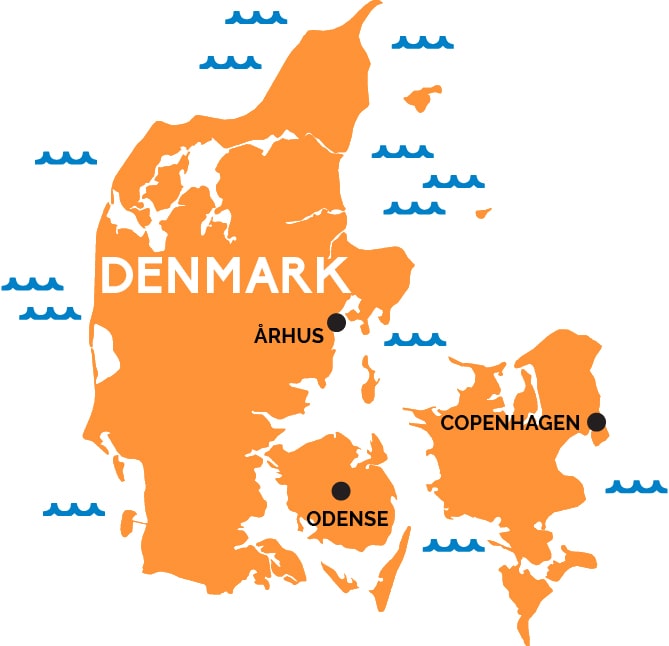
Denmark (Capital: Copenhagen)
- Denmark to implement livestock carbon dioxide emissions tax in 2030
- Political Features:
- Location: Nordic country in northern Europe, part of Jutland Peninsula.
- Territorial boundary: Germany to the south.
- Surrounding water bodies: North Sea on the west coast, Kattegat Bay on the east coast.
- Geographical Features:
- Islands: Archipelago of around 400 islands, largest being Zealand.
- Longest River: Gudenå.
- Climate: Warm Gulf Stream (North Atlantic Current) moderates climate, rain falls throughout the year.
2024 World Drug Report Released by UNODC
UNODC Report on World Drug Day
- The United Nations Office on Drugs and Crime (UNODC) released a report on World Drug Day, which is observed on June 26th to promote a drug-free world.
Key Findings of the Report
- Increase in Drug Abuse: The report shows that the number of people using illicit drugs has risen to 292 million by 2022.
- Most Abused Drugs: Cannabis is the most commonly abused drug, followed by opioids, amphetamines, cocaine, and ecstasy.
- Most Affected Regions: Criminal activities and drug trafficking are prevalent in remote regions with multiple borders and limited governance, such as the Triple Frontier area and the Golden Triangle.
- Cannabis Legalization: Cannabis has been legalized in Canada, Uruguay, and 27 jurisdictions in the US, with THC believed to be the main psychoactive ingredient.
- Environmental Impact: Illegal drug-related activities contribute to deforestation, toxic waste dumping, and chemical contamination.
Initiatives Against Illicit Drugs
- Global Efforts: The Global Commission on Narcotic Drugs and the UNODC were established to address drug control, crime, and terrorism. The UN Convention against Illicit Traffic in Narcotic Drugs and Psychotropic Substances was adopted in 1988.
- India's Initiatives: India has implemented the Nasha Mukt Bharat Abhiyaan and the Narcotic Drugs and Psychotropic Substances Act to combat drug abuse.
18th Lok Sabha Speaker Elected by Voice Vote
Election of Speakers in India
- The Speakers in India have been elected unopposed in all years except for 1952, 1967, and 1976.
- Article 93 of the Indian Constitution states that the Lok Sabha chooses its Speaker and Deputy Speaker by a simple majority of members present and voting.
Role of the Speaker of Lok Sabha
- The Speaker is the presiding officer responsible for the day-to-day functioning of the Lok Sabha.
- The Speaker remains in office until immediately before the first meeting of the Lok Sabha after dissolution and is eligible for re-election.
Responsibilities of the Speaker of Lok Sabha
- The Speaker is the guardian of the rights and privileges of the House, its committees, and members.
- The Speaker resolves deadlocks by using their voting power and presides over joint sittings of Parliament.
- The Speaker has the sole authority to decide if a Bill is a Money Bill according to Article 110(4).
Criticism of the Office of Speaker
- In India, the Speaker retains membership of their party even after election, unlike in Britain where the Speaker must resign from their party to uphold neutrality.
- The discretionary powers of the Speaker, such as in the case of the Anti-defection law or deciding on money bills, can lead to biases.
UGC-NET Exam Paper Leak: Darknet Scandal
- The Centre stated that a paper leak on the darknet resulted in the UGC-NET exam being cancelled.
About Darknet (or Dark Web):
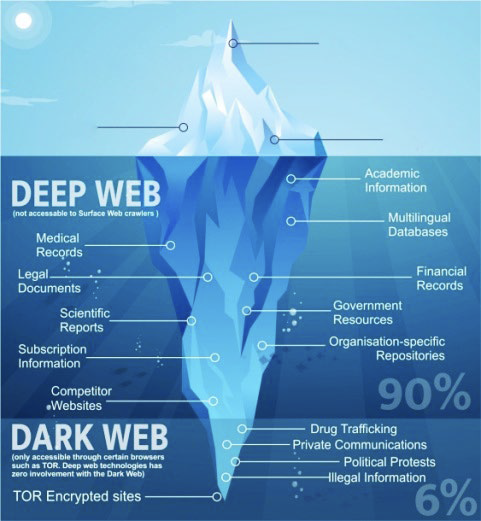
- The Darknet is a part of the Internet that cannot be accessed through traditional search engines or normal browsers.
- It uses non-standard communication protocols and requires specific browsers like TOR to access encrypted content.
- It is a subset of the Deep Web, which includes password-protected sites.
- The Surface Web, on the other hand, is the part of the internet accessible to the general public and searchable on standard search engines.
Uses of Darknet
- Journalists, citizens in oppressive regimes, researchers, students, and law enforcement agencies use the Darknet for various purposes.
- It allows communication without government censorship, research on sensitive topics, and other activities.
Concerns about Darknet
- The anonymity provided by the Darknet can facilitate illicit activities such as drug dealing, communication by terrorists, and child pornography.
- This raises concerns about the potential misuse of the Darknet for illegal purposes.
India: The Future Manufacturing Hub for Electronics
- The CII report highlights the need to shift India's electronics sector from assembly-led manufacturing to value-added manufacturing at the component level.
Key findings of the report:
- The report predicts a significant growth in electronics production from USD 102 billion in 2023 to USD 500 billion by 2030.
- China currently dominates India's electronic component imports, accounting for 62% of the total.
- It recognizes five main components/sub-assemblies as priorities: lithium-ion batteries, camera modules, mechanical parts (such as enclosures), displays, and Printed Circuit Boards.
Challenges in Becoming a Global Hub for Components and Subassemblies
- High import tariffs are affecting India's global competitiveness in the electronics sector.
- India's trade agreements are mainly with countries that have high production but low consumption, leading to trade deficits.
- The lack of investment in research and development in the domestic industry is hindering revenue and manufacturing potential.
Recommendations
- States should offer land at concessional rates and provide Plug & Play infrastructure to attract electronics manufacturers.
- 'Plug and play' infrastructure refers to ready-to-use facilities with essential amenities like power, water, and road connectivity.
- Public-private partnerships in government-funded institutions can help smaller companies access necessary infrastructure.
- Import tariffs on priority sub-assemblies and components should be rationalized to support the growth of the electronics sector.
Government Initiatives to Promote Electronic Manufacturing
- The Production Linked Incentive Scheme (PLI) supports large-scale electronics manufacturing and IT hardware production.
- The Scheme for Promotion of Manufacturing of Electronic Components and Semiconductors (SPECS) aims to boost local production in these areas.
- The Modified Electronics Manufacturing Clusters Scheme (EMC 2.0) and the National Policy on Electronics 2019 are also key initiatives to promote electronic manufacturing in India.
50 Years of National Emergency Proclamation
- On June 25, 1975, the President declared a National Emergency based on the Prime Minister's recommendation, citing an internal threat.
- Previous National Emergencies were declared in 1962 due to war with China and in 1971 due to war with Pakistan.
Constitutional Provisions on National Emergency
- The President can proclaim a National Emergency on the written request of the Union Cabinet as per Article 352 of the Constitution.
- Grounds for proclamation include threats to the security of India due to war, external aggression, or armed rebellion.
- Parliamentary approval is required within one month of the proclamation, with the possibility of extensions.
- The President has the authority to revoke the National Emergency.
Impact of National Emergency
- Suspension of Fundamental Rights: During a National Emergency, certain Fundamental Rights can be suspended, such as the right to move any court for the enforcement of Fundamental Rights except for Article 20 and Article 21.
- Centralization of Power: The National Emergency allows for the centralization of power, with Parliament being able to make laws on any matter, the Union Government giving directions to states on executive power, and the President modifying provisions related to the distribution of revenues between the Union and States.
Julian Assange Released by US Court
- Founded in 2006 to publish restricted materials on wars, spying, and corruption.
- Featured classified U.S. military documents in 2010 from Iraq and Afghanistan.
- Serves as an internet platform for whistleblowers.
Whistleblowing
- Disclosure of wrongdoing like fraud or corruption to the public or authorities.
- Promotes accountability, transparency, and protects public interest.
Ethical Issues in WikiLeaks Case
- Balancing protection of whistleblowers with national security concerns.
- Media responsibility in handling classified information.
- Balancing public right to information with government need for confidentiality.
Indian Laws to Protect Government Secrets
- Official Secrets Act, 1923: Deals with espionage, sedition, and threats to national integrity.
- Rule 11 of Central Civil Services (Conduct) Rules, 1964: Governs communication of official information by government servants.
- Section 8(1) in The Right to Information Act, 2005: Exempts disclosure of information that could harm India's sovereignty and integrity.