
Daily Current Affairs UPSC 26 June 2024
Welcome to our daily current affairs blog post for UPSC aspirants! In today's edition, we will be discussing the most significant events and news updates that took place on 26th June 2024. Staying updated with current affairs is crucial for UPSC preparation, as it not only helps you stay informed but also enhances your understanding of various subjects. So, let's dive into the important happenings of the day and explore their potential impact on the upcoming UPSC examinations.

ULLAS - New India Literacy Programme (NILP)
- Ladakh has achieved full functional literacy through the ULLAS - Nav Bharat Saaksharta Karyakram.
- Functional literacy involves using literacy skills for personal and community development.
- ULLAS-NILP is a Ministry of Education initiative to ensure Education for All.
- It is a centrally sponsored scheme running from FY2022-23 to 2026-27.
- Beneficiaries are non-literates aged 15 and above.
- The program includes components like Foundational Literacy and Numeracy, Critical Life Skills, Basic Education, Vocational Skills, and Continuing Education.
- Implementation is done through volunteerism and online mode.
Biomass briquettes
- Biomass briquettes are being used as an alternative fuel for power and electricity generation.
- They are compact blocks made from organic materials like agricultural residues and forestry wastes.
- The briquetting process densifies biomass to make it a renewable energy resource.
- Biomass briquettes are carbon-neutral and help reduce greenhouse gas emissions when burned.
- Using locally available feedstock for biomass briquettes increases supply chain resilience and reduces exposure to price volatility and geopolitical uncertainties.
Exercise HOPEX
- HOPEX is a collaborative military exercise involving the Indian Air Force and Egyptian Air Force.
- The goal of the exercise is to enhance cooperation at both bilateral and regional levels.
- The Indian Air Force is contributing Rafale fighter jets, C-17 Globemaster, and IL-78 tankers to the exercise.
- The exercise is taking place in Egypt.
International Criminal Court
- The International Criminal Court (ICC) has issued arrest warrants for Russia's Chief of Army chief and former defence minister for alleged war crimes.
- The ICC is the world's first permanent and treaty-based organization aimed at ending impunity for serious crimes of international concern.
- The ICC tries individuals for genocide, war crimes, crimes against humanity, and the crime of aggression.
- The founding treaty of the ICC is the Rome Statute.
- The ICC is headquartered in The Hague, Netherlands.
- There are 124 countries that are States Parties to the ICC, but India is not a member.
- The ICC is an independent international organization and is not part of the UN system.
Leader of Opposition
- The 18th Lok Sabha will have a Leader of Opposition after a 10-year vacancy.
- The Leader of Opposition is from the largest opposition party with at least one-tenth of the total Lok Sabha seats.
- The Office of LoP is not specified in the Constitution.
- LoP in both Houses of Parliament are recognized under the Salaries and Allowances of Leader of Opposition in Parliament Act, 1977.
- They are entitled to salary, allowances, and facilities equivalent to a cabinet minister.
India’s External Debt
- RBI has released data on India's External Debt as of March 2024.
- India's external debt increased by US$ 39.7 billion compared to March 2023.
- The external debt to GDP ratio decreased to 18.7% from 19%.
- Long-term debt share increased while short-term debt share decreased.
- US Dollar denominated debt remains the largest component at 53.8%, followed by Indian rupee, yen, SDR, and euro denominated debt.
Harmful Chemicals in Food Packaging in Plastics
- Some experts are concerned about the potential risks of heating food at high temperatures and storing it in plastic containers.
- Chemicals like Bisphenol A, Phthalates, and Styrene can leach into food from plastic containers.
- Bisphenol A is used in making certain plastics and resins and has been linked to increased risks of cancer with long-term exposure.
- Phthalates are used to make plastics more flexible and durable, but can interfere with the endocrine system and hormone regulation.
- Styrene is a flammable liquid with a sweet odor that is a suspected carcinogen and can cause nervous system issues like headaches and dizziness.
Chang'e-6
- China's Chang'e-6 probe successfully retrieved the first samples ever collected from the Moon's far side.
- The Moon's far side is difficult to reach due to its remote location and rugged terrain.
- Chang'e-6 is China's sixth mission to the Moon and its second to the far side.
- In 2019, China made history by landing the Yutu-2 probe on the far side of the Moon.
- The samples collected by Chang'e-6 will be used to test theories about the Moon's formation and understand its composition, including the center of the Moon.
Sucheta Kriplani (1908 - 1974)
- Sucheta Kriplani, a prominent freedom fighter and India's first female Chief Minister of Uttar Pradesh in 1963, was honored on her birth anniversary on June 25.
- Born in 1908 in Ambala district of Haryana, she was a politician and played a significant role in the drafting committee as one of the fifteen eminent women.
- She was a founding member of the All India Mahila Congress in 1940 and actively participated in the Quit India Movement, working underground to avoid arrest.
- Sucheta Kriplani also engaged in various relief activities, such as aiding in the 1934 Bihar earthquake and the 1946 Noakhali riots before Partition.
- She was part of several delegations, including the Parliamentary Delegation to Turkey in 1954, the International Labour Organization in 1961, and the United Nations General Assembly in 1949.
- Known for her values of courage, patriotism, leadership, and compassion, Sucheta Kriplani left a lasting impact on India's history.

"Global Trans Fat Elimination: WHO 5-Year Milestone Report"
- WHO's recent milestone report summarizes progress towards global elimination of industrially produced trans-fatty acids (TFA) and its impact on public health.
About TFA:
- TFA can come from industrial or natural sources.
- Industrial trans-fats are created by adding hydrogen to vegetable oils.
- WHO recommends limiting trans fat consumption to less than 1% of total energy intake for adults.
Key Highlights:
- 53 nations have implemented WHO's best-practice policies for TFA elimination, covering 46% of the global population.
- In India, around 4.63% of Coronary Heart Disease deaths are linked to TFA intake.
Key Recommendations:
- Sub-regional bodies should pass mandatory TFA elimination policies that are binding on member states.
- Food manufacturers should voluntarily remove industrially produced TFA from their products.
Initiatives for TFA Elimination:
Global:
- WHO's REPLACE action package aims to eliminate industrially-produced TFA from national food supplies.
- WHO Validation Programme recognizes countries for their progress in TFA elimination.
National:
- Food Safety and Standards regulations in India limit industrial TFA in fats and oils.
- FSSAI launched a 'Trans-Fat Free' logo as part of the Eat Right India Movement.
"Political Representation and Forest Conservation: Insights from PESA Act"
PESA extended provisions of part IX of the Constitution to Scheduled Areas under Fifth Schedule
- Scheduled areas are economically backward with a tribal population and are considered viable administrative entities.
About PESA
- Establishment of Gram Sabha for managing and protecting natural resources.
- Rights over minor forest produce and powers to restore land to tribals.
- Electoral quota for reserved positions for Scheduled Tribes in local government councils.
Findings of Study
- Increase in tree canopy by 3% per year and reduction in deforestation due to boosted ST representation through PESA.
- Other legislations without ST political representation had no positive conservation effects.
- STs have economic incentive to protect forests due to reliance on non-timber forest produce, improving overall forest health.
- Increased opposition to mining projects in areas with ST representation.
Recommendations for Improving Forest Conservation
- Mandated political representation for marginalized populations can improve conservation efforts.
- Vesting power in umbrella institutions like multipurpose village councils can address forest management and development challenges better than targeted community resource management institutions.
"Introducing Water Credits: Bisleri's Innovative Solution"
- Bisleri has teamed up with TERI School of Advanced Studies to conduct a study on water credits for the beverages industry and will share the findings with the central government.
Water Credit
- Water credits are a market-based mechanism similar to carbon credits that incentivize water conservation and quality improvement.
- Each credit represents a reduction in carbon emissions or other greenhouse gases in the atmosphere.
- Individuals and entities can earn tradable credits by implementing water-saving measures, which can then be sold to others needing to offset their water usage or improve water management practices.
Significance of Water Credits
- Water credits can help address water stress and contribute to achieving SDG6 (Clean Water and Sanitation).
- In India, 11 out of 15 major river basins are projected to be water-stressed by 2025.
- Enhancing water use efficiency in agriculture, the largest extractor of groundwater, is crucial.
- Water credits can promote investment in sustainable water management practices.
Challenges in Implementing Water Credit System
- Unlike carbon emissions, water savings require a localized approach that considers factors like rainfall and consumption at a watershed level.
- Transactions for water credits are limited spatially to hydrological boundaries.
- There is a risk of wealthier entities dominating the market for water credits.
Potential approach towards Water Credit System
- Establishing a regulatory body to maintain free market conditions is essential.
- Adopting a multiplayer approach where industries can purchase water credits from water-rich municipalities can help mitigate funding challenges.
- Learning from global best practices, such as water trading in the Murray-Darling basin in Australia, can provide a roadmap for successful water trading systems.
Revolutionizing Toll Collection with GNSS ETC System in India
- NHAI plans to introduce GNSS based ETC system alongside the existing FASTag system, initially using a hybrid model where both will operate simultaneously.
- The current FASTag system is RFID based and is part of the National Electronic Toll Collection Program.
About GNSS based ETC
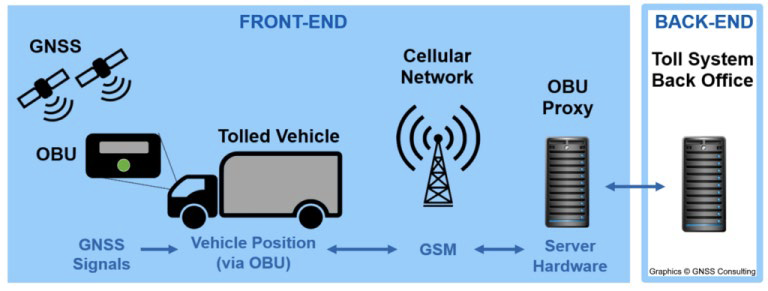
- GNSS based ETC is a barrier-free tolling method that uses satellites to track vehicles and calculate tolls based on distance traveled.
- Toll plazas will identify GNSS vehicles using Stationary Enforcement Gantries, with a Centralized Toll Charger responsible for distance and toll calculation.
- OBUs fitted on GNSS vehicles will send distance and time stamps to the Toll Charger, similar to the issuer entities in the FASTag system.
Working of GNSS based ETC
- Toll plaza will identify GNSS vehicles.
- Centralized Toll Charger will calculate toll for GNSS vehicles.
- OBUs on GNSS vehicles will transmit distance and time stamps to Toll Charger.
- Payment mechanism will be similar to FASTag system.
Significance of GNSS based ETC
- GNSS based ETC offers barrier-less free-flow tolling and distance-based tolling, reducing congestion at toll plazas.
- It helps to prevent toll evasion and plug leakages in toll collection.
- The implementation of GNSS based ETC modernizes toll collection systems in line with global practices.
"New Rules to Prevent Unfair Means in Public Exams"
- The Ministry of Personnel, Public Grievances and Pensions has announced the regulations for the Public Examinations (Prevention of Unfair Means) Act, 2024, which became effective on June 21, 2024.
Key Highlights of the Rules
- The Ministry has implemented rules under the Act from June 21, 2024.
- Venue-in-charge can take action, including filing FIR, if unfair means are reported.
- A committee will be formed if management or board of directors of service provider are involved.
- Service provider refers to any entity engaged by the public examination authority.
- Regional officers must report incidents of unfair means to the public examination authority.
Public Examination (Prevention of Unfair Means) Act, 2024
- "Unfair means" include unauthorized access, assisting candidates, tampering with resources, and conducting fake exams.
- Punishments:
- Individuals using unfair means may face imprisonment for a minimum of three years and a maximum of five years, along with a fine of up to ten lakh rupees.
- Service providers or groups involved in organized crime may be fined up to ₹1 crore, with the cost of examination also being recovered from them.
- All offenses are considered cognizable, non-bailable, and non-compoundable.
"Building Resilience in the Power Sector: CDRI Policy Brief"
- The CDRI's Policy Brief focuses on disaster resilience strategies for the power sector in the face of cyclones and floods, with a specific focus on Odisha.
- Disaster resilience involves anticipating, planning, and reducing disaster risk to protect individuals, communities, countries, livelihoods, health, cultural heritage, socio-economic assets, and ecosystems effectively.
Key Findings for Odisha's Transmission and Distribution (T&D) Infrastructure
- 80% of electricity poles in Odisha are vulnerable to high wind speeds.
- Over 75% of distribution lines in Odisha cannot withstand cyclonic winds.
- Similar situations are likely to be found in other coastal states.
Key Policy Recommendations
- Enhance Codes and Standards for Wind Zonation: Regularly update wind zonation maps with recent and localized meteorological data.
- Create Data Access Platforms for Physical Climate Risks: Facilitate communication and collaboration with disaster management authorities.
- Risk-informed Governance: Include resilience in policy, training, and capacity building initiatives, and develop a cross-sectoral framework for stakeholder collaboration.
- Innovative Financing Solutions: Utilize insurance, reinsurance, Catastrophe (CAT) bonds, and create a "Grant" component for Power Utilities to address emergent needs.
About CDRI
- Launched at the UN Climate Action Summit in 2019 by India.
- Objective is to promote infrastructure resilience to climate and disaster risks.
- A global partnership of 39 countries and 7 organizations, including UN agencies, multilateral development banks, and the private sector.