
Daily Current Affairs UPSC 12, 13 and 14 October 2024
Welcome to our daily current affairs blog post for UPSC aspirants! In today's edition, we will be discussing the most significant events and news updates that took place on 12th, 13th and 14th October 2024. Staying updated with current affairs is crucial for UPSC preparation, as it not only helps you stay informed but also enhances your understanding of various subjects. So, let's dive into the important happenings of the day and explore their potential impact on the upcoming UPSC examinations.

Murine Typhus
- A man from Kerala was recently diagnosed with murine typhus, a bacterial disease.
- Murine typhus is also known as endemic typhus, flea-borne typhus, or flea-borne spotted fever.
- The disease is found worldwide, mainly in tropical and subtropical regions where rats and rat fleas are present.
- It is caused by the flea-borne bacteria Rickettsia typhi.
- Humans can get infected with murine typhus when flea feces come into contact with cuts or scrapes on the skin, or through exposure of mucous membranes to infected flea feces.
- Murine typhus is not transmitted from person to person or from person to fleas.
- Symptoms of murine typhus include fever, chills, headache, and rash.
Space-Based Surveillance (SBS)
- The Cabinet Committee on Security (CCS) has given the green light for Phase III of the SBS initiative.
- This phase will involve the deployment of AI-powered spy satellites over a five-year period to enhance surveillance capabilities.
- The satellites will be used to support the operations and missions of the three armed services.
- The SBS initiative is essential for monitoring man-made objects in space.
- SBS operates continuously, unaffected by weather, time of day, or atmospheric conditions that can disrupt ground-based systems.
- The first phase of SBS was launched in 2001, followed by the second phase in 2013.
UNICEF
- Indian suppliers are the third largest providers of health and nutrition support to children worldwide.
- UNICEF was established in 1946 by the UN General Assembly and is headquartered in New York, USA.
- The organization advocates for children's rights, meets their basic needs, and helps them reach their full potential.
- UNICEF operates in over 190 countries and territories to protect the rights of every child.
- It supports the Convention on the Rights of the Child, a global human rights treaty for children.
- UNICEF is funded entirely by voluntary contributions from governments, intergovernmental organizations, and the private sector.
- The organization publishes the State of the World's Children report.
- In 1965, UNICEF was awarded the Nobel Prize.
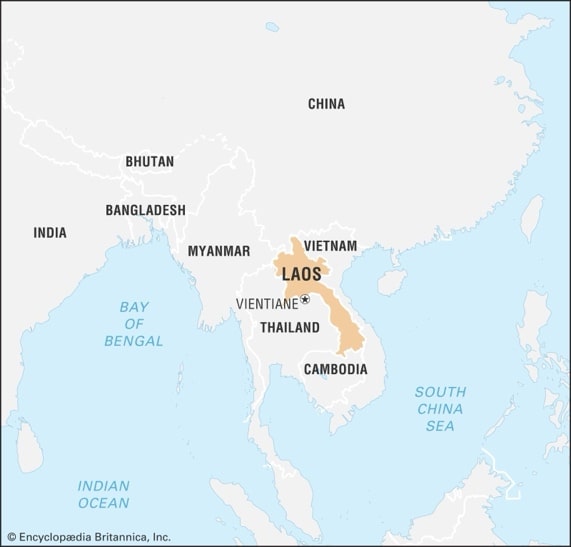
India-Lao PDR bilateral cooperation
- The Prime Ministers of India and Lao PDR discussed bilateral issues during the East Asia Summit.
- The Archaeological Survey of India will be restoring the Vat Phou UNESCO site.
- Three Quick Impact Projects under the Mekong-Ganga Cooperation were highlighted, including preserving the heritage of Lao Ramayan and restoring the Wat Pakea Buddhist temple.
- India will provide a $1 million grant for nutrition security in Lao PDR through the India-UN Development Partnership Fund.
Aurora
- Auroras were photographed at India's highest observatory in Hanle, Ladakh.
- Characteristics of Auroras:
- Multicolored lights seen in the upper atmosphere (ionosphere).
- More common at high northern and southern latitudes, less frequent at mid-latitudes, and rare near the equator.
- Known as aurora borealis in the Northern Hemisphere and aurora australis in the Southern Hemisphere.
- Result from the interaction of solar wind with oxygen and nitrogen in the atmosphere.
- Serve as a stunning indication of the electrical connection between Earth and the Sun.
Biopolymer
- The Union Minister unveiled India's first Demonstration Facility for Biopolymers in Jejuri, Pune, marking a significant step in developing technology for producing Polylactic Acid (PLA) bioplastic.
- Biopolymers are made from biological sources such as fats, vegetable oils, and sugars.
- Biopolymers have advantages over synthetic polymers, including easy biodegradation by bacteria in soil and carbon neutrality as the CO2 released during degradation can be reabsorbed by crops.
Bio Banks
- Researchers recently used data from a bio bank to identify individuals with an undiagnosed rare genetic disorder.
- Bio banks store biological samples like blood, DNA, cells, tissues, and organs, along with genetic data, collected from consenting individuals for research purposes.
- The 'Indian Biological Data Bank' was established in 2022 at the Regional Centre for Biotechnology in Faridabad.
- Challenges with bio banks include issues related to informed consent, withdrawal rights, privacy, and data protection.
- India lacks consistent regulation for bio banks, with no specific laws to protect the rights of individuals.
Nobel Peace Prize
- The Nobel Peace Prize for 2024 was given to the Japanese organization Nihon Hidankyo for their work towards a world without nuclear weapons.
- Nihon Hidankyo is a grassroots movement made up of survivors of the atomic bombs in Hiroshima and Nagasaki.
- The Nobel Peace Prize is awarded to individuals or organizations that promote peace between nations, work towards reducing standing armies, and hold peace congresses.
- In 2017, the Nobel Peace Prize was awarded to the International Campaign to Abolish Nuclear Weapons (ICAN) for their efforts in denuclearization, including the groundbreaking Treaty on the Prohibition of Nuclear Weapons adopted by the UN in 2017.
Dragon Drones
- A new drone known as the "dragon drone" was utilized in the recent Russia-Ukraine conflict.
- The dragon drone is an unmanned aerial vehicle capable of releasing thermite, a combination of aluminum and iron oxide.
- Thermite, when ignited, creates a reaction that is difficult to put out on its own.
- In the past, thermite has been used in both world wars and can cause serious burns and bone damage to humans.
- While thermite itself is not internationally banned, the use of incendiary weapons in civilian areas is prohibited by the UN's Convention on Certain Conventional Weapons.
"New Report on Children's Mental Health Services"
- The report was released in conjunction with 'World Mental Health Day', which has been celebrated annually on 10 October since 1992 by the World Federation for Mental Health.
- Mental health is defined as a state of mental well-being that allows individuals to handle life's challenges, realize their potential, learn and work effectively, and contribute to their community.
Key Findings of the Report
- One-third of mental health conditions manifest before the age of 14, and half before the age of 18.
- Approximately 15% of adolescents aged 10-19 years are affected by mental health conditions, with anxiety, depression, and behavioral disorders being the most common.
- Suicide ranks as the fourth leading cause of death among individuals aged 15-19 years.
- Limited access, high costs, and stigma are barriers that prevent many young people with mental health issues from receiving necessary care.
- Public funding and human resources for mental health services are generally low worldwide, with services for children and adolescents being particularly scarce.
- The report recommended replacing institutional care with community-based services to support children in growing up within their families and communities. This approach would help maintain consistency in their education, social connections, and overall growth.
India’s efforts recognised by the report
- The Mental Health Care Act 2017 removed criminal penalties for suicidal behaviors.
- The Schizophrenia Research Foundation (SCARF) in Chennai offers free care for early psychosis services that meet international standards.
- The Centre for Mental Health Law and Policy in Maharashtra has involved young adults in creating the Outlive! prevention program, which focuses on reducing urban suicides among marginalized young people aged 18-24.
PM attends 19th EAS in Vientiane
EAS is the top platform in the Indo-Pacific region for important strategic discussions.
Key Announcement by India
- India emphasized the importance of ASEAN's central role in the Indo-Pacific regional architecture and in cooperation within the Quad.
- A conclave on education will be hosted by India at Nalanda University, inviting countries from the East Asia Summit to participate.
- India supports ASEAN's approach to the situation in Myanmar and believes that engagement with Myanmar is more effective than isolating the country. India also endorses ASEAN's Five-Point Consensus, which includes the following points:
- Immediate cessation of violence in Myanmar
- Dialogue among all parties involved
- Appointment of a special envoy
- Provision of humanitarian assistance by ASEAN
- Visit by the special envoy to Myanmar to meet with all parties
- India's endorsement of these points shows its commitment to finding a peaceful resolution to the crisis in Myanmar through diplomatic means and cooperation with ASEAN.
- India proposed the implementation of a Code of Conduct (CoC) for Navigation, emphasizing that maritime activities should follow the guidelines of the United Nations Convention on the Law of the Sea (UNCLOS).
- India suggested that the CoC should be strong and not limit the foreign policies of regional nations, promoting a development-focused approach over expansionism in the region.
About EAS
- Establishment of the East Asia Summit (EAS) in 2005 in Kuala Lumpur, Malaysia
- Goal of EAS is to promote peace, stability, and economic prosperity in East Asia
- 18 participants in EAS including 10 ASEAN Member States and countries like India, Australia, China, Japan, New Zealand, South Korea, Russia, and US
- ASEAN Members include Brunei, Cambodia, Indonesia, Laos, Malaysia, Myanmar, the Philippines, Singapore, Thailand, Vietnam
- 6 priority areas of cooperation in EAS: Environment and energy, education, finance, global health issues and pandemic diseases, natural disaster management, and ASEAN Connectivity
- Significance of EAS: Members represent approximately 53% of the world's population and 60% of global GDP
"Concerns Raised by Former CEA on Multi-Plants"
The working paper titled 'Expanding Multi-Plant Operations and Increasing Plant Size: Implications, Expenses, and Justification' raises concerns about the increasing prevalence of small-scale manufacturing facilities in India.
Key highlights:
- The "Midgets making widgets" phenomenon refers to Indian firms opting to set up multiple factories in the same state instead of expanding a single large factory.
- Multi-plants now make up 35% of employment in large firms with over 200 workers.
- Despite a rise in contract workers, large plants have either remained stagnant or decreased in size over the past two decades.
- There have been significant investments in electronics, apparel, and footwear industries in Tamil Nadu and Karnataka, with worker sizes of 10,000 and above.
- This trend may have been influenced by the "China plus one" opportunity or new subsidy schemes.
Reasons behind the trend of midgets making widgets
- Indian businesses choose to keep their operations small to better manage risks and regulatory pressures, such as the Industrial Dispute Act of 1947.
- In case of a dispute, shutting down a plant with fewer employees is less costly than one with a larger workforce.
Consequences of midgets making widgets
- Multi-plant firms tend to have lower productivity compared to single-plant firms of similar size.
- This has led to Indian firms losing out to smaller countries like Bangladesh, which benefits from larger plants in labor-intensive sectors like apparel.
- Bangladesh exports 95% of its apparel output, while India only exports 37%.
India's Global Hunger Index (GHI) ranking for 2024: 'serious' category
The index has been published by Concern Worldwide, an Irish humanitarian organization, and Welthungerhilfe, a German aid agency.
Key Findings of report About India:
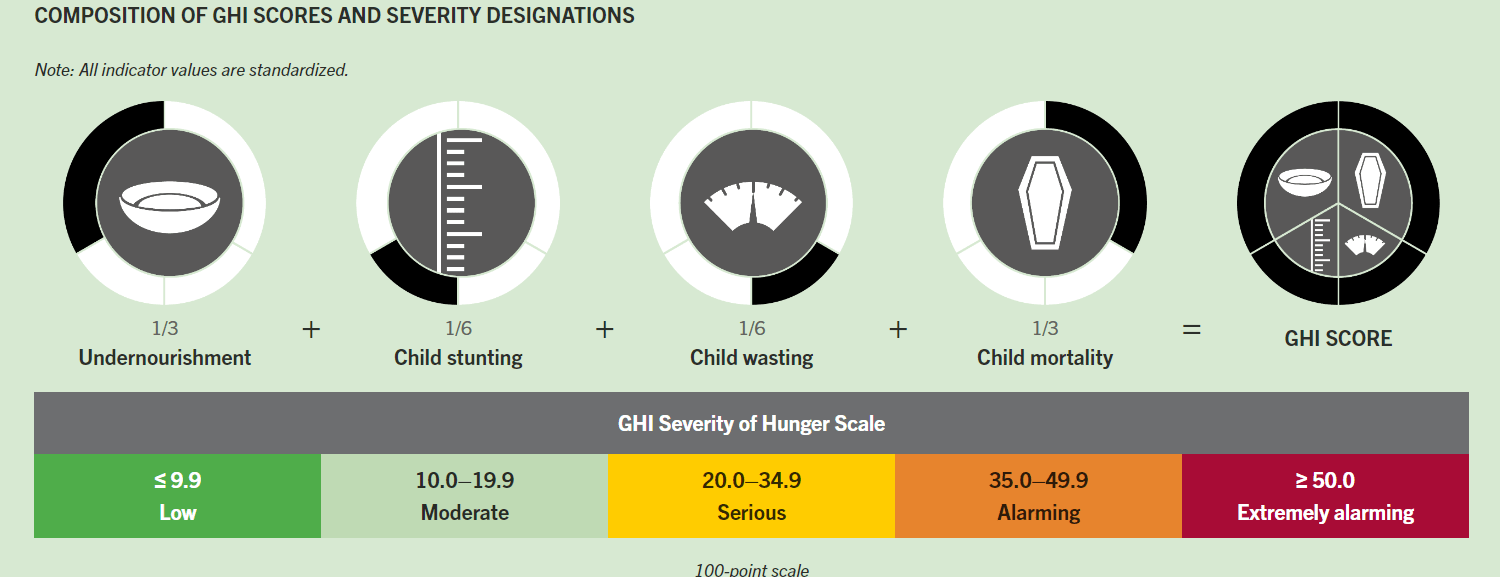
- India's Ranking: India is ranked 105th out of 127 countries, falling under the "serious" category along with 41 other nations like Pakistan and Afghanistan.
- India's GHI Score: India's GHI score has decreased since 2000, but child wasting and stunting rates remain high.
- Maternal Malnutrition: Maternal malnutrition in India contributes to child undernutrition, leading to a cycle of poor nutritional status across generations.
About Global Hunger Index (GHI)
- Purpose of GHI: The GHI is a tool used to measure and monitor hunger on a global, regional, and national scale.
- Calculation of GHI Score: Each country's GHI score is determined by a formula that considers four indicators: undernourishment, child stunting, child wasting, and child mortality.
Key Issues with GHI
- Methodology Concerns: Three out of the four indicators used in the GHI calculation focus on children's health, which may not accurately represent the entire population.
- Faulty Indicator: Some studies question the use of stunting as an indicator of undernutrition, as it can also occur in well-nourished populations.
- Outdated Data: The GHI relies on data sets like the National Family Health Surveys, which may not have annual updates for key indicators.
"NRA of India Meets WHO Vaccine Standards"
- India's Vaccine regulatory systems, including the NRA and affiliated institutions, have been deemed "functional" in all key regulatory functions by WHO's Global Benchmarking Tool (GBT).
- In 2017, India's NRA was assessed using an older version of GBT V, but has now been reassessed using the updated GBT VI.
- India has retained Maturity Level 3 with high marks in several functions, indicating a stable, well-functioning, and integrated regulatory system.
About WHO's GBT
- WHO's GBT is used to evaluate national regulatory systems for products such as medicines, vaccines, blood products, and medical devices.
- The GBT incorporates the concept of 'maturity level' on a scale from 1 (existence of some elements of regulatory system) to 4 (advanced level of performance and continuous improvement).
National Regulatory Authority (NRA) of India
- NRAs in India are institutions responsible for regulating, controlling, and testing vaccines to ensure they meet international standards of quality, safety, and efficacy.
- Comprised of CDSCO, State Drug Regulatory Authorities, Central Drugs Laboratory, Immunization Division, PvPI, etc.
Regulation of Vaccines in India
- Importing and manufacturing of vaccines in India are regulated by the Drugs and Cosmetics Act, 1940, and related rules.
- Manufacturing licenses are granted after joint evaluation by the State Licensing Authority and CDSCO.
- New vaccines manufacturing is governed by the New Drugs and Clinical Trials Rules, 2019, which outline requirements for clinical studies and approvals.
- Compliance with Department of Biotechnology guidelines is required for r-DNA derived vaccines.
Guidelines for PM-Surya Ghar Innovative Projects
- The Ministry of New and Renewable Energy has released operational guidelines to promote advancements in rooftop solar technologies, business models, and integration techniques.
- Earlier guidelines were issued for subcomponents like Modal solar village.
About Innovative Projects Component
- Objective: To support startups, institutions, and industries in testing new concepts, focusing on emerging solutions such as blockchain-based peer-to-peer solar trading.
- Eligibility/Target Group: Any entity or individual, including international cooperation for joint research and design.
- Tenure: Projects will have a maximum duration of 18 months.
- Funds: ₹500 crore allocated to encourage advancements in rooftop solar technologies.
- Funding: Financial assistance of up to 60% of project cost or ₹30 crore, whichever is lower.
- Scheme Implementation Agency: National Institute of Solar Energy (NISE).
About PM Surya Ghar: Muft Bijli Yojana (2024)
- Nodal Ministry: Union Ministry of New and Renewable Energy.
- Duration: Until the financial year 2026-27.
- Objective: To install rooftop solar systems and provide free electricity for up to 300 monthly units for 1 crore households.
- Subsidy Benefits: Provides 60% of the solar unit cost for systems up to 2 kW capacity and 40% of additional system cost for systems between 2 to 3 kW capacity.