
Daily Current Affairs UPSC 14 and 15 July 2024
Welcome to our daily current affairs blog post for UPSC aspirants! In today's edition, we will be discussing the most significant events and news updates that took place on 14th and 15th July 2024. Staying updated with current affairs is crucial for UPSC preparation, as it not only helps you stay informed but also enhances your understanding of various subjects. So, let's dive into the important happenings of the day and explore their potential impact on the upcoming UPSC examinations.

Pradhan Mantri Colleges of Excellence
- The Union Home Minister opened the PM Colleges of Excellence in Madhya Pradesh, making it the first state to implement the National Education Policy (NEP) of 2020.
- The PM Colleges of Excellence have been upgraded to meet the standards set by the NEP.
- Students at these colleges have the flexibility to choose subjects based on their interests across different disciplines, without being restricted by traditional streams. This is known as No compartmental education.
- The colleges focus on a variety of subjects such as Biotechnology, Computer Science, Arts, and Data Analytics, providing students with a diverse range of educational opportunities.
Indian Newspaper Society (INS)
- The Prime Minister officially opens the INS Towers in Mumbai.
- INS, originally known as the Indian & Eastern Newspaper Society (IENS), was established in 1939.
- The first president of INS was Mr. Arthur Moore of the Statesman.
- The main goal of INS is to serve as a central organization for the press in India and other Asian countries.
- Members of INS include owners, proprietors, and publishers of print media.
- INS plays a crucial role in verifying circulation figures of newspapers and periodicals in India.
- Another important role of INS is to protect and advocate for the freedom of the press in India.
Central Information Commission (CIC)
- The Supreme Court has confirmed that the Central Information Commission has the authority to establish benches and create regulations.
- The Central Information Commission (CIC) was established under the Right to Information Act, 2005 to provide Indian citizens with greater access to information.
- The CIC's functions include receiving and investigating complaints related to the RTI Act.
- The Commission is made up of one Chief Information Commissioner (CIC) and Information Commissioners (IC), with a maximum of 10 members.
- The appointment of CICs and ICs is done by the President based on the recommendation of a committee that includes the Prime Minister, the Leader of the Opposition in the Lok Sabha, and a Union Cabinet Minister nominated by the Prime Minister.
- CICs and ICs serve a term of three years in office.
Dedicated Freight Corridor Corporation of India Ltd (DFCCIL)
- The Centre has decided to waive the 18% GST for the Dedicated Freight Corridor Corporation of India Ltd (DFCCIL).
- DFCCIL is a special purpose vehicle of Indian Railways that was established in 2006 under the Indian Companies Act 1956.
- The main responsibilities of DFCCIL include planning, development, financial resource mobilization, construction, maintenance, and operation of Dedicated Freight Corridors (DFCs).
- DFCCIL aims to alleviate congestion on road networks and encourage the transition of freight transport to more efficient rail transport options.
Wolbachia Bacteria
- Recent study found that Wolbachia bacteria manipulate the wasp Encarsia formosa to eliminate males.
- E. formosa helps control whitefly populations, a major agricultural pest.
- Wolbachia bacteria are commonly found in nematodes and arthropods, especially insects.
- In insects, Wolbachia are present in eggs but not in sperm, allowing females to transmit them to offspring but not males.
- Wolbachia have evolved ways to manipulate insect hosts to produce more female offspring.
- The Tra gene of Wolbachia plays a key role in this manipulation.
- Potential application: using Wolbachia-infected mosquitoes to reduce populations of target mosquito species like Ae. Aegypti.
Makhana or Lotus seeds
- The Bihar government has requested a Minimum Support Price for makhana, also known as the popped kernel of foxnut or gorgon nut.
- Makhana is a tropical and subtropical aquatic crop that is grown in stagnant perennial water bodies like ponds and oxbow lakes.
- It is also known as Black Diamond and is native to South-East Asia and China, but is now distributed worldwide.
- India is the largest producer of makhana in the world, with Bihar being the largest producing state.
- Makhana has nutritional benefits such as low fat content, high levels of carbohydrates, protein (15-20%), and minerals.
Kashmir Willow
- In recent years, cricket bats made from Kashmiri willow have gained global recognition.
- Kashmir Willow (Salix Alba) is a deciduous tree that can grow up to 30 meters and is mainly found in the Kashmir region of India.
- The British planted willow trees on a large scale in Kashmir.
- Key features of willow trees include high productivity, extensive fibrous root system, and symbiotic associations with mycorrhizal fungi.
- Willow trees are used in various industries such as the cricket bat industry, package case industry, ply board industry, paper and pulp industry, etc.
Monoclonal Antibodies
- Trials for Nipah monoclonal antibodies could start in India in 2025.
- Monoclonal antibodies are artificial proteins that imitate natural antibodies.
- Antibodies are a crucial part of the immune system that target and eliminate foreign materials.
- Monoclonal antibodies have various applications such as diagnostics, treating diseases, and analyzing cell types in blood or tissue using fluorescent tags.
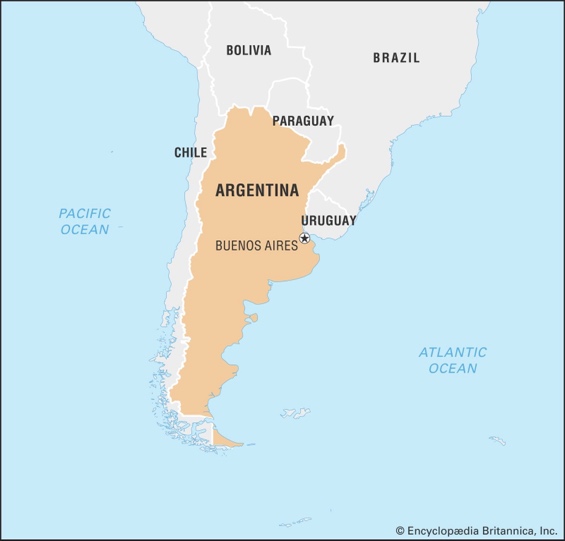
Argentina (Capital: Buenos Aires)
- Argentina designates Hamas as a terrorist group. This decision shows support for Israel.
- Political Features of Argentina
- Located in South America.
- Neighboring countries include Chile, Bolivia, Paraguay, Brazil, and Uruguay.
- Bounded to the east by the Atlantic Ocean.
- Geographical Features of Argentina
- Divided into four major regions: Andes, North, Pampas, and Patagonia
- Pampas is a fertile grassland.
- Major rivers include Parana, Paraguay, and Uruguay.
- Highest peak is Cerro Aconcagua.
"Supreme Court Orders Status Report on Gram Nyayalayas"
- The goal of Gram Nyayalayas is to offer accessible, affordable, and expedited justice to citizens in their local communities, reducing congestion in local courts.
Key Features of Gram Nyayalayas
- The Gram Nyayalayas Act of 2008 provides statutory backing for these courts.
- The Act does not apply to certain states and tribal areas specified in the Act.
- The seat of a Gram Nyayalaya is located at the headquarters of the intermediate Panchayat.
- Gram Nyayalayas are considered to be Courts of Judicial Magistrate of First Class.
- The state government appoints a 'Nyayadhikari' for each Gram Nyayalaya in consultation with the high court.
- The jurisdiction of Gram Nyayalayas includes both civil and criminal cases, and they serve as mobile courts to settle petty disputes at the village level.
- Dispute Process: - Disputes should be resolved through conciliation between the parties, not by following the rules of evidence in the Indian Evidence Act, 1872.
- The Indian Evidence Act, 1872 has been replaced by the Bharatiya Sakshya Adhiniyam.
- Disputes are settled based on the principles of natural justice, rather than strict legal evidence.
- Appeals: Appeals in criminal cases go to the Court of Session and in civil cases to the district court, to be disposed within 6 months.
Key issues associated with Gram Nyayalayas
- Poor Implementation: Only a fraction of the required number of Gram Nyayalayas have been set up and functional.
- Non-Mandatory: The Act does not mandate the establishment of Gram Nyayalayas, leaving it up to the discretion of state governments.
- Resistance: Some states like Jharkhand and Bihar have resisted the establishment of Gram Nyayalayas in tribal or scheduled areas, citing the predominance of local or traditional laws in those regions.
- The Union Government offers financial support to states to establish Gram Nyayalayas as part of the Gram Nyayalayas scheme, a centrally sponsored initiative.
"India Participates in UN Conference on Afghanistan"
- India is among 25 countries participating in the third conference aimed at improving the lives of Afghan people under Taliban rule.
- Previous efforts such as the Delhi Regional Security Dialogue and Moscow Format consultations will be supplemented by this conference.
- The Taliban has positioned themselves as the sole representative of Afghanistan at the conference.
- The Taliban regained power in 2021 after an insurgency against the U.S.-backed government since 2001.
Peaceful and Stable Afghanistan is significant for Region as well as for India:
- Regional connectivity: Afghanistan serves as a gateway to the Central Asian Region.
- Security: Reduced insurgency and cross-border terrorism can enhance security for India's northern and western borders.
- Unstable Afghanistan may become a safe haven for terrorists.
- Energy and resources: Stability in Afghanistan could facilitate the Turkmenistan–Afghanistan–Pakistan–India (TAPI) pipeline.
- Curbing Drug trafficking: - A stable government in Afghanistan would be more effective in addressing drug trafficking.
- Afghanistan, along with Pakistan and Iran, forms the Death Crescent, a region known for drug trafficking.
- Regions like Punjab are particularly impacted by drug trafficking due to the instability in neighboring countries.
India-Afghan Relations Post-Taliban Takeover
- India has not officially recognized the Taliban but is assisting Afghans through humanitarian aid, education, and trade.
- Humanitarian Aid: India has provided shipments of wheat, medical aid, and earthquake relief to Afghanistan.
- Education: The Indian Council for Cultural Relations (ICCR) scholarship scheme for Afghan students continues.
- Trade and commerce between India and Afghanistan, including through the Chabahar port, is ongoing.
- India's technical team in Kabul is monitoring the status and functioning of projects built by India in Afghanistan.
"CITES Report on Rosewoods Worldwide"
- The report provides detailed information on CITES-listed rosewood species, including their characteristics, ecosystem roles, regeneration rates, and threats.
- This information is crucial for CITES parties to make informed non-detriment findings (NDFs) to ensure the long-term survival of these species in the wild.
Rosewood
- Rosewood, also known as "palisander," includes a variety of tropical hardwoods in the Fabaceae (Leguminosae) family.
- CITES-listed rosewood species include Dalbergia latifolia (Malabar rosewood) and Dalbergia Sissoo (Shisham) from India, as well as African rosewood from West African countries.
- These species are used for crafting furniture and musical instruments.
Role in Ecosystem:
Soil Improvement
- Dalbergia species can enhance degraded soil by providing fast decomposing leaf litter that is high in nitrogen, phosphorus, and carbon.
- The nutrients released from the decomposing litter can help improve soil fertility and structure.
Nitrogen Fixation
- Some Dalbergia species can form symbiotic relationships with soil bacteria to fix atmospheric nitrogen.
- This process helps increase nitrogen availability in the soil, promoting plant growth and overall soil health.
CITES Overview
- CITES is an international legally binding agreement between governments to prevent international trade in wild animals and plants from threatening species' survival.
- The convention was drafted in 1963 and came into force in 1975, with 184 parties, including India.
- CITES Appendices contain lists of species with different levels of protection to prevent over-exploitation.
CITES Appendices
- Appendix I: Species facing extinction are protected from international commercial trade.
- Appendix II: Species not currently threatened can be traded with controlled measures to prevent future endangerment.
- Appendix III: Species listed at a Party's request to prevent unsustainable or illegal exploitation can be traded with appropriate permits or certificates.
"Vibrant Village Programme Implementation Review"
- VVP was approved in 2023 to develop selected villages along the northern border in states like Arunachal Pradesh, Himachal Pradesh, Sikkim, Uttarakhand, and Ladakh.
Key Features of VVP
- Type: Centrally Sponsored Scheme.
- Nodal Ministry: Ministry of Home Affairs.
- Areas of intervention: Skill development, livelihood generation, tourism, development of co-operatives, financial inclusion, etc.
- Potential Benefit: Improving border security by promoting community participation in border management.
Significance of Community Participation in Border Management
- Familiarity with local terrain, crossing points, and movement patterns helps act as additional eyes and ears for border guarding forces.
- Enhances situational awareness and aids in intelligence gathering along the border.
- Provides information about suspicious activities, smuggling attempts, or security threats.
- Helps tackle workforce shortage in harsh conditions.
- Example: Residents of Chushul village in Ladakh helped secure supplies for the Army in 2020.
Challenges in Ensuring Community Participation in Border Management
- Distrust and alienation between armed forces and local population disrupt cooperation.
- Lack of economic progress due to government neglect.
Other Initiatives for Improving Life Along International Borders
- Border Area Development Programme (BADP): Launched to meet special development needs of border population within 50 kilometers of the International Border.
- Improvement in connectivity through projects of Border Roads Organisation (BRO).
"Maharashtra's Anti-Naxalism Bill 2024"
Key Provisions
- Targets a wide range of suspect actions, such as encouraging disobedience of the law.
- Allows for the declaration of organisations as unlawful, with permission for prosecution granted by District Magistrates or police commissioners.
- Organisations can be declared unlawful under the Unlawful Activities Prevention Act, 1967, but prosecution under this act requires approval from the Central or State government.
Urban Naxalism
- Naxalism, originating from the 1967 uprising in Naxalbari, refers to Left-wing extremism seeking to overthrow the State through violence.
- Urban Naxalism aims to expand the presence of Naxalism in urban areas, with activities like recruitment, propaganda, funding, and providing support to armed Naxal cadres.
- Unlike rural Naxalism, urban Naxalism is not primarily focused on violent actions against the State.
- Public support for urban Naxalism is minimal compared to rural Naxalism due to better education, infrastructure, and government presence in urban areas.

Impact of Air Pollution on Pollinators
- A recent report in Nature Communications shows that air pollution has a greater negative impact on pollinators such as bees and butterflies compared to crop-damaging pests, which are not as affected.
Key Findings:
- Scent-based communication disruption: Air pollutants affect bees and wasps' ability to locate food, mates, and prey by altering scent trails.
- Biological impact: Air pollution impairs various biological behaviors of insects, with the ability to locate food being the most severely affected.
- Ozone is the most harmful pollutant: Ozone reduces beneficial insects' ability to thrive by 34%, while nitrogen oxides also have negative effects.
- Damage at low pollution levels: Even low levels of air pollution can impact insect performance.
About Pollination and Pollinators:
- Pollination is essential for plant reproduction and involves transferring pollen grains from the male anther to the female stigma.
- Types of pollination: Self-pollination occurs within the same flower or another flower of the same plant, while cross-pollination involves transferring pollen grains to a flower of a different plant of the same kind.
- Pollinators can be abiotic (wind and water) or biotic (insects, birds, bats, etc.) agents of pollination.