
Daily Current Affairs UPSC 09 November 2024
Welcome to our daily current affairs blog post for UPSC aspirants! In today's edition, we will be discussing the most significant events and news updates that took place on 9th November 2024. Staying updated with current affairs is crucial for UPSC preparation, as it not only helps you stay informed but also enhances your understanding of various subjects. So, let's dive into the important happenings of the day and explore their potential impact on the upcoming UPSC examinations.

Commercial Courts
- The government is seeking feedback on the proposed changes to the Commercial Courts Act.
- The goal is to streamline and expedite the resolution of commercial disputes.
Commercial Courts:
- Commercial Courts handle disputes related to business transactions, banking, trade, intellectual property, and more.
- The Commercial Courts Act of 2015 established specialized courts and appellate divisions for commercial cases.
- State governments, in consultation with High Courts, establish Commercial Courts.
- Chief Justices of High Courts appoint judges to the Commercial Division.
World Organisation for Animal Health (WOAH)
- ICAR-NRC Equine in Haryana granted WOAH Reference Laboratory status.
- Recognition for expertise in Equine Piroplasmosis disease.
- Equine Piroplasmosis caused by tick-borne protozoan parasites, affects horses, donkeys, mules, and zebras.
About WOAH:
- WOAH founded in 1924, intergovernmental organization.
- Objective: Disseminating information on animal diseases and improving animal health globally.
- Members: 183 including India.
- HQ: Paris, France.
Proba-3 mission
- ISRO to launch ESA's Proba-3 mission, showcasing international space collaboration.
- First ESA launch from India since Proba-1 mission in 2001.
About Proba-3 Mission:
- Aim: To observe the Sun's corona through satellite formation flight.
- Corona is the outermost part of the Sun's atmosphere.
- Two satellites will be deployed into a high elliptical orbit reaching 60,000 km from Earth.
- Twin satellites will maintain autonomous formation for continuous observation.
Pradhan Mantri Matsya Sampada Yojana (PMMSY)
- Government's initiative to develop 100 climate-resilient coastal fisher villages.
- Aim to improve resilience against climate change by providing necessary facilities.
About PMMSY:
- Objectives include doubling fishers and fish farmers' incomes, enhancing fish production, modernizing value chain.
- Targets to increase fish production to 22 million metric tons by 2024-25.
- Implementing Agency: Department of Fisheries, Ministry of Fisheries, Animal Husbandry and Dairying.
- Time Period: 2020-21 to 2024-25.
National Company Law Tribunal (NCLT)
- Recent ruling of the Supreme Court highlighted staff shortages and operational challenges in NCLT.
- These challenges can impact the efficiency and effectiveness of the tribunal in handling corporate disputes and company law matters.
About NCLT:
- NCLT is a quasi-judicial authority established under section 408 of the Companies Act, 2013.
- It deals with corporate disputes of civil nature arising under the Companies Act.
- NCLT also handles company law matters, including arbitration, restructuring, winding up, and insolvency processes for companies and LLPs under the Insolvency and Bankruptcy Code, 2016.
Jurisdiction of NCLT
- NCLT has jurisdiction over corporate disputes and company law matters.
- It handles arbitration, restructuring, winding up, and insolvency processes for companies and LLPs.
- Decisions of NCLT can be appealed to the National Company Law Appellate Tribunal.
- NCLAT decisions can further be appealed to the Supreme Court on a point of law.
Manas National Park
Recent study shows Tiger population triples in Assam’s Manas National Park.
About Manas National Park:
- Location: Contiguous with Royal Manas National Park in Bhutan.
- Recognition: UNESCO World Heritage Site (1988), Biosphere Reserve.
- Rivers: Major rivers include Manas and Beki, flowing through sanctuary and meeting Brahmaputra downstream.
- Vegetation: Includes semi-evergreen forests, mixed moist and dry deciduous forests, and alluvial grasslands.
- Key Fauna: Tiger, Pygmy hog, Indian rhinoceros, swamp deer, Bengal florican, Indian elephant.
Directorate of Revenue Intelligence (DRI)
The Supreme Court has reinstated the authority of Directorate of Revenue Intelligence (DRI) officers to issue notices and recover dues under the Customs Act, 1962.
About Directorate of Revenue Intelligence (DRI):
- DRI is the top anti-smuggling agency in India.
- It operates under the Central Board of Indirect Taxes & Customs (CBIC), Ministry of Finance.
Responsibilities of DRI:
- Detecting and preventing smuggling of contraband, including illegal drug trafficking.
- Preventing and detecting illicit international trade in wildlife and environmentally sensitive items.
- Combating commercial frauds related to international trade and evasion of Customs duty.
Allulose
Allulose, a natural sugar alternative, is becoming popular in South Korea as a healthier option.
About Allulose:
- Allulose, also known as D-allulose and D-psicose, is a naturally occurring sugar found in figs, kiwis, and other fruits.
- It can also be commercially produced from beet sugar or corn using specific enzymes.
Benefits of Allulose:
- Allulose is low in calories and has a similar taste and texture to table sugar.
- It can help in lowering blood sugar levels, encouraging weight loss, and reducing health risks associated with added sugar.
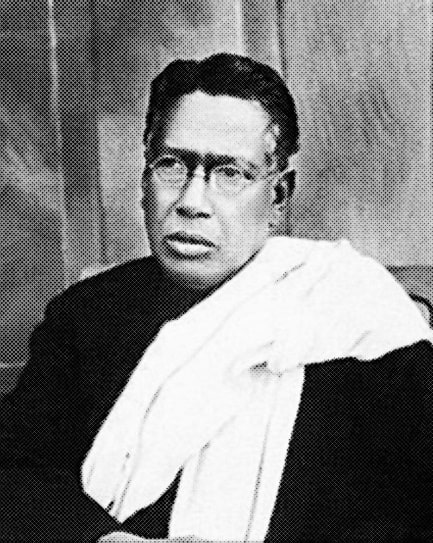
Bipin Chandra Pal (1858-1932)
Bipin Chandra Pal's birth anniversary recently celebrated.
Key Contributions:
- Participated in Swadeshi Movement in 1905.
- Advocate of extremist form of Nationalism.
- Opposed Gandhi during Non-cooperation movement in 1920.
- Imprisoned for refusal to give evidence against Aurobindo Ghosh.
- Transitioned from Brahmo Samaj to Vedanta to Vaishnava Philosophy.
Literary Works:
- New India (weekly Journal).
- Hindu Review (Monthly Journal).
- The New Economic Menace of India (Book).
- Values: Patriotism, Courage, Sacrifice.
World’s First CO2 to Methanol Plant launched by NTPC at Vindhyachal
- NTPC successfully converted CO2 captured from flue gas into methanol using hydrogen from a PEM electrolyzer.
- Developed indigenous methanol synthesis catalyst.
- Significant step in carbon management and sustainable fuel production.
About Methanol (CH3OH):
- Simplest alcohol, also known as methyl/wood alcohol.
- Clear, colorless, flammable liquid with a distinctive odor similar to ethanol.
Advantages of CO2-to-Methanol Technology:
- Lower energy demand and cost for methanol production compared to conventional methods.
- Carbon Capture and Utilization (CCU) to address CO2 emissions.
- Supports India's 'Methanol Economy' vision and Paris Climate Change Goals.
- Reduces oil imports and pollution from the electricity sector.
- Efficient energy storage and transportation compared to hydrogen.
Operation of CO2 to Methanol Plant
- Capture and purify CO2 from industrial processes or the air.
- Produce low-carbon-intensity hydrogen through electrolysis of water.
- Convert CO2 to carbon monoxide (CO) using hydrogen gas.
- Convert CO to methanol.
Supreme Court (SC) overturns its decision which denied Aligarh Muslim University’s(AMU) status as an Minority Institution
- SC overturns previous decision denying AMU minority status.
- Previous judgment held AMU cannot claim minority status under Article 30(1).
- Parliament restored AMU's minority status in 1981.
- Allahabad High Court struck down minority status in 2006.
- SC refers issue to regular bench based on principles in this judgment.
Key Highlights of SC Judgement:
- Minority control over administration not necessary to prove minority status.
- Courts should identify who established the institution to determine minority status.
- Minority status not surrendered if institution created by statute.
- Communities not minority before Constitution entitled to Article 30(1) protection.
Fundamental Right of Minorities to Establish Educational Institutions
- Article 30(1) provides linguistic and religious minorities right to establish and administer educational institutions
- NCMEI Act enacted to safeguard educational rights of minorities under Article 30(1)
India’s First Official Meeting with Taliban Defence Minister: A New Diplomatic Shift
India's official meeting with Taliban Defence Minister highlights increased diplomatic engagement with Afghanistan post-Taliban takeover.
India's Post-Taliban Engagement with Afghanistan
- India has taken a pragmatic approach of limited engagement with Afghanistan since 2022 to protect its interests.
- India is involved in humanitarian assistance, educational support, and regional cooperation initiatives in Afghanistan.
Importance of India's Engagement with Afghanistan
- Geopolitical Interests: India aims to counterbalance Pakistan's influence and secure strategic interests in the region.
- Regional Stability: India is concerned about instability in Afghanistan affecting the broader region.
- Secure Investments: India has invested in key infrastructure projects in Afghanistan to enhance connectivity and economic development.
Key Infrastructure Projects Supported by India in Afghanistan
- Salma Dam: Inaugurated in 2016, known as the Afghan-India Friendship Dam.
- Zaranj-Delaram Highway: Built by Border Roads Organisation, provides India an alternative route to Afghanistan through Iran's Chabahar port, bypassing Pakistan.
1st Global Ministerial Conference on Ending Violence Against Children held in Bogotá, Colombia
- Hosted by Colombia and Sweden, in partnership with UNICEF, WHO, and the UN Special Representative.
- Held in Bogotá, Colombia.
Violence against Children/Child Maltreatment
- Encompasses physical, emotional, and sexual abuse.
- Affects half of the world's child population.
- Corporal punishment impacts three out of five children at home.
- Often goes unreported, with less than half of affected children disclosing it and under 10% receiving help.
Consequences of Violence Against Children
- Health and psychological impacts such as anxiety and depression.
- Increased risk of STIs due to physical violence.
- Developmental disruptions, with early maltreatment linked to a higher likelihood of school dropout.
Measures Required:
- Implement evidence-based strategies to prevent childhood violence.
- Create safer learning environments through school-based programs targeting bullying and social skills.
- Introduce digital safety initiatives to protect children from online exploitation.
Initiative Taken:
- Global INSPIRE Initiative led by WHO and UNICEF with Seven Strategies for Ending Violence Against Children.
- UNICEF's Safe to Learn Program.
- Adoption of UN Convention on the Rights of the Child (CRC) in 1989.
- India's constitutional provisions such as Article 21A and Article 24.
- Legal measures like POCSO Act, 2012 and Juvenile Justice Act, 2015.
- Other initiatives like Operation Nanhe Farishte by the Railway Protection Force to rescue children from trafficking.
Sexual assault under POCSO can't be quashed based on compromise: Supreme Court (SC)
- SC ruled that cases of sexual assault under POCSO Act cannot be quashed based on compromise.
- Decision made in Ramji Lal Bairwa & Anr vs State of Rajasthan & Ors Case.
- Special Leave Petition heard under Article 136 of the Constitution.
Key Observations:
- Rejection of Compromise Precedent: Referenced State of M.P. v. Laxmi Narayan case.
- Non Private nature of offense: Crimes cannot be treated as private matters eligible for compromise-based quashing.
About POCSO Act, 2012:
- Aim: Gender-neutral legislation ensuring child safety and punishing offenders.
- Definition of Child: Individuals below 18 years of age.
- Three broad categories of sexual offences punishable: Sexual assault, sexual harassment, using a child for pornography.
- 2019 Amendment introduced more stringent punishment, including the death penalty for sexual crimes on children.
Scheme for Strengthening the Medical Device Industry launched by Ministry of Chemicals and Fertilizers
- Comprehensive scheme targeting critical areas of medical device industry
- Aim to make India self-reliant in the sector.
- India's medical device market valued at $14 billion, expected to grow to $30 billion by 2030.
Features of the Scheme:
- Total Outlay: 500 crore.
- Components:
- Common Facilities for Medical Devices Clusters.
- Marginal Investment Scheme for Reducing Import Dependence.
- Capacity Building and Skill Development for Medical Devices.
- Medical Device Clinical Studies Support Scheme.
- Medical Device Promotion Scheme.
Challenges faced by the Medical device Industry:
- Lack of infrastructure like R&D labs, design and testing centers.
- High import dependence for high-end devices.
- Low capital investment.
- Inverted duty structure.
India’s Initiatives for Promotion of Medical Devices Manufacturing
- Production Linked Incentive Scheme for Promoting Domestic Manufacturing of Medical Devices.
- Promotion of Medical Device Parks Scheme.