
Daily Current Affairs UPSC 04 October 2024
Welcome to our daily current affairs blog post for UPSC aspirants! In today's edition, we will be discussing the most significant events and news updates that took place on 4th October 2024. Staying updated with current affairs is crucial for UPSC preparation, as it not only helps you stay informed but also enhances your understanding of various subjects. So, let's dive into the important happenings of the day and explore their potential impact on the upcoming UPSC examinations.

International Medical Device Regulators Forum
- Central Drugs Standard Control Organization is now an affiliate member of the International Medical Device Regulators Forum (IMDRF) under the Union Ministry of Health & Family Welfare.
- IMDRF is a group of global medical device regulators formed in 2011 to harmonize international medical device regulations.
- Members of IMDRF include national regulatory authorities from various countries and the World Health Organization (WHO).
- India's membership in IMDRF will help Indian medical device manufacturers meet regulatory requirements of member countries, boosting "Brand India" in the global market.
- This membership will simplify manufacturing processes, enhance public health, and improve collaboration through harmonized global regulatory requirements.
Global Strategic Preparedness, Readiness and Response Plan (SPRP)
- The World Health Organization (WHO) has initiated the Strategic Preparedness and Response Plan (SPRP).
- The goal of SPRP is to address diseases like dengue, Zika, and chikungunya by promoting a united global effort.
- SPRP will be in effect for over a year, until September 2025.
- The plan includes five main components: emergency coordination, collaborative surveillance, community protection, safe and scalable care, and access to countermeasures.
- SPRP is in line with other global initiatives such as the Global Vector Control Response 2017-2030 and the Global Arbovirus Initiative.
Akashteer Systems
- The Indian Army has finished acquiring 100 Akashteer Air Defence Systems.
- The Akashteer Systems are advanced Air Defence Control and Reporting Systems created by Bharat Electronics Limited (BEL).
- These systems will play a crucial role in protecting the country from aerial threats like missile and rocket attacks.
- The Akashteer Systems will allow for monitoring of low level airspace in battle areas and the ability to respond to enemy attacks in real-time.
Cyber Commandos Programme
- A new training program called the Cyber Commandos Programme has been launched by IIT Madras Pravartak Technologies Foundation to train law enforcement officers in India.
- The foundation is a Section 8 company funded under the National Mission on Interdisciplinary Cyber-Physical Systems and is hosted by IIT Madras.
- The Cyber Commandos Programme is supported by the Union Ministry of Home Affairs and aims to enhance India's cyber defence capabilities.
- Unlike traditional cybercrime cells that focus on reactive measures, the Cyber Commandos will be a proactive force in combating cybercrimes.
Anna Darpan System
- Food Corporation of India (FCI) has recently introduced Anna Darpan, a microservices-based integrated supply chain management system.
- Anna Darpan is a digital transformation initiative aimed at modernizing FCI's current supply chain management system, Depot Online System.
- The system is designed to streamline and improve supply chain operations and services at different levels.
- M/s Coforge Limited will be responsible for the complete process of designing, developing, implementing, and maintaining Anna Darpan.
- The key objectives of Anna Darpan include enhancing efficiency and productivity, enabling data-driven decision making, and ensuring smooth interoperability with other systems within and outside FCI.
Input Tax Credit
- The Supreme Court recently established two criteria, 'functionality' and 'essentially', to determine eligibility for Input Tax Credit in construction.
- According to the Court, if a building is essential for providing services like renting or leasing, it may be considered a plant under certain clauses of the CGST Act.
The functionality test is used to determine whether a building qualifies as a plant or not. - Input Tax Credit is a mechanism aimed at preventing the cascading of taxes, or 'tax on tax'.
- Under the GST Act, a registered taxable person who pays tax in the course of business can claim and utilize Input Tax Credit through an electronic ledger.
International Energy Efficiency Hub (IEEH)
- The Union Cabinet has given approval for India to join the International Energy Efficiency Hub (IEEH) by signing a letter of intent.
- The Bureau of Energy Efficiency (BEE) will be responsible for implementing the Hub on behalf of India.
- The International Energy Efficiency Hub was established in 2020 as a successor to the International Partnership for Energy Efficiency Cooperation (IPEEC), of which India was a member.
- The Hub's mandate is to serve as a global platform for collaboration and promotion of energy efficiency on a worldwide scale.
PM Internship Scheme
- The PM Internship Scheme was introduced by the Union Government.
- The Ministry of Corporate Affairs is responsible for overseeing the PM Internship Scheme.
- The main goal of the scheme is to offer internship opportunities to one crore young individuals in the top 500 companies within a span of 5 years.
- The internship duration is set at 12 months.
- Participants will receive a stipend of ₹5,000 per month for the duration of the internship.
- To be eligible for the scheme, individuals must be Indian citizens, aged between 21-24 years, and not currently employed full-time or engaged in full-time education.
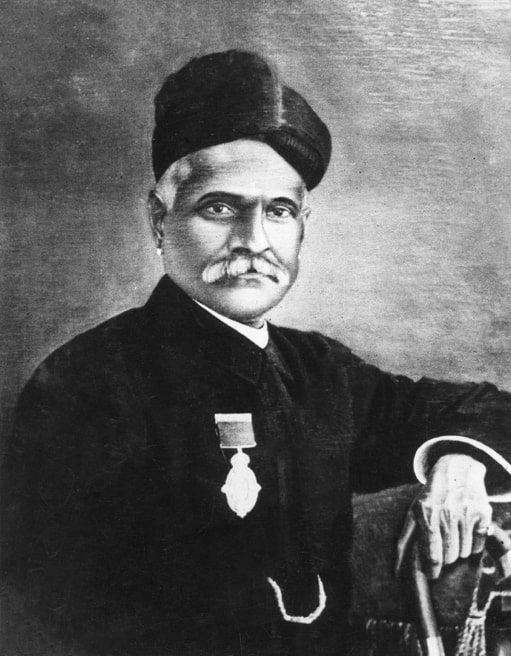
Raja Ravi Varma (1848 - 1906)
Remembering Raja Ravi Varma on his Death Anniversary
About Raja Ravi Varma
- Belonged to the family of Maharajas of Travancore in Kerala
- Addressed as Raja
- Known as the father of modern Indian art
Key Contributions
- Mastered Western art of oil painting and realistic life study
- Painted themes from Indian mythology, focusing on scenes from epics like Ramayana and Mahabharata
- Famous works include Damayanti Talking to a Swan, Shakuntala Looking for Dushyanta, Nair Lady Adorning Her Hair, and Shantanu and Matsyagandha
Rewards and Recognitions
- Received the Kaisar-i-Hind Gold Medal in 1904 from Viceroy Lord Curzon on behalf of the British Emperor
- Title 'Raja' mentioned for the first time in the citation for this award
Values - Cultural nationalism, aesthetic excellence, humanitarianism, etc.
Supreme Court Rules Against Caste-based Prisoner Work Assignments
- The Supreme Court recently ruled in the Sukanya Santha vs. UoI & Others Case, invalidating provisions in Prison Manuals of multiple States that assigned jobs to prisoners based on their castes.
- The case brought attention to ongoing caste-based discrimination in prisons, particularly in the segregation of barracks, allocation of manual labor, and discriminatory treatment of prisoners from Denotified tribes and "habitual offenders".
- The Court established guidelines to prevent segregation and division of labor based solely on the prisoners' castes in prisons.
Key highlights of the Judgment
- The court ruled that caste-based discrimination in prisons is unconstitutional and violates multiple articles of the Constitution.
- Caste information in prison registers must be removed.
- States and Union Territories must update their Prison Manuals/Rules within three months.
- The Union government must make changes to address caste-based discrimination in the Model Prison Manual 2016 and Model Prisons and Correctional Services Act 2023.
- References to habitual offenders in prison manuals must align with the definitions in State laws.
About DNTs and ‘Habitual Offenders’
- DNTs, also known as Vimukta Jati, were originally classified as criminal tribes under the Criminal Tribes Act of 1871.
- The Criminal Tribes Act was abolished in 1949, leading to the de-notification of these tribal communities.
- Habitual Offenders are individuals who have been convicted of multiple crimes and are deemed a threat to society, as defined by the Habitual Offenders Act in various states.
- The Idate Commission in 2017 recommended the immediate repeal of the Habitual Offenders Act by states, as it can lead to the harassment of DNT members.
"RBI Report on MIBOR Benchmark"
The RBI has issued a report suggesting important changes in how the Mumbai Interbank Outright Rate (MIBOR) is calculated, as well as proposing a shift to a new secured money market benchmark for popular product derivatives.
What is MIBOR?
- Introduced by NSE in 1998, MIBOR is the benchmark interest rate for unsecured interbank borrowing in India.
- FBIL calculates and releases MIBOR daily.
- MIBOR is currently determined using trades on the NDS-Call system in the first hour.
- Challenges with MIBOR include low transaction volume and volatility due to thin call money market volumes.
Key recommendations of the Committee
- The computation methodology of MIBOR is being updated to include transactions from the first three hours instead of just the first hour, in order to better reflect activity in the call money market and improve its accuracy.
- A new benchmark based on the secured money market will be developed and published by FBIL, calculated from trades in the first three hours of basket repo and TREP segments.
About Call Money Market and TREP
- Call Money Market is a financial market where banks and financial institutions borrow and lend funds for short-term purposes.
- TREP is a form of repo contract in which a third party serves as a middleman between two parties involved in the repo transaction, providing services such as collateral selection, payment and settlement, and custody and management throughout the transaction's duration.
"National Mission on Edible Oils Approved by Cabinet"
About NMEO -Oilseeds
Aim:
- Increase the production of oilseeds within the country to become self-sufficient in edible oils and improve the income of farmers.
- The goal is to reduce the reliance on imports, which currently make up 57% of India's edible oil demand.
Focus
- Improving the yield of important primary oilseed crops like Rapeseed-Mustard, Groundnut, Soybean, Sunflower, and Sesamum.
- Boosting the efficiency of collecting and extracting oils from secondary sources such as Cottonseed, Rice Bran, and Tree Borne Oils.
Approach:
- High-yielding seeds with high oil content will be adopted for cultivation.
- Cultivation will be expanded into fallow lands used for rice and potatoes, as well as promoting intercropping and diversifying crops.
- Value Chain Clusters will be established in 347 districts to give farmers access to quality seeds, training on Good Agricultural Practices (GAP), and advice on weather and pest control.
Timely availability of quality seeds
- The SATHI Portal's mission is to launch a 5-year rolling seed plan online through the Seed Authentication, Traceability & Holistic Inventory Portal.
- SATHI will allow States to form partnerships in advance with seed-producing agencies such as cooperatives, FPOs, and government or private seed corporations.
- The initiative will also involve the establishment of new seed hubs and seed storage units.
Tenure:
Over a span of 7 years, from 2024-25 to 2030-31.
Other Initiatives taken to promote domestic edible oils production
- The National Mission on Edible Oils – Oil Palm (NMEO-OP) was introduced in 2021 to increase oil palm farming in India.
- The Pradhan Mantri Annadata Aay Sanrakshan Abhiyan (PM-AASHA) guarantees that oilseed farmers will receive Minimum Support Price (MSP) through a price support scheme and price deficiency payment scheme.
- A 20% import duty on edible oils has been implemented to safeguard domestic producers from inexpensive imports and promote local cultivation.
"Union Cabinet Grants Classical Language Status to Five Languages"
- Marathi, Pali, Prakrit, Assamese, and Bengali have been recognized as Classical Languages.
- The main states associated with these languages are Maharashtra for Marathi, Bihar, Uttar Pradesh, and Madhya Pradesh for Pali and Prakrit, West Bengal for Bengali, and Assam for Assamese.
About Classical Language
- Genesis: Established in 2004
- Linguistic Experts Committee (LEC): Formed in 2004 by the Ministry of Culture through the Sahitya Akademi
- Its purpose is to assess the qualifications of languages suggested for classical language recognition.
- In order to be included, a language must have a long history of written texts dating back 1500-2000 years.
- The language must have a significant body of ancient literature that is valued by generations of speakers.
- Knowledge texts, including prose, poetry, epigraphical evidence, and inscriptions, are important for inclusion.
- The Classical Language and literature may be different from its modern form or may not directly lead to later forms of the language.
- The languages that were added to the list in various years are Tamil (2004), Sanskrit (2005), Telugu and Kannada (2008), Malayalam (2013), and Odia (2014).
About New Classical languages:
- Jnaneshwar's earliest poetry and prose include a commentary on the Bhagavad Gita in Marathi.
- Prakrit is a colloquial language used in Ashoka's inscriptions alongside Pali, and Gāthā Sattasai is written in Prakrit.
- Pali is the language used for Buddhist philosophical works like Dhammapada and stories like Jātaka Tales.
- Shankardev's Vaishnavite poetries are in Assamese.
- Sri Chaitanyadeva and Rabindranath Tagore are poet-saints who produced literary masterpieces in Bengali, with Tagore's Geetanjali receiving a Nobel Prize.
"PM launches DAJGUA in Jharkhand"
The program is named in honor of Birsa Munda, also known as Dharti Aaba, a tribal leader who fought against the British Empire and led the Ulgulan movement.
About DAJGUA
- Originally known as PM-JUGA, the scheme aims to provide basic services to tribal-majority villages.
- The goal is to improve social infrastructure, health, education, and livelihood opportunities in around 63,000 tribal villages.
- The beneficiaries include over 5 crore tribal people in 30 states and Union Territories.
- The scheme involves collaboration between 17 ministries and departments of the Government of India.
- Funding will be shared between the Centre and State governments over a 5-year period.
- Monitoring of the scheme will be done through the PM GatiShakti Portal.
About Tribal Population of India
- Approximately 8.6% of the population belongs to Scheduled Tribes according to the 2011 Census.
- There are more than 730 Scheduled Tribes recognized under Article 342 of the Indian Constitution.
- Challenges faced by Scheduled Tribes include low education levels, poor health conditions, and displacement caused by development projects.
- Empowerment initiatives for Scheduled Tribes include programs like Pradhan Mantri Adi Adarsh Gram Yojana and Adivasi Mahila Sashaktikaran Yojna.
New agricultural schemes approved by Union Cabinet
The Union Cabinet recently approved a proposal to streamline all Centrally Sponsored Schemes within the Ministry of Agriculture and Farmer's Welfare into two umbrella schemes: Pradhan Mantri Rashtriya Krishi Vikas Yojana (PM-RKVY) and Krishonnati Yojana (KY).
Need of rationalization of schemes
- State governments are developing a comprehensive strategic plan for the agriculture sector that includes convergence, flexibility, and avoiding duplication to meet their specific needs.
- Approval of annual plans for states can be streamlined by approving the Annual Action Plan (AAP) in one go instead of approving individual scheme-wise AAPs.
- The focus of the strategic plan is on addressing emergent challenges in agriculture such as nutrition security, sustainability, climate resilience, value chain development, and increasing private sector participation.
About PM-RKVY
- Goal: Encouraging sustainable farming practices.
- Includes 9 programs such as Soil Health Management and Rainfed Area Development.
- Major update: State governments can now shift funds between different components to meet their specific needs.
About Krishonnati Yojana (KY)
- Goal: To improve food security and agricultural self-sufficiency in India.
- Includes 9 different parts, such as the National Food Security & Nutrition Mission and Digital Agriculture Mission.
- The Mission Organic Value Chain Development for North Eastern Region (MOVCDNER) will be adjusted to allow North Eastern states more flexibility in addressing important issues.