
Daily Current Affairs UPSC 09 October 2024
Welcome to our daily current affairs blog post for UPSC aspirants! In today's edition, we will be discussing the most significant events and news updates that took place on 9th October 2024. Staying updated with current affairs is crucial for UPSC preparation, as it not only helps you stay informed but also enhances your understanding of various subjects. So, let's dive into the important happenings of the day and explore their potential impact on the upcoming UPSC examinations.

Atal Pension Yojana (APY)
- Over 7 crore people have enrolled in the Atal Pension Yojana (APY).
- The APY was launched by the Ministry of Finance in 2015 with the goal of creating a social security system for all Indians, especially those in the underprivileged and unorganized sectors.
- Key features of the APY include a minimum guaranteed pension ranging from Rs.1,000 to Rs.5,000 per month, with payments starting at age 60 based on subscriber contributions.
- Eligibility for the APY is open to any Indian citizen aged 18 to 40 with a savings bank account or post office savings bank account.
- The APY is administered by the Pension Fund Regulatory and Development Authority (PFRDA).
Evergreening of loans
- SEBI has released guidelines for investors in alternative investment funds to prevent the practice of loan ever-greening.
- Evergreening of loans is when banks provide new loans to borrowers who cannot repay existing loans in order to avoid categorizing the previous loans as non-performing assets.
- Ways in which evergreening is carried out include restructuring existing loans and round-tripping of funds.
- The consequences of loan ever-greening include masking the true financial health of banks, potentially leading to worse asset quality, higher default risks, capital loss, and distorted financial indicators.
World Association of Zoos and Aquariums (WAZA)
- The membership of Delhi zoo in the global body WAZA has been suspended due to the poor conditions of an African elephant.
- WAZA, established in 1935, aims to support zoos, aquariums, and similar organizations in animal care, welfare, environmental education, and global conservation.
- WAZA serves as a global alliance that includes regional associations, national federations, zoos, and aquariums.
- The membership of WAZA comprises nearly 400 leading institutions and organizations.
- WAZA accepts membership applications in four categories: Associations, Institutions, Affiliates, and Corporations.
Exercise Malabar 2024
- Exercise Malabar 2024 started in Visakhapatnam, Andhra Pradesh.
- It is an annual maritime exercise that will happen in both harbor and at sea.
- Participants include Australia, Japan, the United States, and India.
- The goal is to enhance cooperation and security in the Indo-Pacific region.
Indian Wild Ass
- The 10th Wild Ass Population Survey conducted by the Gujarat Forest Department revealed a 26.14% increase in the population of Indian Wild Ass from 6,082 in 2020 to 7,672 in 2024.
- The Indian Wild Ass, also known as Equus hemionus khur, is one of the five subspecies of the Asiatic wild ass and is referred to as 'Ghudkhur'.
- The habitat of the Indian Wild Ass is the arid zone of the northwestern Indian subcontinent, with its population currently restricted to the Little Rann of Kutch (LRK) in Gujarat.
- Behavioral characteristics of the Indian Wild Ass include being solitary, shy, and present in low densities across its distribution range. They exhibit a dominance hierarchy in territorial males and only adult males have horns, which are used for browsing preferred nutrient-rich forage.
- The conservation status of the Indian Wild Ass is Near Threatened on the IUCN Red List of Threatened Species, listed under Schedule I of the Wildlife Protection Act, 1972, and included in Appendix I of CITES.
Humsafar Policy
- The Humsafar Policy was launched by the Union Minister of Road Transport & Highways.
- The aim of the policy is to provide standardized, well-maintained, and hygienic facilities for commuters along National Highways and Expressways.
- One key benefit is that registered service providers can have renewal fees waived if they maintain an average rating of 3 or higher.
- The policy aims to ensure reliable passenger convenience establishments are available at regular intervals.
Kaimur Wildlife Sanctuary (KWS)
- The National Tiger Conservation Authority has approved the development of Kaimur Wildlife Sanctuary as Bihar's second tiger reserve.
- NTCA is a statutory body established under the Wildlife (Protection) Act of 1972.
- KWS is located on a plateau between the Son River and Karmanasa River, spread over Central highlands and Chota Nagpur Plateau.
- The sanctuary is linked to the Bandhavgarh-Sanjay-Guru Ghasidas-Palamau tiger landscape.
- Fauna in KWS includes leopards, wild boars, sloth bears, and more.
- The forest type in KWS is Northern Tropical Mixed Dry Deciduous Forests.
Digital Arrest
- A woman from Madhya Pradesh fell victim to a new cyber fraud tactic known as Digital Arrest.
- Digital Arrest involves fraudsters pretending to be law enforcement officers through audio or video calls to scare victims into giving money or personal information.
- The fraudsters use false allegations and fabricated emergencies to manipulate their victims.
- Unlike a real arrest, there is no legal provision for Digital Arrest, making it a dangerous and illegal scam.
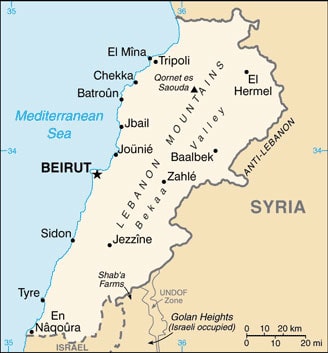
Lebanon (Capital: Beirut)
Israel has increased its military presence in southern Lebanon to target Hezbollah.
Political Features:
- Lebanon is located along the eastern shore of the Mediterranean Sea.
- It is a West Asian country in the Levant region.
- It shares borders with Syria to the north and northeast, and Israel to the south.
- It has a maritime boundary with Cyprus.
Geographical Features:
- Lebanon is home to the Lebanon Mountains, Anti-Lebanon, and Hermon Ranges.
- The highest peak in Lebanon is Qurnat al-Sawda.
- The Bekaa Valley (Al-Biqa) is a prominent valley in the country.
- Rivers like the Litani and Orontes flow through Lebanon.
"DAE Inaugurates MACE Observatory in Ladakh"
- The opening of the MACE Observatory was a component of the DAE's Platinum Jubilee year festivities.
- The DAE was established in 1954 by executive order under the direct supervision of the Prime Minister, following the Atomic Energy Act of 1948.
- The DAE is responsible for spearheading research and development efforts for the peaceful applications of atomic energy.
About MACE Observatory
- Largest imaging Cherenkov telescope in Asia and second largest in the world
- Cherenkov Telescope Array (CTA) is currently under construction and will be the largest Cherenkov telescope globally, with two arrays in Spain and Chile
- Located at an altitude of approximately 4,300 meters, making it the highest of its kind worldwide
- Goal is to observe high-energy gamma rays to study the most energetic events in the universe like supernovae, black holes, and gamma-ray bursts
- Named after scientist Pavel Alekseyevich Cherenkov, who discovered Cherenkov radiation
- Built by Bhabha Atomic Research Centre (BARC) with support from Electronics Corporation of India (ECIL) and other partners
- Will work alongside global observatories like High Energy Stereoscopic System (HESS)
What are Gamma Rays?
- Gamma rays have the shortest wavelengths and highest energy levels among all electromagnetic waves.
- They are produced by various sources in the universe, including neutron stars, pulsars, supernova explosions, and areas near black holes.
- On Earth, gamma rays are created through nuclear explosions, lightning strikes, and radioactive decay processes.
Why Hanle in ladakh is chosen for observatory?
- Located at an elevation of 4250m above sea level, the Hanle Valley in Changthang is a dry, cold desert with few inhabitants.
- The area's cloudless skies and low atmospheric water vapor make it an ideal location for observing optical, infrared, submillimeter, and millimeter wavelengths.
- In 2022, the Hanle Dark Sky Reserve (HDSR) was designated for astro-tourism, recognizing its exceptional conditions for stargazing and astronomical observation.
"Concerns Over Weaponization of Trade"
He pointed out that the combination of trade globalization and weaponization has led to job losses and affected the overall quality of life in numerous countries.
Trade Weaponization Overview
- Trade weaponization involves using trade as a tool of foreign policy to coerce another nation into taking specific actions for desired outcomes, such as fulfilling national security objectives or gaining geopolitical advantages.
Key Tools for Trade Weaponization
- Creating Impediments to Trade: This includes preventing customs clearance and imposing obstacles related to environment, biosecurity, and intellectual property standards. An example is China blocking imports of certain goods from Taiwan in 2022.
- Sanctions and Embargo: Countries may selectively cut off imports and exports as a form of trade weaponization. The USA's Countering America's Adversaries Through Sanctions Act targeting Iran, Russia, and North Korea is an example.
Consequences of Trade Weaponization
- Protectionism: This involves imposing tariffs on products imported from a specific country, such as the tariffs imposed on Chinese products during the China Shock 1.0 and 2.0.
- Trade War: When countries retaliate by imposing tariffs on each other, a trade war can occur. The trade war between the USA and China since 2018 is an example.
- Supply Chain Disruptions: Events like the COVID-19 pandemic can lead to disruptions in the global supply chain.
Measures to counter Trade Weaponization
- Institutional Cooperation: Engaging in forums like the Indo-Pacific Economic Framework for Prosperity (IPEF) and forming partnerships for mineral security can help counter trade weaponization.
- Supply Chain Resilience: Diversifying trade partners, promoting innovation, and digitization can help build resilience in supply chains.
- Counter Strategies: Strategies like the China plus one business approach and Friend Shoring, which enhances trade with economic and political allies, can help mitigate the impact of trade weaponization.
"Physics Nobel Prize for Training ANNs"
John Hopfield and Geoffrey Hinton were jointly awarded for developing techniques that contributed to the establishment of artificial intelligence through the use of artificial neural networks in machine learning.
What is ANNs?
- ANNs are a type of Machine Learning algorithms that mimic the functions of the human brain.
- ANNs are made up of artificial neurons that are interconnected and process information in a way similar to how neurons work in the brain.
Discovery:
John Hopfield's Discovery:
- John Hopfield created the Hopfield Network, a type of neural network that can store and recall patterns similar to human memory.
- The Hopfield network is based on physics principles related to atomic spin, which is the magnetic moment of an atom caused by the spins of particles within it.
Geoffrey Hinton's Discovery:
- Geoffrey Hinton developed the Boltzmann Machine, a method that can automatically identify properties in data, such as specific elements in images.
- The Boltzmann machine learns by using examples it encounters, allowing it to sort images or generate new patterns based on what it has learned.
- This network incorporates techniques from statistical physics to function effectively.
Role of ANNs in AI
- Deep Learning is based on Artificial Neural Networks (ANNs) and is a subset of Machine Learning that focuses on handling extensive datasets and intricate models.
- Artificial Intelligence (AI) applications such as image recognition, natural language processing, and autonomous systems utilize ANNs to make independent decisions.
- ANNs can be trained on large sets of data, such as medical images, to accurately identify tumors in new images.
"India Declared Trachoma-Free by WHO"
- India is the third country in South-East Asia to eliminate Neglected Tropical Diseases (NTDs) after Nepal and Myanmar
- Previously, India was declared free from Guinea Worm disease in 2000 and Yaws in 2016
About Trachoma
- Trachoma is an eye infection caused by the bacterium Chlamydia trachomatis
- It is a contagious disease that can lead to irreversible blindness if left untreated
- In 1971, blindness due to Trachoma in India was 5%, but now it is less than 1%
- Interventions for Trachoma in India include the National Programme for Control of Blindness & Visual Impairment (NPCBVI) and adoption of the WHO SAFE strategy
What are NTDs?
- NTDs are a group of conditions caused by various pathogens such as viruses, bacteria, parasites, fungi, and toxins
- They are prevalent among impoverished communities in tropical areas with poor environmental conditions
- NTDs are called neglected because they are often absent from the global health agenda, receive low funding, and are associated with stigma and social exclusion
Steps Taken for NTDs
- Globally, efforts include the Global NTD Annual Reporting Form (GNARF), Global Vector Control Response 2017-2030 (GVCR), and the Kigali Declaration on NTDs (2022)
- In India, the National Vector Borne Diseases Control Programme (NVBDCP) is addressing NTDs
Neglected Tropical Diseases (NTDs)
Helminth NTDs:
- Taeniasis/Cysticercosis: Infection caused by tapeworms that can lead to symptoms such as abdominal pain and weight loss.
- Guinea worm disease: Infection caused by a parasitic worm that can lead to painful skin lesions and fever.
- Echinococcosis: Infection caused by tapeworms that can lead to cysts in the liver, lungs, and other organs.
- Foodborne trematodiases: Infections caused by parasitic flatworms that can be transmitted through contaminated food.
- Lymphatic filariasis: Infection caused by parasitic worms that can lead to swelling of the limbs and genitals.
- Soil-transmitted helminthiases: Infections caused by parasitic worms that are transmitted through contaminated soil.
- Schistosomiasis: Infection caused by parasitic worms that can lead to symptoms such as abdominal pain and blood in the urine.
- Onchocerciasis: Infection caused by parasitic worms that can lead to skin lesions and blindness.
Protozoan NTDs:
- Chagas Disease: Infection caused by a parasite that can lead to symptoms such as fever and swelling of the lymph nodes.
- Leishmaniasis: Infection caused by a parasite that can lead to skin sores and fever.
- Human African Trypanosomiasis: Infection caused by a parasite that can lead to symptoms such as fever and confusion.
Viral NTDs:
- Rabies: Viral infection that can be transmitted through the bite of an infected animal and can lead to symptoms such as fever and paralysis.
- Dengue & Chikungunya: Viral infections transmitted by mosquitoes that can lead to symptoms such as fever and joint pain.
Non-infectious diseases or conditions:
- Snakebite envenoming: Condition caused by the bite of a venomous snake that can lead to symptoms such as swelling and difficulty breathing.
Fungal NTDs:
- Mycetoma, chromoblastomycosis and other deep mycoses: Fungal infections that can lead to skin lesions and disfigurement.
Bacterial NTDs:
- Buruli Ulcer: Bacterial infection that can lead to skin ulcers and tissue destruction.
- Leprosy: Bacterial infection that can lead to skin lesions and nerve damage.
- Trachoma: Bacterial infection that can lead to eye irritation and blindness.
- Yaws: Bacterial infection that can lead to skin lesions and bone deformities.
Ectoparasitic NTDs:
- Scabies and other ectoparasites: Infections caused by parasitic mites that can lead to itching and skin rashes.
SC Raises Concerns Over Discrimination Against EWRs in Rural Areas
The Supreme Court recently provided relief to a female Sarpanch who was removed by the District Administration in a village in Maharashtra, shedding light on the challenges faced by women in elected positions in Panchayats.
Issues faced by EWRs in Rural Areas:
- Rubber Stamp Candidates: EWRs often have limited decision-making powers as their husbands or male family members control the actual decision-making process.
- Gender Biases and Social Barriers: EWRs face domestic responsibilities and prejudiced attitudes that hinder their ability to bring about social change.
- States' Policies as Barrier: Some states have criteria such as a two-child norm or minimum educational qualification for contesting elections, which can be a barrier for EWRs.
- Rotation of Seats: EWRs often have to discontinue after serving a single term due to seat rotation policies.
- Other Issues: EWRs also face challenges such as the digital divide, lack of knowledge, apprehensions about their abilities, and cultural constraints.
Way forward on facilitating EWRs
- Institutional Reforms: Recruiting more women in other Panchayat roles and implementing institutionalized monitoring to restrict interference by male counterparts.
- Strengthening Women Collective Agency: Nurturing federations of EWRs and mobilizing forums like Self Help Groups to empower EWRs.
- Other Measures: Investing in capacity building through education, ensuring coherent and updated data for comprehensive assessment, etc.
EWRs in Rural Government in India
- Status: Approximately 1.4 million women make up 46% of total elected representatives of Panchayati Raj Institutions (PRIs).
- Constitutional Mandate: The 73rd Constitutional Amendment in 1992 mandated reservation of at least one-third seats for women in PRIs.
- Significance: EWRs play a crucial role in improving service delivery, reducing corruption, promoting inclusive governance, and advancing gender equality in rural areas.
"India's Forex Reserves Surpass 700 Billion Dollar Mark"
- India's foreign reserves have surpassed $700 billion, making it the fourth country in the world to achieve this milestone after China, Japan, and Switzerland.
- India's reserves are able to cover 11.9 months of imports, which is well above the standard norm of six months.
About Forex Reserve:
- Various assets are held by a central bank.
- The RBI Act of 1934 in India allows the RBI to be the custodian of forex reserves and manage them according to specific goals.
Components of Reserve
- Foreign Currency Assets (FCA)
- Valued in currencies other than the country's own
- Gold reserves
- Special Drawing Rights
- A reserve asset provided by the International Monetary Fund (IMF)
- Value based on a mix of five major currencies: US dollar, euro, Chinese renminbi, Japanese yen, and British pound sterling
- Reserve Tranche Position (RTP)
- Equal to the member’s quota less the IMF’s holdings of the member’s currency in account
- The main reason for the increase in reserves is the inflow of Foreign Direct Investment (FDI) and Foreign Portfolio Investment (FPI), as well as remittances.
Significance/Need of Forex Reserve:
- Managing Crises: Forex reserves help limit external vulnerability by maintaining foreign currency liquidity during times of crisis.
- Meeting Financial Obligations: Reserves assist in paying debts and financing imports.
- Reassuring Investors: Reserves provide confidence to markets and credit rating agencies that external obligations can be met.
- Other Benefits: Reserves enhance the capacity to intervene in foreign exchange markets and support economic stability.