
Daily Current Affairs UPSC 29 October 2024
Welcome to our daily current affairs blog post for UPSC aspirants! In today's edition, we will be discussing the most significant events and news updates that took place on 29th October 2024. Staying updated with current affairs is crucial for UPSC preparation, as it not only helps you stay informed but also enhances your understanding of various subjects. So, let's dive into the important happenings of the day and explore their potential impact on the upcoming UPSC examinations.

Sambhar Lake
- Over 40 migratory birds died at Sambhar Lake in Rajasthan.
About Sambhar Lake:
- The name "Sambhar" is derived from Shakambhari, the tutelary deity of the Chauhan Rajputs.
- Wetland: India's largest saline lake.
- Ramsar Site: Designated in 1990 for international ecological importance.
- Biodiversity: Attracts tens of thousands of migratory birds, including flamingos, from northern Asia and Siberia between November to February.
Turmeric (Curcuma longa L.)
Recent studies have found evidence of turmeric being adulterated with lead chromate in South Asia.
About Turmeric:
- Turmeric is a rhizomatous herb cultivated extensively in Asia, India, China, and other tropical countries.
- A rhizomatous herb has an underground stem called a rhizome.
- The aqueous extract of turmeric has bio-pesticidal properties.
- Turmeric is used as condiments, dye, and aromatic stimulant in medicines.
- India is the largest producer of turmeric, accounting for 80% of total world production.
- Turmeric is cultivated in states like Telangana, Andhra Pradesh, Maharashtra, Orissa, Tamil Nadu, Karnataka, and Kerala.
Right to Privacy
Justice KS Puttaswamy passes away at 98.
Law for Right to Privacy in India:
- Supreme Court ruling in 2017.
- Right to Privacy is a fundamental right with reasonable restrictions.
- Protected under Article 21 as part of right to life and personal liberty.
Global perspective on Right to Privacy:
- Universal Declaration of Human Rights and International Covenant on Civil and Political Rights protect against arbitrary interference with privacy.
Indigenous herbal knowledge
Custodians of herbal traditional knowledge in Jammu & Kashmir and Gujarat granted herbal patents.
About Indigenous herbal knowledge:
- Indigenous herbal knowledge holders have deep understanding of local flora through experiences, experiments, and wisdom.
- India has 7500 out of 17,000 higher plant species known for medicinal uses.
- Initiatives in India to protect traditional knowledge: Traditional knowledge digital library, National IPR Policy 2018.
Mission Amrit Sarovar
The Prime Minister said over 60,000 Amrit Sarovars were constructed across villages for future generations.
Mission Amrit Sarovar:
- Launched in 2022 as part of India's 75th year of independence celebrations.
- Aim is to have every district construct or rejuvenate at least 75 Amrit Sarovars with a pondage area of at least 1 acre.
Key Objectives of Mission Amrit Sarovar:
- Focuses on water conservation, people's participation, and proper utilization of soil excavated from water bodies.
- No separate financial allocation for the Mission.
Impact of Mission Amrit Sarovar:
- Over 60,000 Amrit Sarovars have been constructed across villages for future generations.
- Promotes sustainable water management and community involvement in conservation efforts.
BRIC-National Agri-Food Bio-Manufacturing Institute (BRIC-NABI)
BRIC-NABI is a new Biomanufacturing Institute in India.
About BRIC-NABI:
- Formed through the merger of NABI and CIAB.
- Funded by the Department of Biotechnology.
- Aims to promote research in genetic manipulation and metabolic pathways.
- Seeks to address India's biomanufacturing gap by creating production facilities and supporting startups.
National commission for Indian system of medicine (NCISM)
Workshop for drafting Ayurveda Process Handbook concludes at NCISM
About NCISM:
- Genesis: Statutory body constituted under NCISM Act, 2020
- Composition: 19 members including chairman, Ex Officio members, and part time members
Aim and Objectives of NCISM:
- Improve access to quality and affordable Ayurveda, Unani, Siddha and Sowa-Rigpa (AUS&SR) medical education
- Ensure availability of adequate and high quality AUS&SR medical professionals in all parts of the country
- Maintain a National AUS&SR medical register for India.
Clouded Leopard
Studies have shown that the Island of Taiwan is highly suitable for reintroducing the Clouded Leopard species.
About Clouded Leopard (Neofelis nebulosa):
- Physical Features of Clouded Leopard: Clouded Leopards have distinct cloud-shaped patches on their pale-yellow to brown fur that helps them camouflage in dense forests.
- Habitat and Ecology of Clouded Leopard:
- Clouded Leopards are found in south-east Asia, including countries like India, China, and Malaysia.
- They prefer dense evergreen forests for their habitat.
- Conservation Status of Clouded Leopard:
- IUCN lists Clouded Leopards as Vulnerable.
- CITES lists Clouded Leopards under Appendix I.
- Clouded Leopards are protected under the Wildlife (Protection) Act, 1972, under Schedule I.
- Clouded Leopards National Park in Tripura, India: India's first dedicated wildlife park to spot Clouded Leopards is located inside the Sipahijola wildlife sanctuary in Tripura.
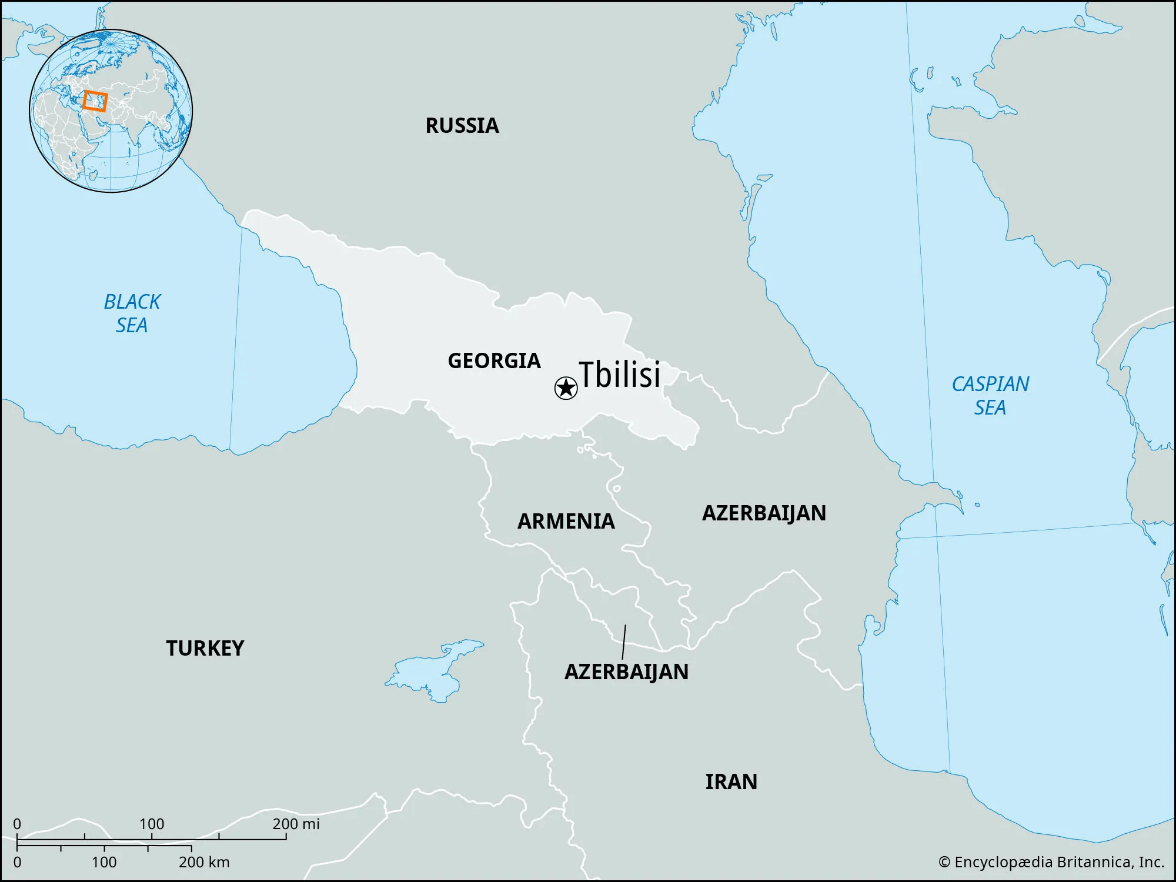
Georgia (Capital: Tbilisi)
Recent election violations in Georgia prompted calls for a probe from the USA and EU.
Political Features:
- Located in Eastern Europe in the South Caucasus region.
- Borders Russia to the North and Northeast, Azerbaijan to the East and Southeast, and Armenia and Turkey to the South.
- Has a sea boundary with the Black Sea to the West.
Geographical Features:
- Highest Point: Mount Shkhara.
- Mountain Ranges: Greater Caucasus range.
- Major Rivers: Inguri, Rioni, and Kodori.
- Conflict regions include Abkhazia, South Ossetia, and Ajaria.
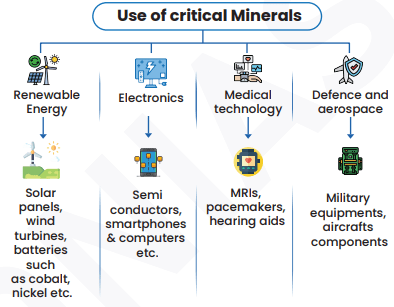
Institute for Energy Economics and Financial Analysis (IEEFA) Reports released “India’s Hunt for Critical Minerals”
- IEEFA's report analyzes India's import dependency on critical minerals such as cobalt, copper, graphite, lithium, and nickel.
- India currently relies heavily on imports for these minerals, with 100% external dependence for lithium, cobalt, and nickel.
- Demand for critical minerals in India is projected to more than double by 2030.
About Critical Minerals:
- Critical minerals are those with a higher risk of supply shortage and significant impact on the economy compared to other raw materials.
Concerns about Critical Minerals Import Dependence:
- Strategic Vulnerability: India's dependence on a few key suppliers, particularly China, poses a risk.
- Price Volatility: Fluctuations in global demand and supply can affect manufacturing costs and energy production.
- Economic Implications: Rising import costs may reduce India's competitiveness in global markets.
- Renewable Energy Goals at Risk: High import dependence could hinder India's transition to clean energy and electric vehicles.
Recommendations from the Report:
- India should develop strategies to reduce risks associated with mineral dependencies and promote domestic production.
- Explore investment opportunities in resource-rich and friendly nations like Australia, Chile, Ghana, and South Africa.
ISRO and Department of Biotechnology (DBT) Join Forces to Advance Space Biotechnology Research
- Lack of continuous availability of nutrients, waste management, preservation of food, microgravity, radiation, health hazards.
- Space biotechnology studies how living organisms adapt in microgravity conditions to advance space exploration and human survival.
Applications and Significance of Space Biotechnology:
- Microgravity Research: Enables better protein crystal growth for drug development.
- Radiation Research: BioSentinel predicts human cell repair in response to ionising radiation in space.
- Environmental Monitoring: Study of microbes for bioremediation on Mars and Moon.
- Disease Modelling: Helps address health challenges in long-duration space missions.
- Bioregenerative Life Support Systems: Enables self-sustaining missions through waste recycling.
Space Biotechnology Initiatives:
- India: Axiom-4 and Gaganyaan missions
- Global Initiatives: Space Biology Program (NASA), Biolab (European Space Agency), Space breeding programs (CNSA)
Greenhouse Gas Bulletin (GGB) released by the World Meteorological Organisation (WMO)
- GGB provides analysis of greenhouse gas concentrations from WMO's GAW Programme.
- GAW Programme monitors atmospheric composition changes and interactions between air, oceans, and biosphere.
About GGB:
- Compares current CO2, CH4, and N2O levels with pre-industrial levels.
- Insights on Radiative forcing changes by LLGHGs like CO2, CH4, and CFCs.
- CO2, CH4, N2O, CFC-12, and CFC-11 account for 96% of radiative forcing.
Key observations from the report:
Greenhouse Gas Concentration:
- The concentration of CO2, CH4, and N2O in the atmosphere in 2023 is significantly higher compared to pre-industrial levels.
- CO2 levels are at 151%, CH4 at 265%, and N2O at 125% of pre-industrial levels.
Radiative Forcing:
- Radiative forcing from long-lived greenhouse gases (LLGHGs) increased by 51.5% between 1990 and 2023.
- CO2 is the primary contributor, accounting for approximately 81% of the increase.
Atmospheric Methane:
- Atmospheric methane levels experienced the largest 3-year increase on record.
- This increase is attributed to higher emissions from natural wetlands due to climate change.
Impact of Climate Change:
- Climate change could lead to ecosystems releasing more greenhouse gases.
- Wildfires may emit more CO2, and oceans could absorb less CO2, exacerbating global warming and ocean acidification.
About Radiative forcing by long-lived GHGs:
- Radiative forcing measures how gases affect Earth's energy balance.
- These gases trap heat, causing the planet to warm up.
About WMO:
- Specialized agency of the UN based in Geneva, Switzerland.
- Established in 1950 with 187 Member States and 6 Member Territories, including India.
Pradhan Mantri Vanbandhu Kalyan Yojana (PMVKY) completes 10 years
- PMVKY was launched in 2014 to address challenges faced by tribal communities in India.
- It is a center sector scheme focusing on the holistic development of tribal communities.
- The Ministry of Tribal Affairs (MoTA) is responsible for its implementation.
About PMVKY:
- Type: Center sector scheme.
- Aim: To improve socio-economic conditions and preserve cultural heritage of tribal populations.
- Implemented by: Ministry of Tribal Affairs (MoTA).
Key Initiatives Under PMVKY:
- Pradhan Mantri Adi Adarsh Gram Yojana: Focuses on improving road and telecom connectivity, education, health services, etc. in rural areas.
- Development of Particularly Vulnerable Tribal Groups (PVTGs): A mission launched to provide essential amenities like housing, clean water, education, health, nutrition, etc. to vulnerable tribal groups.
- Support to Tribal Research Institutes (TRI): A program to support research and documentation efforts related to tribal communities.
- Pre-Matric Scholarships: Scholarships provided to students before completing their matriculation.
- Post-Matric Scholarships: Scholarships provided to students after completing their matriculation.
- Administrative Assistance for Project Management Units: Support provided to project management units for effective implementation of initiatives.
Tribal Population in India:
- Scheduled Tribes (ST) make up 8.6% of India's population.
- There are over 730 Scheduled Tribes identified under Article 342 of the Constitution.
- 75 Particularly Vulnerable Tribal Groups in 18 States and Union Territory of Andaman & Nicobar Islands.
Additional Steps for Tribal Welfare:
- Eklavya Model Residential Schools for quality education.
- Pradhan Mantri Janjatiya Vikas Mission for marketing of tribal products.
- Development Action Plan for Scheduled Tribes involving 41 ministries and departments.
CERT-In releases advisory on Online Scams
- CERT-In released a list of online scams being perpetrated by fraudsters in India, including "digital arrest."
- National Crime Records Bureau reported 17,470 cases of fraud for cybercrime in 2022.
Key Advisory Points:
- Do not transfer money under pressure, as legitimate law enforcement agencies will not demand immediate payments.
- Avoid disclosing sensitive personal or financial information over phone or video calls, especially to unknown numbers.
About Digital Arrest:
- Digital arrest is a new form of cybercrime where fraudsters pose as law enforcement officials and contact victims via phone calls.
- In India, citizens lost around Rs 120 crore to digital arrest frauds in the first quarter of 2024.
- Ministry of Home Affairs stated that digital arrests have become a prevalent method of fraud, with many perpetrators based in Myanmar, Laos, and Cambodia.
Challenges in tackling Cybercrime:
- Lack of trained and qualified manpower to implement counter measures.
- Lack of awareness and culture of cyber security at individual and organizational levels.
Government initiatives to tackle Cybercrime:
- Indian Cybercrime Coordination Centre (I4C) under the Ministry of Home Affairs coordinates activities related to combating cybercrime in the country.
- CERT-In is the national nodal agency for responding to computer security incidents.
- National Cyber Crime Reporting Portal launched as part of I4C to enable the public to report incidents of cybercrimes.
- National Toll-free Helpline number 1930 operationalized to provide citizen assistance in lodging online cyber complaints.
India-Spain Joint Statement
- Released after the visit of the President of the Government of Spain to India, the first visit by a Spanish President in 18 years.
Key outcomes of the visit:
- Defense manufacturing: Tata Advanced Systems and Airbus Spain inaugurated C295 Aircraft Final Assembly Line in Vadodara.
- Investment Facilitation: Fast Track Mechanism established in India's DPIIT and Spain’s Directorate General of International Trade and Investment for mutual investments.
- Consular Expansion: Spanish Consulate announced in Bengaluru and Indian Consulate operational in Barcelona.
Cultural Cooperation:
- Cultural Exchange Programme launched for 2024–2028.
- Declaration of 2026 as the India-Spain Year of Culture, Tourism, and AI.
India-Spain Bilateral Relations
- Diplomatic relations established in 1956.
- Significance of Bilateral Relations:
- Defense Ties:
- Strengthened defense cooperation through India-Spain Defence Joint Working Group.
- Joint projects like C295 aircraft manufacturing in India.
- Economic and Commercial Growth:
- Spain is India’s 6th largest trade partner in Europe.
- Bilateral trade reached US$ 9.9 billion in 2023.
- Multilateral and Global cooperation:
- Support for each other’s United Nations Security Council candidacies.
- Shared commitment to addressing global challenges like climate change, counter-terrorism, and sustainable development.
- Defense Ties: