
Daily Current Affairs UPSC 25 September 2024
Welcome to our daily current affairs blog post for UPSC aspirants! In today's edition, we will be discussing the most significant events and news updates that took place on 25th September 2024. Staying updated with current affairs is crucial for UPSC preparation, as it not only helps you stay informed but also enhances your understanding of various subjects. So, let's dive into the important happenings of the day and explore their potential impact on the upcoming UPSC examinations.

Guidelines on School Safety and Security
- The Supreme Court has ordered States and Union Territories to follow Guidelines on School Safety and Security.
- The National Commission for Protection of Child Rights is responsible for monitoring the implementation of these Guidelines.
- The Guidelines on School Safety and Security were created by the Ministry of Human Resource Development in collaboration with the NCPCR.
- The main goal of the Guidelines is to make school management responsible for the safety of children in all types of schools.
- The Guidelines are recommendations rather than mandatory rules.
Mankidia Tribes
- Mankidia of Odisha have been granted habitat rights under the Scheduled Tribes and Other Traditional Forest Dwellers (Recognition of Forest Rights) Act, 2006.
- The Mankidia Tribes are considered one of the seventy-five Particularly Vulnerable Tribes.
- They are a semi-nomadic group within the Birhor tribe known for their expertise in catching monkeys and trapping small birds and animals.
- Their traditional dwellings are dome-shaped leaf huts called Kumbha.
- The Mankidia Tribes speak a language that is part of the Munda branch of the Austro-Asiatic language group.
G4 Nations
- The Minister of External Affairs recently held a meeting with foreign ministers from the G4 nations in New York.
- During the meeting, the group reiterated their dedication to pushing for immediate reform of the United Nations Security Council through discussions based on written proposals.
- The G4 nations consist of Brazil, Germany, India, and Japan.
- These nations back each other's campaigns for permanent positions on the United Nations Security Council.
- The group has suggested expanding the Council's membership from 15 to 25-26 members by including six permanent members and four or five non-permanent members.
Asian Organization of Supreme Audit Institutions (ASOSAI)
- The President of India participated in the opening ceremony of the 16th ASOSAI Assembly hosted by the Comptroller and Auditor General (CAG) of India in New Delhi.
- ASOSAI is a Regional Group of the International Organization of Supreme Audit Institutions, founded in 1979 with 11 members and now consisting of 48 members.
- The inaugural Assembly and Governing Board meeting took place in New Delhi, India.
- During the Assembly, the Rules and Regulations of ASOSAI were officially endorsed.
WAVES Anime & Manga Contest
- The Ministry of Information & Broadcasting (MoI&B) and the Media & Entertainment Association of India (MEAI) have introduced the WAVES Anime & Manga Contest (WAM!) as a collaboration.
- WAM! is a component of the “Create in India Challenge” which aims to support local talent and cater to the increasing interest in Japanese manga and anime within the Indian audience.
- The MoI&B has initiated 25 Challenges under the ‘Create in India Challenge - Season 1’ for the World Audio Visual & Entertainment Summit (WAVES) set to take place in New Delhi in 2025.
- These challenges encompass various fields such as animation, filmmaking, gaming, music, and visual arts.
India-Nepal Trade
- India remains Nepal's primary trading partner according to Nepal Trade Statistics.
- Nepal has a trade deficit of INR 149.17 billion with India as of mid-September 2024-25.
- Nepal exports items such as hydroelectric power, resin, agricultural produce, yarn, handicrafts, silver, and gold jewelry to India.
- Imports to Nepal from India include petroleum products, chemical fertilizers, salt, sugar, rice, vehicles, copper, cotton, among others.
- India is the top export destination for Nepal, while Nepal ranks as the 17th largest export destination for India.
IndiaAI
- IndiaAI-Independent Business Division (IBD) is seeking nominations for the IndiaAI fellowship for B.Tech & M.Tech students.
- The fellowship is for full time PhD scholars conducting research in Artificial Intelligence at top 50 NIRF ranked Research Institutes.
- IndiaAI is a division under the Digital India Corporation (DIC) of the Ministry of Electronics and IT (MeitY) and is responsible for implementing the IndiaAI Mission.
- The goal of IndiaAI is to make the benefits of AI accessible to all, enhance India's global leadership in AI, promote technological self-reliance, and ensure ethical and responsible use of AI.
Goa Maritime Symposium (GMS) 2024
- The Indian Navy recently hosted the fifth edition of the Goa Maritime Symposium 2024.
- The theme of the symposium was focused on addressing common maritime security challenges in the Indian Ocean Region.
- The Goa Maritime Symposium serves as a platform for promoting collaboration and mutual understanding among India and other key maritime nations in the region.
- This symposium was established by the Indian Navy in 2016 with the goal of fostering cooperative thinking and cooperation.
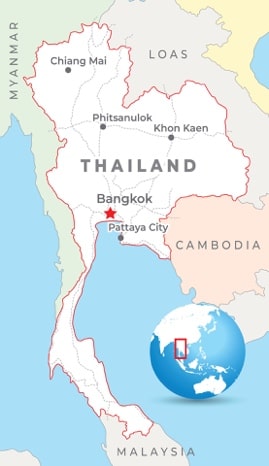
Thailand (Capital: Bangkok)
Thailand Legalizes Same-Sex Marriage: A Look at Political and Geographical Features
Political Features:
- Thailand is located in the centre of mainland Southeast Asia and is a founding member of ASEAN.
- The country borders Myanmar to the West, Laos to the North and East, Cambodia to the Southeast, and Malaysia to the South.
- Thailand also borders the Gulf of Thailand and the Andaman Sea.
Geographical Features:
- The highest peak in Thailand is Doi Inthanon.
- Major rivers in Thailand include the Chao Phraya and Mekong.
- The Kra Isthmus connects the Malay Peninsula with the Asian mainland.
- Thailand is the world's largest producer of natural rubber.
"RBI Study on Priority Sector Lending in India"
- PSL was established in 1972 to provide credit to sectors that are creditworthy but struggle to access formal financial institutions.
Key findings of the study on PSL
- Enhanced asset quality through PSL growth: PSL plays a key role in improving overall bank asset quality by focusing on specific segments.
- Specialization in PSL segments: The introduction of PSLCs has allowed certain banks to develop expertise in specific PSL segments, leading to an increase in their share of total bank credit.
- Exceeding PSL targets: Lending to the priority sector has consistently surpassed 40% across different periods and bank categories, driven by individual bank strategies.
- Meeting agricultural lending targets: Public sector banks have consistently met their 18% agricultural lending target, showcasing their commitment to supporting the agricultural sector.
About PSL
- Objective: Ensure vulnerable sections and underdeveloped areas have access to credit.
- PSL Targets: - Banks are required to allocate a portion of their Adjusted Net Bank Credit or Credit Equivalent of Off-Balance Sheet Exposure towards Priority Sector Lending.
- The mandated target for PSL allocation varies for different types of banks, with Scheduled commercial banks and foreign banks (with 20 or more branches) required to allocate 40% and Regional Rural Banks and Small Finance Banks required to allocate 75%.
- Urban Cooperative banks must allocate 65% to PSL in FY 2024-25, with an increase to 75% required in FY 2025-26.
Categories under Priority Sector
- Agriculture
- Micro, Small Others and Medium Enterprises
- Export Credit
- Education
- Housing
- Social Infrastructure
- Renewable Energy and Others
"Transforming Healthcare: Six Years of Ayushman Bharat PM-JAY"
- Ayushman Bharat PM-JAY is a key component of the Ayushman Bharat initiative, along with health and wellness centers.
- Launched to achieve Universal Health Coverage as per the National Health Policy 2017.
Ayushman Bharat PM-JAY
- Largest health assurance scheme globally
- Centrally Sponsored Scheme under Ministry of Health & Family Welfare
- Offers cashless hospital cover of Rs. 5 lakhs per family per year for secondary and tertiary care
- Includes coverage for pre-hospitalization and post-hospitalization expenses
- Targets 12 crore families, around 55 crore beneficiaries
- Recently expanded to include all senior citizens aged 70 and above by Union Cabinet approval
Achievements of Ayushman Bharat PM-JAY
- More than 354 million Ayushman cards have been distributed, and the program is active in 33 States and Union Territories.
- Almost half (49%) of the Ayushman cards have been given to women.
- A total of 30,529 hospitals nationwide are part of the program, including 17,063 public and 13,466 private hospitals.
"Centennial Celebration: Harappan Civilisation Discovery"
- John Marshall, Director General of ASI, announced the discovery of the "Civilisation of the Indus Valley" in 1924.
- Daya Ram Sahni and Rakhal Das Banerji, ASI archaeologists, were key in the discovery.
Harappan Civilization Overview
- The civilization covers 2,000 sites in India, Pakistan, and Afghanistan, with most sites located between the Indus and Saraswati River basins.
- The five major cities of the civilization are Rakhigarhi, Mohenjodaro, Harappa, Dholavira, and Ganweriwala.
- The extent of the civilization ranges from Daimabad in Maharashtra (Southernmost) to Manda in Jammu (Northernmost), with Alamgirpur in UP (Easternmost) and Sutgakendor in Pakistan (Westernmost).
- The civilization is classified into three phases: early phase (6000 BCE-2600 BCE), mature period (2600 BCE to 1900 BCE), and late phase (1900 BCE-1300 BCE).
New Evidence for Harappan Civilization
- A recent archaeological dig uncovered a 5,200-year-old Harappan settlement at Padta Bet in Kachchh, Gujarat.
- DNA testing of skeletons from Rakhigarhi showed that the DNA of the Harappans is still present in the South Asian population today, with many people being their descendants.
- The Harappans had trade and cultural interactions with other regions, leading to a small amount of genetic mixing in their descendants.
Characteristic features of Harappan Civilization:
- Urban planning in Mohenjodaro included citadels, great baths, and a sophisticated drainage system, all constructed using burnt bricks.
- The Indus Valley civilization had advanced technology and crafts such as micro-drilling, bead-making, metal-working, seal-making, and pottery making, as seen at sites like Chanhudaro.
- The civilization also had a fully developed Indus script for writing, although it has not been deciphered yet.
- Trade was a significant aspect of the civilization, with the port city of Lothal serving as a hub for commercial links with regions like Afghanistan, Iran, and Mesopotamia (Tigris and Euphrates), where the Indus region was known as Meluha.
"Introducing the MSP Finance Network"
- MSP Finance Network was created by India and 14 other MSP members, such as the USA, Australia, and Canada.
- The network aims to enhance collaboration and facilitate the sharing of information and funding among participating institutions to improve supply chains for critical minerals.
- It will encourage sustainable investment in global critical mineral supply chains by attracting private sector funding for various projects related to production, extraction, processing, recycling, and recovery.
About Minerals Security Partnership (MSP)
- MSP is a partnership between 14 countries and the European Union aimed at promoting responsible investment in critical minerals supply chains worldwide.
- India became a member of MSP in 2023.
- MSP specifically targets minerals and metals essential for clean energy technologies, such as lithium, cobalt, nickel, manganese, graphite, rare earth elements, and copper.
Significance of Critical Minerals
- Economic growth relies on the significance of cobalt, nickel, and lithium in industries such as telecommunications and electric vehicle battery manufacturing.
- Clean energy technologies like semiconductors, solar panels, and wind turbines heavily depend on critical minerals.
- National security and defense are supported by key minerals like bauxite, alumina, and silica, which are essential for producing armor, weaponry, and other military infrastructure.
Measures taken by India
- The Mines and Minerals (Development and Regulation) Amendment Act of 2023 allows for mining concessions for 24 important minerals.
- 30 critical minerals have been identified as essential for self-reliance.
- Collaborations with Australia and Argentina have been established for lithium and cobalt.
- Khanij Bidesh India Ltd. (KABIL) has been tasked with identifying and acquiring overseas mineral assets, specifically focusing on critical minerals like lithium and cobalt.
"SPICED Scheme Gets Approval from Commerce Ministry"
- The SPICED scheme by the Spices board aims to promote sustainability in the spice sector through innovative and collaborative interventions for export development.
- The goal of the scheme is to increase the area under cardamom cultivation, improve productivity, promote exports, and enhance the skills of stakeholders.
- Key components of the scheme include improving productivity, upgrading post-harvest quality, expanding markets, promoting trade, implementing technology interventions, conducting research, and providing capacity building and skill development.
- The scheme will be implemented during the remaining term of the 15th Finance Commission, from 2023-24 to 2025-26.
About Cardamom
Cardamom is grown for its dried fruits, known as capsules, on a commercial scale.
Small Cardamom:
- Small cardamom is native to the evergreen forests of the Western Ghats in South India.
- The main producers of small cardamom are Kerala, Karnataka, and Tamil Nadu.
- Ideal conditions for growing small cardamom include thick shady areas with loamy, acidic soil, an elevation of 600 to 1500 meters, and adequate drainage.
Large Cardamom:
- Large Cardamom is found in the Sub-Himalayan region of North Eastern India, Nepal, and Bhutan.
- The ideal conditions for Large Cardamom include an average precipitation of 3000-3500 mm over approximately 200 days.
- The temperature range suitable for Large Cardamom is between 6-30 degrees Celsius.
About Spice Board India
- Established in 1987 as per the Spices Board act of 1986.
- Responsible for promoting the export of 52 scheduled spices and developing Cardamom (Small & Large).
- Located in Cochin, Kerala.
- Comes under the Ministry of Commerce and Industry.
"Embracing Digital Solutions for Noncommunicable Diseases"
- The report was released by the World Health Organization (WHO) and International Telecommunication Union (ITU).
- It acts as a guide for taking action, supporting the WHO Global Initiative on Digital Health and Global Strategy on Digital Health 2020-2025.
Key findings of the Report
- NCDs, such as cardiovascular diseases, cancer, diabetes, and chronic respiratory diseases, account for more than 74% of worldwide deaths each year.
- The effects of NCDs include significant economic costs, challenges in achieving Sustainable Development Goals, pressure on social security systems, and decreased productivity.
- Digital Health Interventions (DHIs) encompass a variety of technologies such as online programs, mobile apps, virtual reality, telehealth, wearable devices, online counseling, and AI-driven applications using big data to enhance health outcomes.
- Utilizing digital health interventions such as telemedicine, mobile messaging, and chatbots could result in saving over 2 million lives from non-communicable diseases in the next ten years.
- These interventions could also prevent around 7 million acute events and hospitalizations.
- Implementing DHIs could lead to an additional US$199 billion in economic benefits.
- The return on investment for DHIs is estimated to be US$19 for every US$1 invested.
- In order to experience the advantages of DHIs, governments would need to spend an average of US$ 1.6 per patient over a 10-year period.
India’s Digital Health Interventions
- The Ayushman Bharat Digital Mission aims to create a national digital health system using the Ayushman Bharat Health Account (ABHA) Number.
- e-Sanjeevani is the largest telemedicine program in primary health care that is well-documented.
- e-Hospital is a Hospital Management Information System (HMIS) designed to streamline internal workflows and processes within hospitals.
- e-RAKTKOSH is a centralized system for managing blood banks.