
Daily Current Affairs UPSC 21 and 22 July 2024
Welcome to our daily current affairs blog post for UPSC aspirants! In today's edition, we will be discussing the most significant events and news updates that took place on 21th and 22th July 2024. Staying updated with current affairs is crucial for UPSC preparation, as it not only helps you stay informed but also enhances your understanding of various subjects. So, let's dive into the important happenings of the day and explore their potential impact on the upcoming UPSC examinations.

Chairman of UPSC
UPSC Chairperson Resignation
- Recently, the UPSC Chairperson resigned from his position five years before the expiration of his term.
About UPSC Chairman (Article 316)
- Appointment: The UPSC Chairman is appointed by the President of India.
- Term: The term of the UPSC Chairman is 6 years or until they reach the age of 65, whichever comes earlier.
- Eligibility: The UPSC Chairman must have held office for at least ten years under the Government of India or a State government. They are also ineligible for further employment in government.
- Removal: The President can remove the UPSC Chairman if they are adjudged insolvent, engage in paid employment outside their duties, or are unfit to continue in office due to mental or physical infirmity.
U-WIN
- The government has introduced a new online vaccination portal for childhood vaccination, similar to the COWIN platform.
- The U-WIN portal captures vaccination events for pregnant women and children up to six years old under the Universal Immunization Programme.
- The portal allows users to locate the nearest vaccination center, register births, and track micro-trends across areas.
- It is linked to the government's eVIN platform for inventory management of vaccine stocks and flows.
- The portal also provides digital vaccine certificates for users.
Nine-dash Line
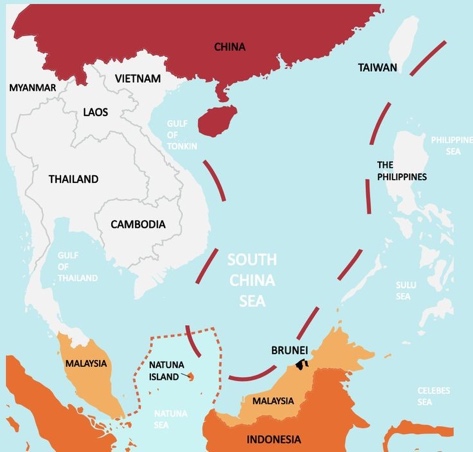
- China and the Philippines have agreed to resolve their dispute over the Shoal island in the South China Sea, which is claimed by China under the Nine-dash line.
- The Nine-dash line is a representation of China's expansive claims in the South China Sea, covering nearly 90% of the area and overlapping with the claims of other countries like Brunei, Indonesia, Malaysia, the Philippines, Taiwan, and Vietnam.
- The claims made by China under the Nine-dash line were rejected by a UN Tribunal in 2016, but the issue has continued to be a source of tension in the region.
Zebra Mussel
- The invasive Zebra mussel has been discovered in the Colorado River for the first time in the United States.
- This fingernail-sized mollusc is originally from the Caspian and Black Seas and likely arrived in the Great Lakes in the 1980s through ballast water.
- Zebra mussels are typically found in slow rivers, canals, lakes, and water pipes.
- They feed by using filter feeders to siphon particles of plankton and algae from the water.
- Zebra mussels attach themselves to hard surfaces using root-like protein byssal threads, such as rocks, native mussels, and docks.
- Biofouling occurs when adults accumulate on surfaces, potentially causing harm to the ecosystem.
International Mathematical Olympiad
- A team of six students from India achieved great success in the International Mathematical Olympiad (IMO) 2024, winning 4 Gold medals, 1 silver medal, and 1 honourable mention.
- This achievement marks the best performance by an Indian team in the IMO since the country first participated in 1989.
- The IMO is a prestigious competition for high school students that serves as the World Championship Mathematics Competition, taking place annually in various countries.
- The first IMO was held in 1959 in Romania, and participants can earn Gold, Silver, and Bronze medals, as well as Honourable Mentions for their efforts.
Bail Under UAPA
- The Supreme Court recently granted bail to an accused under the UAPA after 9 years in custody due to slow trial progress.
- The UAPA has strict conditions for bail under Section 43D(5), usually not allowing it if the accusation appears true.
- In the case of K A Najeeb vs. Union of India (2021), the Supreme Court ruled that the bail restrictions of UAPA should not violate constitutional rights such as the Right to Life and Personal Liberty under Article 21.
Rapid Apophis Mission for Space Safety (RAMSES)
- European Space Agency (ESA) has announced the RAMSES mission to study Asteroid Apophis.
- Asteroid Apophis is a near earth object that will pass within 20,000 miles of Earth's surface by April 2029.
- RAMSES Mission is a planetary defense mission against a hazardous asteroid.
- The mission will survey the asteroid's shape, surface, orbit, rotation, and orientation.
- Other planetary defense missions include NASA's OSIRIS-Apophis EXplorer (OSIRIS-APEX), NASA's DART asteroid impactor, and ESA's Hera asteroid detective.
Representative Concentration Pathways (RCP)
- A recent study utilized Representative Concentration Pathways (RCP) to analyze the effects of climate change on India's tropical dry deciduous forest.
- The study found that non-timber forest products like bael and bahera are expected to do well under climate change, while species like chironji, mahua, and amla may suffer negative impacts.
- RCPs were introduced by the IPCC in their Fifth Assessment Report (AR5) to outline four different scenarios of greenhouse gas emissions, atmospheric concentrations, air pollutant emissions, and land use in the 21st century.

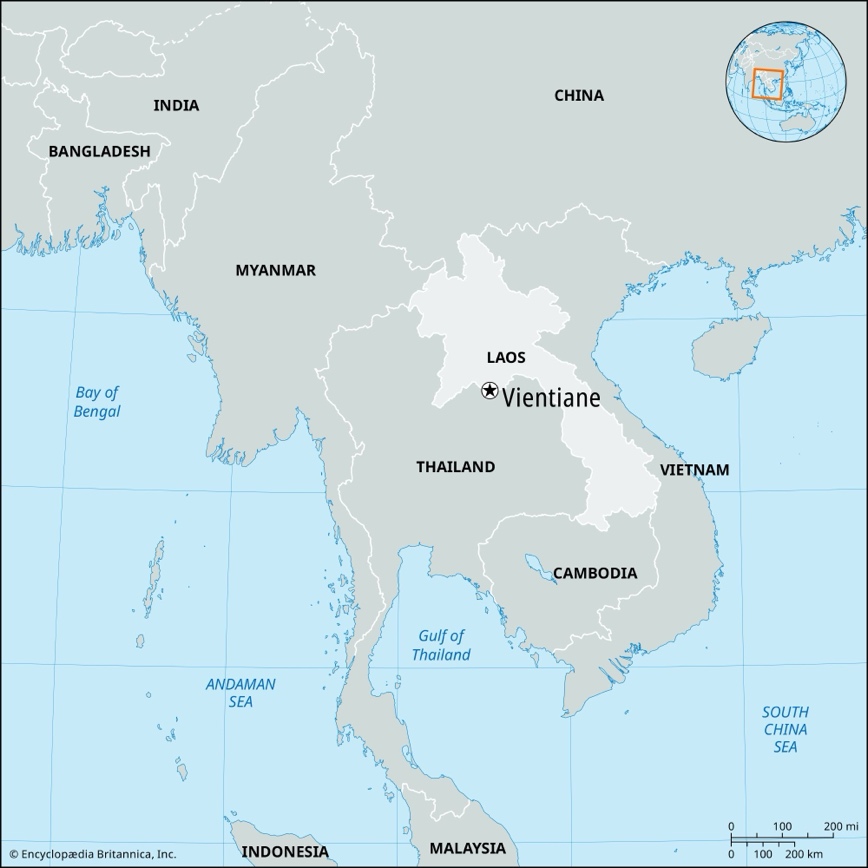
Laos (Capital: Vientiane)
Rescue of 13 Indians from Cyber-Scamming Centers in Laos
Political Features of Laos
- Only landlocked country in Southeast Asia.
- Neighbours include China, Vietnam, Cambodia, Thailand, and Myanmar.
- Part of ASEAN and RCEP groupings.
Geographical Features of Laos
- Climate: Tropical Monsoon Climate.
- Major Rivers: Mekong (capital located on this river).
- Minerals: Gold, copper, Zinc, Lead, etc.
- Major Mountains: Annamite Range, Luang Prabang Range.
- Highest Peak: Mount Bia.
"NAM Urges Removal of Cuba from US Terrorism List"
- The USA has a list of countries it considers to be 'State Sponsors of Terrorism', leading to economic and financial sanctions.
- North Korea, Iran, Syria, and Cuba are on this list.
- The Non-Aligned Movement (NAM) supports Cuba, showing its importance to Global South countries.
- NAM was created in response to Cold War superpowers and aims to establish a New International Economic Order.
- NAM originated from the 1955 Asia-Africa Conference in Bandung and held its first conference in Belgrade in 1961.
Contemporary relevance of NAM for Global South
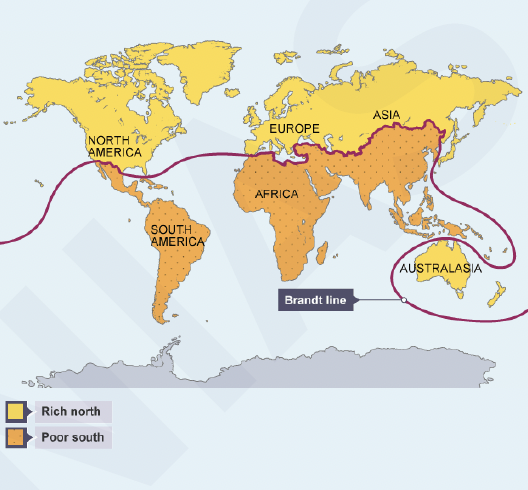
- All 120 members of the NAM are from the Global South, emphasizing the unity and common interests of these countries.
- The Russia-Ukraine War has intensified geopolitical competition, highlighting the importance of nonalignment and peaceful coexistence for countries in the Global South.
- NAM allows its members to make decisions independently and act in their own best interests, providing autonomy in statecraft.
- Other regional groupings like ASEAN, BRICS, African Union, and G77, which are mostly made up of NAM members, have adopted some of NAM's agendas, such as advocating for reforms in multilateral institutions.
India's Concerns on State-sponsored Terrorism in UNSC
- The Indian representative expressed worries about countries using terrorism as a tool of state policy during a discussion on cooperation between the UN and regional organizations in maintaining international peace and security.
- State-sponsored terrorism refers to when a terrorist group receives backing from a government, which can include financial support, training, weapons supply, and providing refuge within the country's borders.
Why countries use State Sponsored Terrorism?
- Geopolitical rivalry between states has historically led to the sponsorship of militant groups by countries like the US and Soviet Union during the Cold War era.
- Territorial grievances can also drive countries to support terrorist groups, as seen with Pakistan sponsoring groups like Hizbul Mujahideen and Lashkar-e-Taiba.
- Ethnic and religious support can play a role in countries backing terrorist organizations, such as Iran supporting groups like Hezbollah in Syria, a Shiite Muslim militant group based in Lebanon.
Implications of using terrorism as an instrument of state policy
- Absence of agreement and a cohesive worldwide reaction: For example, there is a lack of agreement among United Nations Member States regarding the Comprehensive Convention on International Terrorism.
- Endangerment to regional and global security: This is caused by the spread of nuclear technology and other weapons of mass destruction to countries that sponsor terrorism.
- Other factors contributing to the issue include religious radicalization, political instability, and so on.
Steps taken to counter State-sponsored terrorism
Global:
- The Financial Action Task Force is an international organization that monitors and combats money laundering and terrorist financing on a global scale.
- UNSC Resolution 1267 is a list created by the United Nations Security Council that imposes sanctions on individuals and groups linked to terrorist organizations.
- The UN Counter-Terrorism Centre works to encourage collaboration among countries in the fight against terrorism and assists Member States in implementing the Global Counter-Terrorism Strategy.
National:
- FIU-IND was established by India to handle and share information about suspicious financial activities.
- The organization is tasked with processing and distributing information related to suspect financial transactions.
- The Weapons of Mass Destruction and their Delivery Systems (Prohibition of Unlawful Activities) Act of 2005 is a law that prohibits illegal activities involving weapons of mass destruction and their delivery systems.
"LiDAR Dominance: A Global Security Concern"
- Although the main driver for the current demand for LiDAR technology is autonomous vehicles, it is also being utilized in various industries, including commercial and military sectors.
About LiDAR
- LiDAR is a versatile optical remote sensing technology that uses pulsed laser light to measure distances and map the surrounding environment.
Types of LiDAR Technology
- Topographic LiDAR: Utilizes near-infrared laser to map land features.
- Bathymetric LiDAR: Uses water-penetrating green light to measure seafloor and riverbed elevations.
Working of LiDAR Systems
- LiDAR technology is made up of three key parts: a laser emitter, a scanning mechanism, and a specialized GPS receiver.
- LiDAR operates by emitting waves of energy to locate and monitor objects, similar to how RADAR and SONAR function.
- While RADAR uses microwaves and SONAR uses sound waves, LiDAR uses light waves for detection and tracking.

Applications of LiDAR
- Agriculture: Used for measuring agricultural landscapes, crop biomass estimation, and detecting soil properties.
- Aerospace and Defense: Utilized for terrain mapping, target tracking, mine hunting, and imaging through clouds.
- Automotive: ADAS and autonomous vehicles use 3D LiDAR map data for navigation.
- Other applications include weather forecasting, mapping environments in virtual and augmented reality.
"PM Inaugurates 46th WHC Session at Bharat Mandapam"
- The WHC is responsible for managing World Heritage matters and deciding new sites for the list.
- India is hosting the WHC meeting for the first time.
- During the inauguration, the Prime Minister emphasized that heritage is a shared consciousness of humanity.
About Heritage and its Significance
- Heritage includes tangible and intangible aspects from the past that we pass on to future generations.
- The 1972 UNESCO treaty aims to protect cultural and natural heritage worldwide.
Importance of Heritage for Humanity
- Preserving cultural identity through art forms like Bharatnatyam and Kathak.
- Shaping human society through sites like the Ellora Caves showcasing tolerance.
- Scientific values seen in challenging heritage sites like the Kedarnath temple.
- Educational value from archaeological findings like horse-driven chariots in Sinauli.
- Architectural inspiration from historical sites like Chausath Yogini Mandir.
India's Efforts to Protect Global Heritage
- India will contribute $1 million to the UNESCO World Heritage Centre for conservation efforts.
- A certificate program in World Heritage Management is being launched for young professionals.
- The Archaeological Survey of India is involved in restoring heritage sites in countries like Cambodia, Laos, and Myanmar.
- Various schemes like HRIDAY, PRASAD, and IHDS Programme are aimed at preserving India's heritage in digital space.
"Microsoft and CrowdStrike Outage Sparks Global IT Chaos"
- The outage was the result of a mistake in how a sensor was set up for Microsoft Windows systems, causing the system to crash.
- This issue impacted important industries such as healthcare and banking.
- A review conducted by the RBI revealed that 10 banks and NBFCs in India experienced minor disruptions as a result of this worldwide outage.
Impact of IT outages on critical services
- Economic Disruption: IT outages can lead to financial markets freezing and businesses reliant on cloud services shutting down, as seen in the National Stock Exchange outage in 2021.
- Healthcare Disruption: IT outages can disrupt telemedicine services and make digital health records inaccessible, as seen in the Wannacry Ransomware attack on hospitals in the UK in 2017.
- Government and Security: IT outages can lead to cybersecurity breaches, such as the 2020 breach at the Kundankulam Nuclear Power Plant of NPCIL.
- Other Impacts: IT outages can cause communication breakdowns and energy sector disruptions due to the failure of smart grids.
Vulnerability of digital infrastructure in India
- Import Dependence: India's heavy reliance on imported hardware and software creates supply chain vulnerabilities and security risks.
- Low Digital Literacy: With only 38% of households in India being digitally literate, the country's large digital footprint is at risk.
- Limited Redundancy: India lacks adequate backup and redundancy measures, making systems more vulnerable to single points of failure.
- Other Vulnerabilities: India faces threats from state-sponsored cyber-attacks and a lack of robust cybersecurity protocols.
Measures taken for protection of digital infrastructure
- Institutional Measures: India has established organizations like the National Critical Information Infrastructure Protection Centre (NCIIPC), Defence Cyber Agency (DCA), and CERT-In to protect its digital infrastructure.
- Legal Measures: India has enacted laws like the Digital Personal Data Protection Act (2023) and the Information Technology Act, 2000 to safeguard digital information.
- Policy Measures: India has implemented policies like the National Cyber Security Policy (2013) to enhance cybersecurity in the country.
"GTRI Concerned About India's Rising Garments and Textiles Imports"
India's Textile Industry
- Current Value and Employment: India's textile industry is valued at US$ 250 billion and provides jobs to 50 million people. The industry is present across all parts of the value chain.
- Global Trade Contribution: India contributes around 4.6% of the global trade in textiles and apparel.
- Garment Export Growth: India's exports grew only by 4.6% from 2013 to 2023, lagging behind countries like Vietnam and Bangladesh.
Challenges in India’s Textile Industry
- Complex Export Procedures: Outdated and intricate procedures by the Directorate General of Foreign Trade (DGFT) and customs hinder exports.
- Import Restrictions: High import duties and mandatory quality norms on raw materials complicate imports, making it hard to compete globally.
- Weak Weaving and Processing Sectors: Small, informal units lack advanced technology and scale, leading to higher costs and lower quality compared to Chinese counterparts.
- Fast Fashion Impact: Frequent changes in fashion affect fabric and input consumption, making old norms impractical.
Strategies to Strengthen India’s Textile Industry
- Modify PLI Scheme: Make it more appealing to investors to boost investment in the sector.
- Streamline Import Procedures: Issue import entitlements based on value terms to simplify the process and improve competitiveness.
- Strengthen Legal Framework: Enhance contract enforcement to provide a more secure business environment.
- Other Strategies: Focus on enhancing synthetic apparel production, implement strategies to become compliant with the fast fashion industry, etc.