
Daily Current Affairs UPSC 13 September 2024
Welcome to our daily current affairs blog post for UPSC aspirants! In today's edition, we will be discussing the most significant events and news updates that took place on 13th September 2024. Staying updated with current affairs is crucial for UPSC preparation, as it not only helps you stay informed but also enhances your understanding of various subjects. So, let's dive into the important happenings of the day and explore their potential impact on the upcoming UPSC examinations.

Vertical Launch Short Range Surface-to-Air Missile (VL-SRSAM)
- The recent successful flight test of VL-SRSAM was conducted by DRDO and the Indian Navy at the Integrated Test Range in Chandipur, Odisha.
- The test involved launching the missile from a land-based vertical launcher.
- VL-SRSAM is a vertically launched surface to air missile designed for use by the Indian Navy.
- It is a ship-borne weapon system capable of neutralizing aerial threats at close ranges, including sea-skimming targets.
- The missile features an Indigenous Radio Frequency (RF) seeker and was developed by DRDO.
Bio-decomposer
- The Delhi Government plans to use bio-decomposer on 5,000 acres of farmland instead of burning stubble.
- Bio-decomposer was created by the Indian Agricultural Research Institute and is a microbial liquid spray made up of seven fungal species.
- This technology can break down various agricultural and horticultural residues quickly and effectively, turning them into nutrient-rich compost.
- It helps improve soil quality, supports plant growth, and can decompose agricultural residue in just 25 days.
State Finance Commission
- Kerala Cabinet has approved the formation of the seventh State Finance Commission.
- The State Finance Commission (SFC) is empowered by Article 243I of the Constitution to be constituted by the Governor of a state every five years.
- Article 243I was added by the 73rd Constitutional Amendment Act of 1992.
- The SFC reviews the financial status of Panchayats and suggests principles for the distribution of state taxes, assignment of taxes to Panchayats, and grants-in-aid from the State Consolidated Fund.
- Article 243Y states that the SFC must also make similar recommendations for municipalities.
National Instructional Media Institute (NIMI)
- NIMI has recently launched YouTube Channels in order to provide vocational education to ITI students in a more accessible way.
- NIMI was originally established in 1986 as the Central Instructional Media Institute by the Government of India, and later renamed as NIMI in 2003.
- NIMI is now an autonomous institution under the Ministry of Skill Development & Entrepreneurship, Directorate General of Training in New Delhi.
- The objective of NIMI is to serve as a nodal agency for developing instructional materials, e-content, question banks, and training media developers and trainers. They also work to translate books into Hindi and other regional languages.
EXERCISE AL NAJAH V
- Indian Army Contingent is heading to the 5th edition of the INDIA-OMAN Joint Military Exercise AL NAJAH V.
- The Exercise AL NAJAH has been taking place every two years since 2015, rotating between India and Oman.
- This year's exercise will be held at the Rabkoot Training Area in Salalah, Oman.
National Stock Exchange (NSE)
- SEBI has approved a tenfold increase in NSE's authorized share capital to ₹500 crore.
- NSE is headquartered in Mumbai and was established in 1992, recognized as a stock exchange by SEBI in 1993, and began operations in 1994.
- A stock exchange is a centralized marketplace where securities like stocks, bonds, and derivatives are traded by investors.
- NSE is India's largest stock exchange by market cap and its flagship stock market index is Nifty 50, owned and managed by NSE Indices Limited.
- Nifty 50 consists of 50 diversified stock indexes from various sectors of the economy.
- NSE was the first exchange in India to implement electronic/screen-based trading technology.
National Bank for Financing Infrastructure and Development (NaBFID)
- The Central Government designated NaBFID as a Public Financial Institution (PFI) in accordance with the Companies Act, 2013.
- Only institutions that are established under a Central or State Act or have at least 51% of their paid-up share capital held by the central or state government can be recognized as a PFI.
- NaBFID, established under the National Bank for Financing Infrastructure and Development Act, 2021, is a Development Financial Institution (DFI) with a focus on infrastructure.
- NaBFID's main goal is to support the growth of long-term non-recourse infrastructure financing in India, including the development of bonds and derivatives markets.
Rangeen Machhli App
- The Union Minister for Fisheries, Animal Husbandry and Dairying recently launched the 'Rangeen Machhli' App.
- The app was developed by ICAR-Central Institute of Freshwater Aquaculture with support from the Pradhan Mantri Matsya Sampada Yojana.
- The objective of the app is to provide information on popular ornamental fish species in eight Indian languages.
- Features of the app include locating nearby aquarium shops, promoting local businesses, and connecting users with reliable sources for ornamental fish.
- Ornamental fish farming in India involves raising attractive and colorful fishes in a confined aquatic system.
- Some examples of indigenous ornamental fishes in India include Loaches, Eels, Barbs, Catfish, Goby, and Clown Fish.
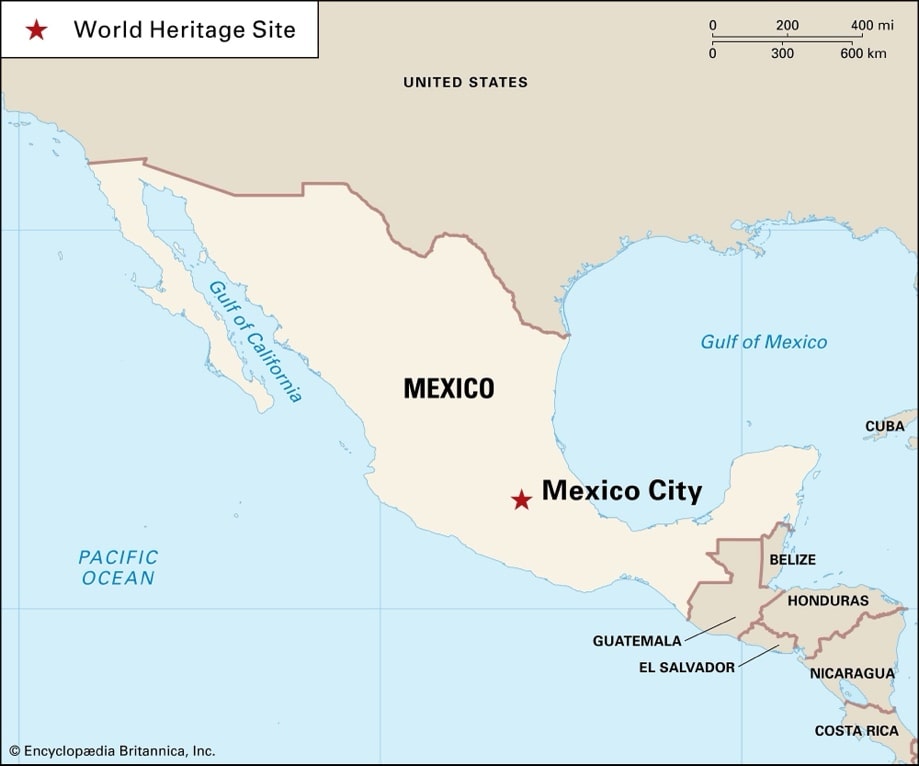
Mexico (Capital: Mexico City)
Mexico is the first country to approve popular election of judges
- Political features
- Located in North America.
- Territorial Boundaries: USA (north), Guatemala and Belize (south-east).
- Maritime Boundaries: Pacific Ocean (West & South), Gulf of Mexico (East) and Caribbean Sea (South-East).
- Geographical Features
- Region is part of Ring of Fire, characterized by active volcanism and frequent seismic activity.
- Major Rivers: Rio Grande, Colorado.
- Mountain range: Sierra Madre Oriental and Sierra Madre Occidental (Extension of Rocky Mountains).
- Major mountain peaks: Pico de Orizaba, Popocatepetl.
"Equity and Justice in Energy Transition Minerals"
- The UN Secretary-General's Panel on Critical Energy Transition Minerals (CETMs) has published a report outlining guiding principles for the energy transition.
- CETMs are essential minerals needed for the construction, production, distribution, and storage of renewable energy sources.
- These minerals include Rare Earth Elements, copper, cobalt, nickel, lithium, graphite, cadmium, selenium, and others.
- The demand for CETMs is projected to triple by 2030 as the global shift from fossil fuels to renewable energy sources continues.
About the Report
- A report has identified seven Guiding Principles and five Actionable Recommendations to ensure that the renewables revolution is based on justice and equity.
- These principles are necessary because the growing demand for Clean Energy Transition Metals (CETMs) could worsen commodity dependence, geopolitical tensions, and environmental and social issues, hindering progress towards transitioning to cleaner energy sources.
- Create a high-level expert advisory group to speed up the process of increasing benefit-sharing, adding value, and diversifying the economy in CETMs value chains.
- Implement a global traceability, transparency, and accountability framework throughout the entire mineral value chain.
- Establish a Global Mining Legacy Fund to enhance financial assurance mechanisms for mine closure and rehabilitation.
- Develop an initiative that supports artisanal and small-scale miners in practicing responsible mining.
- Set material efficiency and Circularity targets to manage consumption and minimize environmental effects.
Seven Principles
- Human rights should be the foundation of all mineral value chains.
- It is important to protect the integrity of the planet, its environment, and biodiversity.
- Justice and fairness should be key principles in mineral value chains.
- Development should be encouraged through sharing benefits, adding value, and diversifying the economy.
- Investments, finance, and trade should be conducted in a responsible and fair manner.
- Transparency, accountability, and anti-corruption efforts are essential for good governance.
- Global action should be supported by multilateral and international cooperation to promote peace and security.
"Expert Group Report on Pandemic Preparedness Released by NITI Aayog"
- The report discusses the difficulties encountered during the COVID-19 pandemic and suggests a detailed plan for better preparedness in future pandemics.
- It highlights the importance of a "One Health" approach in tackling the increasing risk of zoonotic diseases.
Challenges Faced During COVID-19 Pandemic:
- Legislative Challenges: NDMA & Epidemic Diseases Act not fully suited for public health emergencies.
- Surveillance and Data Management Issues: Lack of integration of data sources affecting decision-making.
- Research and Innovation Gap: Research bodies not collaborating with industries for rapid development of diagnostics & vaccines.
Key recommendations:
Governance Recommendations:
- Enact Public Health Emergency Management Act (PHEMA) to address broader aspects beyond epidemics.
- Establish Empowered Group of Secretaries on Pandemic Preparedness and Emergency Response (PPER) chaired by Cabinet Secretary.
- Create special PPER fund for emergency response.
Data Management and Surveillance Recommendations:
- Develop well-connected and integrated surveillance network.
- Build robust modeling and forecasting network for early prediction of outbreaks.
Research and Innovation Recommendations:
- Establish Institute of Innovation for New Platform technologies and vaccine development.
- Create Centers of Excellence for skilling human resources in identified gap areas.
Existing Framework for Epidemic/Pandemic Management:
- Public Health and Sanitation falls under Entry 6 of the State list in the Seventh Schedule.
- Entry 29 of the Concurrent List allows both the center and State to create laws for preventing infectious or contagious diseases from spreading between states.
- The International Health Regulation (2005) establishes a legal framework for States to manage public health emergencies.
- The EDA 1897 is the primary legislation concerning public health and sanitation.
- The Integrated Disease Surveillance Programme is in place for disease surveillance.
"Union Cabinet Approves Modification of Hydro Electric Project Support Scheme"
- The Union Cabinet made changes to the scheme aimed at speeding up the development of Hydro Electric Projects (HEP) and enhancing infrastructure in remote and hilly project areas.
- The Ministry of Power introduced a scheme in 2019 to provide budgetary support for the cost of enabling infrastructure for HEP, as part of efforts to boost the hydropower sector in India.
- This scheme included funding for the construction of roads and bridges that would connect key project components like dams and power houses with the nearest state or national highway.
Modified Scheme for Faster Development of Hydro Electric Projects
- The Union Cabinet has made changes to the scheme aimed at accelerating the development of Hydro Electric Projects (HEP) and enhancing infrastructure in remote and hilly project locations.
- The scheme now has a total outlay of Rs.12,461 crore for a cumulative generation capacity of about 31,350 MW, with implementation scheduled from FY 2024-25 to FY 2031-32.
- In addition to roads and bridges, the scheme now covers costs for constructing transmission lines, ropeways, railway sidings, and communication infrastructure.
- Eligibility for the scheme includes HEPs with a capacity greater than 25 MW, including private sector projects and all Pumped Storage Projects (PSPs).
Other Measures for Development of Hydro Electric Projects
- Large Hydro Power projects (> 25 MW projects) have been declared as Renewable Energy sources.
- Hydro Power Purchase Obligations (HPOs) have been implemented to require entities to purchase electricity from HEPs.
- Tariff rationalization measures have been introduced to lower hydropower tariffs.
- Budgetary support is provided for flood moderation and Storage HEPs.
Challenges with Hydro Electric Project Development
- Financial constraints are a major challenge as HEPs require high upfront costs.
- Geological concerns during construction in hilly regions, particularly in the Himalayas, pose challenges.
- Power evacuation issues arise due to the remote locations of these projects.
- Social issues such as large land acquisition and rehabilitation requirements also present challenges.
"New Health Cover for Seniors: ₹5 Lakh Approved"
- The Union Cabinet has approved a health cover for senior citizens under the Ayushman Bharat Pradhan Mantri Jan Arogya Yojana (AB PMJAY).
- The scheme is expected to benefit around 6 crore senior citizens.
Details of the Scheme Expansion
- Eligibility Criteria: All senior citizens aged 70 and above, regardless of their income, are eligible.
- Benefits Offered: Senior citizens will receive a family-based cover of Rs. 5 lakh annually. Those already covered by AB PM-JAY will receive an additional top-up of Rs. 5 lakh annually.
- Ease of Access: Eligible senior citizens will be issued a distinct card. They can choose between existing public health insurance schemes or AB PM-JAY. Senior citizens under private health insurance or Employees’ State Insurance schemes are also eligible.
About AB PM-JAY Scheme
- Ministry: Ministry of Health & Family Welfare
- Type: Centrally Sponsored Scheme under Ayushman Bharat Mission
- Target: 12 crore families (approximately 55 crore beneficiaries)
- Purpose: To achieve Universal Health Coverage
- Benefits: Health cover of Rs. 5 lakh/family/year for secondary and tertiary care hospitalization. Covers pre-hospitalization and post-hospitalization expenses.
- It is the world's largest publicly funded health assurance scheme.
Other Schemes for Senior Citizens
- Atal Vayo Abhyuday Yojana: To improve the quality of life of senior citizens.
- Senior Aging Growth Engine (SAGE) initiative: To promote and incentivize senior care products and services.
- SACRED portal: To connect senior citizens with job providers in the private sector.
"PM Adopts Delhi Declaration on Civil Aviation"
- The 2nd Asia Pacific Ministerial Conference on Civil Aviation (APMC) ended with the Delhi Declaration being unanimously adopted.
- The APMC, which marks the 80th anniversary of the International Civil Aviation Organization (ICAO), was hosted by the Ministry of Civil Aviation and ICAO.
Key Commitments under Delhi Declaration
- Reaffirmation of Asia and Pacific Ministerial Declaration on Civil Aviation (Beijing): The commitment to implement the State Safety Programme and Asia/Pacific Seamless Air Navigation Service Plan.
- Aviation Safety & Security: The goal to achieve the aspirational goal of the Global Aviation Security Plan.
- Gender Equality: Taking necessary measures to strengthen gender equality in the aviation industry.
- Aviation Environment Protection: The commitment to reduce emissions and other environmental impacts of aviation.
- Ratification of International Air Law Treaties: Encouraging Asia & Pacific States to ratify amendments to the Convention on International Civil Aviation.
Civil Aviation Sector in India
- India's civil aviation sector is the fastest-growing market globally and currently ranks as the 3rd largest in the domestic segment.
- With over 800 aircraft and 157 airports, India has seen exponential growth in its aviation infrastructure.
- Gender equality is a focus, with 15% of pilots in India being women, well above the global average of 5%.
- Schemes like the Regional Connectivity Scheme (RCS) - Ude Desh ka Aam Nagrik (UDAN), Digi Yatra, and the Greenfield Airports Policy prioritize carbon neutrality in the sector.
International Civil Aviation Organization (ICAO)
- Established in 1944 based on the Chicago Convention, ICAO is a United Nations Specialized agency with 193 member states, including India.
- Headquartered in Montreal, Canada, ICAO's vision is to achieve sustainable growth in the global civil aviation system.
- Its mission involves developing policies and standards, conducting compliance audits, and fostering cooperation among its member states and stakeholders.
- Key agreements and initiatives include the Carbon Offsetting and Reduction Scheme for International Aviation (CORSIA) and the Long-Term Aspirational Goal (LTAG).
"Supreme Court Upholds Detenu Rights"
- In the Jaseela Shaji vs Union of India case (2024), the Supreme Court emphasized the rights of a detained person (detenu) to make an effective representation against preventive detention, which is detention without trial.
Key Points of the Judgment
- The detainee must be given the reasons for their detention and the documents used to justify it.
- Not providing these documents promptly would violate the detainee's right to make a proper defense under Article 22(5) of the Constitution.
- Article 22(5) requires the detaining authority to inform the detainee of the reasons for their detention and allow them to make a representation against the detention order as soon as possible.
Preventive Detention and Safeguards
- Article 22(3) allows authorities to detain individuals for preventive reasons like maintaining public order or national security.
- Safeguards include not authorizing detention beyond three months without approval from an Advisory Board, communicating grounds for detention promptly, and providing the detenu with the earliest opportunity to make a representation.
Laws for Preventive Detention
- National Security Act, 1980
- Unlawful Activities (Prevention) Amendment Act, 1967
- Conservation of Foreign Exchange and Prevention of Smuggling Activities Act (COFEPOSA), 1974
- Prevention of Black marketing and Maintenance of Supplies of Essential Commodities Act (PBMSECA), 1980