
Daily Current Affairs UPSC 16 and 17 June 2024
Welcome to our daily current affairs blog post for UPSC aspirants! In today's edition, we will be discussing the most significant events and news updates that took place on 16th and 17th June 2024. Staying updated with current affairs is crucial for UPSC preparation, as it not only helps you stay informed but also enhances your understanding of various subjects. So, let's dive into the important happenings of the day and explore their potential impact on the upcoming UPSC examinations.

Baltic Sea
- Russian SU-24 bomber breaches Swedish airspace near Gotland.
Baltic Sea Overview
- Arm of North Atlantic Ocean.
- Connected to Atlantic Ocean through Danish Straits.
- Separates Scandinavian Peninsula from rest of continental Europe.
- World's largest inland brackish sea with low salinity.
- Surrounding Countries: Denmark, Germany, Poland, Lithuania, Latvia,Estonia, Russia, Finland, Sweden.
- Rivers Draining: Vistula and Oder.
- Kiel Canal connects North Sea to Baltic Sea.
- Major Gulfs: Gulf of Bothnia, Gulf of Finland, Gulf of Riga, Gulf of Gdansk.
Bioluminescence
Bioluminescence: A Common Trait Among Deep-Sea Shrimp
- Definition: Bioluminescence is the ability of a living organism to emit light.
- Mechanism: Light is produced through energy released from enzyme-
- catalyzed oxidation reactions in organisms.
- Chemicals Involved: Bioluminescence requires two unique chemicals - luciferin and either luciferase or photoprotein.
- Light Range: The spectral range of light emission of bioluminescent organisms spans from blue to red light.
- Species: Bioluminescence can be found in a variety of species including sponges, jellyfish, hatchet fish, worms, Sea Walnuts, fireflies, fungi, bacteria, etc.
- Functions: Bioluminescence serves various functions such as counter-illumination (camouflage against predatory animals), prey attraction, intraspecies communication, etc.
E-flow Monitoring System
- Union Jal Shakti Ministry launches e-flow ecological monitoring system.
- E-flow refers to necessary flow for ecological functions of flora and fauna in water bodies.
- Developed by National Mission for Clean Ganga (Namani Gange).
- Program includes cleaning Ganga and its tributaries.
- Real-time analysis of water quality for Ganga, Yamuna, and tributaries.
- Monitoring of Namami Gange program activities at central level.
Exercise Tarang Shakti
- India to hold its inaugural multinational air Exercise Tarang Shakti in August 2024.
- Exercise will be divided into two phases: one in southern India and the other in the western sector.
- The first phase will take place in southern India while the second phase will be held in the western sector.
Speciation
- Study findings: Asiatic lions & Bengal tigers co-existed due to Sympatric Speciation.
- Speciation defined: Lineage-splitting event creating two or more species, increasing biodiversity.
- Modes of Speciation:
- Allopatric: New species from geographically isolated populations.
- Peripatric: New species from small population at edge of larger population.
- Parapatric: New species from continuously distributed population.
- Sympatric: New species from within range of ancestral population.
Digital Health Incentive Scheme
Extension of Digital Health Incentive Scheme (DHIS) till 2025
- DHIS was launched in 2023 as part of the Ayushman Bharat Digital Mission (ABDM).
- Aim of DHIS is to provide incentives to providers of digital health solutions like HMIS and LMIS.
- DHIS aims to make right software available at an affordable cost.
- Eligible health facilities and digital solutions companies can earn financial incentives of up to Rs. 4 crores based on the number of digital health records they create.
River Alakananda
- Alaknanda river is the source of the incident.
- Originates at an elevation of 3641m from Alkapuri Glacier.
- Alkapuri glacier is a combination of snout of Bhagirath kharak glacier and Satopanth glacier.
- Alaknanda comprises Panchprayags where it meets other rivers.
- 'Badrinath' is situated along the right bank of river Alaknanda.
eMigrate portal
MEA and SBI signed MoU for digital payment services on eMigrate portal
- Integration of SBIePay with eMigrate portal for Indian migrant workers, recruiting agents, and other users.
eMigrate portal overview
- Launched in 2014 for online emigration process.
- Initiative by Overseas Employment Division of MEA to automate processes.
- Assists blue-collar workers going to ECR countries.
- Allows voluntary registration for ECNR passport holders.
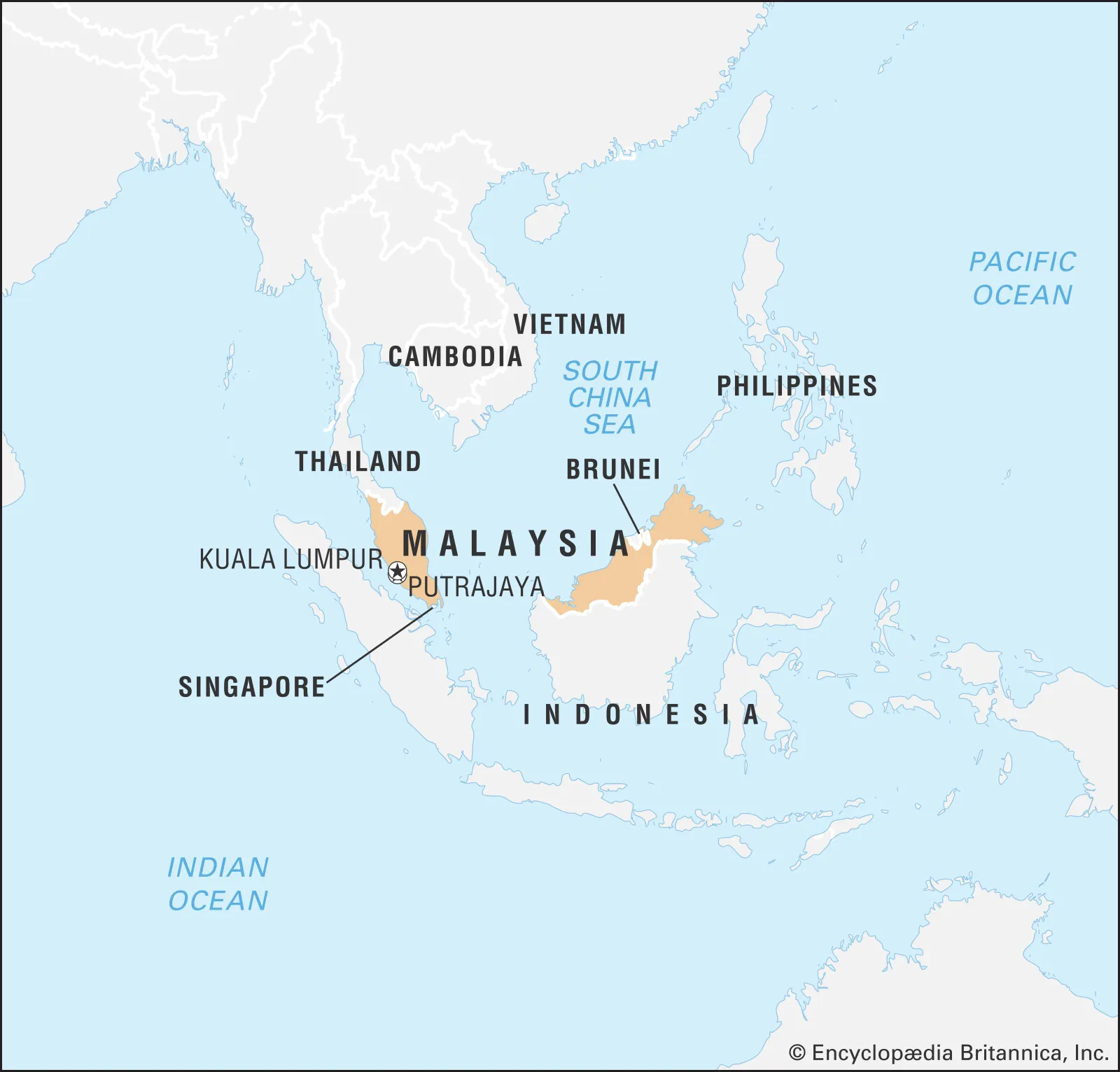
Malaysia (Capital: Kuala Lumpur)
Political Features:
- Malaysia is a country in Southeast Asia located just north of the Equator.
- It is composed of two non-contiguous regions: Peninsular Malaysia and East Malaysia on the island of Borneo.
- Malaysia shares land boundaries with Thailand, Singapore, Indonesia, and Brunei.
- The country is surrounded by the South China Sea and Andaman Sea.
Geographical Features:
- Important rivers in Malaysia include the Pahang, the Rajang, and others.
- Significant lakes in Malaysia include Kenyir, Bera, and Chini.
- Important straits in Malaysia include the Malacca Strait and Balabac Strait.
- The highest point in Malaysia is Mount Kinabalu.
Eviction of Indigenous Bajau Community:
- The indigenous Bajau community in Malaysia is being evicted to make way for rapid urbanization in Sabah, Malaysian Borneo.
PM Calls for Tech Democratization at G7 Summit
- Democratization of Technology (DoT) involves making technology more accessible to a larger population through factors like affordability, decentralization, and skill development.
Significance of DoT:
- Economic benefits include enabling individuals and small businesses to innovate and compete, driving economic growth and job creation.
- Social benefits include bridging digital divides and providing access to educational and healthcare resources.
- Cultural benefits include giving voice to diverse communities and sharing cultural content globally.
- Governance benefits include facilitating citizen engagement and accountability in decision-making processes.
Challenges in DoT:
- Digital divide and infrastructure gap, especially in remote areas.
- Gender and social inequities exacerbating the digital divide.
- Cybersecurity and privacy concerns deterring full embrace of technology.
Steps taken for DoT in India:
- Implementation of digital public infrastructure like 'India Stack' for digital identification and payments.
- Establishment of Common Service Centres for delivery of Government-to-Citizen e-Services.
- NAMO Drone Didi Initiative to help Women SHGs purchase drones for farming.
- India AI mission to democratize benefits of AI across society.
PMs Discuss India-Italy Strategic Partnership
- Bilateral Partnership between India and Italy.
Political Aspects:
- Established political relations in 1947, elevated to Strategic Partnership in 2023.
- Adopted 2020-2025 Action Plan for enhanced partnership.
Economic Aspects:
- Italy is India's 4th largest trading partner in the EU.
- Indo-Italian Joint Economic Commission Cooperation since 1976.
- Migration and Mobility Partnership Agreement signed in 2023.
Technology Aspects:
- New Science & Technology Co-operation Agreement signed in Nov 2003.
- Joint research in Electronics, Biotechnology, Energy, etc.
- Executive Programme of Cooperation for 2025-27 for joint research and development.
Defence and Security Aspects:
- Italy joined Indo-Pacific Ocean Initiative's Science and Technology Pillar in 2023
- Joint Military exercises like PASSEX Exercise, MILAN (Naval Exercises)
Cooperation in Multilateral Bodies:
- Italy joined India-led International Solar Alliance, Coalition for Disaster Resilient Infrastructure, Global Biofuels Alliance, and IMEC.
Bengaluru's Proposed Solid Waste Management Cess
Proposed SWM Cess by BBMP
- BBMP has proposed a Solid Waste Management (SWM) Cess of ₹100 per month for each household
- Solid Waste Management Rules, 2016 enables Urban Local Bodies to levy user fees or SWM cess
- Solid waste refers to the byproducts of household or commercial activities that have lost their value to the original owner(s) but may hold significance for others
Current State of SWM in India
- Solid waste generated stands at 160,038.9 tons per day, with ~95% of waste collected efficiently
- ~50% of collected waste undergoes treatment, while 31.7% remains unaccounted
Challenges in SWM in India
- Segregation of waste: Inadequate segregation at source increases waste disposal costs
- Collection and transportation: Underdeveloped waste storage infrastructure, limited door-to-door collection
- Disposal and treatment: Use of open dumps emitting methane gas, contributing to fires and global warming
- Municipal Finance: Struggle to make enough money, challenges in attracting private capital
Key Provisions of Solid Waste Management Rules, 2016
- Applicability: Rules apply to Municipal areas, urban agglomerations, census towns, industrial townships
- Segregation of Waste: Mandates segregation into Biodegradable, Non-biodegradable, and Sanitary and Domestic Hazardous waste
- Collection & Disposal: Local authorities responsible for waste systems
- Recovery and recycling facility: Developers required to earmark area for recovery and recycling
Assessing the Quad: Indo-Pacific Diplomacy
Quad's Evolution into a Multifaceted Partnership
- Quad has expanded beyond security dialogue to encompass a wide range of policies and initiatives
- Established six working groups since 2017 to focus on diverse goals and partnerships
Quad's Policies and Initiatives
- Health: Quad Vaccine Partnership evolved into Quad Health Security Partnership in 2023
- Climate: Launched Quad Climate Change Adaptation and Mitigation Package in 2022
- Critical and Emerging Technology: Semiconductor Supply Chain Initiative to diversify technology supply chains
- Space: Indo-Pacific Partnership for Maritime Domain Awareness launched in 2022
- Infrastructure: Trilateral Partnership for Infrastructure Investment in the Indo-Pacific established in 2018
- Cybersecurity: Quad Cybersecurity Partnership formed in 2022
About Quad
- Composed of Australia, India, Japan, and the United States
- Not a military alliance or mutual defense agreement
- Inaugural meeting held in 2007 on the sidelines of the ASEAN Regional Forum
- Quad countries represent 24% of the world's population, 35% of GDP, and 18% of global trade
HelpAge India Report on Ageing in India
Key Findings:
- Working Status: Only 15% of elderly persons are currently employed, with a significant gender disparity as 24% of elderly males work compared to just 7% of elderly females.
- Lack of Social Security: Only 29% of elderly people have access to social security schemes.
- High Prevalence of Multiple Morbidities: 54% of all elderly persons are suffering from two or more Non-Communicable Diseases.
- Digital Access: 59% of elderly individuals do not have access to a digital device.
- Social Participation: Only 7% of elderly individuals are members of any social organization.
Steps Undertaken for Elderly Care in India:
- Pradhan Mantri Vaya Vandana Yojana (2015): A pension scheme to provide regular income to senior citizens aged 60 years and above.
- Rashtriya Vayoshri Yojana (2017): Provides assisted-living devices and support services to senior citizens in the Below Poverty Line category.
- Maintenance and Welfare of Parents and Senior Citizens Act, 2007: Aims to ensure the maintenance and welfare of senior citizens by making it a legal obligation for children and relatives.
Successful Conclusion of Bonn Climate Change Conference
Progress on adaptation indicators and international carbon market under Article 6 of Paris Climate Deal
- Progress made during Conference towards adaptation indicators and better functioning international carbon market under Article 6 of Paris Climate Deal
- Article 6 helps countries achieve emission-reduction goals through bilateral deals and a new global offset market
New Collective Quantified Goal on climate finance
- Proposed in COP21 for setting post-2025 climate finance goal
- Parties to UNFCCC aimed to mobilize $100 billion annually by 2020, extended to 2025 but not fully delivered
- NCQG aims to raise floor on climate finance above current $100 billion target while addressing shortcomings
Mitigation Work Programme for enhancing mitigation ambition
- Established at COP26 to achieve 1.5°C goal of Paris Agreement
- 2024 program will focus on "Cities: buildings and urban systems" to reduce operational emissions, design efficient building envelopes, and reduce embodied emissions