
Daily Current Affairs UPSC 28 June 2024
Welcome to our daily current affairs blog post for UPSC aspirants! In today's edition, we will be discussing the most significant events and news updates that took place on 28th June 2024. Staying updated with current affairs is crucial for UPSC preparation, as it not only helps you stay informed but also enhances your understanding of various subjects. So, let's dive into the important happenings of the day and explore their potential impact on the upcoming UPSC examinations.

Factory Farming
- Factory Farming Defined: Refers to raising livestock and poultry in high-density facilities to maximize production efficiency and lower costs.
- Impacts of Factory Farming:
- Antibiotic Resistance: Over 53% of egg samples in India showed resistance to multiple antibiotics.
- Zoonotic Diseases: Majority of infectious diseases are zoonotic in origin.
- Environmental Degradation: Factory farming contributes significantly to global greenhouse gas emissions.
- Health Risks: Diets high in animal products can increase the risk of various diseases like cardiovascular disease, cancer, and diabetes.
President’s Address to the Parliament
- President addressed the joint sitting of Parliament after the formation of the 18th Lok Sabha.
- Article 86 allows the President to address either House of Parliament or both Houses together.
- President has not addressed under this provision before.
- Article 87 of the Constitution provides two instances when the President specially addresses both Houses of Parliament assembled together:
- At the beginning of the first session after each general election.
- At the beginning of the first session of each year.
- Originally, Article 87(1) required the President to address both Houses of Parliament at the commencement of every session.
- The Constitution (First Amendment) Act, 1951, amended this provision.
Committee of Privileges of Rajya Sabha
- Privileges Committee of Rajya Sabha found 12 opposition MPs guilty of misconduct for disrupting House proceedings.
- Responsibilities of the Committee of Privileges of Rajya Sabha
- Investigating and addressing breaches of parliamentary privileges.
- Ensuring that special rights and immunities granted to both Houses of Parliament and their members are upheld for efficient functioning.
- Composition of the Privileges Committee
- Consists of 10 members nominated by the RS Chairman.
- Chairman of the Committee is appointed by the RS Chairman from amongst the members of the Committee.
- Comparison with Lok Sabha
- In Lok Sabha, the Privileges Committee consists of 15 members nominated by the Speaker.
Commonwealth Local Government Forum (CLGF)
- India participated in the CLGF Annual Board meeting in Sri Lanka with the theme of "Reinforcing Social Resilience through Women's Political Representation."
- CLGF, headquartered in London, UK, was established in 1995.
- CLGF unites local government, ministries of local government, national associations of local government, and individual councils from 56 Commonwealth countries, including India.
- CLGF is dedicated to supporting women's full and active participation in public life, especially in achieving equal representation in local governance, aligning with SDG 5: Achieve gender equality and empower all women and girls.
Exercise Freedom Edge
- Trilateral multi-domain exercise, Freedom Edge, initiated by South Korea, US, and Japan.
- Location: South Korea's southern island of Jeju
- Context: Exercise coincides with North Korea and Russia signing a strategic partnership treaty
- Focus areas: Ballistic missile defense, air defense, antisubmarine warfare, search and rescue, maritime interdiction, defensive cyber training.
Pench Tiger Reserve
Introduction to Pench Tiger Reserve
- Location and spread across states of Maharashtra and Madhya Pradesh.
- Background as a National Park in 1975 and Tiger Reserve in 1992.
Forest Types in Pench Tiger Reserve
- South Indian Tropical Moist Deciduous, Southern Tropical Dry. Deciduous Teak, and Southern Dry Mixed Deciduous.
- Pench River divides the reserve into two halves.
Flora and Fauna in Pench Tiger Reserve
- Mention of Mahua, White Kulu, Salai, Saja, Bijiyasal, Dhaora, Amaltas, etc.
- Presence of Tiger, leopard, sloth bear, Indian gaur, wild dog, wolf, etc.
Historical and Literary Significance of Pench Tiger Reserve
- Mention in Ain-i-Akbari.
- Original setting of Rudyard Kipling's The Jungle Book.
Bhuvan Panchayat and NDEM 5.0
- Union Minister of State for Science and Technology will launch two Geoportals: Bhuvan Panchayat 4.0 and National Database for Emergency Management (NDEM 5.0).
- ISRO has created national level geospatial databases for these two portals.
- Bhuvan Panchayat 4.0 is an online platform for geospatial data and services dissemination.
- Objective is to integrate space-based information in governance and research initiatives for spatial planning at Gram Panchayat level
- NDEM 5.0 provides a comprehensive geospatial database for the entire country for situational assessment and effective decision-making during disasters/emergency situations.
Spring Initiative
- PRI has introduced the Spring Initiative to combat nature loss by 2030.
- The initiative is backed by 200 investors with $15 trillion in assets.
- The goal is to mitigate the risk of nature loss on society and long-term portfolio value.
- The focus is on improving corporate practices related to forest loss and land degradation.
- Emphasis is placed on responsible political engagement as a key component of corporate governance.
Mainland Serow
- Scientists spotted a lone Mainland Serow in Raimona National Park in western Assam.
- Mainland Serow is a mammal found in the Himalayas, southern China, mainland Southeastern Asia, and Sumatra.
- Characteristics include being territorial and living alone or in small groups.
- Other species of Serow include Japanese Serow, Red Serow, and Taiwan or Formosan Serow.
- Conservation status: Vulnerable according to IUCN, listed in Appendix I of CITES, and protected under Schedule I of the Wildlife (Protection) Act, 1972.
ABHYAS
- ABHYAS is a High-speed Expendable Aerial Target (HEAT).
- Designed by DRDO's Aeronautical Development Establishment in Bengaluru.
- Provides a realistic threat scenario for practicing weapon systems.
- Autonomous flying capabilities with auto pilot and Ground Control System.
- Ability to record data during flight for post-flight analysis.
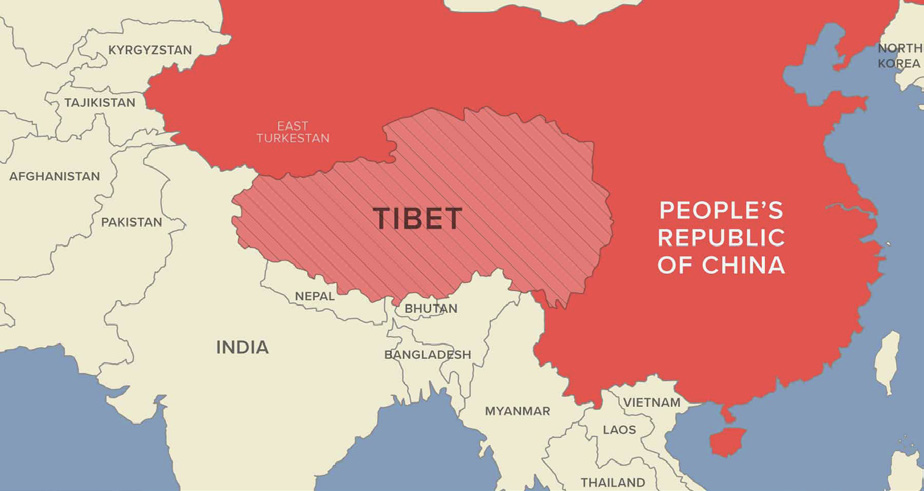
US Congress Passes Tibet-China Dispute Resolution Act
The US Act states that the Tibet-China dispute should be resolved peacefully through dialogue without preconditions and in accordance with international law.
- It supports the Dalai Lama's "Middle Way Approach" for meaningful autonomy for Tibet within China.
About Tibet-China Dispute
- Tibet declared independence in 1912 but signed a sovereignty agreement with China in 1951.
- China claims sovereignty over Tibet based on this agreement, while Tibet argues it was coerced into signing it.
India's Position on Tibet
- India granted asylum to the Dalai Lama in 1959 after a failed uprising.
- Since 2003, India recognizes Tibet Autonomous Region as part of China following a cooperation agreement with China.
2024 MSME Day Celebrated Globally
- The celebration of World Micro-, Small- and Medium-sized Enterprises (MSMEs) Day took place on June 27, focusing on the theme of 'MSMEs and the SDGs'.
- MSMEs play a crucial role in advancing SDG 8 and SDG 9 by promoting decent work, economic growth, industry, innovation, and infrastructure.
Significance of MSMEs
- Globally, MSMEs make up 90% of businesses, provide 60 to 70% of employment, and contribute to 50% of GDP.
- In India, MSMEs account for 29.1% of the Gross Value Added in the GDP and 43.59% of exports.
Challenges Faced by MSMEs in India
- Access to finance is a major issue, with only 16% of credit demand being met by commercial banks, leading to difficulties in obtaining working capital.
- Limited exposure to global export markets and compliance with international quality standards pose challenges for MSMEs.
- The business environment in India is complex, with regulatory compliances, delays in customs clearance, policy uncertainty, and an 'Inverted Duty Structure' hindering access to raw materials.
Initiatives to Support MSMEs in India
- The government has introduced initiatives such as the Pradhan Mantri Mudra Yojna and Priority Sector Lending to improve access to finances for MSMEs.
- Programs like the Raising and Accelerating MSME Performance (RAMP) Programme and the Aatmanirbhar Skilled Employee Employer Mapping (ASEEM) Portal aim to enhance the performance of MSMEs in India.
Definition of Micro, Small and Medium Enterprises
| Parameters | Micro | Small | Medium |
|---|---|---|---|
| Investment in Plant and Machinery | ≤1 Crore INR | ≤10 Crore INR | ≤50 Crore INR |
| Annual Turnover | ≤5 Crore INR | ≤50 Crore INR | ≤250 Crore INR |
RBI's FSR: Success in NPA Reduction
- The FSR (biannual report) is based on the assessment of the Sub-Committee of Financial Stability and Development Council.
- It highlights that Scheduled commercial banks Gross NPAs (GNPAs) and Net NPA ratios fell to multi-year lows of 2.8% and 0.6% respectively at March-end 2024.
About NPA
- NPA refers to the classification for loans or advances of a bank that are in default or arrears.
- A loan is in arrears when principal or interest payments are late or missed and becomes an NPA when interest/ installment of principal remain overdue for more than 90 days.
- GNPAs are the sum of all loan assets that are classified as NPAs.
Reasons for NPAs
- Surge in wilful defaults (Rs 353,874 crore as of March 2023).
- Rise in bank frauds (14,483 cases between April-Sept 2023 from 5,396 in the same period 2022).
- Non-compliance with regulatory directions regarding banking operations by Public Sector Banks.
Steps taken to reduce NPA
- SARFAESI Act, 2002: Allows secured creditors to take possession of collateral upon a default in repayment.
- Insolvency and Bankruptcy Code (IBC), 2016: For reorganization and insolvency resolution of corporate, partnership firms, and individuals within 180 days (extended period of 90 days).
- National Asset Reconstruction Company Limited to resolve stressed assets above Rs. 500 crore.
NPAs Classification
- Substandard assets are classified as NPAs if they have been in that status for 12 months or less.
- Doubtful assets are those that have been substandard for 12 months.
- Loss assets are identified as such by the company, internal or external auditors, or the RBI, but the full amount has not been written off.
Paraguay Joins International Solar Alliance
- The International Solar Alliance (ISA) is an intergovernmental organisation established by India and France in 2015 during the COP-21 conference in Paris.
- The headquarters of ISA is located in Gurugram, India.
About International Solar Alliance (ISA)
- The main objective of ISA is to facilitate cooperation among countries with abundant solar resources to promote the use of solar energy.
- The ISA Framework Agreement came into effect in 2017, and with an amendment in 2020, all UN member states are now eligible to join ISA.
Importance of ISA
- India plays a leadership role in clean energy and aims to achieve net neutrality by 2070, ensuring energy security.
- Globally, ISA aims to reduce global solar emissions by 1,000 million tonnes of CO2 annually and promote market development for solar energy.
Challenges Associated with ISA
- China's dominance in the solar supply chain poses a challenge for ISA.
- Technical difficulties in integrating solar energy into existing grids.
- Low private investment in solar energy due to risks and uncertainties.
Initiatives by ISA
- The Solar Technology Application Resource Centre (STAR C) focuses on capacity-building and institutional strengthening.
- The One Sun One World One Grid (OSOWOG) initiative aims to connect regional grids for efficient transfer of renewable energy.
- The Global Solar Facility works to catalyze solar investments in underserved areas, particularly in Africa.
- The ISA Solar Fellowship for Mid-Career Professionals aims to develop qualified professionals for managing solar energy projects in member countries.
RBI unveils SAARC Currency Swap Framework 2024-2027
- RBI and the Union Government have updated the framework for bilateral swap agreements with SAARC central banks.
- The Currency Swap Arrangement (CSA) involves exchanging two currencies at a set rate and then re-exchanging them at a fixed date in the future.
- In 2012, SAARC countries established a framework for a Currency Swap mechanism to address short-term forex liquidity needs.
Key Highlights of the Revised Framework
- New INR Swap Window introduced under 2024-27 Framework.
- INR Swap Window offers concessions for swap support in Indian Rupee.
- Total corpus for Rupee support is ₹250 billion.
- RBI will offer swap arrangement in USD and Euro under separate US Dollar/Euro Swap Window.
- Overall corpus for USD/Euro Swap Window is US$ 2 billion.
Significance of CSAs
- CSAs help maintain financial stability during crises by providing funding for forex liquidity needs.
- They address short-term balance of payments stress.
Other Significant CSAs of India
- BRICS Contingent Reserve Agreement signed in 2015.
- India-Japan bilateral CSA worth $75 billion.
- Other CSAs include India-UAE CSA, India-Sri Lanka CSA, etc.
Telecommunications Act, 2023: New Sections in Effect
- Purpose of the Act: The Act aims to update laws related to telecommunication services and networks, focusing on principles of Inclusion, Security, Growth, and Responsiveness.
- Repeal of Previous Acts: The Act repeals the Indian Telegraph Act 1885 and Indian Wireless Telegraphy Act 1933 due to advancements in the telecom sector and technologies.
Salient Features:
- Definition of Terminologies: The Act defines terms like telecommunication, spectrum, and user to reduce uncertainties and improve investor confidence.
- Right of Way Framework: RoW framework will be granted on a non-discriminatory and non-exclusive basis.
- Government Standards: The Central Government may notify standards and conformity measures for telecommunication services, networks, security, and equipment.
- User Protection: The Act includes measures to protect users, such as prior consent for receiving messages and creation of Do Not Disturb registers.
- Universal Service Obligation Fund: The scope of the fund will be expanded and renamed Digital Bharat Nidhi, under the control of the central government.
Significance:
- Security and Quality: The Act aims to enhance security and quality in telecommunication services.
- Consumer Protection: The Act gives greater emphasis to consumer protection and national security.