
Daily Current Affairs UPSC 11 and 12 August 2024
Welcome to our daily current affairs blog post for UPSC aspirants! In today's edition, we will be discussing the most significant events and news updates that took place on 11th and 12th August 2024. Staying updated with current affairs is crucial for UPSC preparation, as it not only helps you stay informed but also enhances your understanding of various subjects. So, let's dive into the important happenings of the day and explore their potential impact on the upcoming UPSC examinations.

Arecanut
- CPCRI issued an advisory to control 'kole roga' in arecanut plantations to prevent fruit rot disease.
- Arecanut is a commercial crop also known as betelnut or supari, and is a major producer in parts of Karnataka, Kerala, Assam, Meghalaya, West Bengal, and Andaman and Nicobar Islands.
- Arecanut is typically grown at altitudes up to 1000 meters above sea level and thrives in temperatures ranging from 4°C to 40°C.
- The crop requires abundant and well-distributed rainfall, with the ability to grow in areas with as low as 750 mm to as high as 4500 mm of rainfall.
- Arecanut grows best in laterite, red loam, and alluvial soils with a pH range of 5.2 to 7.0.
Mount Kilimanjaro
- A team from the Ministry of Defence successfully raised the Indian national flag at the top of Uhuru Summit on Mount Kilimanjaro.
- Mount Kilimanjaro is the highest peak in Africa, standing at 5,895 meters in Tanzania.
- It is the largest free-standing mountain rise in the world, not part of a mountain range.
- Kilimanjaro is a stratovolcano, composed of ash, lava, and rock, with three cones: Kibo, Mawenzi, and Shira.
- The highest point on Kibo's crater rim is known as Uhuru.
- The mountain is a UNESCO World Heritage Site as part of Kilimanjaro National Park.
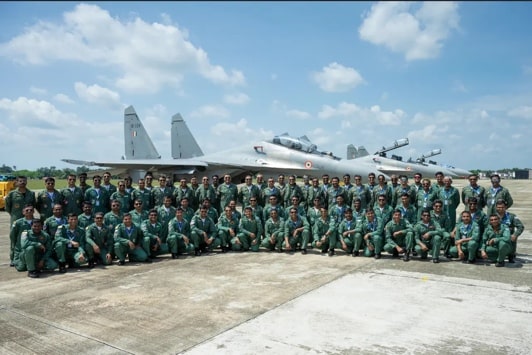
Exercise Udara Shakti
India and Malaysia are conducting a collaborative air exercise together.
Neelakurinji
- Neelakurinji, also known as Strobilanthes kunthiana, is a shrub that is famous for its massive blooming every 12 years.
- It has been classified as a vulnerable species on the IUCN Red List of threatened species.
- Neelakurinji is found in the Shola grasslands of the Western Ghats, including the Nilgiri hills, Palani hills, and the Eravikulam hills of Munnar, as well as the Shevaroy hills in the Eastern Ghats.
- The name Nilgiris, meaning blue mountains, is derived from the colors of the Neelakurinji flowers.
- The major threats to Neelakurinji include tea and softwood plantations, urbanization, and the invasion of exotic species like eucalyptus and black wattle.
Subduction Zone
- Japan has issued its first-ever megaquake advisory for the Nankai Trough in the country's Southwest Pacific Coast.
- Megaquakes are earthquakes that have a magnitude greater than 8.
- The Nankai Trough is an underwater subduction zone where the Eurasian Plate collides with the Philippine Sea Plate.
- In a subduction (or Benioff) Zone, the heavier/denser plate subducts below the lighter plate when two plates converge along the convergent margin.
- The location where the sinking of the heavier plate occurs is known as the subduction or Benioff Zone.
Saint Martin’s Island
- Reports suggest that the US was interested in establishing a military base on St. Martin's Island in Bangladesh.
- St. Martin's Island is a small coral island in the northeastern part of the Bay of Bengal.
- The island is also known as 'Narikel Jinjira' or Coconut Island, 'Daruchini Dwip' or Cinnamon Island, among other names.
- Originally part of the Teknaf peninsula, the island became separated due to submergence.
- In 1974, Bangladesh and Myanmar agreed that St. Martin's Island would be part of Bangladeshi territory.
- The island's geopolitical significance lies in its proximity to both Bangladesh and Myanmar.
Dysbiosis
- Misuse of antibiotics is linked to dysbiosis, which is an imbalance of microbial species and reduced diversity in bodily microbiomes.
- Dysbiosis results in a decrease in beneficial bacteria and an increase in potentially harmful bacteria.
- This imbalance disrupts immune function, leading to inflammation, immune system sensitization, and the development of autoimmune diseases.
Meteorite Shower
- The Perseid meteor shower began in July and reached its peak recently.
- Perseid meteors are remnants of the comet Swift-Tuttle.
- Meteorite showers are celestial events where multiple meteors enter Earth's atmosphere in a short timeframe.
- Meteors are rocks from space that enter Earth's atmosphere.
- The bright streaks seen during meteor showers are not rocks but rather glowing hot air.
- Meteor showers are typically named after a nearby star or constellation where the meteors are visible in the sky.
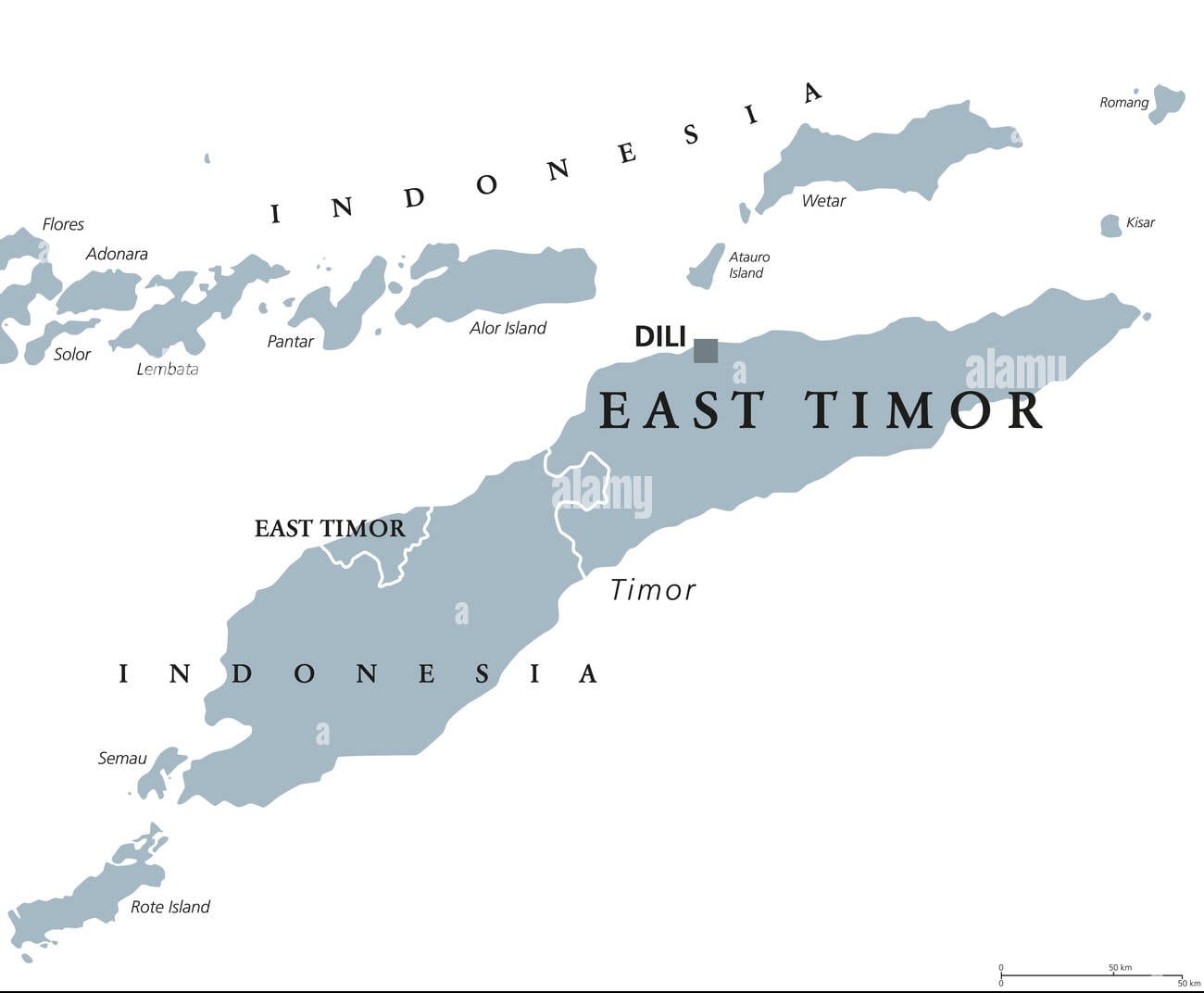
Timor Leste (Capital: Dili)
Indian President awarded highest civilian award in Timor-Leste
- Political features of Timor-Leste
- Island country in South-East Asia.
- Occupies eastern half of Timor island and nearby islands.
- Also known as East Timor due to location.
- Bounded by Timor Sea, Wetar Strait, Ombai Strait, and western Timor
- Geographical features of Timor-Leste
- Highest Point: Mount Tatamailau.
"PM Unveils 109 New Crop Varieties"
- ICAR's crop-improvement program focuses on developing new crop varieties and hybrids with better adaptability and higher yields.
- This program is an example of a "lab to land" initiative, where research in the laboratory is translated into practical applications in the field.
Strategies used in crop-improvement process
- Genomics-assisted selection: Using genetic information to select desirable traits in crops.
- Phenomics: Systematic measurement and analysis of qualitative and quantitative traits in crops.
- Conventional breeding: Traditional methods of breeding to improve crop characteristics.
- Biotechnology-based approaches: Using genetic engineering and genome editing to enhance crop traits.
Need of Crop Improvement
Managing Impact of Climate Change:
- Climate resilient seeds, such as Bt cotton, can produce good crops even in extreme weather conditions like heat waves and droughts.
- Climate resilient crops can help reduce crop losses caused by diseases and pests.
Food Security:
- Agricultural yields are expected to decrease by 16% by 2030, according to the World Economic Forum.
Nutritional Security:
- The government aims to promote biofortified crops by integrating them into programs like the Mid-Day Meal and PM Poshan Scheme to combat malnutrition in India.
- Biofortified crops are cost-effective as they do not require additional expenses to prepare enriched food grains, such as vitamin-A rich maize grains.
Raising Farmers Income:
- Utilizing high-yielding and adaptable crop varieties can lead to increased incomes for farmers.
About Biofortification
- Biofortification: Enhancing the nutritional value of food crops by increasing nutrient levels during plant growth, such as iron and zinc in wheat grains.
About Lab to Land programme
- Lab to Land programme: Facilitating the transfer of advanced agricultural technology from research institutions to farmers for practical application.
"PM JI-VAN Yojana Gets Cabinet Approval"
- Efforts are being made to improve strategies to meet ethanol blending goals by focusing on new technologies and feedstocks.
- The quantity of ethanol mixed with petrol has increased to more than 500 crore liters in 2022-23, with the current blending rate surpassing 15%.
- The government's objective is to achieve a 20% blending target by the conclusion of 2025-26.
Pradhan Mantri JI-VAN Yojana for 2nd Generation ethanol production
- Launched in 2019 to support development of 2G ethanol from surplus biomass and agricultural waste.
- Supported India's first 2G ethanol plant by Indian Oil Corporation at Panipat.
Key Changes approved for the JI-VAN Yojana
- Extension of implementation period by 5 years till 2028-29.
- Broadening scope to include biofuels from lignocellulosic feedstocks.
- Eligibility for "bolt on" plants and "brownfield projects".
Significance of the change
- Provides financial support to multiple sectors and stable income for farmers.
- Mitigates environmental pollution and strengthens India's energy security and self-reliance.
- Aligns with net-zero greenhouse gas emissions by 2070 and supports Make in India initiative.
Generation of Biofuels
- 1st generation: Derived from edible materials creating food security issues.
- 2nd generation: From non-edible materials like agricultural and forest residues.
- 3rd generation: From aquatic biomass such as algae.
- 4th generation: From Engineered plants and microorganisms.
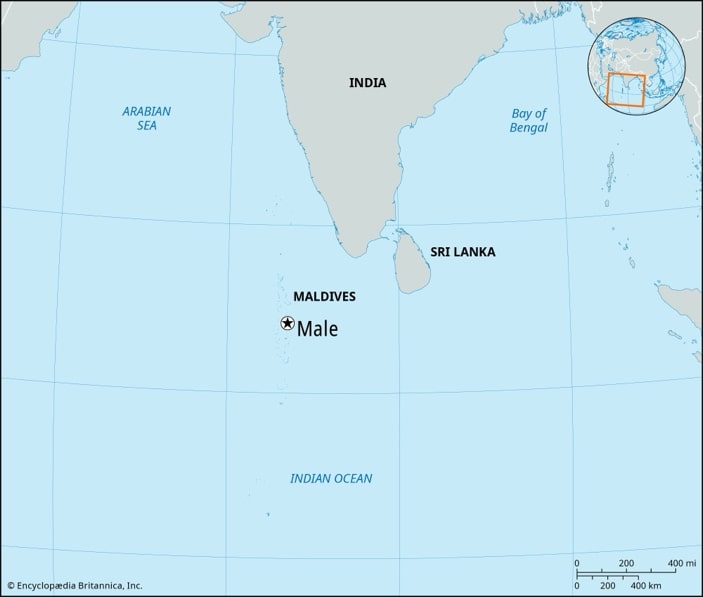
"Indian Minister Visits Maldives"
Outcomes of the visit
- Memorandum of Understanding (MoU) signed for the introduction of Unified Payments Interface (UPI) in Maldives.
- Inauguration of the Addu Reclamation and Shore Protection Project and Addu Detour Link Bridge Project.
- Review of progress on the India-assisted Greater Male Connectivity Project (GMCP) development project connecting Male with Villingili, Gulhifalhu, and Thilafushi.
Significance of Maldives for India
- Geo-economics: Maldives is strategically located along major commercial Sea lines of communication (SLOC) where about 50% of India's external trade and 80% of energy imports transit.
- Geopolitical importance: Maldives plays a crucial role in maintaining peace, stability, and prosperity in the Indian Ocean Region, aligning with India's Vision 'SAGAR' (Security and Growth for All in the Region) and the 'Neighbourhood First' policy.
- Defence cooperation: Both countries engage in Joint Exercises (Ex Ekuverin), Maritime Domain Awareness, and other security initiatives.
- Historical ties: India and Maldives share strong ethnic, linguistic, cultural, and religious connections.
Key Challenges in Bilateral relations
- Rising Chinese influence: Examples include the construction of the Sinamale bridge and agreements for military assistance to Maldives.
- Anti-India sentiments under the current regime: Calls for the withdrawal of Indian troops from Maldives and campaigns against India.
- Rise of Religious Radicalism in Maldives: Concerns about Pakistan-backed terror groups operating in the region.
"India and Nepal Sign MoU for Munal Satellite Launch Grant"
- The collaboration between Nepal and India highlights the increasing importance of space technology in diplomatic relations.
- Munal Satellite, developed in Nepal, aims to create a vegetation density database of the Earth's surface.
- The satellite will be launched using NewSpace India Limited's Polar Satellite Launch Vehicle.
About Space Diplomacy
- Space diplomacy involves using space science and technology to achieve foreign policy goals and enhance national space capabilities.
- Significance for space diplomacy for India:
- Global South Cooperation: India is investing in resources and consensus building for space exploration, such as the South Asia Satellite Project.
- National Security: The India-US space situational awareness agreement can provide access to U.S. radar and sensor network to protect India's space assets.
- International Cooperation and Capacity Building: Utilizing space resources for the growing population, like the UNispace Nanosatellite Assembly & Training by ISRO (UNNATI) to educate foreign engineers/scientists in space sciences.
- Conflict-Free Space: India is dedicated to using outer space for peaceful purposes and maintaining a conflict-free environment.
- Challenges include lack of private participation, limited deep space exploration missions, and few multilateral space partnerships.
India's International Cooperation in Space
- India has collaborated with the US on initiatives like the Artemis Accord and the NASA-ISRO Synthetic Aperture Radar (NISAR) satellite.
- Cooperation agreements with the EU involve sharing earth observation data from satellites.
- India and Russia are working together on the human spaceflight programme.
"UN Member States Reach Cybercrime Treaty Agreement"
- The UN has created a new treaty to improve the prevention and combat of cybercrime, specifically focusing on issues like child sexual abuse imagery and money laundering.
- The treaty will become active once 40 member nations have officially approved it.
- Currently, the Budapest Convention from 2001 is used as a model for cybercrime laws around the world.
Significance of Treaty
- Establishes a global-level legal framework for cybercrime and data access
- Establishes a global criminal justice policy to protect society against cybercrime
Key Provisions
- Domestic legislation: Requires states to create laws making it illegal to breach information and communications systems
- Protect children from sexual abuse: Requires states to criminalize the production, distribution, and sale of child sexual content online
- Human Rights: States must ensure that treaty obligations are consistent with international human rights law
- Data collection: Allows states to collect relevant data for convictions and compel service providers to provide incriminating information or documents
"Implementing Model Solar Village: PMSurya Ghar Guidelines"
Guidelines for Model Solar Village and PM-Surya Ghar: Muft Bijli Yojana.
Model Solar Village Guidelines:
- Aim to create one Model Solar Village in each District.
- Empower village communities to meet their energy needs.
- Eligibility: Village with population over 5,000.
- Central Financial Assistance: Rs 1 crore grant per village.
- Implementation Agency: State Renewable Energy Development Agency or nominated entity.
PM-Surya Ghar: Muft Bijli Yojana (2024) Details:
- Aim to install rooftop solar and provide free electricity for 1 crore households.
- Subsidy structure: 60% of solar unit cost for systems up to 2 kW, 40% for systems between 2 to 3 kW.
- Potential Benefits: 1 crore families expected to save Rs 15,000 crore annually, earn income from surplus power sales to DISCOMs.