
Daily Current Affairs UPSC 03 September 2024
Welcome to our daily current affairs blog post for UPSC aspirants! In today's edition, we will be discussing the most significant events and news updates that took place on 3rd September 2024. Staying updated with current affairs is crucial for UPSC preparation, as it not only helps you stay informed but also enhances your understanding of various subjects. So, let's dive into the important happenings of the day and explore their potential impact on the upcoming UPSC examinations.

E shram Portal
- E shram has garnered more than 30 crore registrations within just 3 years.
- It is designed to be a comprehensive solution for the unorganized workforce in the country.
- The goal is to establish a National Database of Unorganized Workers (NDUW) which will include migrant workers, construction workers, gig workers, and platform workers.
- The NDUW will be linked with Aadhaar for identification purposes.
- Launched by the Ministry of Labour & Employment, the aim of E shram is to streamline access to various social security schemes for unorganized workers such as Pradhan Mantri Jeevan Jyoti Bima Yojana, Pradhan Mantri Suraksha Bima Yojana, and Ayushman Bharat.
Investor Education and Protection Fund Authority (IEPFA)
- IEPFA has introduced a new toll-free number, 14453, to improve assistance for claimant inquiries.
- IEPFA operates under the Ministry of Corporate Affairs and was established according to the Companies Act, 2013.
- The organization is tasked with overseeing the Investor Education and Protection Fund (IEPF), which aims to protect investor interests by facilitating refunds for unclaimed dividends, shares, and matured deposits/debentures.
- IEPFA's initiatives are designed to promote financial literacy, protect investors' rights, and ensure transparency in the financial sector nationwide.
Cocoa
- Scientists are researching ways to grow cocoa in non-tropical regions and increase its resilience.
- Cocoa, also known as Theobroma cacao L., is a tropical and perennial crop primarily cultivated in Africa.
- In India, cocoa is mainly grown in the southern states.
- The crop is native to the Amazon region of South America.
- Cocoa requires an average rainfall of 1250-3000 mm per year, spread throughout the year.
- The optimal temperature for cocoa growth is around 25°C, with a range of 15-39°C.
- Cocoa is typically grown in clay loam and sandy loam soils.
- While cocoa can withstand flooding, it cannot tolerate stagnant or waterlogged conditions.
Geographic Information System (GIS)
- NHAI plans to monitor approximately 100 toll plazas using GIS software to improve traffic flow on National Highways.
- GIS is a technology that uses computers to map and analyze various aspects of the Earth, including physical features and events.
- GIS can display multiple types of data on a single map, including roads, structures, and plant life.
- Some examples of GIS systems in India include PARIVESH, e-Green Watch, Van Agni Geo-portal by MoEF&CC, and Gram Manchitra by Ministry of Panchayati Raj.
Glacial Lake Outburst Floods (GLOFs) Early Warning System (EWS)
- The government has started an Early Warning System (EWS) for 188 important lakes in the Indian Himalayan Region that are at risk of Glacial Lake Outburst Floods (GLOFs) after the 2023 Sikkim disaster.
- A team from the National Disaster Management Authority (NDMA) visited the first lake, Tenchungkha lake, in Sikkim as part of the GLOF EWS Mission.
- The delegation includes members from NDMA, ISRO, and the State Disaster Management Authority, who are conducting assessments on the ground for the GLOF EWS Mission and planning ways to reduce risks.
- The critical lakes that have been identified are situated in states like Uttarakhand, Arunachal Pradesh, Sikkim, Himachal Pradesh, Ladakh, Jammu and Kashmir, Meghalaya, Manipur, and Nagaland.
Buy (Indian) category
- The cabinet recently approved the procurement of 240 aeroengines for Su-30 MKI aircraft from Hindustan Aeronautics Limited.
- The engines will have over 54% indigenous content.
- The Buy (Indian) category refers to acquiring products from Indian vendors with at least 60% indigenous content on the cost basis of the contract price.
- Vendors in the Buy (Indian-IDDM) category must have indigenous design and at least 50% indigenous content to be eligible to participate.
Odisha famine of 1866
- The famine in Odisha, which killed around one-third of the total population, was also known as the 'Na-Anka Famine' during Gajapati Divyasinghadeva's ninth regnal year.
- The causes of the famine included the carelessness of British administrators, as well as natural and economic disasters.
- The famine occurred during the tenure of Thomas Edward Ravenshaw, who was the Commissioner of Odisha division at the time.
- In the aftermath of the famine, the Puri Canal or Coast Canal was built to connect the Hooghly River in West Bengal to the River Matai in Odisha.
- Thomas Edward Ravenshaw established vernacular schools in rural areas with a focus on the Odia language, and also converted the Cuttack Zilla School into Ravenshaw College.
Wood Wide Web
- Trees and plants have a network similar to the internet called the "Wood Wide Web" made up of underground fungal threads.
- This network, known as mycelium, connects plant roots and allows them to share nutrients and communicate through chemical signals.
- Just as we use the internet to communicate and order supplies, trees and plants use the Wood Wide Web to interact and support each other.
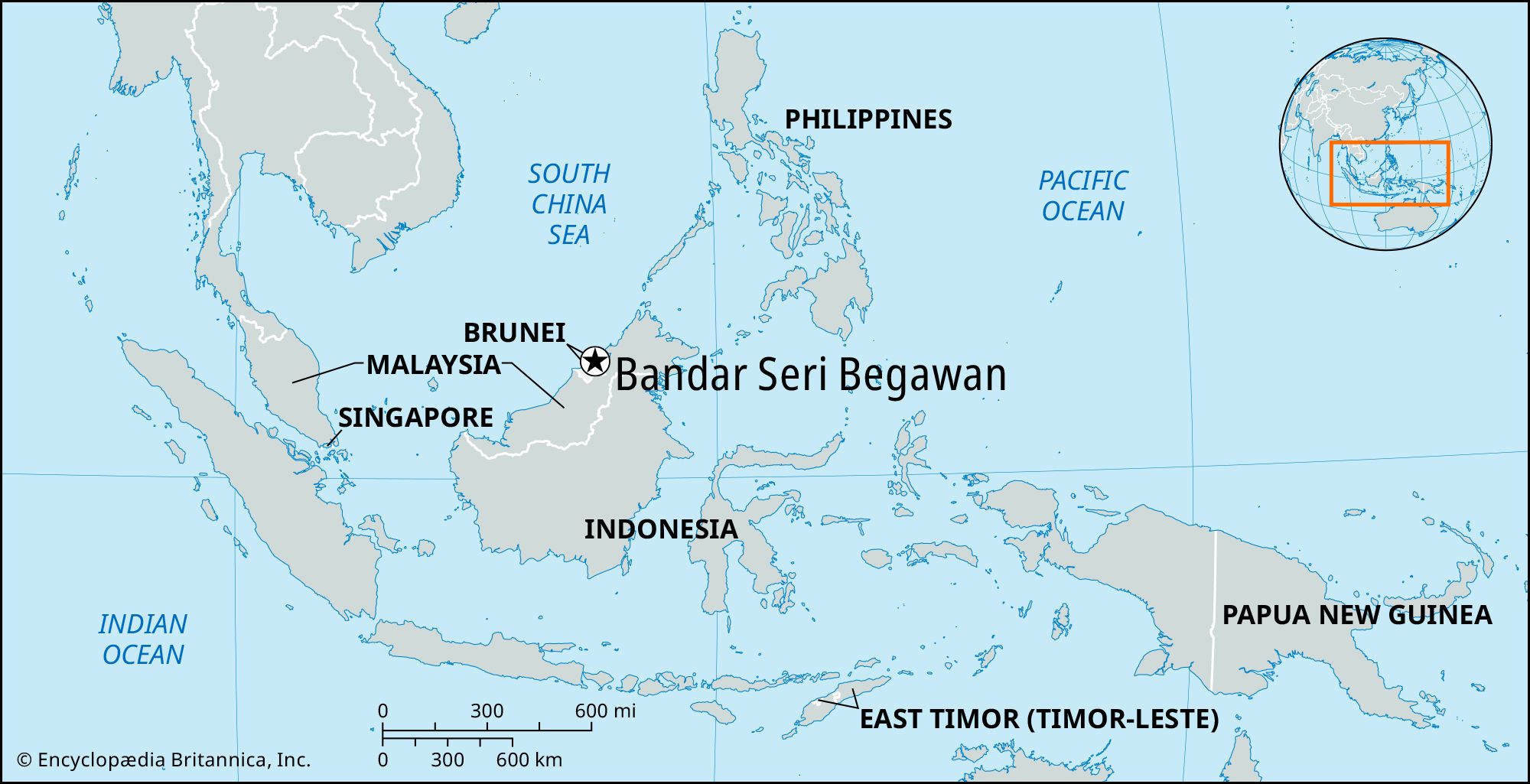
Brunei Darussalam (Capital : Bandar Seri Begawan)
The Prime Minister of India made history by undertaking the first-ever bilateral visit by an Indian Prime Minister to Brunei Darussalam.
Political Features
- Brunei Darussalam is located in Southeast Asia and consists of two unconnected parts on the northern coast of the island of Borneo.
- The country is bordered by the Malaysian state of Sarawak and has a northern coastline on the South China Sea.
- Brunei Darussalam is a member of the Commonwealth and ASEAN.
Geographical Features
- The country has a narrow coastal plain in the north and rugged hills in the south.
- The highest point in Brunei Darussalam is Pagon Peak.
- Major rivers in the country include Belait, Tutong, Brunei, and Pandaruan.
- The climate in Brunei Darussalam is equatorial and influenced by monsoon systems.
"Union Cabinet Approves Digital Agriculture Mission with Rs 2817 Crores Funding"
About DAM
- The umbrella scheme aims to support digital agriculture initiatives like creating Digital Public Infrastructure (DPI) and implementing the Digital General Crop Estimation Survey (DGCES).
- DPI is a digital system that helps countries provide economic opportunities and social services efficiently and securely.
- Three DPIs will be built under the mission, including AgriStack, Krishi Decision Support System, and Soil Profiling.
- AgriStack includes farmers' registry, geo-referenced village maps, and crop sown registry to provide farmers with a digital identity linked to state land records and livestock ownership.
- Krishi Decision Support System uses geospatial data, weather information, and groundwater availability to help farmers make informed decisions.
- Soil Profiling aims to create detailed Soil Profile Maps on a 1:10,000 scale for about 142 million hectares of agricultural land in the country.
Significance
- Facilitate quick and effective delivery of services and schemes to farmers.
- Create job opportunities for approximately 250,000 trained local youth and Krishi Sakhis.
- Improve value chains for agricultural inputs and post-harvest processes to enhance efficiency.
Other Initiatives to Promote Digital Technology in Agriculture
- National Agriculture Market (e-NAM): This is a nationwide electronic trading platform that offers digital services to traders, farmers, and mandis. It aims to streamline the agricultural market by providing a platform for transparent and efficient trading.
- National e-Governance Plan in Agriculture (NeGP-A): This initiative provides funds for projects that utilize modern technologies such as artificial intelligence, machine learning, and drones in the agricultural sector. The goal is to enhance productivity and efficiency in agriculture through the use of cutting-edge technology.
- Other initiatives: Kisan Call centers, mKisan portal & Mobile app, Direct benefit transfer under PM KISAN Scheme, etc. These initiatives aim to provide support and assistance to farmers through various digital platforms and services. They help in improving communication, access to information, and financial assistance for farmers across the country.
"New Semiconductor Unit Approved by Cabinet"
- The approved unit in Sanand, Gujarat will have a capacity of 60 Lakh chips per day.
- Additional units are being established in Dholera, Gujarat, Morigaon, Assam, etc. with a cumulative capacity of about 7 crore chips per day.
Why is India focussed on developing Semiconductor manufacturing?
Dependency on semiconductor imports in India
- Semiconductors are crucial components in modern technologies like smartphones, medical devices, and vehicles.
- India's increasing consumption of electronic devices is mainly met through imports.
- In 2019, India exported semiconductors worth US$ 0.33 billion but imported significantly more at US$ 4.65 billion.
Global diversification of semiconductor supply chain
- The semiconductor value chain has shifted due to pandemic disruptions and rising labor costs.
- Global producers are diversifying away from China to mitigate risks.
- Currently, 70% of the world's semiconductor manufacturing is concentrated in South Korea, Taiwan, China, the United States, and Japan.
About India Semiconductor Mission (ISM)
- ISM is a specialized and independent Business Division within the Digital India Corporation, serving as the nodal agency for schemes approved under the Semicon India Programme.
Semicon India Programme/Modified Programme for Semiconductors and Display Fab Ecosystem under MeitY
- Rs 76,000 crore has been approved for the development of semiconductor and display manufacturing ecosystem in India.
- Financial support will be provided to companies through schemes like Semicon India Future Design, Modified Scheme for setting up of Semiconductor Fabs, Modified Scheme for setting up of Display Fabs, and Modified Scheme for setting up of Compound Semiconductors/Silicon Photonics/Sensors Fab.
Cabinet greenlights seven farmer-focused schemes
- Seven schemes are included with a total expenditure of Rs 14,235 Crore:
- Mission for Digital Agriculture: Modeled after Digital Public Infrastructure.
- Crop science for food and nutritional security focuses on several key areas:
- Research and education in crop science.
- Management of plant genetic resources.
- Enhancing genetic traits in food and fodder crops.
- Improving pulse and oilseed crops.
- Enhancing commercial crop varieties.
- Studying insects, microbes, and pollinators for crop research.
- Enhancing Agricultural Education, Management, and Social Sciences: This initiative falls under the jurisdiction of the Indian Council of Agricultural Research (ICAR) and is in accordance with the New Education Policy 2020.
- Integration of Advanced Technologies: The program highlights the importance of incorporating cutting-edge technologies like Digital DPI, AI, big data, and remote sensing into agricultural education and management practices.
- Emphasis on Sustainable Practices: The initiative also places a strong emphasis on promoting natural farming techniques and developing strategies to enhance climate resilience within the agricultural sector.
- Focus on sustainable livestock health and production program
- Emphasis on animal health management and veterinary education.
- Dairy production and technology development highlighted.
- Management, production, and improvement of animal genetic resources.
- Emphasis on animal nutrition and small ruminant production and development.
- Sustainable development of horticulture involves the growth of various types of crops in different climates, such as tropical, sub-tropical, and temperate regions. This includes the cultivation of root, tuber, bulbous, and arid crops, as well as vegetables, floriculture, and mushrooms.
- Strengthening Krishi Vigyan Kendra is important for promoting agricultural knowledge and research.
- Natural resource management is crucial for ensuring the sustainability of agricultural practices and preserving the environment.
Significance of the schemes
- Get farmers ready to withstand climate change and ensure food security by 2047.
- Equip agriculture students and researchers to tackle present obstacles.
- Update agricultural research and education methods.
- Boost farmers' earnings from livestock, dairy, and horticulture.
WHO Releases Report on Road Safety in South-East Asia
The report presented at the 15th World Conference on Injury Prevention and Safety Promotion reveals that the South-East Asia Region accounts for 28% of global road traffic deaths, with an estimated 330,222 deaths.
Findings related to India
- In India, road traffic deaths in 2021 were estimated at 216,618, with a 2.1% change since 2010. Reported road traffic deaths were 153,972, with deaths of two-three wheelers drivers/riders constituting the highest at 45.1%. The road traffic deaths per 100,000 populations in India in 2021 were 15.4, higher than the global rate of 15.
Issues related to Road Safety in South-East Asia
- Fragmented Efforts: Due to the absence of an effective lead agency with relevant expertise and adequate resources.
- Poor Quality Infrastructure: Due to the absence of budgetary allocations for road safety and a structured system for road safety audits.
- Other issues include non-compliance of safe vehicle standards, inadequate emergency and trauma care systems, etc.
Recommendations for Road Safety
- Integrate road safety into other processes such as urban planning and environmental policy.
- Align road design with star ratings corresponding to International Road Assessment Programme standards.
- Other recommendations include implementing time-bound targets, strengthening the post-crash care system, and establishing dedicated data surveillance departments.
Road Safety Measures in India
- National Road Safety Policy (2010): Establishing road safety information databases and encouraging safer road infrastructure.
- Motor Vehicle (Amendment) Act, 2019: Creation of Motor Vehicle Accident Fund and implementation of Cashless Treatment Scheme during Golden Hour.
- Integrated Road Accident Database: An initiative of the Ministry of Road Transport and Highways to enrich accident databases.
- Other measures include road safety audits, the constitution of the National Road Safety Council, etc.
"Manipur Attacked by Grenade-Bearing Drones"
Manipur police has established a high-level committee to look into the recent drone bomb attack and develop strategies to prevent future incidents.
About Drone Technology
- Drone technology involves the use of unmanned aerial vehicles (UAVs) that can be controlled remotely or fly autonomously.
Security Implications of Drone Technology
- Drone Terrorism: Terrorist organizations find drones appealing due to their affordability, maneuverability, and payload capacity, making them potential tools for attacks.
- Surveillance and Intelligence Gathering: Drones are utilized for monitoring military installations, border areas, and sensitive government facilities, posing a threat to national security.
- Disruption of Critical Infrastructure: Drones can be used to carry out cyber-attacks, electronic jamming, or physical attacks on infrastructure networks, leading to potential disruptions.
- Cross-Border Smuggling and Trafficking: Drones are used for smuggling contraband, narcotics, and illegal weapons across borders, as seen in cases like Pakistan smuggling improvised explosives, weapons, and drugs.
- Privacy Concerns: Drones equipped with cameras raise privacy and security concerns for individuals and sensitive facilities such as nuclear plants, highlighting the need for regulations to address these issues.
Mitigating Drone-Related Threats
- Counter-drone technology is essential to neutralize unauthorized or malicious drones.
- Capacity building of security forces focusing on drone detection, identification, and response is crucial.
- Public-private partnerships can help in developing indigenous drone technology to enhance national capabilities.
Drone Regulations and Initiatives in India
- The Drone Rules 2021 categorize Indian airspace into Green, Yellow, and Red zones based on drone flying acceptability.
- The Drone Import Policy 2022 bans the import of foreign drones and allows the import of drone components.
- India's first AI-powered anti-drone system, Indrajaal, has been developed.
- The PLI Scheme for Drones and Drone Components aims to promote the manufacturing of drones and their components in India.