
Daily Current Affairs UPSC 25 and 26 August 2024
Welcome to our daily current affairs blog post for UPSC aspirants! In today's edition, we will be discussing the most significant events and news updates that took place on 25th and 26th August 2024. Staying updated with current affairs is crucial for UPSC preparation, as it not only helps you stay informed but also enhances your understanding of various subjects. So, let's dive into the important happenings of the day and explore their potential impact on the upcoming UPSC examinations.

Sonobuoys
- The US recently approved the potential sale of anti-submarine warfare Sonobuoys and related equipment to India.
- Sonobuoys are expendable, electro-mechanical Anti-Submarine Warfare (ASW) tactical sonar systems that transmit information about submarine activity.
- They use a transducer and a radio transmitter to record and transmit underwater sounds.
- There are three types of Sonobuoys: Passive sonobuoys, Active sonobuoys, and Special Purpose buoys.
- Passive sonobuoys use an underwater microphone to listen for sound energy from a target.
- Active sonobuoys use a transducer to send an acoustic signal and then listen for the return echo off an object.
- Special Purpose buoys provide additional information about the environment, such as water temperature or wave height.
Scrub Typhus
- The Chief Minister of Meghalaya recently tested positive for Scrub Typhus.
- Scrub Typhus, also known as bush typhus, is caused by the bacteria Orientia tsutsugamushi.
- The disease is spread to people through bites of infected chiggers, which are larval mites.
- Symptoms of Scrub Typhus include fever, headache, body aches, rash, and a scab-like region at the chigger bite site (eschar).
- There is currently no vaccine available for scrub typhus.
- Most cases of scrub typhus occur in rural areas of South East Asia, China, the Indian subcontinent, and Northern Australia.
Schedule M of Drugs and Cosmetics Act, 1945
- Pharmaceutical companies requested more time to comply with the updated manufacturing practices rules in Schedule M of the Drugs and Cosmetics Act, 1945.
- The Union Ministry of Health and Family Welfare revised the rules under Schedule M in January 2024 to align with global Good Manufacturing Practices (GMP) recommendations, particularly those of the WHO.
- Schedule M outlines the Good Manufacturing Practices (GMP) for pharmaceutical products.
- GMPs are essential standards that ensure quality in a product by controlling materials, methods, machines, processes, and more.
- GMP was initially included in Schedule M in 1988.
The Great Nicobar Project
- The Environment Minister has stated that the Great Nicobar project will not harm the tribal population.
- The Great Nicobar project is considered strategically important for national defense, involving a port, airport, power plant, and township.
- The project is estimated to cost Rs 72,000 crore.
- The transhipment port has potential due to its strategic location near international shipping routes.
- Safeguards are in place to protect the Shompen tribe, with provisions for a net increase in tribal reserve land.
Marshyangdi River
- A tourist bus accident resulted in the deaths of at least 14 Indian individuals after plunging into the Marshyangdi River.
- The Marshyangdi River is a Himalayan river in Nepal that is approximately 150 km long and is fed by snow.
- This river is a significant tributary of the Gandaki River, which eventually meets the Ganga river near Patna at Hajipur.
- In the plains of Nepal, the Gandaki River is known as the Narayani, while in India it is called the Gandak.
- The Marshyangdi River is popular for river rafting activities and has been the site of various hydro-projects.
Atacama Salt Flat
- Researchers at the University of Chile discovered that the Atacama salt flat in Chile is sinking because of lithium brine extraction.
- The Atacama Salt Flat, also known as Salar de Atacama, is the largest salt deposit in Chile.
- Beneath its rough white surface lies a large salt lake.
- The lake under the salt flat holds one of the world's largest lithium reserves.
- Located in Chile's Atacama Desert, which is considered one of the driest places on Earth.
- The northern part of the basin is the San Pedro River delta.
Sonoluminescence
- Pistol shrimp from the Alpheidae family create light through Sonoluminescence by snapping their claws quickly.
- Sonoluminescence is the process of generating light by exposing liquids to ultrasonic waves.
- This phenomenon occurs when bubbles created by cavitation in liquids interact with strong sound waves.
- The rapid expansion and contraction of bubbles caused by the alternating high and low pressure of sound waves leads to a significant increase in temperature, ionization of gases inside the bubble, and the emission of light energy.
Pradhan Mantri Janjati Adivasi Nyaya Maha AbhiyaN (PM-JANMAN)
- The Ministry of Tribal Affairs is conducting a countrywide initiative called PM-JANMAN to provide essential amenities like safe housing and clean drinking water to PVTG households and settlements within three years.
- The campaign targets 75 PVTG communities in 18 States and 1 UT with a total budget of Rs.24,104 Cr.
- It includes 11 key interventions carried out by 9 Ministries, including the construction of Pucca houses and connecting roads by the Ministry of Rural Development.
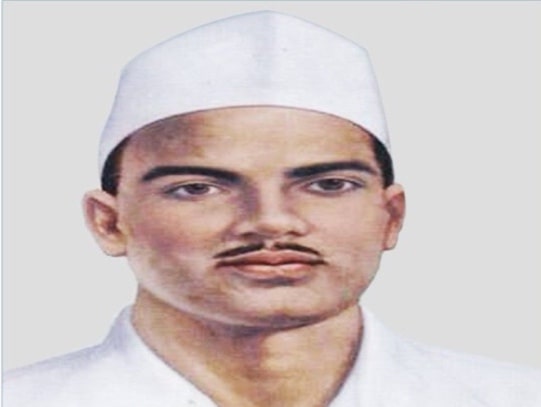
Shivaram Hari Rajguru (1908 - 1931)
Remembering Shivaram Rajguru on his 116th Birth Anniversary.
Shivaram Hari Rajguru:
- Born in Khed village near Pune, Maharashtra.
- Member of the Hindustan Socialist Republican Association (HSRA).
Key Contributions:
- Participated in the assassination of British officer John Saunders in 1928.
- Hanged by the British Government along with Bhagat Singh and Sukhdev in 1931.
- March 23 observed as 'Shaheed Diwas' to honor their sacrifice.
Values:
- Patriotism, Courage, Selflessness, etc.
"Cabinet Approves BioE3 Policy"
- BioE3 Policy aims to promote high-performance biomanufacturing in India by focusing on strategic sectors.
- High-performance biomanufacturing involves using advanced biotechnological processes to manufacture bio-based products.
Salient Features of BioE3 Policy
- The policy supports innovation-driven R&D and entrepreneurship.
- It accelerates technology development and commercialization through Biomanufacturing & Bio-AI hubs and Biofoundry.
- Prioritizes regenerative bio-economy models for green growth.
- Facilitates the expansion of India's skilled workforce and job creation.
Benefits of BioE3 Policy
- Strengthens Government initiatives like 'Net Zero' carbon economy and 'Lifestyle for Environment (LiFE)'.
- Promotes 'Circular bio-economy' for accelerated 'Green Growth' in India.
- Aims to create a more sustainable, innovative, and globally responsive future, laying down the bio-vision for Viksit Bharat.
Indian Biotechnology Sector Overview
- Valued at $151.1 billion in 2023, projected to reach $300 billion by 2030.
- India holds a 3% share of the global biotechnology industry, ranking third in Asia and among the top 12 biotech destinations worldwide.
- Key initiatives include the National Biopharma Mission and financial support from the Biotechnology Industry Research Assistance Council.
Six Thematic Sectors
- Chemicals and enzymes derived from biological sources.
- Nutritious foods and innovative proteins.
- Targeted biotherapeutic treatments.
- Agriculture practices that can withstand climate challenges.
- Capturing and using carbon emissions.
- Cutting-edge research in marine and space exploration.
Anticipatory Bail Allowed under SC/ST Act: SC
- The Supreme Court clarified that the bar on anticipatory bail under Section 18 of the SC and ST Act only applies if a prima facie case under the Act is established against the accused.
- Section 18 of the Act specifically states that anticipatory bail under Section 438 of the CrPC does not apply to cases involving offences under the SC and ST Act.
Key Highlights of the Judgement
- The Court emphasized that simply insulting a member of SC or ST is not considered an offence under the Act unless the intention to humiliate based on caste identity is proven.
- Only intentional insults or intimidation stemming from entrenched social norms like untouchability or caste superiority are considered offences under the Act.
Anticipatory Bail
- Anticipatory bail is a directive from the High Court or Court of Session to release a person on bail if they are at risk of arrest for a non-bailable offence.
- The provisions related to anticipatory bail are outlined in Section 438 of the CrPC, and under reformed criminal laws, Section 482 of the Bhartiya Nagarik Suraksha Sanhita (2023) contains relevant provisions for anticipatory bail.
SC and ST (Prevention of Atrocities) Act, 1989
- The Act aims to prevent offences against members of SCs/STs, establish Special Courts for trial of such offences, and provide relief and rehabilitation for victims.
- Salient features:
- The person being accused cannot belong to the SC/ST community.
- Crimes under this law include hiring SC/ST members for manual scavenging, dedicating SC/ST women as devadasis, and denying their customary rights.
- The law also includes penalties for public servants who neglect their duties under the Act, even if they are not SC/ST members.
"End of Left Wing Extremism by March 2026: Home Minister"
- The Union Minister for Home Affairs announced during a press conference that Left Wing Extremism (LWE) will be eliminated from the country by March 2026.
- The Naxal insurgency in India, also known as LWE, originated in 1967 in Naxalbari, West Bengal, and was influenced by Maoist beliefs that called for the violent overthrow of the government.
Current Status of Left Wing Extremism in India
- LWE-affected districts have decreased from 96 in 2010 to 38 districts across 9 states.
- The number of most LWE affected districts has reduced to 12 in 2024 from 35 in 2018.
Measures to Combat Left Wing Extremism in India
- The National Policy and Action Plan (2015) led to the development of the operational strategy 'SAMADHAN' which includes Smart leadership, Aggressive strategy, Motivation and training.
- Security-related measures such as the Security Related Expenditure scheme, Scheme for construction of Fortified Police Stations, and redeployment of CRPF Battalions have been implemented.
- Offensive strategies like joint operations, financial choking, and establishment of a separate vertical within NIA for investigation have been put in place.
- Developmental interventions like the Civic Action Programme, Road Connectivity Project, Eklavya Model Residential Schools, and Aspirational District Programme have been initiated.
Factors Contributing to the Persistence of Left Wing Extremism
- Socio-economic factors such as land alienation, social exclusion based on castes, and sub-optimal access to basic amenities like education and healthcare play a role.
- Governance issues like ineffective implementation of Forest Rights Act and PESA Act, as well as state-highhandedness reflected in policies like Salwa Judum, contribute to the persistence of LWE.
- LWE strategies including the exploitation of local grievances, deep roots in local communities, and the ideological appeal of LWE also contribute to its persistence.
"Union Cabinet Approves UPS"
- The effective date of the proposal is April 1, 2025, as per the recommendations of the T. V. Somanathan Committee (2023).
- The UPS aims to combine the benefits of both the Old Pension Scheme (OPS) and the New Pension Scheme (NPS).
Key Features of Unified Pension Scheme (UPS)
Assured Pension under UPS
- 50% of the average basic pay drawn over the last 12 months prior to superannuation for a minimum qualifying service of 25 years.
- Proportionate pension for a lesser service period (minimum service of 10 years).
- In OPS, 50% of last drawn salary is considered instead of the average of 12 months, while NPS has no assured pension.
Assured Family Pension and Minimum Pension under UPS
- On demise, family pension amounting to 60% of the employee's pension before demise.
- Assured minimum pension of ₹10,000/month for a minimum service of 10 years, increased from ₹9,000/month under OPS and NPS.
Inflation Indexation and Lumpsum Payment under UPS
- Inflation indexation in the form of Dearness Relief based on All India Consumer Price Index for Industrial Workers (AICPI-IW), similar to service employees (similar to OPS).
- Lumpsum payment on superannuation in addition to gratuity, 1/10th of monthly salary + Dearness Allowance for every completed six months of service, without reducing the quantum of assured pension.

"PM attends 'Lakhpati Didi Sammelan' in Jalgaon"
Certificates for 1.1 million new Lakhpati Didis and ₹2,500 crore Revolving Fund released
Lakhpati Didis
- Lakhpati Didis are Self-Help Group (SHG) members earning an annual household income of Rupees One Lakh or more.
- SHGs are informal groups formed to provide mutual support and address common problems.
- Lakhpati Didis are a result of the Deendayal Antyodaya Yojana – National Rural Livelihoods Mission (DAY-NRLM).
- There are currently over 10 million Lakhpati Didis as of June 30, 2024.
- The target for Lakhpati Didis has been increased from 2 crore to 3 crore in the Interim Budget 2024-25.
Challenges faced by Women-led SHGs
- Lack of knowledge and guidance on finances and government schemes
- Poor marketing strategies and product quality issues
Measures to promote SHGs
- Deen Dayal Antyodaya Yojana – National Rural Livelihoods Mission.
- Revolving Fund (RF) and Community Investment Fund (CIF) provided to SHGs
- Start-up Village Entrepreneurship Programme (SVEP) supports SHGs in setting up small enterprises in the non-farm sector.
- SHG-Bank Linkage Program by NABARD for financial inclusion of SHGs
- SARAS Collection on Government e-Marketplace serves as a Store Front for marketing SHG products.
"Union Cabinet Approves 'Vigyan Dhara' Scheme"
The Union Cabinet recently approved the continuation of three umbrella schemes, which have been merged into a unified central sector scheme called 'Vigyan Dhara' by the Department of Science and Technology (DST).
About Vigyan Dhara Scheme
- Objective of Vigyan Dhara Scheme: The main objective of the Vigyan Dhara scheme is to promote capacity building in science and technology, research, innovation, and technology development to strengthen the Science, Technology, and Innovation ecosystem in India.
- Components of Vigyan Dhara Scheme: The scheme consists of three broad components: Science and Technology (S&T) Institutional and Human Capacity Building, Research and Development, and Innovation, Technology Development, and Deployment.
- Financial Outlay: The scheme has an outlay of ₹10,579.84 crore during the 15th Finance Commission period from 2021-22 to 2025-26.
- The research and development component of the scheme will be aligned with the Anusandhan National Research Foundation (ANRF), which was established under the ANRF Act, 2023 to promote R&D and foster a culture of research and innovation in India.
- Significance of the Scheme
- The merger of schemes under Vigyan Dhara will enhance efficiency in fund utilization and establish synchronization among sub-schemes/programs.
- It will also contribute to building a critical human resource pool to strengthen the science and technology landscape in India and expand the research and development base of the country to improve the Full-Time Equivalent (FTE) researcher count.