
Discuss the evolution of the Himalayas. Illustrate your answer with suitable labelled sketches. IAS 2024, 15 Marks
Discuss the evolution of the Himalayas. Illustrate your answer with suitable labelled sketches. IAS 2024, 15 Marks

Introduction:
The Himalayas, the highest mountain range in the world, have been formed through a complex process of tectonic plate movements and geological events over millions of years. The evolution of the Himalayas is a fascinating story of the Earth's dynamic forces at work.
Evolution of the Himalayas
The Himalayas, one of the youngest mountain ranges in the world, were formed due to the collision of the Indian Plate with the Eurasian Plate. This tectonic process began during the Late Cretaceous period and continues to evolve.
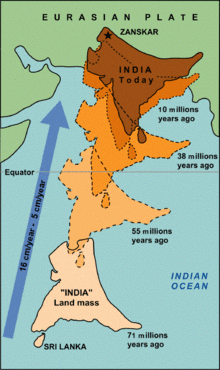
Key Stages of Evolution
- Pre-Collision Stage (Pre-70 Million Years Ago)
- Tethys Ocean: A vast ocean existed between the Indian Plate and the Eurasian Plate.
- Subduction: The Indian Plate moved northward, subducting beneath the Eurasian Plate.
- Initial Collision Stage (70–55 Million Years Ago)
- Continental Collision: The Indian Plate collided with the Eurasian Plate, causing the closure of the Tethys Ocean.
- Uplift Begins: Initial uplift of sediments deposited in the Tethys Ocean.
- Main Orogeny (55–23 Million Years Ago)
- Formation of Major Himalayan Ranges:
- Inner Himalayas (Greater Himalayas) formed first due to the thrusting and folding of deeper sediments.
- Middle Himalayas (Lesser Himalayas) uplifted subsequently.
- Major Fault Systems: Formation of Main Central Thrust (MCT) and Main Boundary Thrust (MBT).
- Formation of Major Himalayan Ranges:
- Post-Orogeny and Continued Uplift (23 Million Years Ago–Present)
- Ongoing Collision: Indian Plate continues to move northward, causing further uplift.
- Formation of Outer Himalayas (Siwaliks): Erosion and deposition from older ranges led to the creation of foothill ranges.
- Seismic Activity: Continued tectonic activity leads to earthquakes and further shaping of the region.
Conclusion:
The evolution of the Himalayas is a testament to the power of tectonic forces and geological processes in shaping the Earth's surface. The ongoing collision of the Indian Plate with the Eurasian Plate continues to shape the Himalayas and the surrounding regions, making it one of the most dynamic and geologically active areas on the planet.