
Describe the Cretaceous volcanic province in India. UPSC 2024, 10 Marks
Describe the Cretaceous volcanic province in India. UPSC 2024, 10 Marks

Introduction:
The Cretaceous volcanic province in India is a significant geological feature that spans across several states in the country. This volcanic province is known for its unique rock formations and volcanic activity during the Cretaceous period.
Cretaceous Volcanic Province in India
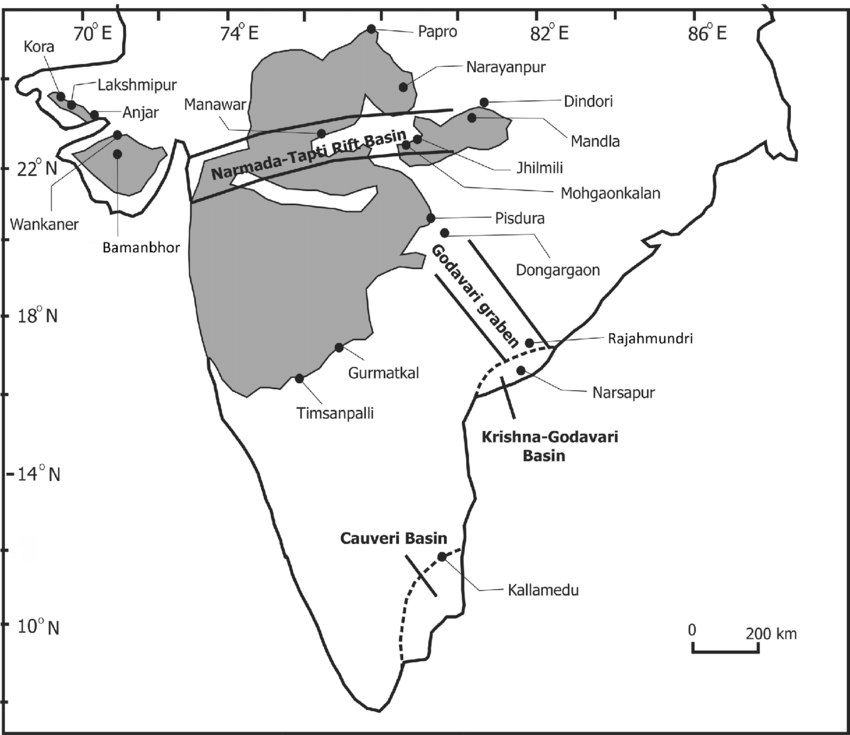
- The Cretaceous period is a significant era in Earth's geological history, marking notable events like widespread volcanism, transgression-regression cycles, and the extinction events associated with the K-T (Cretaceous-Tertiary) boundary.
- In India, the Cretaceous volcanic province is dominated by the Deccan Traps, which are among the largest volcanic features in the world.
- Deccan Traps
- Formation:
- The Deccan Traps were formed due to intense volcanic activity at the end of the Cretaceous period, around 65 million years ago.
- The lava flows covered a vast area of approximately 1.5 million square kilometers during their peak.
- Geographical Extent: Today, the remnants of the Deccan Traps cover around 500,000 square kilometers, mainly in western and central India, including Maharashtra, Gujarat, Madhya Pradesh, and parts of Karnataka.
- Lithology:
- Composed primarily of basaltic lava flows, these formations exhibit layers with distinctive trap structures (flat-topped and step-like).
- The traps are interspersed with sediments containing fossils, providing insights into the paleoenvironment.
- Thickness: The thickness varies significantly, with some regions exceeding 3,000 meters, especially along the western margins.
- Formation:
- Significance of Deccan Volcanism
- Mass Extinction Events:
- The timing of Deccan volcanism is closely linked to the Cretaceous-Paleogene (K-Pg) mass extinction event.
- It is believed that massive lava flows, coupled with greenhouse gas emissions, played a role in the extinction of numerous species, including non-avian dinosaurs.
- Paleoclimate Impact: Emissions of CO₂ and SO₂ during eruptions likely caused rapid climatic shifts, including acid rain and global cooling followed by warming.
- Economic Resources:
- The weathered basalts of the Deccan Traps contribute to the formation of fertile black cotton soil (regur).
- They also host significant deposits of zeolites, quartz, and other minerals.
- Mass Extinction Events:
- Associated Features
- Intertrappean Beds: These are sedimentary layers deposited between lava flows, preserving fossils of flora and fauna, which provide valuable paleoenvironmental records.
- Volcanic Activity and Rift Zones: The volcanism is associated with the tectonic movements of the Indian Plate, including its separation from Madagascar and its rapid northward drift.
- Challenges in Study
- Precise correlation between individual lava flows.
- Assessing the exact role of Deccan volcanism in the K-Pg boundary extinctions.
Conclusion:
The Cretaceous volcanic province in India is a fascinating geological feature that provides valuable insights into the Earth's history and past volcanic activity. Its unique rock formations and volcanic features make it a significant area of study for geologists and researchers.