
HUMAN ECOLOGICAL ADAPTATIONS | ENVIRONMENTAL GEOGRAPHY Optional for UPSC
HUMAN ECOLOGICAL ADAPTATIONS | ENVIRONMENTAL GEOGRAPHY Optional for UPSC

Introduction
- Ecological adaptations are the various ways in which humans have adapted to their environments over time.
- Adaptations show how humans have adapted to their ecological surroundings, facilitating survival and success in different environments.
Forms of adaptations
1. Physiological Adaptations / Biological adaptations:
- Thermoregulation: Humans adapt to different climates through sweat production, blood vessel dilation/constriction. Example: Sweating in hot environments.
- Altitude adaptation: High-altitude populations develop increased lung capacity, elevated red blood cell count. Example: Tibetans have adapted to high-altitude living.
- Skin pigmentation: Darker skin protects against UV radiation in sunny regions, while lighter skin allows for vitamin D synthesis in low UV regions. Example: Indigenous populations in Africa and Europe, respectively.
- Body shape: Populations in colder climates have stockier builds and shorter limbs to conserve body heat.
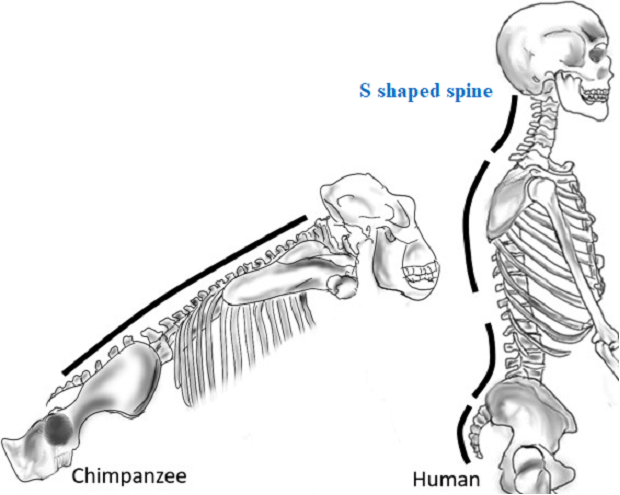
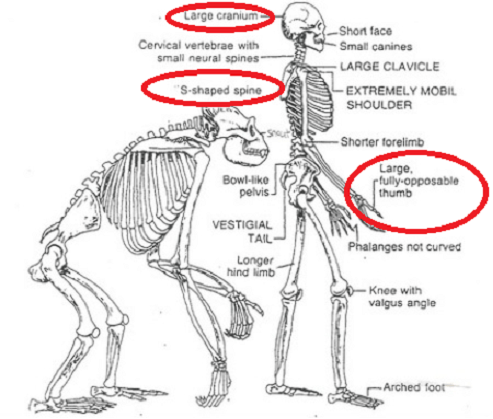
- Transformation of Human: Human is transformed from ape to hominid to homo sapiens. In this process, following adaptations have taken place:
- S shaped spins: erected posture.
- Bipedalism: It is a type of locomotion, which involves movement on two feet.
- Opposite thumbs: It help to hold the thumb.
- Eyes in frontal lobe and stereoscopic vision: It helps in better depth perception.
- Dental structure: It helps in omnivorous diet.
- Intellect level: Cranial capacity is large.
2. Cultural Adaptations:
- Clothing and shelter: Humans use clothing and shelter to protect against environmental elements. Example: Inuit people using fur clothing and igloos in the Arctic.
- Food preservation and storage: Preservation techniques like drying, smoking, and canning ensure food supply throughout the year. Example: Ancient Egyptians preserving food through mummification.
- Agricultural practices: Transition from hunting-gathering to farming, leading to increased food production. Example: The emergence of agriculture in the Fertile Crescent.
- Nomadic herding: Some societies practice nomadic herding to move livestock based on seasonal resource availability.
3. Behavioral Adaptations:
- Social cooperation: Humans form complex social structures for cooperation and resource sharing. Example: Division of labor in hunter-gatherer societies.
- Fire control and use: Harnessing fire for warmth, protection, and cooking. Example: Early humans using fire for cooking food.
- Tool use: Crafting and utilizing tools for various tasks. Example: Early humans using tools for hunting and gathering.
4. Technological Adaptations:
- Irrigation systems: Sophisticated irrigation systems were created to sustain agriculture in arid regions, such as ancient systems in Mesopotamia or modern ones like the Qanat system in Iran.
- Tools and weapons: Humans create tools to exploit resources. Example: Fishing nets for aquatic environments.
- Transportation: Humans develop transportation for resource acquisition. Example: Boats for water travel.
5. Nutritional Adaptations:
- Lactose tolerance: Some populations can digest lactose into adulthood. Europeans, who historically practiced dairy farming, are often lactose tolerant.
- High-altitude adaptation: Populations at high altitudes have increased lung capacity and produce more red blood cells to cope with lower oxygen levels. Andean people are an example.
- Food preferences: Humans adapt diets based on local food availability. Example: Inuit communities with a diet rich in fish and marine mammals.
6. Social Adaptations:
- Division of labor: Humans establish roles and specialization. Example: Nomadic pastoralist societies with different livestock-related tasks.
- Knowledge sharing and cultural transmission: Humans pass on adaptive practices. Example: Traditional farming techniques passed down through generations.
Thinkers' Perspective on Human Ecological Adaptations:
1. Cultural Ecology Perspective:
- Focuses on the interaction between humans and their environment, considering the influence of culture on adaptations.
- Example: The Inuit people's knowledge of ice conditions and hunting techniques in the Arctic.
2. Biological Evolutionary Perspective:
- Emphasizes genetic and biological factors in human adaptations.
- Example: The Bajau people's larger spleens for free diving.
3. Historical Materialism Perspective:
- Considers socio-economic systems and historical development in human adaptations.
- Example: Ancient Mesopotamian irrigation systems driven by the need for surplus food.
4. Systems Theory Perspective:
- Views adaptations as complex interactions between humans, environment, and systems.
- Example: Permaculture's sustainable agricultural practices and resource efficiency.
5. Postcolonial Perspective:
- Examines adaptations in the context of colonialism, globalization, and power structures.
- Example: Indigenous communities in the Amazon rainforest facing challenges due to deforestation.
Adaptation: Darwinism vs. Lamarckism
Darwinism:
- It is a theory of evolution by Charles Darwin in his seminal work, "The Origin of Species by Means of Natural Selection" (1872).
- Adaptation refers to the dynamic evolutionary process of natural selection that enables organisms to fit better into their environment, ultimately enhancing their evolutionary fitness.
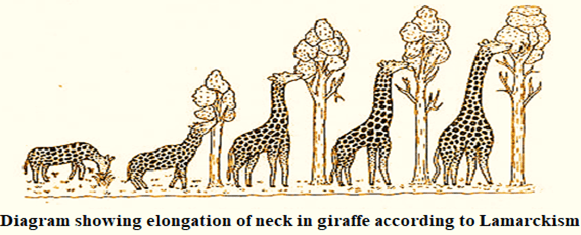
- Example: A classic example of adaptation is the long neck of giraffes, which evolved to help them reach leaves on tall trees for food, giving them a competitive advantage in their habitat.
Lamarckism:
- Lamarckism, also known as Lamarckian inheritance, is a theory of evolution proposed by Jean-Baptiste Lamarck.
- This theory suggests that organisms have a tendency to become more complex and progress up a ladder of development.
- Lamarck also proposed the influence of circumstances, such as use and disuse of certain organs or traits.
- Example: According to Lamarckism, if a person continuously uses their muscles through physical activities, their offspring may inherit stronger muscles compared to individuals who lead a sedentary lifestyle.
Inheritance of Acquired Characteristics:
- Lamarckism postulates that physical changes acquired by organisms during their lifetime, such as the development or degeneration of specific organs or traits due to increased use or disuse, can be passed on to their offspring.
- This concept is also referred to as the inheritance of acquired characteristics or soft inheritance.
- Example: If a parent bird with a longer beak constantly uses it to extract nectar from flowers, Lamarckism suggests that its offspring may inherit a slightly longer beak as a result of this acquired characteristic.

- As per evolutionary biologist Theodosius Dobzhansky, “Adaptation is the evolutionary process whereby an organism becomes better able to live in its habitat or habitats”.
Human Ecology
- Human ecology is the study of the relationship between humans and their natural, social, and built environments.
- To survive, all societies must adapt to the possibilities and constraints presented by the environment for them.
- Humans live in a greater variety of habitats than any other species. Hence, humans have adapted to a grater number of environmental conditions.
- Human’s ability to modify the environment is the major factor that has allowed us to occupy the diverse ecosystems.
- Human adaptation involves both biological and behavioral mechanisms.

Adaptation
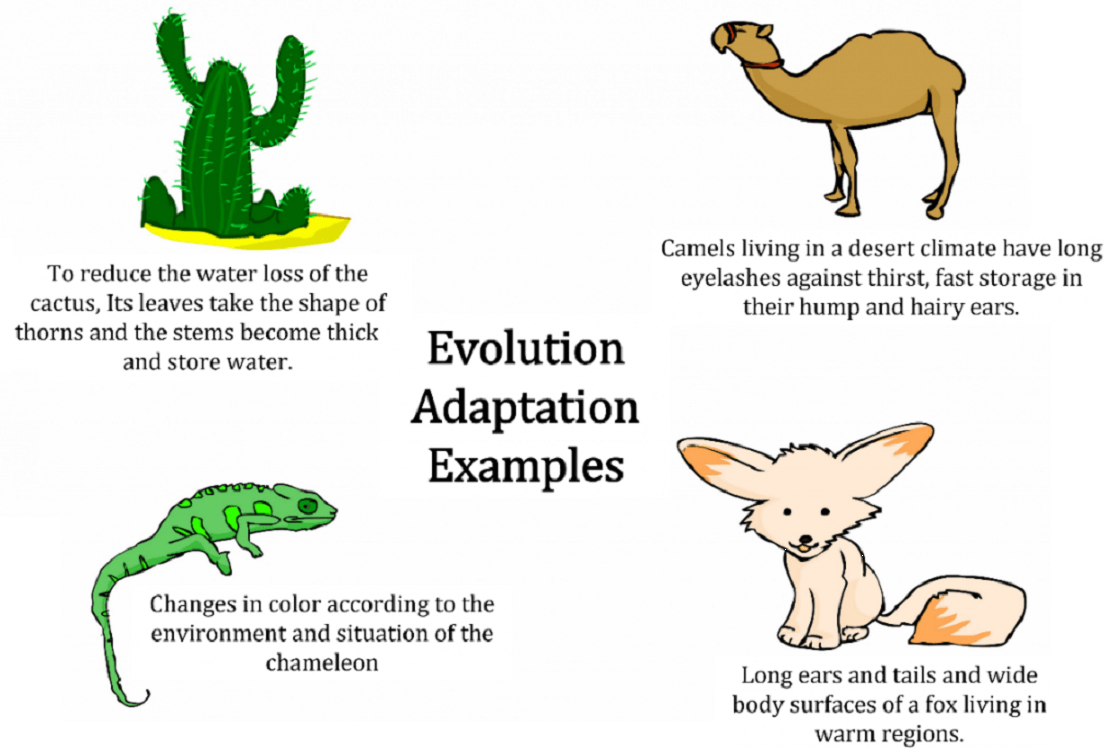
- Adaptation is the process by which a species becomes fitted to its environment.
- Human beings, like any other species, are exposed to changes in environmental conditions. Survival depend upon the ability of humans to tolerate change. Such ability of humans to adjust to the shifting condition in their environment is called human adaptation.
- Adaptation is the result of natural selection’s acting upon heritable variation over several generations.
- The general meaning of adaptation is how the species changes its body structure and behavior to better suit the environment.
- Adaptation leads to evolution.
Effect of environment on Human
The environment affects man through
- Biophysical limitations.
- Behavioral controls.
- Resource availability.
1. Biophysical Limitations
- The study of reactions of human body to changes in the atmospheric environment is known as 'human biometeorology'.
- According to M. Bates (1966) three levels of climatic environment affect human behaviour viz.
- Microclimate: It represents weather conditions surrounding an individual organism.
- Ecological climate or ecoclimate: It represents weather elements of the habitat of the organisms.
- Geographical climate or geoclimate: It is the weather conditions of larger areal unit and longer temporal span.
- Biologically, the human body can function properly only in certain environmental conditions.
- Micro-climate affects leisure, recreation, comfort etc.
- Certain non-infectious diseases and medical disorders have been correlated with environmental factors such as geochemistry of rocks, soils and water.
- Concentration of a few trace minerals in the rocks, soils and water in the Uttarakhand Himalaya causes stomach disorders through diarrhoea, dysentery etc.
- M. Cole (1971) has shown correlation between certain forms of cancer and cardio-vascular troubles & geochemical properties of soils.
- Certain diseases and illnesses have been related to atmospheric conditions. Eg. Diphtheria and jaundice are more prevalent during winter whereas measles, influenza and chicken pox are most common in spring in Switzerland (J.E. Hobbs, 1980).
2. Behavioral Controls
- Environment influences the thoughts, ideologies and culture of human being.
- Even the social, economic and political behaviour is influenced to certain extent by man's perception of environmental factor and his responses to these factors.
- Frequency and magnitude of extreme natural events influence man's perception of natural environment. These decide his reactions and responses to these events.
3. Resource Availability
- The richness or poorness, quality and quantity and above all the availability of renewable and non-renewable resources decide the type of human activities, economic viability, social organisations, political stability, international relations etc.
- Very rich reserves of mineral oil in the Middle East are the main reason for political instability in the gulf countries.
- The inter-state water disputes are because of location of rivers in more than one country.
Adaptation response in Human
Humans normally respond to environmental stresses in four ways:
1. Genetic changes
- It is the changes in the genetic makeup of populations that come about over generations because of natural selection.
- This is a permanent adaptation.
- These adaptations usually take many generations to become widespread in a population.
2. Acclimatization
- Acclimatization is the process in which an individual organism adjusts to a change in its environment, in a short period of time, and within the organism's lifetime.
- Although the ability to undergo acclimatization has a genetic basis, the actual response does not occur unless there is an environmental stress.
- These are a less permanent type of adaptation and is reversable.
- Ex: Tanning in response to ultraviolet radiation, mountaineers acclimate to high altitude over hours or days, such as a mammal shedding heavy winter fur in a lighter summer.
3. Growth and development adjustment
- These are changes that occur in response to an environmental stress during the period of growth.
- These changes are generally irreversible as it involves change in the way that some part of the body grows or develops.
- Adaptation to high latitude involves the developmental adaptation.
4. Cultural level
- These include adaptation with the help of technical aid or with the aid of housing, clothing etc.
- Eg. creation of microenvironment.
- Hunting and food gathering.
- Use of fire.
- Agriculture: not dependent on the mercy of forest and wild, making its own way to sustain.
- Migration to a place where resources are abundant to survive.
- New revolution: Fire was the first important innovation of humans, the second was agriculture. humans keep innovating from fire, agriculture, urbanization, industrialization, computer, nanotechnology, quantum computer, etc.
Human adaptation in different Climatic zone
1. Adaptation To Heat
- Humans experience heat stress in varied geographical areas such as tropical equatorial areas or temperate zones having vast land areas.
- In order to tolerate heat stress, humans develop synchronized physiological responses that enable them to lose heat in an efficient manner and adapt to the heat stress.
- Adaptation to heat occurs through the process of acclimation.
- Cultural and behavioral adaptations also help in dealing with heat stress.
- According to Hanna (1983), humans’ material culture provides special habitations and clothing which establish a favorable microclimate, which counters the high potential of radiation, convection, and conductive heat gain.
Factors affecting Heat Tolerance
- Age: Individuals above the age of 45 years have the lower capacity to tolerate heat stress.
- Body size and shape: Rate of heat loss is directly proportional to the body surface area.
- Physical fitness: the more fit one is, the faster heat acclimation occurs.
- Cardiovascular function: Tolerance to heat stress is affected by the capacity to expand the vascular volume.
2. Adaptation to Cold
- Adaptations to chronic cold exposure can be categorized into three basic patterns: habituation, metabolic adaptations and insulative adaptations.
- Habituation is characterized by blunted shivering (various grades of muscle contraction) and cutaneous vasoconstriction (narrowing of the blood vessels).
- Metabolic adaptations are characterized by enhanced thermogenesis.
- Insulative adaptations are characterized by enhanced vasoconstriction and redistribution of body heat.
- Most of the times, the way people adapt to cold is cultural rather than biological.
- Ex: Use of clothing made of animal skin and fur and living in special houses (igloo).
Factors affecting Cold Adaptation
- Surface area: Larger the body size, smaller the heat requirement.
- Insulation of fat: greater the fat layer, the lower the skin temperature.
- Physical fitness: physically fit individuals have more effective thermoregulatory abilities.
- Age: younger individuals have better thermoregulatory responses.
- Nutrition: Lack of proper nutrition causes reduced response to cold stress.
3. Adaptation to High Altitude
- At high altitudes, there are significant environmental stresses. E.g. lower oxygen level (hypoxia), decrease in barometric pressure, cold and dry winds, limited availability of nutrients and rough topography.
- When exposed to high altitude, lowlanders exhibit an immediate rise in ventilation known as the hypoxic ventilatory response (HVR). This response is not long term.
- Long term response includes increased red blood cell production.
Factors affecting High Altitude Adaptations
- Age: During the first few days at high altitude, younger individuals have higher hemoglobin concentration than older ones.
- Physical fitness: physically fit individual is better able to tolerate the stress of hypoxia.
Impact of Urbanization and Industrialization on Human Adaptations
- It has led to significant alteration in environment and increased environmental stress.
- In the face of these environmental changes, human population is altering their behavior and struggling to adapt to the altered environmental conditions.
Example 1. Adaptation to severe air pollution:
- Structural and technological adaptations: e.g. installation of air-purifiers, building of indoor facilities for outdoor activities, use of facial masks etc.
- Behavioral adaptations: many anti-pollution strategies and laws have been enforced to reduce the emission from automobiles and factory outlets.
Example 2. Adaptation to climatic stresses like rise in sea level, change in coastal wave frequency and intensity due to global warming:
- Structural adaptations: These include building dykes around islands and mangrove plantations, or beach restoration.
- Non-structural adaptations: These involve information dissemination, land use control programs and risk insurance.