
Environment Impacts of Different Activities | ENVIRONMENTAL GEOGRAPHY Optional for UPSC
Environment Impacts of Different Activities | ENVIRONMENTAL GEOGRAPHY Optional for UPSC

Environment Impacts of Urbanisation
Introduction
- Urbanization refers to general increase in population and the amount of industrialization of a settlement.
- It is predominantly the process by which towns and cities are formed and become larger as more people begin living and working in central areas.
- Urbanization occurs either organically or planned as a result of individual, collective and state action.
- Over the last decades, cities have emerged as the world’s economic platforms for production, innovation and trade, providing opportunities for poverty alleviation and improvement of quality of life.
- However, urbanization is also a driving force of environmental degradation and its associated impacts on human health and livelihoods.
- It accounts for more than 70% of global energy-related CO2 emissions and an estimated 50% of global waste.
- With a rising share of the global population expected to live in urban areas, the impact of cities on the environment is also continues to grow.
Perspectives
- Cities are a major contributor to climate change, as they are responsible for around 75% of global greenhouse gas emissions (UNEP).
- Urbanisation is described as one of the most destructive forces affecting stream health and watersheds (Riley, 2008).
- There is a strong correlational link between increasing urbanisation and declining biodiversity (Paucharda et al. 2006).
- Deterioration of liveability challenges related to waste management, scarce resources, air pollution and traffic congestion that cause human health concerns, as well as aging public infrastructure, are some of the problems generated by rapid urbanization (Washburn et al., 2009).
- Three groups of cities namely emerging cities, global megacities and mature cities have been recognized that might create future environmental setbacks (Floater et al., 2015).
- Urban populations interact to a greater extent with their environments, compared to rural populations (Torrey, 2004).
Environmental Impacts of Urbanization
- Cities worldwide are increasingly suffering the effects of climate-related disasters, such as floods, droughts, sea level rise, heatwaves, landslides and storms.
- At least 130 port cities with over one million inhabitants are expected to be affected by coastal flooding and the one billion people in urban informal settlements are particularly at risk.
- Cities are on the front line of climate change impact and must be at the heart of climate action.
- Many cities and communities around the globe are already taking action to build climate resilience and identify successful pathways to reduce GHG emissions.
Impacts of Urbanization on The Atmosphere and Climate
Creation of heat island
- Urban heat island (UHI) is an urban area that is significantly warmer than its surrounding rural areas due to human activities.
- The temperature difference is usually larger at night than during the day,and is most apparent when winds are weak.
- Urban heat islands occur when cities replace natural land cover with dense concentrations of pavement, buildings, and other surfaces that absorb and retain heat.
- Materials like concrete, asphalt, bricks etc absorb and reflect energy differently than vegetation and soil.
- This effect increases energy costs (e.g., for air conditioning), air pollution levels, and heat-related illness and mortality.
Changes in Air Quality
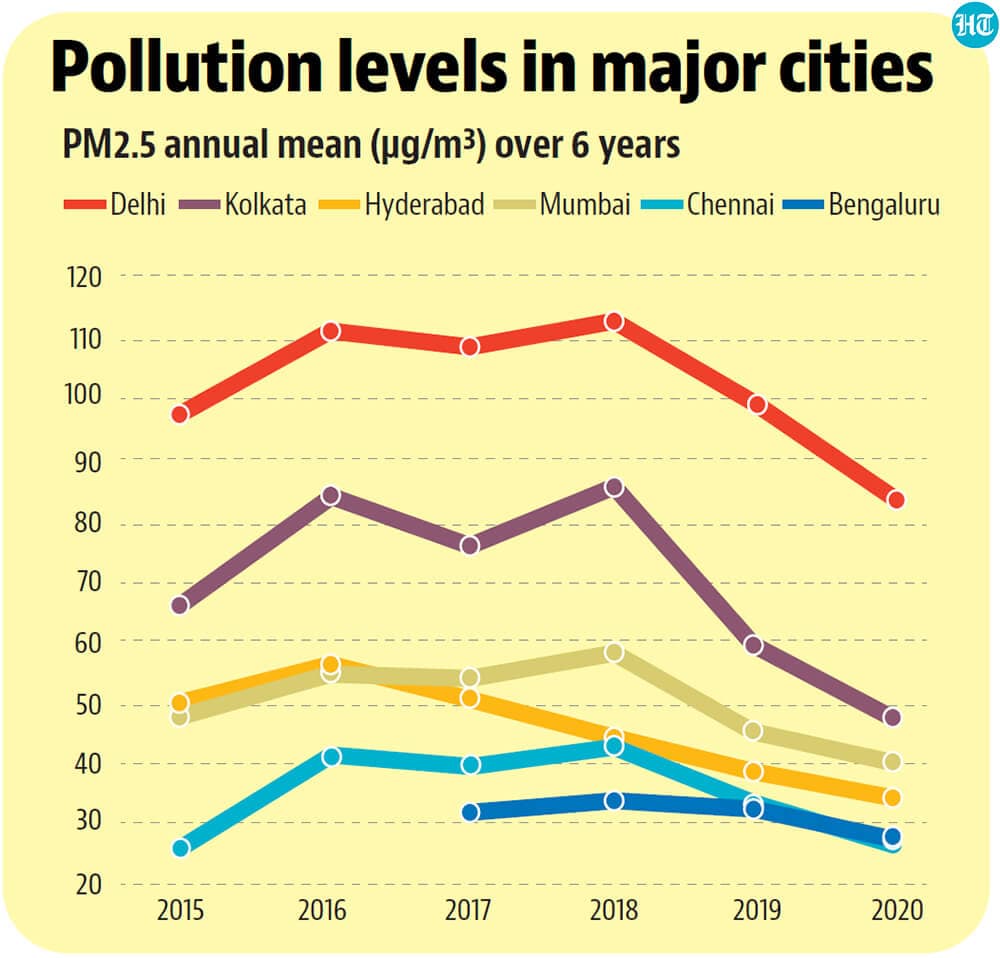
- The air of urban areas get polluted due to a lot of anthropogenic activities, flying of large number of automobiles, industries etc.
- These activities release pollutants like carbon monoxide, carbon dioxide, oxides of nitrogen, oxides of sulphur, hydrocarbons, vapours of organic compounds, particulates, and toxic metals etc. which are capable of including a number of health hazards.
Changes in Patterns of Precipitation
- Heat island circulation weakens the stability of the urban atmosphere.
- This significantly promotes the formation of convective weathers such as thunderstorms, heavy precipitation, and strong storms, and changes the dynamic structures of clouds and storms leading to extreme events of enhanced intensity as a result of the strengthened convection in downwind urban areas.
- It is also known as the rain island effect.
Impacts On the Lithosphere and Land Resources
Erosion and other changes in land quality
- Urbanisation causes an increased human pressure on land due to reduce vegetation cover and green spaces.
- This increases the exposure of soil to various degrading drivers such as natural disasters and urban contaminants.
Pollution
- Pollutants are often dispersed across cities or concentrated in industrial areas or waste sites.
- Lead- based paint used on roads and highways and on buildings is one such example of a widely dispersed pollutant that found its way into soil.
- Burying tremendous amounts of waste in the ground at municipal and industrial dumps also causes land degradation.
Impacts On the Hydrosphere and Water Resources
Flow of Water into Streams
- Natural vegetation and undisturbed soil is replaced with concrete, asphalt, brick, and other impermeable surfaces.
- This means that, when it rains, water is less likely to be absorbed into the ground and, instead, flows directly into river channels.
- Increased runoff change streams channels that have evolved over centuries under natural conditions.
- Flooding can be a major problem as cities grow and stream channels attempt to keep up with these changes.
Degraded Water Quality
- The occurrence of eutrophication in bodies of water is another effect large urban populations have on the environment.
- When rain occurs in these large cities, the rain filters down the pollutants such as CO2 and other greenhouse gases in the air onto the ground below.
- Then, those chemicals are washed directly into rivers, streams, and oceans, causing a decline in water quality and damaging marine ecosystems.
Impacts On the Biosphere
Modification of Habitats
- Urbanization can have a large effect on biodiversity by causing a division of habitats and thereby alienation of species, a process known as habitat fragmentation.
- Habitat fragmentation does not destroy the habitat, as seen in habitat loss, but rather breaks it apart with things like roads and railways.
- This change may affect a species ability to sustain life by separating it from the environment in which it is able to easily access food, and find areas that they may hide from predation.
Destruction of Habitats
- Urbanization leads to deforestation and changes in land use.
- There is also complete eradication of habitats as an outcome of urbanization and native species are pushed out of cities.
Creation of New Habitats
- New habitats can be created for some native and non-native species.
- Cities also create habitats for some species considered pests, such as pigeons, sparrows, rats, mice, flies and mosquitoes.
- Urbanization has, for example, eliminated many bat colonies in caves, but has provided sites such as bridges for these species to nest.
Impact on The Environmental Quality in The Metropolitan Cities
Development of Slums
- The areas within the cities and towns without civic and basic amenities are called Slums.
- The slum settlement arises due to un-flux of rural peoples into urban areas and shortage of housing facilities for them. They construct their dwellings using rusted tins, empty tar barrels, jute sacks, etc.
- Although these areas become overcrowded, these lack civic amenities like light, water supply, drainage, roads, toilets and medical facilities.
- The areas of slums become centers of a number of environmental problems such as unplanned waste disposal causing water and air pollution, diseases like typhoid, cholera, enteric fever, etc.
- These cause health hazards not only in slum areas but also in other nearby places.

Management of Solid Waste
- Thickly populated urban areas consume large quantities of material and simultaneously releases a lot of solid wastes.
- The solid wastes include municipal wastes, industrial wastes, hazardous wastes etc.
- The solid waste production increases with an increase in population foul smell and poisonous gases and become breeding grounds of vectors of different diseases.
- The gases produced cause air pollution, surface run-off from the wastes causes water pollution and vector causes different diseases.

Over Exploitation of Natural Resources
- Due to high population density and expensive life style, the rate of consumption of natural resources (e.g. water, energy, fossil fuel, forest products etc.) is very high in urban areas.
- There is also misuse of natural resources whose immediate compensation becomes difficult.
- Few acute problems of urban areas are scarcity of drinking water especially the ground water, scarcity of forest products, power cut due to excessive use of electricity etc.
Noise Pollution
- The noise produced from automobiles, vehicles, social functions, industries etc. cause noise pollution in urban areas.
- This in turn causes psychological and physical ailments.
Indian Cities and Environment
- Indian cities such Mumbai, Chennai, Bengaluru and Delhi are vulnerable to environmental and climate-related risks.
- In recent 2022 Environment Performance Index by the universities of Yale and Columbia India was ranked last among a cohort of 180 countries.
- Environmental Risk Outlook 2021 cautioned India of an urban disaster in the making. It projected 43 Indian cities, including Mumbai, Chennai, Bengaluru, and Delhi, as the 100 most vulnerable urban centres exposed to environmental and climate-related risks.
- According to WHO 10 out of 20 most polluted cities in the world are located in India and have caused around 1.8 million premature deaths.
- Indian cities New Delhi, Kolkata, Mumbai and, Hyderabad have the highest PM2.5 levels ranging between at 40-81 μg/m3 against the WHO prescribed PM2.5 levels of 10 μg/m3 (CHE, 2017).
- Almost 42 per cent of Mumbai lives in slums while occupying only 12 per cent of its total geographic area, giving it the dubious distinction of being the largest slum in Asia.
Way forward
- Cities demonstrate strong leadership in many fields, setting sustainability and CO2 reduction targets that are often bolder than those of national governments.
Various steps that cities can take involve:
- Increase the road capacity and inculcate price mechanisms e.g., congestion charging.
- Improving traffic management system, public transit subsidy (bus services), car sharing, building pavements for pedestrian, strict parking policies and uniform parking charges etc.
- Building pollution-reducing infrastructure and arresting repercussions of emissions
- Imposing pollution standard implying a maximum allowable pollution level, levy pollution tax or ecological tax, or other viable alternative tax-liability schemes.
- Development of a countrywide integrated solid waste management programme
- Regulation and monitoring the licensing distribution, management of water demands, technology up gradation.
- Integrating the environmental degradation mitigation strategies in its conventional planning and governance
- Strengthening of urban local bodies (ULBs) through institutional reforms and capacity building. Etc.
Global initiatives – such UN-Habitat’s Cities and Climate Change Initiative (CCCI), the Cities Climate Finance Leadership Alliance, the Global Covenant of Mayors for Climate & Energy or the C40 Cities network – are fostering collaboration between cities and promoting innovative solutions to mitigate and adapt to climate change in urban areas.
Case studies
- The flagship urban programmes aiming at urban rejuvenation i.e., Smart City Mission (SCM)‘, Jawaharlal Nehru National Urban Renewal Mission (JNNURM)‘ and Atal Mission for Rejuvenation and Urban Transformation (AMRUT).
- Town Planning Schemes (TPS) of Gujarat and Pune: Develop well planned grid of road network, including ring roads, and provide land for infrastructure, social amenities, gardens and housing for economically weaker sections.
- Delhi Urban Art Commission (DUAC) of shrinking the Lutyens Bungalow Zone (LBZ) by 5.13 sq. km. from its current 28.73 sq. km. to 23.6 sq. km. is laudable insofar as the future outcome is concerned. This idea could result in a vertical growth of Delhi, giving ample scope for creation of green public spaces & recreational zones, fields and, parks etc.
- Municipal solid waste management in the City of Indore: Indore’s municipal corporation (IMC) has eliminated garbage dumps, ensured 100% household-waste segregation and converted waste to usable products, such as compost and fuel. It partnered with non governmental organisations for an awareness campaign to change the behaviour of its citizens, contracted private companies to run some waste management operations, used technology, and improved municipal capacity to ensure the implementation of its waste management plan.
Environment Impact of Mining
Introduction
- Mining activities, including prospecting, exploration, construction, operation, maintenance, expansion, abandonment, decommissioning and repurposing of a mine can impact social and environmental systems in a range of positive and negative, and direct and indirect ways
- Environmental effects of mining can occur at local, regional, and global scales through direct and indirect mining practices.
Impacts
Impact on water :
- Reduction in availability of water in the area as mining uses lot of water
- Removal of water bodies from the area for quarrying, dumping.
- Disruption of drainage pattern.
- Disruption of hydrological regime, ground water regime and lowering of ground water table.
- Pollution of surface and ground water bodies due to discharge of mine water, run off from coal stocks and overburden dumps
Impact on land:
- Massive land disturbance and deforestation due to use of land for large scale excavation ,dumping of overburden, making industrial and service building ,roads and other infrastructure , township etc.
- Change in land use pattern due to building construction and other infrastructure development.
- Soil erosion and soil degradation.
- Alteration in characteristic of top soil.
- Reduces fertility of land/agriculture production in the surrounding area due to siltation and run off from overburden dumps.
- Change in topography and drainage pattern due to subsidence.
Impact on Air Quality:
- Air pollution due to emission of gaseous pollutant (SO2, NOX, CO), suspended particulate matter and dust from drilling, blasting, transport of coal and overburden, crushing and screening.
- Pollution from mine fires and fires in waste dumping, including those left burning in post mining period.
- Auto-emissions.
- Emissions from soft coke bhattas and coke ovens.
Noise Pollution:
- Machinery installed in shafts/inclines, compressor houses and workshop generates noise which becomes ambient noise.
Impact on Ecology:
- Clearing of vegetation from land used for quarry, dumping of overburden, construction of infrastructure.
- Deforestation when mine is situated in forest area.
- Disturbance in wildlife and other fauna due to clearing of vegetation/deforestation, mining noises and other allied activities.
- Retardation of growth of vegetation and agriculture produce due to disruption of waste regime, and due to air and water pollution.
- Degradation of aquatic flora and fauna due to discharge of polluted water.
Social Impact:
- Displacement of people whose land is acquired.
- Loss of livelihood of people dependent on land directly or indirectly.
- Influx of outsiders.
- Damaged sanitation.
- Adverse health effects.
- Urbanization.
- Danger to life and property in post mining period.
- Rise in aspirations of society.
Mitigation
Reclamation
- It is the process of re-establishing of viable soils and vegetation at a mine site.
- Reclamation includes the following steps: contouring of land; placement of topsoil or an approved substitute on the graded area; reseeding with native vegetation, crops and/or trees; and years of careful monitoring to assure success.
- Some approaches used in mining site reclamation are: Forestry Reclamation Approach, Holistic approach.
- The FRA establishes guidelines for achieving successful reforestation on mined lands are
- Create a suitable rooting medium for good tree growth that is no less than four feet deep and made of topsoil, weathered sandstone, and/or the best available material.
- Loosely grade the topsoil or topsoil substitute established in step one to create a non-compacted growth medium.
- Use groundcovers that are compatible with growing trees.
- Plant two types (or more) of trees: early successional species for wildlife and soil stability, then commercially valuable crop trees.
- Use proper tree planting techniques.
- Holistic approach is used when the local environment is not forest. Steps may include
- Grade the best available material to the required topography, establishing keylines (land use technique).
- Sow the native species of early successional species of plants and grasses.
- Cover the area with a loose layer of hay mulch to provide the initial "jump start" of forage required for the livestock.
- Using keylines as a guide, establish paddocks and implement holistic planned grazing techniques to heal the land.
- If the goal is to establish a wildlife area or natural park, as the keystone species begin returning (a process called ecological succession) or are introduced in large enough numbers, livestock can be reduced or eliminated.
- The rate of soil carbon storage on post mining soil can be very high and may exceeded the rate of carbon storage one may gain, e.g., by reforestation of arable land.
Soil treatment
- A common approach used in dealing with contaminated soil is to move it to specially designed repositories.
- In this approach, the volume and toxicity of the soil is not reduced, the soil is just relocated.
- Effective soil treatment approaches depend upon better understanding of the risks associated with metals in mine wastes.
- These “natural” metals in minerals may not be as readily available in the biosphere, and therefore, they may not be as toxic as the metals in processed forms, such as lead in gasoline.
Water treatment
- The most common treatment for acidic and metal-bearing waters is the addition of a neutralizing material, such as lime, to reduce the acidity.
- This “active” treatment process, which causes the dissolved metals to precipitate from the water, usually requires the construction of a treatment facility.
- The ongoing maintenance that such a plant requires makes this treatment technique very expensive.
- Some active treatment plants also generate large amounts of sludge.
- Disposal of the sludge is a major problem.
- Possible alternatives include:
- Using “passive” wetland systems to treat metal-bearing water.
- Using in-situ treatment zones where reactive materials or electric currents are placed in the subsurface so that water passing through them would be treated.
- Combining treatment with the recovery of useful materials from contaminated water.
Preventing acid rock drainage
- Prevention must be addressed during exploration activities, before the beginning of newly-planned mining operations.
- Possible measures include:
- Flooding of old underground mine
- Sealing exposed surfaces in underground workings with a coating of material that is non-reactive or impermeable to inhibit the oxidation process.
- Backfilling mine workings with reactive materials that can neutralize and treat waters that pass through them.
- Adding chemicals to the water in flooded surface and underground mine workings that can inhibit acid-generating chemical reactions
- Isolating contaminated waters at depth by stratification
Controlling gas emissions
- Technology that controls the emission level should be promoted.
- Treatment of harmful gases before release.
Environmental Impact of Open Cast Mining
Introduction
- Open cast mining is a type of surface mining where mineral resources are extracted from the earth by removing overlying material. While this method is efficient in extracting minerals, it also has significant environmental impacts that need to be considered.
About open cast mining
- Open-pit mining is a surface mining technique used to extract rock or minerals from the earth.
- It is used when deposits of commercially useful ore or rocks are found near the surface with relatively thin overburden.
- Open-pit mining is considered one of the most dangerous sectors in the industrial world, causing significant effects to miners' health and the environment.
- It can lead to changes in vegetation, soil, and bedrock, impacting surface hydrology, groundwater levels, and flow paths.
- Open-pit mining produces harmful pollutants depending on the type of mineral being mined and the mining process used.
Enviromnental Impact
Impact on Physical Environment
Destruction of land and vegetation
- Mining activities can lead to the destruction of large areas of land, removing vegetation and disrupting ecosystems.
- Deforestation for agriculture or urban development can also result in the loss of natural habitats and biodiversity.
- Construction projects such as roads or buildings can require clearing of land, further impacting vegetation and wildlife.
Alteration of topography and landscape
- Excavation and mining can alter the natural topography of an area, creating pits or mounds that change the landscape.
- Urban development can lead to the leveling of hills or filling in of valleys, altering the natural contours of the land.
- Natural disasters such as earthquakes or landslides can also dramatically change the topography of an area.
Soil erosion and sedimentation
- Deforestation and land clearing can increase the risk of soil erosion, leading to loss of fertile topsoil and degradation of agricultural land.
- Mining activities can expose bare soil to erosion, causing sedimentation in nearby water bodies and impacting aquatic ecosystems.
- Construction projects that disturb the natural vegetation cover can also contribute to soil erosion and sedimentation.
Changes in water flow and quality
- Alteration of the landscape through construction or mining can change the natural flow of water, leading to flooding or drought in certain areas.
- Pollution from industrial activities or agriculture can contaminate water sources, affecting the quality of water for both humans and wildlife.
- Changes in land use can also impact the hydrological cycle, affecting groundwater recharge and water availability in an area.
Chemical Impact
Release of toxic chemicals and heavy metals
- Increased risk of human health hazards: Exposure to toxic chemicals and heavy metals can lead to various health issues such as respiratory problems, neurological disorders, and even cancer.
- Long-term environmental damage: The release of these chemicals can have long-lasting effects on the environment, affecting soil quality, water sources, and wildlife populations.
- Difficulty in remediation: Cleaning up the contamination caused by toxic chemicals and heavy metals can be a challenging and costly process, requiring extensive remediation efforts.
Acid mine drainage
- Acidification of water sources: Acid mine drainage occurs when sulfide minerals in rocks react with air and water, creating acidic runoff that can contaminate nearby water sources.
- Harmful effects on aquatic life: The acidic water can have detrimental effects on aquatic ecosystems, leading to the decline of fish populations and other aquatic organisms.
- Impact on infrastructure: Acid mine drainage can also corrode infrastructure such as bridges and pipelines, leading to costly repairs and maintenance.
Contamination of soil and water sources
- Reduced agricultural productivity: Contamination of soil with toxic chemicals can reduce the fertility of the land, impacting crop yields and agricultural productivity.
- Threat to drinking water sources: Contaminated water sources pose a risk to human health, as they can contain harmful substances that are not safe for consumption.
- Disruption of ecosystems: The contamination of soil and water can disrupt natural ecosystems, leading to the decline of plant and animal species that rely on these resources for survival.
Impact on wildlife and ecosystems
- Loss of biodiversity: The release of toxic chemicals and heavy metals can lead to the loss of biodiversity in affected areas, as certain species may not be able to survive in contaminated environments.
- Disruption of food chains: Contaminated soil and water can impact the food chain, as toxins can accumulate in plants and animals, leading to health issues for predators higher up the chain.
- Long-term ecological damage: The impact of chemical contamination on wildlife and ecosystems can have long-lasting effects, potentially leading to irreversible damage to the environment.
Environmental Degradation
- Destruction of habitats: Open cast mining involves clearing large areas of land, leading to the destruction of natural habitats for plants and animals.
- Soil erosion: The removal of vegetation and topsoil during mining can result in increased soil erosion, impacting the stability of the ecosystem.
- Water pollution: Mining activities can contaminate nearby water sources with chemicals and heavy metals, affecting aquatic life and water quality.
- Air pollution: Dust and emissions from mining operations can contribute to air pollution, impacting the health of both wildlife and nearby communities.
- Noise pollution: The noise generated by mining equipment and machinery can disrupt wildlife behavior and communication patterns.
Impact on Biodiversity
- Loss of species: The destruction of habitats and ecosystems can result in the loss of plant and animal species that are unable to adapt or relocate.
- Disruption of food chains: Mining activities can disrupt food chains and ecological relationships, leading to imbalances in the ecosystem.
- Fragmentation of habitats: The fragmentation of habitats due to mining operations can isolate populations and limit their ability to migrate or interact with other species.
- Introduction of invasive species: Mining activities can introduce invasive species to the area, outcompeting native species and further impacting biodiversity.
- Genetic diversity loss: The loss of species and habitats can lead to a decrease in genetic diversity within populations, making them more vulnerable to disease and environmental changes.
Mitigation
1. Reclamation of Land
- After mining activities are completed, the land should be reclaimed to restore it to its original state or to a condition suitable for other land uses.
- This can involve reshaping the land, planting vegetation, and ensuring proper drainage to prevent erosion.
2. Water Management
- Open cast mining can lead to water pollution through the release of contaminants into nearby water bodies.
- To mitigate this impact, proper water management practices should be implemented, such as treating water before discharge and monitoring water quality regularly.
3. Air Quality Control
- Dust and particulate matter generated during open cast mining can lead to air pollution.
- Measures such as dust suppression techniques, using enclosed conveyor systems, and implementing air quality monitoring can help mitigate the impact on air quality.
4. Biodiversity Conservation
- Open cast mining can disrupt local ecosystems and habitats, leading to loss of biodiversity.
- To mitigate this impact, measures such as creating wildlife corridors, preserving critical habitats, and conducting biodiversity assessments before mining can help protect local flora and fauna.
Case Studies
1. Jharia Coalfield
- One of the largest coalfields in India, Jharia has been extensively mined through open cast mining.
- The mining activities have led to subsidence, land degradation, and air pollution due to coal fires.
- The local communities have been displaced and their health has been affected due to the environmental impact of mining.
2. Bellary, Karnataka
- Open cast mining in Bellary has led to widespread deforestation, soil erosion, and water pollution.
- The mining activities have also resulted in the loss of biodiversity and disruption of local ecosystems.
- The local communities have faced health issues and displacement due to the environmental impact of mining.
3. Singrauli, Madhya Pradesh
- Singrauli is known as the energy capital of India due to the presence of numerous coal mines and power plants.
- The open cast mining activities in Singrauli have led to air and water pollution, deforestation, and displacement of local communities.
- The environmental impact of mining in Singrauli has also resulted in health issues for the residents living in the region.
4. Appalachian Mountains, USA
- Mountaintop removal mining in the Appalachian Mountains has led to extensive deforestation and destruction of ecosystems.
- The mining activities have contaminated water sources and led to the loss of biodiversity in the region.
- Local communities have faced health issues and displacement due to the environmental impact of mining in the Appalachian Mountains.
5. Tar Sands, Alberta, Canada
- Open cast mining of tar sands in Alberta has led to extensive land degradation and deforestation.
- The mining activities have also resulted in water pollution and the release of greenhouse gases into the atmosphere.
- The environmental impact of mining tar sands in Alberta has affected local communities and wildlife in the region.
6. Cerro de Pasco, Peru
- Open cast mining in Cerro de Pasco has led to extensive soil and water pollution due to the release of heavy metals.
- The mining activities have also resulted in the displacement of local communities and loss of biodiversity.
- The environmental impact of mining in Cerro de Pasco has affected the health and livelihoods of the residents living in the region.
Conclusion
While open cast mining is an important method for extracting mineral resources, it is crucial to consider and mitigate its environmental impacts. Implementing sustainable mining practices and reclamation efforts can help minimize the negative effects of open cast mining on the environment.
Environmental Impact of Fertilizers
Introduction
- Fertilization increases efficiency and obtains better quality of product recovery in agricultural activities.
- Non-organic fertilizers mainly contain phosphate, nitrate, ammonium and potassium salts.
- Fertilizer industry is considered to be source of natural radionuclides and heavy metals.
- However increased fertilizer use has caused serious environmental problems.
Impacts
- The application of fertilizers can impact the accumulation of heavy metals in soil and plants.
- Plants absorb fertilizers from the soil, which can then enter the food chain.
- Direct exposure or consumption of contaminated plants can be harmful to both humans and animals.
- Health risks for humans include symptoms like abdominal pain, dizziness, headaches, nausea, and vomiting.
- Long-term exposure to heavy metals can also increase the risk of cancer.
- Fertilization can lead to pollution of water, soil, and air.
- Chemicals from fertilizers can reach water sources through drainage, leaching, and runoff.
- This can result in nitrate contamination of surface and groundwater.
- Excessive nitrogen and phosphorous in water can lead to eutrophication, causing oxygen depletion and negative impacts on aquatic life.
- Eutrophication can also lead to water quality degradation, fish kills, and unpleasant odors.
- Overuse of chemical fertilizers can contribute to soil degradation, nitrogen leaching, and loss of soil organic matter.
- Long-term fertilizer use can also decrease crop quality.
- Increased fertilizer use can release nitrogen gases into the atmosphere, contributing to greenhouse gas emissions.
- Nitrogen oxides released from fertilized lands can react with volatile organic compounds to form tropospheric ozone.
- Ammonia emissions from fertilized lands can lead to ecosystem and vegetation damage, as well as contribute to acid rain formation.
Mitigation
- The adverse effects of these synthetic chemicals on human health and the environment can be reduced or eliminated by adopting new agricultural technological practises, including the use of organic inputs such as manure, biofertilizers, biopesticides, slow-release fertilisers and nanofertilizers, etc.
Practices that can be adopted for mitigation of adverse effect can be:
- Soil management practices such as deep ripping, compaction etc.
- Water management practices – water reclamation, water conservation practices, improved irrigation techniques
- Conservation practices such as Residue/Organic Matter Management, Terracing, Contouring, Water and Sediment Control Basin, Conservation Tillage(Mulch till, Ridge till, No-till/Strip till, Grassed Waterways, Filter Strips).
- Crop Management- Crop Selection and Rotation, Soil testing, Use of Organic Matter, Incorporation of residue etc.