
Show diagrammatically the characteristics of binary eutectic system under 1 atmosphere (1 atm pressure). How does one explain the formation of porphyritic basic rock with phenocryst of plagioclase in a groundmass with plagioclase and clinopyroxene with the help of a suitable binary eutectic system? IAS 2024, 10 Marks
Show diagrammatically the characteristics of binary eutectic system under 1 atmosphere (1 atm pressure). How does one explain the formation of porphyritic basic rock with phenocryst of plagioclase in a groundmass with plagioclase and clinopyroxene with the help of a suitable binary eutectic system? IAS 2024, 10 Marks

Introduction:
- A binary eutectic system consists of two components that form a eutectic mixture at a specific composition and temperature.
- The characteristics of a binary eutectic system under 1 atm pressure can be represented diagrammatically.
Characteristics of Binary Eutectic System Under 1 Atmosphere
Key Features:
- A binary eutectic system involves two components that can coexist as liquid and solid at a specific eutectic composition and temperature under 1 atm pressure.
- Phases: Includes liquid, solid A, and solid B.
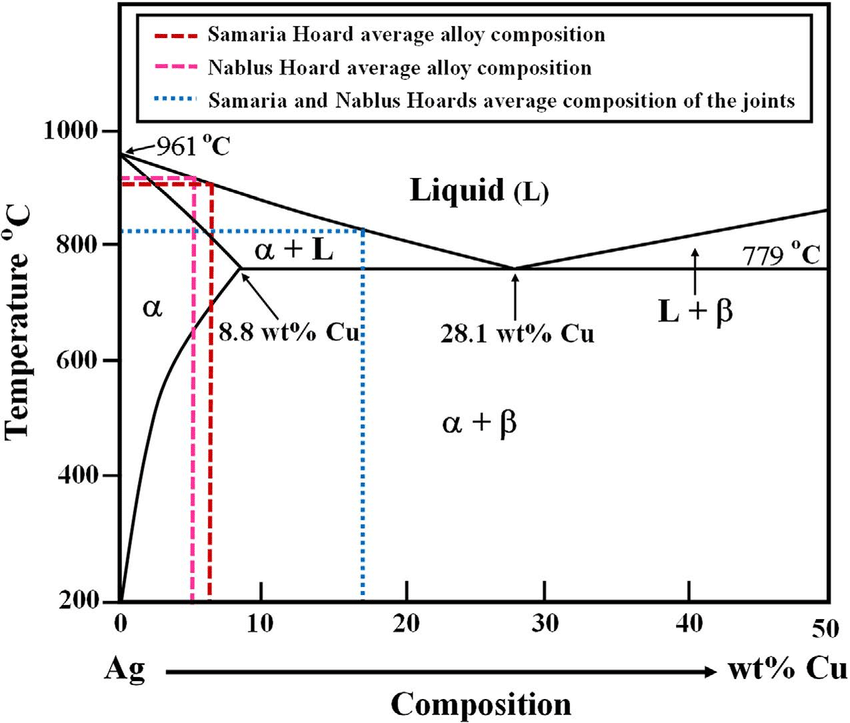
- Eutectic Point: The lowest temperature at which the liquid phase can exist; both components crystallize simultaneously in a fixed ratio.
Diagram Explanation:
- The phase diagram consists of:
- Liquidus Curve: Separates the liquid phase from the two-phase liquid + solid region.
- Solidus Curve: Indicates temperatures below which only solid phases exist.
- Eutectic Point: Intersection of solidus and liquidus lines where the two solids crystallize simultaneously.
Simplified Diagram:
Formation of Porphyritic Basic Rock with Plagioclase Phenocrysts
Explanation with Binary Eutectic System:
- System: Consider the diopside-anorthite system as a representative binary eutectic system.
- Initial Stage:
- The magma initially cools slowly at depth, leading to the formation of large plagioclase phenocrysts (early crystallization due to supercooling).
- Plagioclase forms due to the liquidus curve's inclination toward the plagioclase composition.
- Subsequent Cooling:
- As the magma cools further, it reaches the eutectic point.
- Both plagioclase and clinopyroxene crystallize together from the remaining liquid.
- Final Rock Texture:
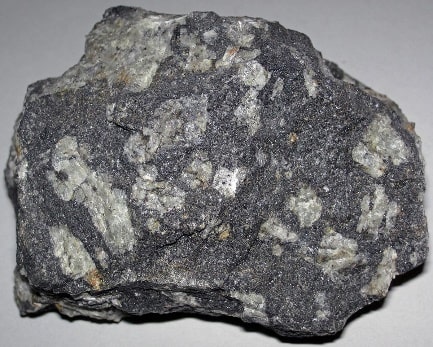
- The phenocrysts of plagioclase (formed earlier) are embedded in a fine-grained groundmass composed of plagioclase and clinopyroxene, reflecting the eutectic crystallization.
Relevance of Binary Eutectic System:
- The eutectic system explains the simultaneous crystallization of plagioclase and clinopyroxene in the groundmass.
- The earlier nucleation of plagioclase corresponds to the solidus-liquidus path of a plagioclase-rich composition.
Diagram:
Conclusion:
- The characteristics of a binary eutectic system under 1 atm pressure can be represented diagrammatically.
- The formation of porphyritic basic rock with phenocrysts of plagioclase can be explained using a binary eutectic system with plagioclase and clinopyroxene.