
Political Ideologies | PSIR Optional for UPSC
Political Ideologies | PSIR Optional for UPSC

PYQ
- Define ideology. Critically examine the “End of Ideology. Debate. (01/60)
- Examine the debate on the ‘End of Ideology’. (11/30)
- Comment: End of Ideology debate. (19/10)
What are Ideologies?
- An ideology is a collection of ideas.
- The term ideology was coined by a French Enlightenment philosopher Antoine Destutt de Tracy. He conceived it in 1796 “as the science of ideas”, which is a “rational collection of ideas”, as opposed to the irrational impulses of the mob.
- Ideology is a 'coherent system of ideas' that “rely on a few basic assumptions which may or may not have any factual basis”.
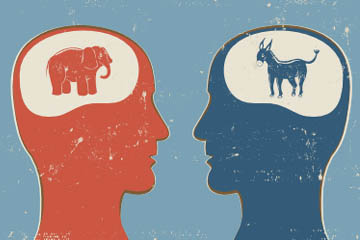
What are Political Ideologies
- A political ideology is a certain set of ethical ideals, principles, doctrines, myths or symbols of a social movement, institution, class or large group. It explains how society should work and offers some political and cultural blueprint for a certain social order.
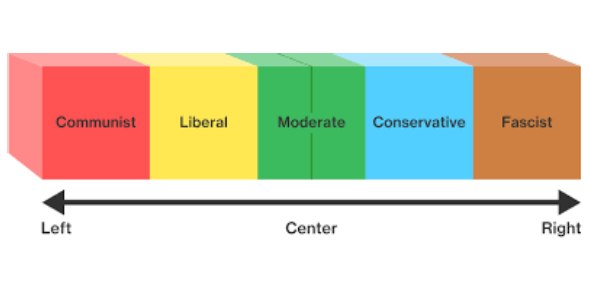
- Ideologies tend to identify themselves by their position on the political spectrum. Eg. the left, the centre or the right.
- Examples of political ideologies: Anarchism, Authoritarianism, Communism, Democracy, Environmentalism, Fascism and Nazism, Feminism, Liberalism, Nationalism, Populism, Religio-political ideologies, Socialism.
- Some political parties follow a certain ideology very diligently. On the other hand, others may take broad inspiration from a group of related ideologies.
- Political ideologies have two dimensions:
- (1) Goals: how society should be organized; and
- (2) Methods: the most appropriate way to achieve this goal.
- Generally, each political ideology contains certain ideas on what it considers to be the best form of government (e.g. autocracy or democracy) and the best economic system (e.g. capitalism or socialism).
- Political ideology is a term fraught with problems. It is called "the most elusive concept in the whole of social science". - D. McLellan, Ideology, 1986.
Thinkers’ views
- Antoine Destutt de Tracy devised the term for a "science of ideas," basing such upon two things:
- the sensations that people experience as they interact with the material world; and
- the ideas that form in their minds due to those sensations.
- Marx's analysis sees ideology as “a system of falsehoods”. As per them, it is a deliberately promulgated system by the ruling class as a means of self-stability.
- In the Marxist base and superstructure model, base denotes the relations of production and modes of production, and superstructure denotes the dominant ideology (i.e. religious, legal, political systems).
Characteristics of Ideology
- It must be logically coherent.
- It must provide guidance towards action.
- It is a set of beliefs or philosophies attributed to a person or group of persons.
- It may or may not have any proven basis or universal applicability. Hence, ideologies are neither necessarily right nor wrong.
- It serves as the seed around which further thought grows.
- It is accepted by a particular social group or class.
- It is an action-oriented sets of beliefs.
Political ideology vs Political Theory
- Political ideology is a “passionate” search for a better society. Some examples of political ideologies are Marxism, liberalism, nationalism etc.
- On the other hand, political theory is a “disinterested” search for a better societal or political arrangement.
- Political ideology is a general and a wider concept. On the other hand, political theory is strict adherence to certain principles.
- However, there are some same terms for both political ideologies and political theories. E.g. liberalism, socialism etc. But it doesn't necessarily mean that they are identical entities.
Ideocracy
- Ideocracy is "governance of a state according to the principles of a particular political ideology".
- When a political ideology becomes a dominant feature of a government, it is known as ideocracy.
- It is a government based on a monistic ideology, which is distinct from an authoritarian state, which is characterized by strong central power and limited political freedoms.
- In The Anatomy of Revolution, Crane Brinton said that new ideology spreads when there is extreme ideocracy, or there is discontent with an old ideology.
- The revolution thus is seen as a reaction to ideocracy.