
Describe the general features and life cycle of Ascaris. (IAS 2023/15 Marks Marks)
Describe the general features and life cycle of Ascaris. (IAS 2023/15 Marks Marks)

Introduction:
Ascaris is a genus of parasitic roundworms that infect the intestines of humans and animals. They are one of the most common intestinal parasites worldwide.
General Features of Ascaris
- Scientific Classification: Ascaris lumbricoides is a parasitic nematode (roundworm) belonging to the phylum Nematoda.
- Morphology:
- Cylindrical, elongated, and tapered at both ends.
- The female is typically larger (20-40 cm) than the male (15-30 cm).
- The male has a curved tail, while the female has a straight one.
- Habitat: Primarily found in the small intestines of humans, particularly in areas with poor sanitation.
- Feeding: Absorbs nutrients directly from the host's intestine, leading to malnutrition in the host.
- Disease: Causes Ascariasis, leading to symptoms like abdominal pain, malnutrition, and in severe cases, intestinal blockage.
Life Cycle of Ascaris:
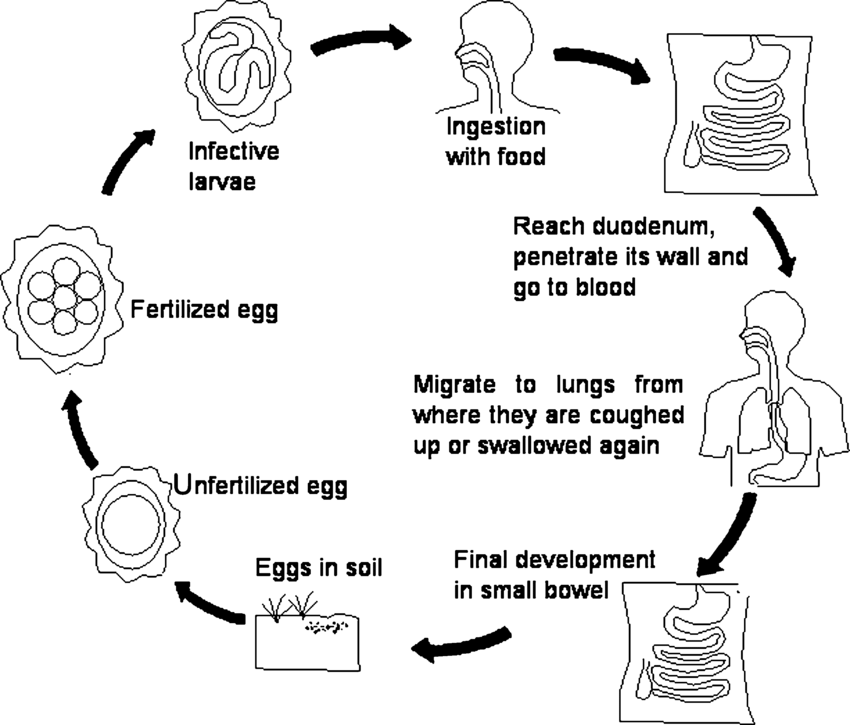
- Egg Stage: Female Ascaris lay eggs in the intestine of the host. These eggs are excreted with feces and become infective after 2-4 weeks under suitable environmental conditions (moist soil, warmth).
- Infective Stage: Humans are infected by ingesting food or water contaminated with Ascaris eggs. The eggs hatch into larvae in the small intestine of the new host.
- Larval Migration: The larvae penetrate the intestinal wall, enter the bloodstream, and are carried to the lungs, where they mature further.
- Maturation in the Lungs: In the lungs, larvae molt and grow before moving to the trachea. They are then swallowed back to the intestine.
- Adult Stage: The larvae reach the small intestine, where they mature into adult worms and start the reproductive cycle anew.
Importance of Life Cycle
- Survival Strategy: The complex life cycle with migration through various organs helps Ascaris evade the immune system and increases chances of survival in the host.
- Public Health Concern: Since eggs are excreted with feces, poor sanitation can lead to widespread Ascaris infections, particularly in tropical and subtropical regions.
Conclusion:
Ascaris is a common intestinal parasite with a complex life cycle that involves both humans and animals. Understanding the general features and life cycle of Ascaris is important for prevention and treatment of infections.